Dublin and around
30 places
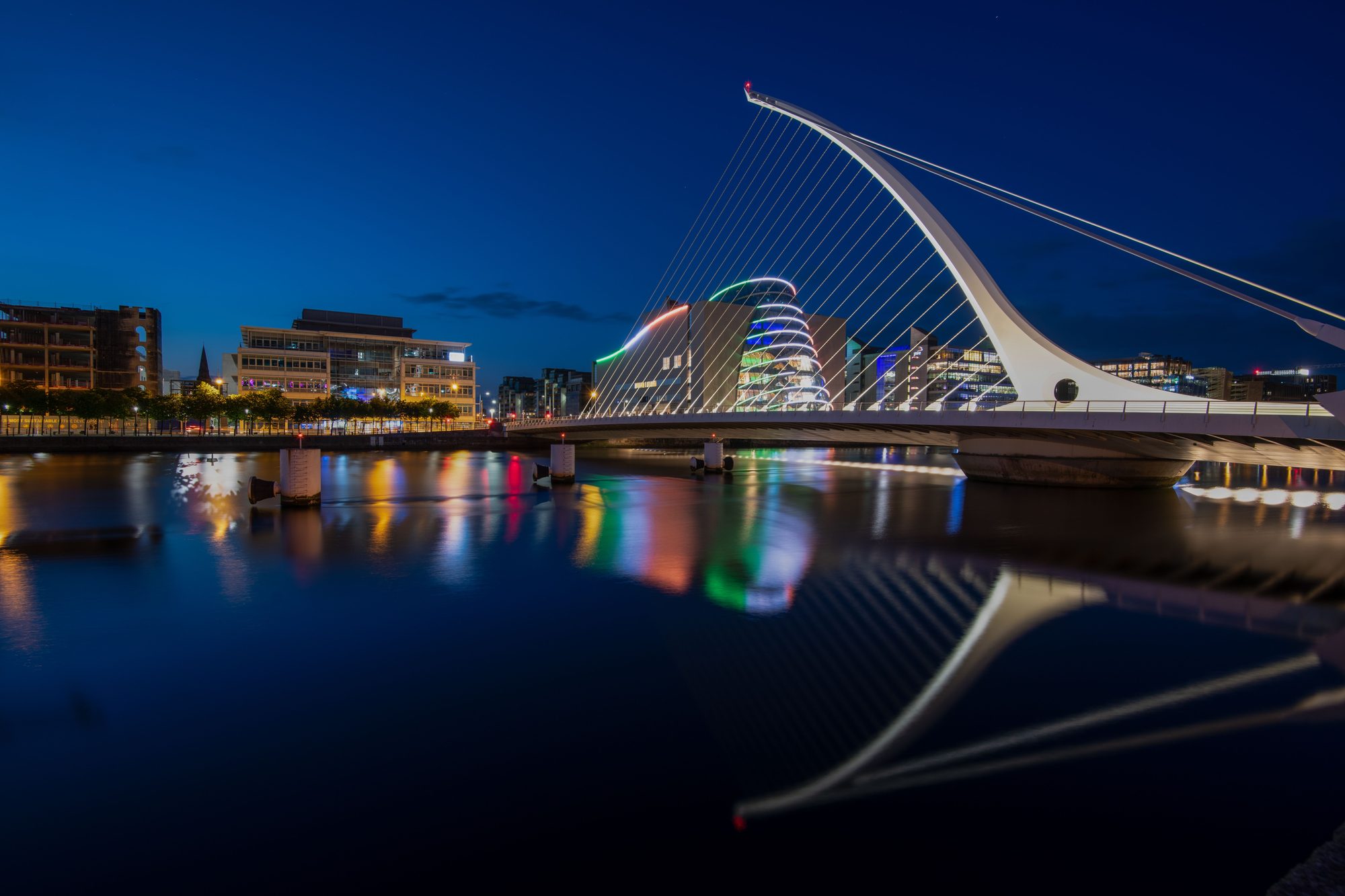
Berlin has been filmed in Dublin at least twice. The Spy Who Came In from the Cold, out in 1965, took most of its West Berlin street work here and sent the interiors to Shepperton and to Ardmore in Bray.
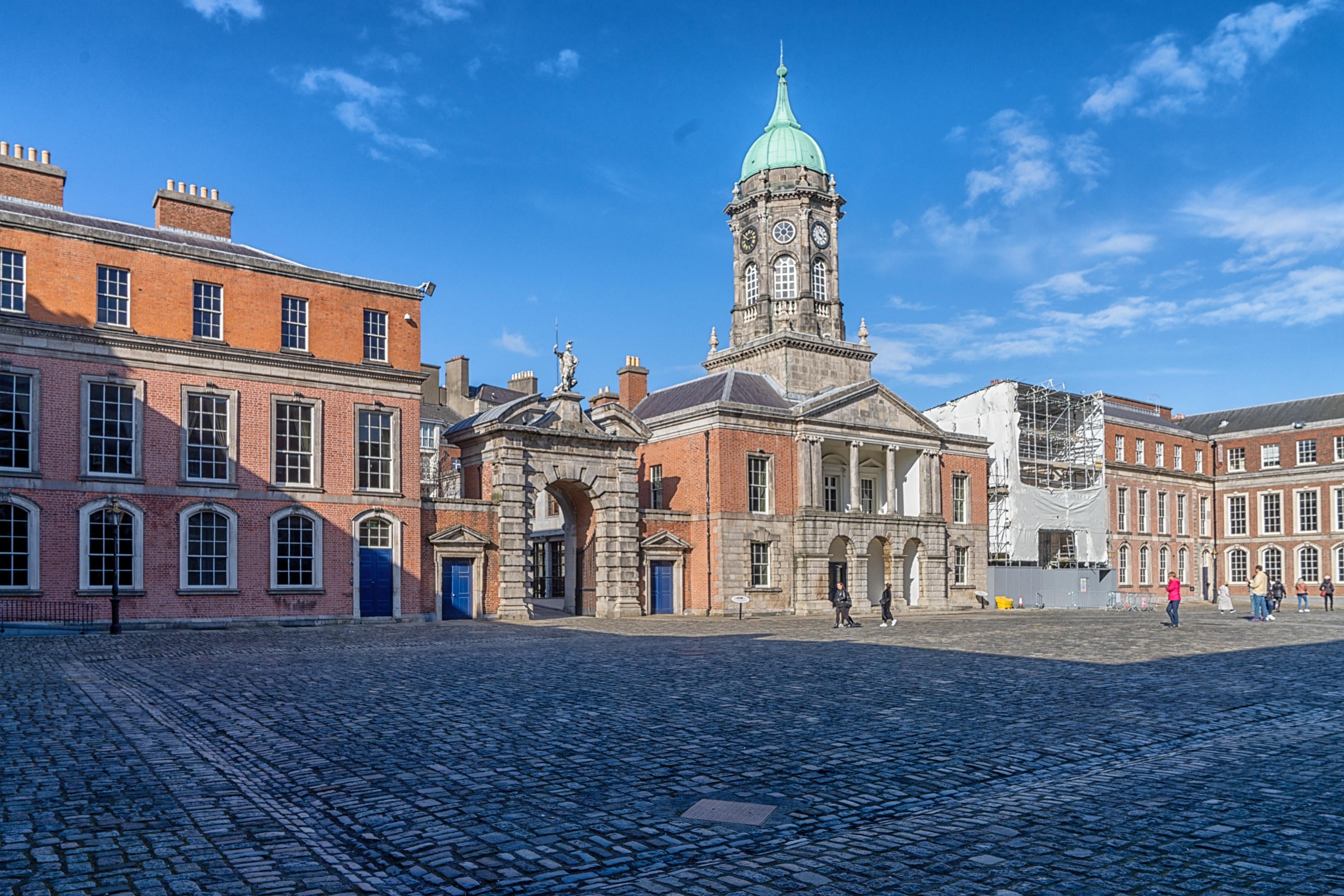
The second time was Barry Lyndon: Kubrick wanted the state rooms at Dublin Castle for the Berlin household of a card sharp, Patrick Magee's Chevalier de Balibari. Doing it cost the castle some of its own furnishing. Every picture of a 1916 signatory in the round rooms was lifted down and left in a stack, image side to the plaster, while the place was re-dressed into a first-class hotel and a gaming floor.
Standing in is the ordinary condition of this map. Trinity College lends its Old Library to Oxford in Transformers: The Last Knight, and Abigail started work here in May 2023 on a story set in Boston. Whelan's, a music venue in the city, does duty in P.S. I Love You as a pub the script puts in Wicklow. Out in the counties the distances stretch: for Braveheart a tower house under the flight path plays Edinburgh Castle and a Norman keep on the Boyne plays the Tower of London, and for Saving Private Ryan a strand in Wexford plays Omaha. Nearly all of it still stands and most can be visited. One room cannot be: it burned.
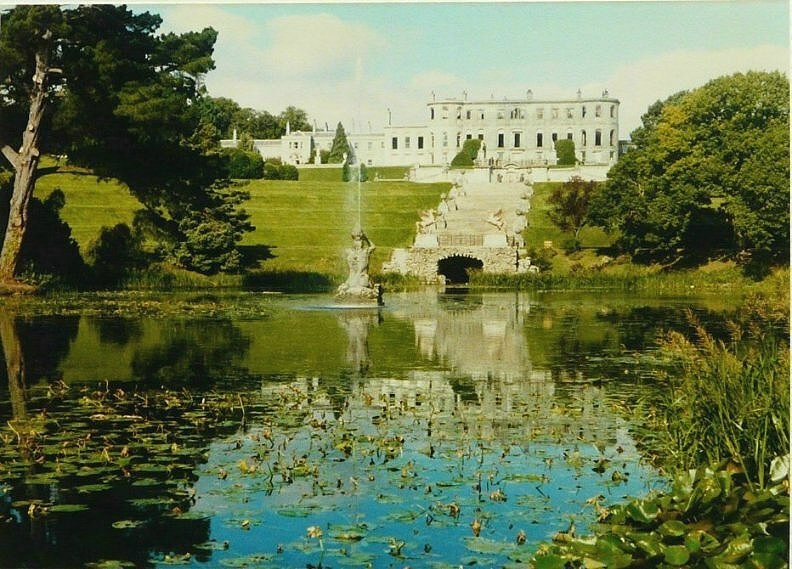
The room is a saloon at Powerscourt, County Wicklow. Forty Volkswagen vans came up the drive with more behind them, and Barry Lyndon turned the main hall into a German gaming house lit by candles alone; there was wax over the floorboards by the time the unit finished. More than one scene sits in that saloon, and through its windows you can see the Wicklow Mountains from inside a building the script puts in Germany. Fire took the interiors in November 1974, months after the last van left. The shell was rebuilt in the 1990s and holds a restaurant and shops now; the view people photograph is the facade above the terraces. Powerscourt had been letting film crews in since at least 1944, when Henry V filmed the house, its gardens and the waterfall.
Much of it works because of a studio at Bray. Ardmore has been the country's production base since 1958: ten stages, no public access, and a client list that takes in Braveheart and My Left Foot. It also built the interiors for Braveheart, the film that shipped a whole war across the Irish Sea.
Mel Gibson spent about six weeks of that shoot in Scotland, then moved the fighting to Ireland, where the state offered tax terms and something less easy to hire. The Defence Forces provided 1,600 extras, largely reservists, who grew beards on leave and went into medieval kit; the same men fought on both sides of every battle. His reasoning was plain: Ireland had ground that looked right and could keep horses, crowd and equipment within an easy drive of a city. Filming ran between 6 June and 28 October 1994.
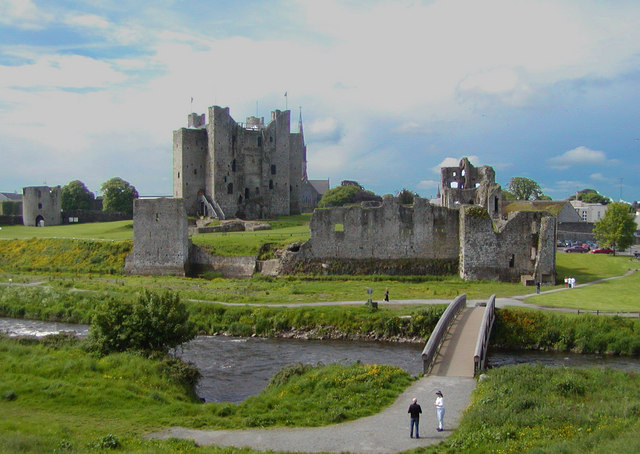
So Edinburgh Castle is Dunsoghly, a tower house of about 1450 in farmland 4.5 km from Dublin Airport, right under the approach; the real thing is 345 km off and never appears. Trim Castle took two roles in one go, York besieged on the grass outside the curtain wall and the Tower of London inside the keep, and several hundred townspeople filled the crowd. At Bective Abbey, founded in 1147, the cloister became the courtyard of Longshanks' castle. At Dunsany the roofless church of St Nicholas was patched up to pass for Westminster Abbey at a royal wedding. The battle itself is the Curragh in Kildare, five thousand acres of open grass belonging to the Department of Defence, with sheep on it under grazing rights fixed by statute. The battle it carries was fought at Stirling, in Scotland, and no camera went there. West of Ballymore Eustace the habit stuck: King Arthur put up a length of Hadrian's Wall in a Kildare field in 2003, the biggest set ever erected in this country, and took it down again.
What is left of all that varies. A panel by the wall at Trim spells out which scene belongs to which stretch of stone, and the keep is guided groups only, the stair too tight for visitors on their own. Walkers use the Curragh, the army fires on it, and the warning boards mean what they say. Somebody hung a steel gate on Dunsoghly after the film; it is a silhouette from the lane now.
Three years on, the same reserve army was hired for Saving Private Ryan. The real Omaha was looked at and rejected as too built up, so the landing went to Ballinesker at Curracloe in County Wexford, 511 km distant from the beach in the story. Irish Army reservists played the men wading ashore, with wet suits under the uniforms; some 1,500 people were involved over three or four weeks, and better than a thousand mannequins filled the ranks behind them. Hits were faked with compressed-air lines under the sand and the shallows: step on one and you were a casualty. Four kilometres inland, Curracloe had no three-phase supply until the production asked for one. A conservation order then held the unit there a further month to put the dunes and sand back.
Not every swap crosses a border. John Michael McDonagh wrote The Guard over a Christmas at his parents' place in An Spidéal, roads and piers chosen before anyone was hired, so that film hardly pretends about anything. The exception is the shootout everyone remembers. It was written for the pier at the far end of that Galway village and was made at Wicklow Harbour, 220 km east on the opposite coast, because sparks, effects, armourers and stunt performers arriving together would have swamped the village. Six days went on it, part of that after dark, the quay floodlit and blanks cracking out over the water. What the harbour gave instead was a commercial port at work: timber stacked by the sheds, trawlers along the south quay. Wicklow's list of the film's locations also carries the ruin at the harbour mouth, two broken stumps of the castle Maurice FitzGerald raised after the Norman invasion, though it does not say what happened there. Its clearer credits are elsewhere: Taffin in 1988, a graveyard in Reign of Fire in 2002, longships off this shore through six seasons of Vikings.
Some of it is not pretending at all. The Wind That Shakes the Barley staged its execution in Kilmainham Gaol, where leaders of Irish rebellions were held and some put to death, by the British and again in 1923 by the Free State.
The city plays itself often enough: The Commitments through the autumn of 1990, The Snapper out in Raheny and Kilbarrack, Michael Collins here as well. What sets Once apart is that the street was never told. John Carney shot it across seventeen days in January 2006: no catering truck, no fridge, nowhere to stay, and people changing in the toilets of restaurants.
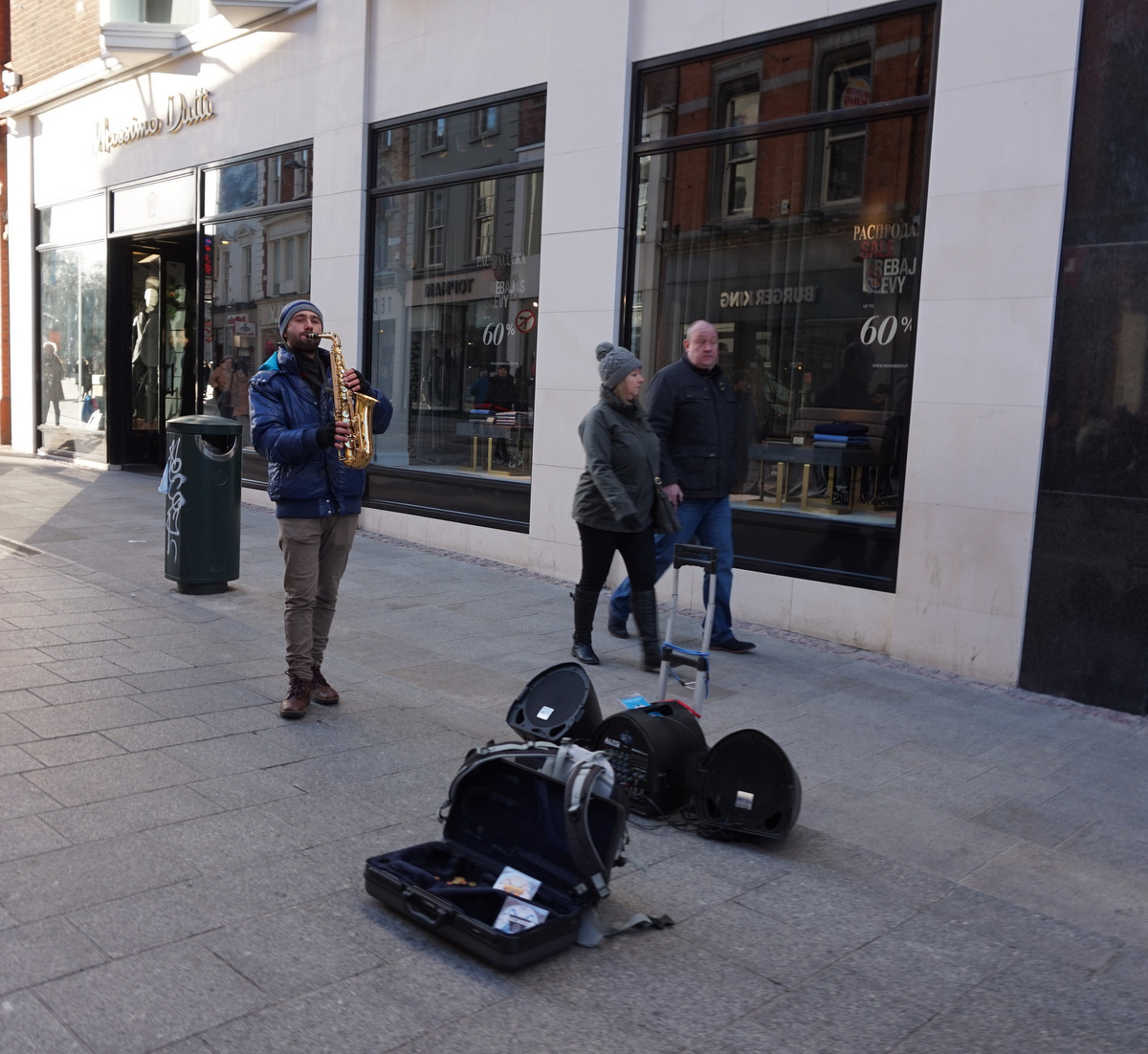
On Grafton Street three cameras worked from the opposite footpath, out of view, some of it on a long lens, because a visible camera turns passers-by into performers. The crowd in the first shot is whoever was out at nine on a January morning. Listeners rang radio programmes afterwards to report that Glen Hansard was busking on Grafton Street again. He had been, honestly enough, working that pavement since he was thirteen. Hansard died in July 2026, aged fifty-six.
Falling Slowly gets written in the back of Waltons on South Great George's Street while the shop is shut over lunch, which is the trick that turns a room full of instruments into a private one. Eight minutes of film, and nearly all of it is two hand-held cameras facing one another over a display piano. Carney had taught himself bass off the racks in that shop as a teenager. The song took an Academy Award the following year and visitors came in their thousands to photograph the piano. The business shut in February 2018 anyway and moved out to Blanchardstown. The music school upstairs is still at number 69-70 and says nothing about the film on its site.
The lunch that follows was taken through the window from the footpath, which leaves the audience on the wrong side of the glass when she drops the stranded-immigrant story and tells him what she actually is, a classical pianist out of the Czech Republic. The coffee shop is inside George's Street Arcade, which has held that corner since 1881 under the name South City Markets, went up in flames in 1892 and came back rebuilt on 13 September 1894. It is a covered market still, with ways in from three streets, and the pair walk out through it in the next scene, the song carrying over. The studio where the demo is cut is somewhere in Temple Bar: one newspaper report identifies it, more than a decade late, and the addresses in circulation belong to three streets round one block.
The flat is on Mountjoy Square, and Once ends with a crane easing back from her window while she plays. By Hansard's account the crane was the one piece of hired kit on the production, and the only crane move in it. Nobody has settled which window, and those are lived-in flats, so the marker goes on the square. Then it goes to the rim of the city. Killiney Hill above the Irish Sea, the one stretch where the two of them say plainly what they are thinking; the rest is played at pavement height. Dollymount, five kilometres of firm sand on North Bull Island where cars are allowed, which is the only reason two people can sit there playing a demo off a car stereo. Then the airport: a Dublin departures hall in January 2006 could only be Terminal 1, the second being four years off.
The state apartments at Dublin Castle take visitors, so the room that served as Berlin can be walked through on an open day. Two rooms from Once cannot be. The party where the guests sing in turn was filmed in Hansard's own flat, which he mentioned once at a Los Angeles press day and nobody has attached a street to since; the shop that mends vacuum cleaners, with the flat over it where most of the domestic scenes were made, gets no closer than the suburbs in the one detailed reading of the film that raises it. That is where the map stops.
Click a point to jump to its film.
filmed herewhere it really happened