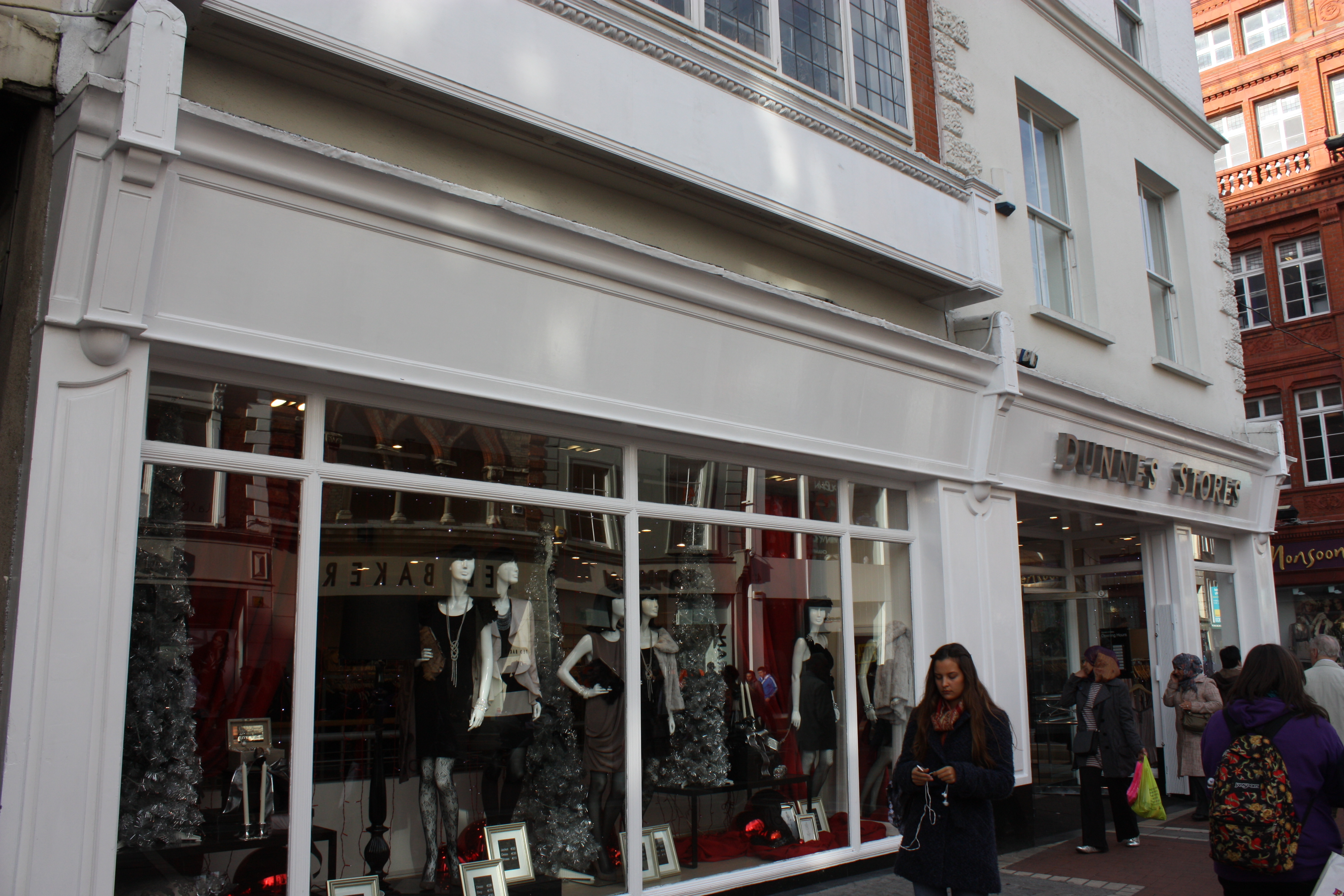
A moving van pulls out of frame and there is a man playing a guitar outside Dunnes Stores on Grafton Street, with a heroin addict dancing beside him. Everybody else in that shot is a real Dubliner on a real errand. The cameras were on the far pavement, hidden, at nine in the morning in January, and nobody walking past knew there was a film being made.
8
places on the route
The city-centre addresses stand within three hundred metres of each other — switch to the city centre with the buttons above. Click a point to jump to its entry.
John Carney shot Once in seventeen days in January 2006. There was no catering, no fridge and no hotel rooms; the actors changed in restaurant toilets, and the street scenes were taken from across the road, some of them on a long lens. Almost nothing in the picture was built. What the camera points at is a working city: a tight knot of streets around Grafton Street and George's Street, and then a hill, a beach and an airport at the edges. The end credits thank the Dublin businesses and public bodies the production had to deal with, name by name. Two of the rooms the film spends the most time in are on no list at all.
The stolen three hundred metres
Grafton Street, Dublin 2
The film opens in front of this shop: a van clears frame, Guy is playing, and a junkie is dancing next to him.
The film opens here and comes back twice: Guy and Girl meet on this pavement after dark, and the next morning she wheels her broken vacuum cleaner up the street to find him. Carney put three cameras on the far side of the street and kept them out of sight, on the reasoning that the moment people see a camera they start behaving like extras. So the crowd in the opening shot is the crowd that happened to be there. Some of them phoned radio stations afterwards to say that Glen Hansard was back busking on Grafton Street.
He had been, for real: Hansard, of the Frames, played this street from the age of thirteen. He died in July 2026, at fifty-six.
The pitch in that shot is in front of Dunnes Stores, near the top of the street and thirty seconds' walk from St Stephen's Green. Dunnes took over the Cassidy's shops on this street in 1994, closed for most of 2009 and 2010, and reopened. HMV had a shop on the street too. The Irish chain collapsed in 2013, and there is no HMV on Grafton Street now.
Busking on Grafton Street is licensed by the city council: an hour to a pitch, and no going back to the same pitch until the next day.
Waltons Music, 69-70 South Great George's Street, Dublin 2
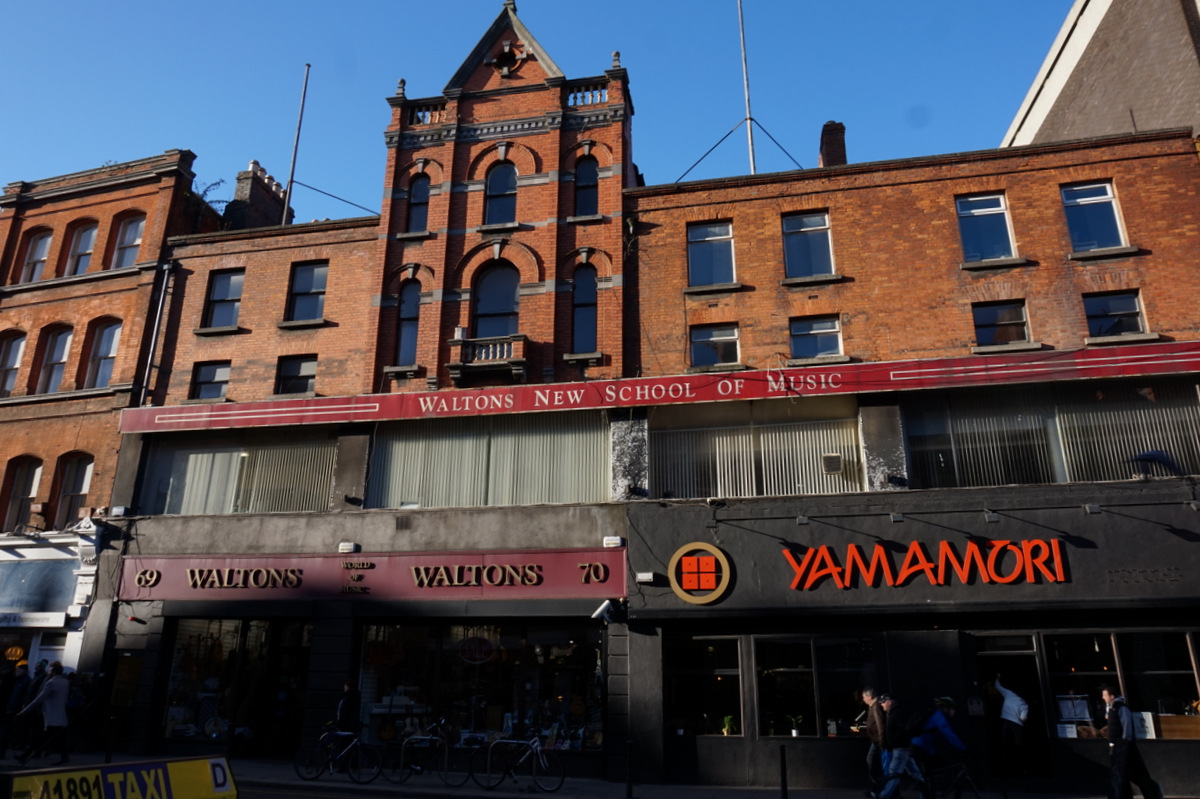
Photographed in January 2016, two years before the shop closed. The school is still upstairs; the numbers on the fascia are the address.
This is where Falling Slowly happens. Girl comes in to play the display pianos, Guy follows her with a guitar, and the two of them work the song out at the back of a music shop that is closed for lunch, which is what allows a room full of instruments to play as a private one. The scene runs eight minutes and is built almost entirely out of two hand-held shots facing each other across a display piano, plus one cutaway to the owner listening at the counter. Neither Glen Hansard nor Markéta Irglová was an actor by trade, as Carney has pointed out himself. The song won the Academy Award for Best Original Song the following year.
Carney taught himself bass on the display guitars in this shop when he was a teenager.
Afterwards people came in to photograph the piano. The managing director, Niall Walton, told the Irish Times there had been thousands of them, that the Oscars ceremony rebuilt the shop interior on stage for the performance, and that the stage version of Once names Waltons out loud. The shop closed anyway, in February 2018, and the business moved out to Blanchardstown. Waltons New School of Music still works upstairs in the same building, its name lettered right across the first floor above the shopfronts numbered 69 and 70.
George's Street Arcade, South Great George's Street, Dublin 2
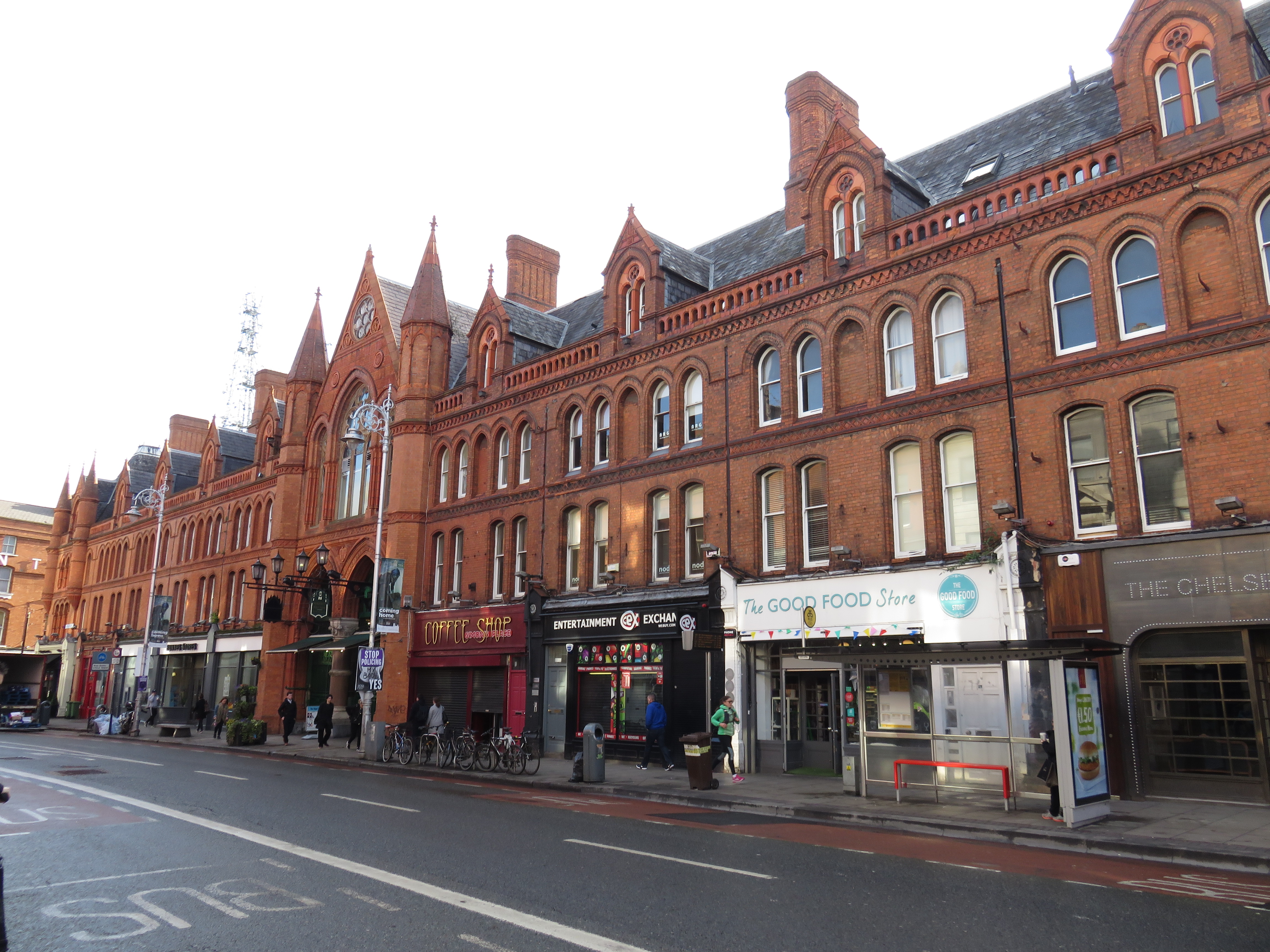
The market building from the street. Waltons is across the road from this frontage.
Two scenes, twenty minutes of film apart, on either side of one doorway. First the lunch: the pair in the window of Simon's Place, the coffee shop inside the arcade, filmed from the street through the glass on a long lens, so that the audience is put outside looking in at the moment she stops being a stranded immigrant and tells him she is a Czech classical pianist. Then, straight out of the music shop across the road, the two of them walk through the arcade with the song still running over the cut, on their way to the back seat of a double-decker bus.
The building has been on this corner since 1881, when it opened as the South City Markets: a red-brick Victorian market hall with turrets on it. It burned in August 1892 and reopened rebuilt on 13 September 1894, and the Layden family bought it in 1992. Robert French photographed the same frontage for the Lawrence collection around 1895, with the awnings out over the pavement.
The arcade is a working covered market, free to walk through, with entrances on South Great George's Street, Drury Street and Fade Street.
The studio and the square
Sun Studios, Temple Lane South, Temple Bar, Dublin 2
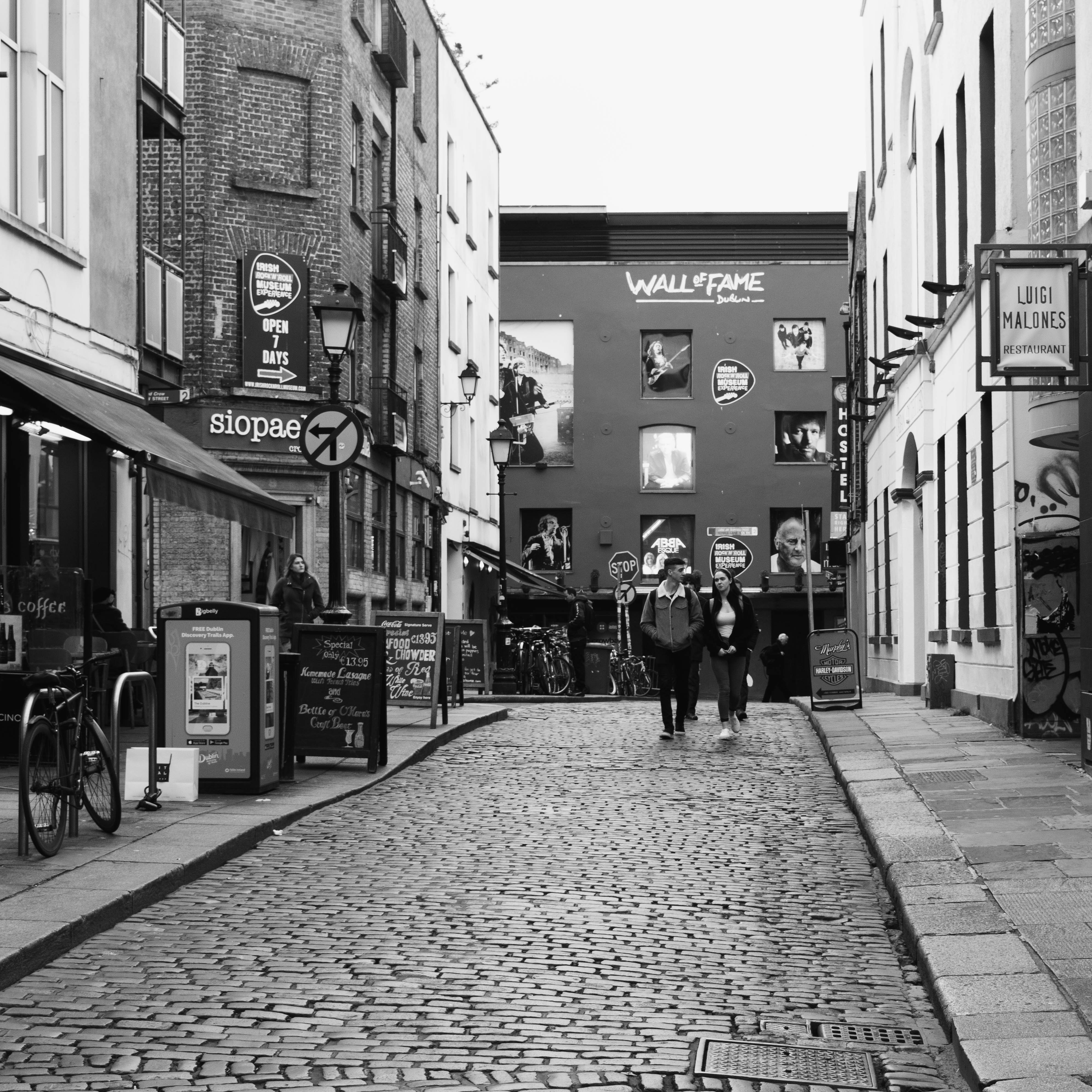
The wall of portraits is how the one source that names the studio identifies it. The Irish Rock'n'Roll Museum branding on the same wall matches the museum that source says is attached to the studio. The studio door itself is not in shot.
Guy hires a studio for a weekend with borrowed money and fills it with buskers. The house engineer starts out sceptical and is won round by the first take of When Your Mind's Made Up. On the break, Girl finds an empty room with a piano in it and plays Guy a song of her own. It is a working commercial studio rather than a set, and the film treats it as one.
TheJournal.ie reported in April 2018, eleven years after the shoot, that the studio in the film was Sun Studios, and pointed at the wall of musicians' portraits hanging over that end of Temple Bar.
The address moves about. Hot Press has put Sun Studios on Crow Street. The wall of portraits stands at the corner of Cecilia Street and Temple Lane South, and it carries the branding of the Irish Rock'n'Roll Museum Experience, which that report says is attached to the studio. Crow Street, Cecilia Street and Temple Lane South go round one small block, so both can be describing the same premises.
The room has a recording history that has nothing to do with cinema. Rihanna's vocal for Love the Way You Lie was cut here, and James Vincent McMorrow's cover of Higher Love. In 2018 it was still a working studio, with a music museum and a rock'n'roll tour attached to it and the Button Factory next door.
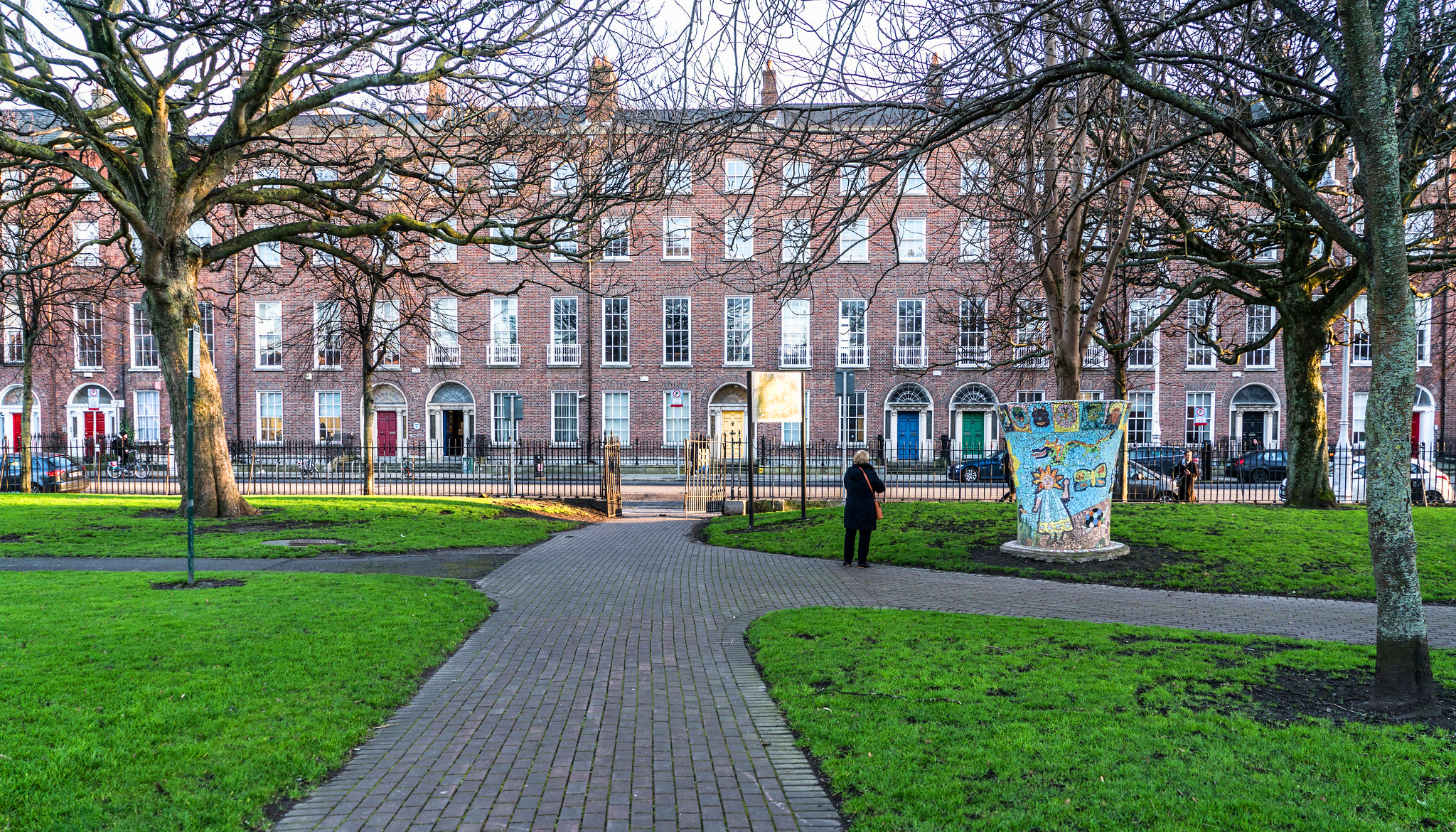
Mountjoy Square, Dublin 1
The square from its park. Girl's flat is one of these houses; the closing crane shot pulls back from a window like these.
Girl's home, and the last shot of the film. She lives here with her mother and her small daughter and with Czech and Polish neighbours who come in every evening to watch Fair City and pick up Dublin English off the television. Guy walks her home about a third of the way in, is invited up expecting one thing, and finds a sleeping grandmother and a toddler on the floor. At the end the camera pulls back from her window on a crane while she plays the piano he bought her. It is the only crane shot in the film, and by Hansard's own account the only piece of equipment on the picture that cost anything.
Which window is a question nobody has answered. Wikipedia's entry for the square puts much of the film inside an apartment on Mountjoy Square East. Paul Lynch, film critic of the Sunday Tribune, reviewed the film in March 2007 and put Girl's flat on Mountjoy Square: no side, no number.
The park in the middle is open in daylight hours. The houses round it are flats and offices, and people live behind those windows.
A hill, a beach and an airport
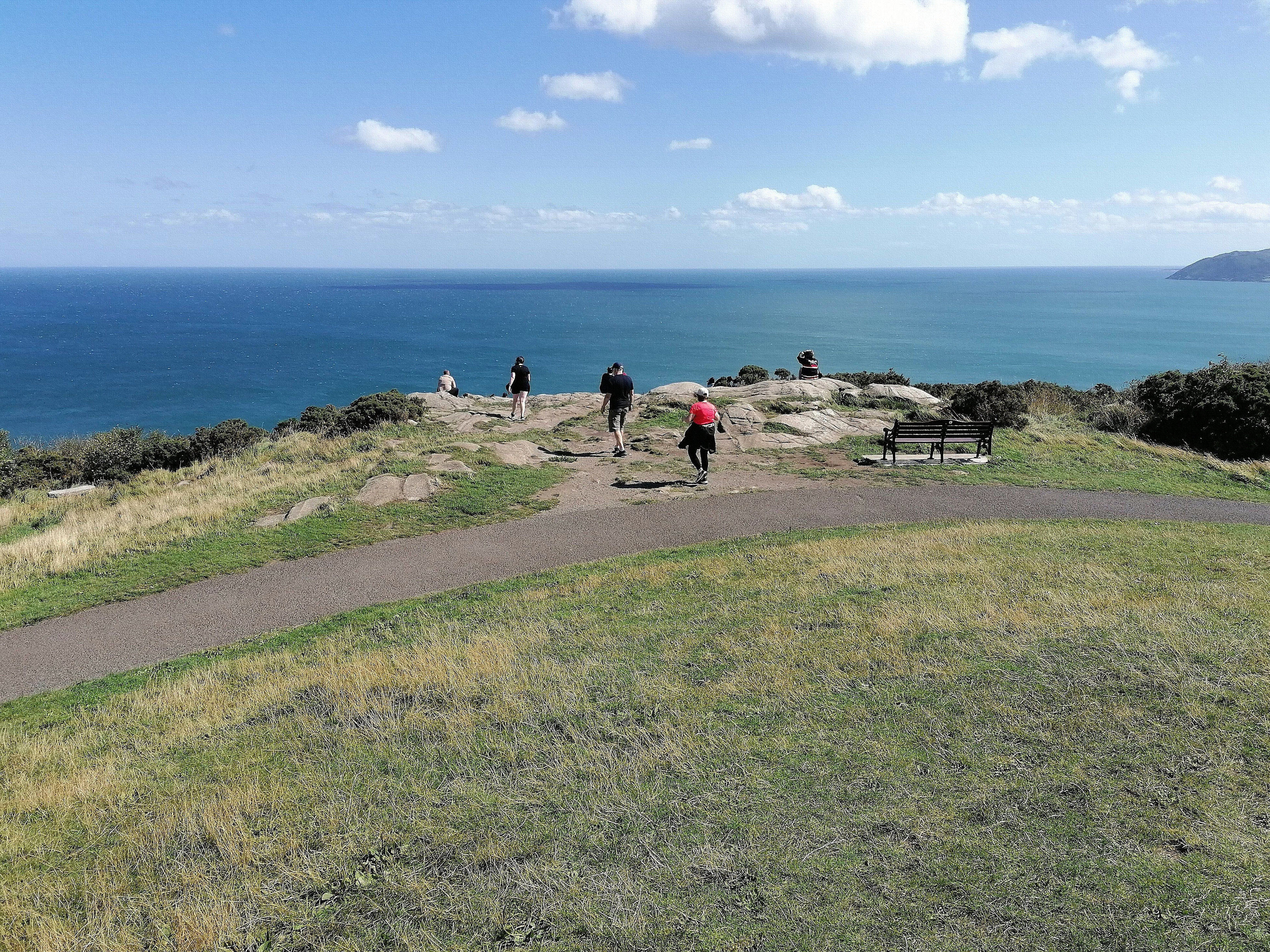
Killiney Hill, Killiney, County Dublin
The horizon the film goes out of town to find. Everything else in it happens at pavement level.
The trip out of town. Guy takes Girl out of the city and they end up on the hill over the Irish Sea, and this is one of the few stretches of the film in which the two of them say what they mean in words instead of in a song. The rest of the picture happens at pavement level. Here there is a horizon.
The park is public, free and open all year, run by Dun Laoghaire-Rathdown County Council. The summit carries the Mount Mapas obelisk of 1742 and the small pyramid that locals call the Wishing Stone, the Dalkey and Killiney loop is about three kilometres, and Dalkey Quarry inside the same park is where Dublin climbers go.
Killiney Hill Road carries one more film: Widows' Peak (1994) used Stonehurst, a private house standing on it. That is the road, not the park.
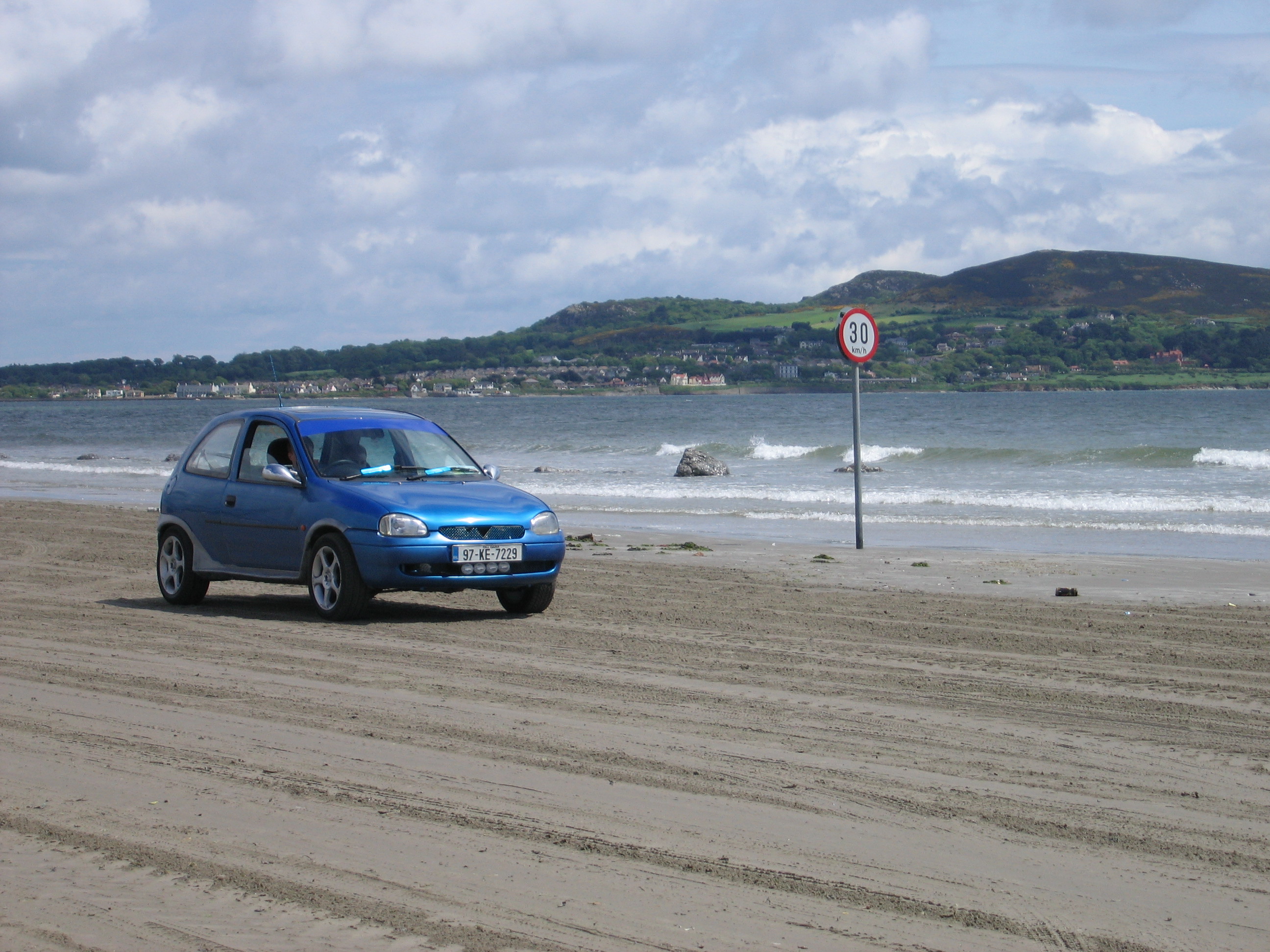
Dollymount Strand, North Bull Island, Dublin 3
You are allowed to drive onto this beach. That is what makes the dawn scene after the recording session possible.
Photo: Sarah777 (Wikipedia user, own work, released as PD-self) · Public domain (PD-self) · Wikimedia Commons
Where they go when the record is finished. The session runs all night, and at dawn they get into the producer's car, put the demo on the car stereo, the test every band does, and drive out onto the sand. For three minutes there is no location sound at all: they talk in the car, they mess about on the beach, and the only thing you hear is the song they cut a few hours earlier.
The scene is possible because you are allowed to drive onto this beach. Dollymount is five kilometres of hard sand on the seaward side of North Bull Island, reached by the wooden bridge from Clontarf or by the causeway, and generations of Dubliners have learned to drive on it. The island is a bird sanctuary and a UNESCO biosphere reserve, with two golf courses on the landward side.
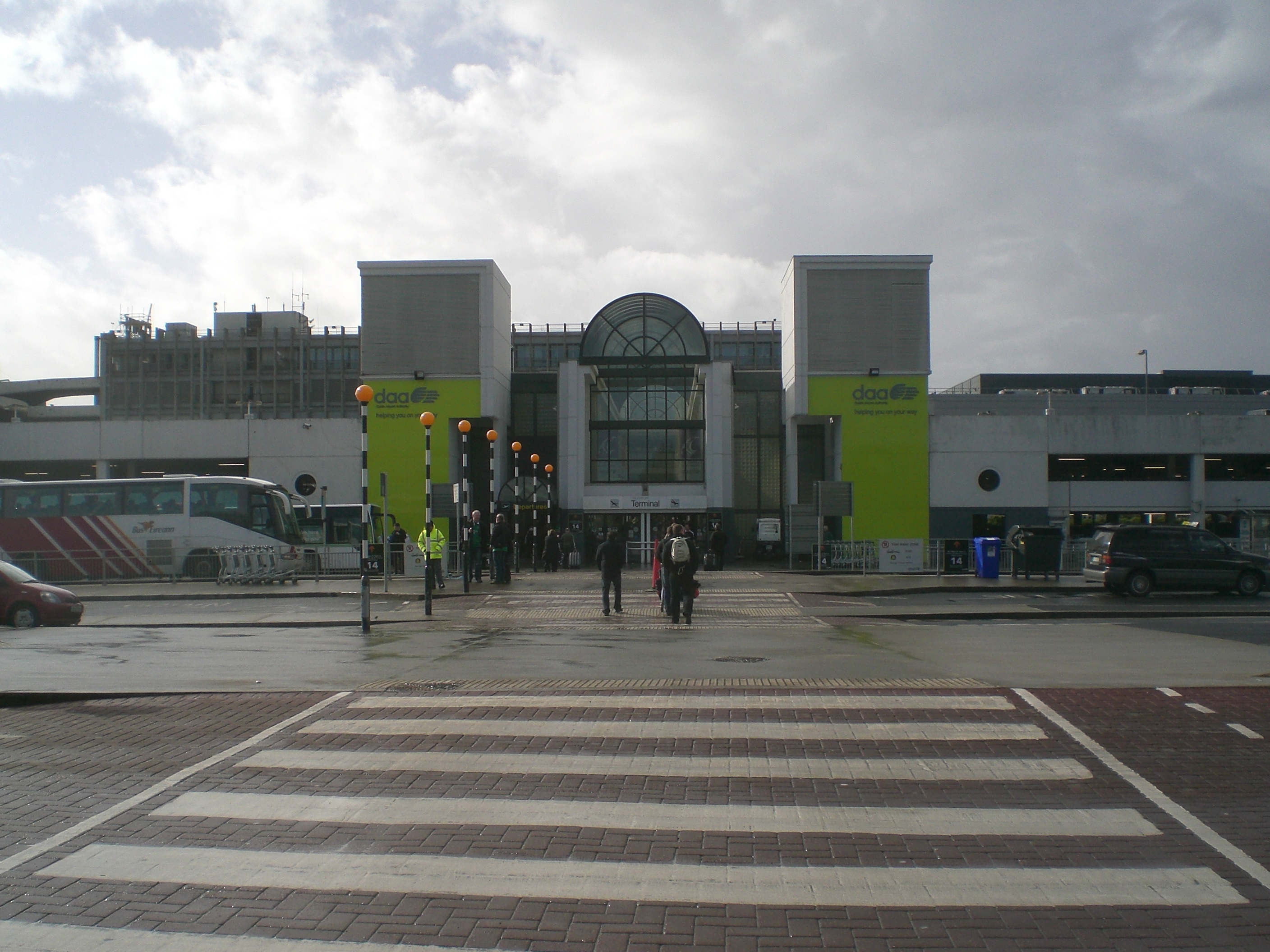
Dublin Airport, Collinstown, County Dublin
Terminal 1 in 2008. Terminal 2 did not open until 2010, so this is the building Guy waits in.
The last we see of Guy is a man in a departures hall waiting for the London flight, having failed to say goodbye. The film cuts from him to Girl in her flat with her husband and the piano, and then it stops. In January 2006 a departures hall here meant Terminal 1, because Terminal 2 did not open until 2010, so the building in shot is the older one.
Two rooms with no address
The flat where the party happens
Guy's friends fill a flat and take turns singing traditional Irish songs, the camera moving from one guest's point of view to another as though it were a guest itself. The blonde woman singing solo is Catherine Hansard, Glen Hansard's mother, and the flat was Hansard's own; he said so himself at a press day in Los Angeles. Fergus O'Farrell and Pete Short are credited as singers at the party.
Where that flat was, nobody wrote down: no street, no district. It was somebody's home in 2006.
The shop where Guy lives
Guy lives over a shop that repairs vacuum cleaners, which is where the broken vacuum cleaner of the plot comes from, and where a good share of the film's domestic scenes play. The film puts the two of them somewhere in the suburbs and never says where.
Nine in the morning, January, three cameras across the street: that much is known about the film's first shot. The room the main character sleeps in cannot be placed at all. Somewhere in Dublin there is, or was, a shopfront with a flat over it that a small crew walked into in January 2006 with a camera and no permit, and nobody wrote the address down.