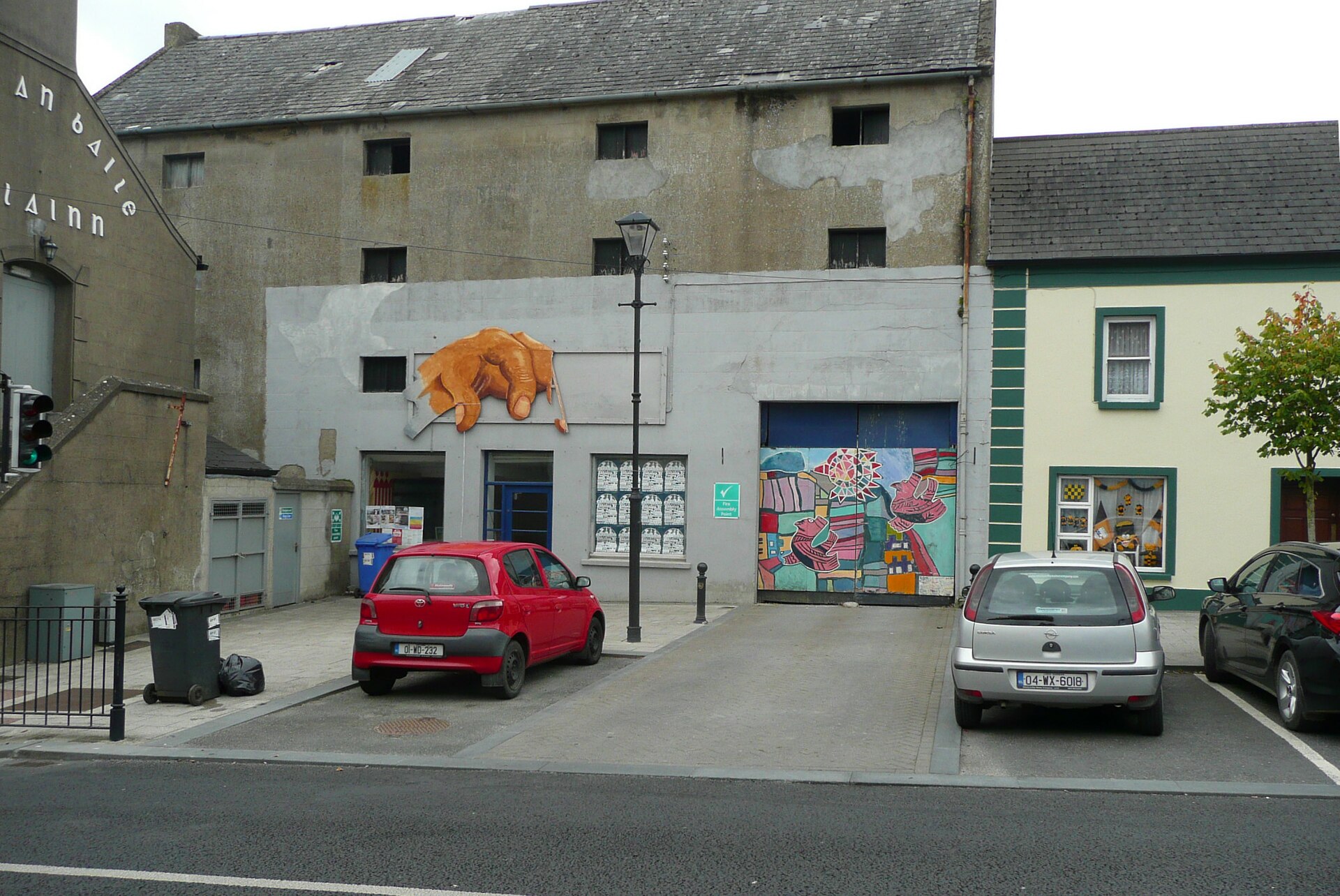
Opposite the parish church in Callan, one day in September 2004, Jimmy Walsh of Skeaugh was trying to talk a horse into walking the way a horse walked when it delivered milk in the 1970s. The cart behind it was loaded with milk bottles. By then the telephone boxes in the town had been covered over to look like stone memorials, new signposts pointed the way to Derry and Belfast, and the effects crew had laid frost along the top of Green Street in warm autumn sunshine.
11
places on the route
Much of it stands inside Callan itself — switch with the buttons above. Click a point to jump to its entry.
Tyreelin does not exist. Kitten's border town was made out of four streets of Callan, County Kilkenny, that fit inside four hundred metres: a bakery became a café, a front room went back to being the pub it had been two years earlier, a private house grew a dressmaker's sign. Callan is in the south of the county, 250 km from Belfast. Patrick McCabe, who wrote the novel and shares the screenplay credit, was born in Clones, up on the Monaghan border.
John Fitzgerald lives in the town and watched the work from the pavement. A Dalek stood at the church gates on the eighth day, a car was blown up at the Town Cross on the ninth, and on the tenth the parish church was set on fire in front of most of Callan. Then Wicklow, and Belfast in October. Kitten's London, when she finally reaches it, is a tube platform and a footbridge over the trains. Her day at the sea is a pier in Essex. A train driver in Reading watched the film and recognised the rolling stock.
The Callan filming locations: a town dressed as Tyreelin
Two trees stand opposite the church, and for the film they were stripped by hand, leaf by leaf, into bare winter shapes. Painters had gone round the buildings of the town in the weeks before that. Shooting began on 6 September 2004.
Green Street is the R695 through the middle of Callan, and it carries the parish church, the war memorial and the ruin of medieval St Mary's. Liam Neeson, Cillian Murphy and Ruth Negga were all filmed in this street.
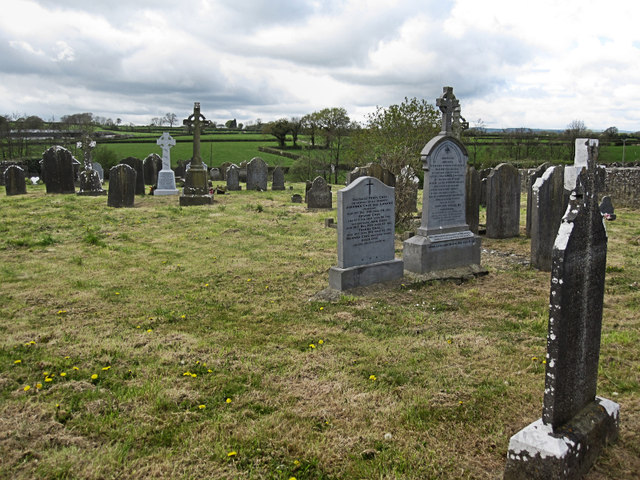
The funeral. On the evening of the first day the crew moved about two miles out, on the Kilkenny side of the town, to a small burial ground on rising ground, and put mock graves in among the real ones. From the road there was nothing to watch: the cornfield between the road and the graveyard wall was trampled flat, and the Gardaí stopped traffic in both directions every time the call went up.
The site was usable at all because of a restoration in 1989 that pulled it back out of weeds and scrub. Before that it had gone under them.
RTÉ was in the town that week making a report of its own, and called the day's work a 1950s funeral and the first of half a dozen street scenes, which sounds like a funeral going through the town rather than out here in a field. One funeral filmed in two places, or two separate days of work: nobody says.
The graveyard is off a minor road from the N76. A stone stile in the wall, a gate, no facilities, and nothing on the site about the film.
Bridge Street, Callan
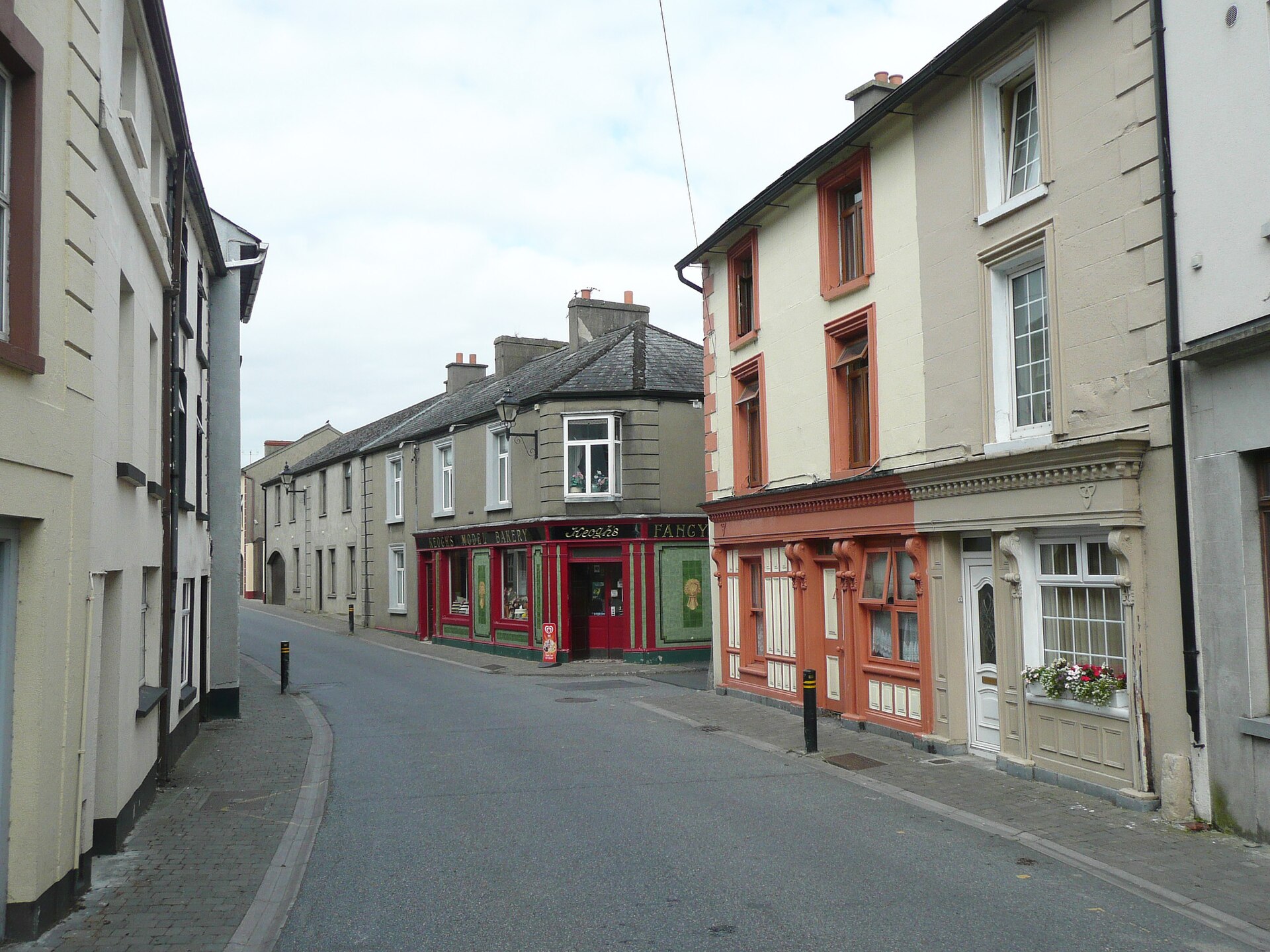
Lower Bridge Street, Callan, September 2014, with Keogh's Model Bakery on the corner.
Margaret Fennelly handed over her house, the farmyard behind it and an old hay barn, and moved out for the duration. Her front room went back to being the pub it had been until she gave up the trade two years earlier, with bottles of stout in the windows. In the film the house is Ma Braden's and the front room is Braden's pub.
A few doors along, Mary Munnelley's house-front was lettered EJ Botwood, Dressmaker. She enjoyed the attention it brought her from the morning it went up. Keogh's Model Bakery, the red and green tiled shopfront on the corner of Lower Bridge Street, was turned into a café. The interior of O'Brien's clothes shop had held on to enough of a 1970s look to be used as it stood. A 1970s anti-internment march came down this street.
Bridge Street is the old Cork road through Callan, two halves joined by the stone bridge over the King's River. Parts of it look as though somebody had built them as a film set, which is why the production wanted the street. Then the production rebuilt it anyway.
Fennelly's is an arts and events space now. Keogh's still bakes on its corner.
The Cross of Callan
A car bomb went off at the Town Cross on the ninth day. Which of Callan's junctions carries that name, no account of the shoot says.
Church of the Assumption, Callan
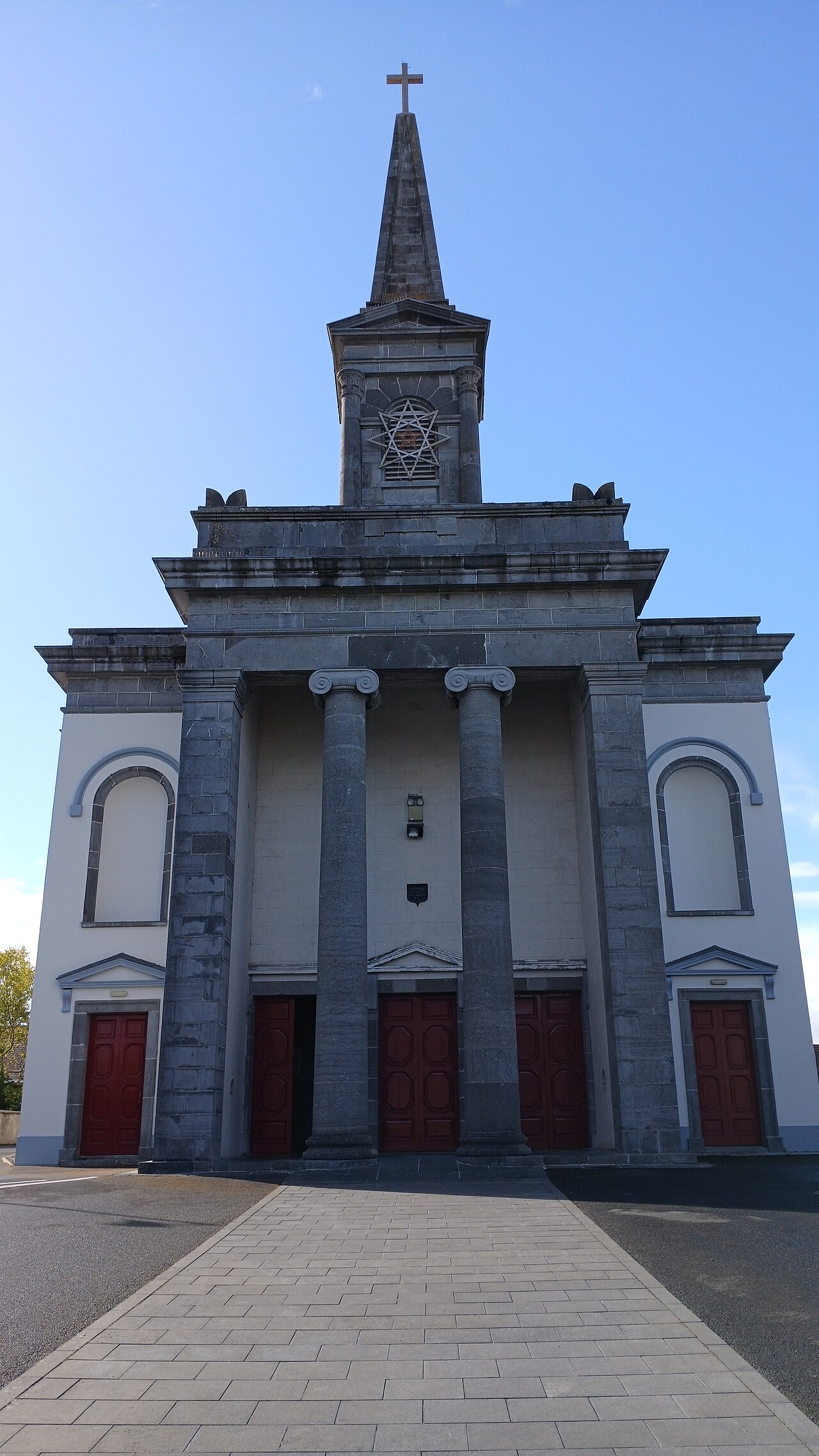
Church of the Assumption, Green Street, Callan, in September 2025.
The parish church of Tyreelin: the church Kitten is left outside as a baby, where her father is the priest, and which burns at the end of the Irish half of the picture. Three separate things were done to this building. The Diocese of Ossory gave the crew permission to film inside it. A replica presbytery was built onto the outside of it before shooting began, so that priest's house and church would stand together in shot. And on the tenth day the church was made to burn in front of what Fitzgerald describes as almost the whole town, smoke first and then flame running along the roof. Nothing was harmed. The effects crew put the fire out within seconds of each take ending.
Two days earlier a Dalek had stood at the church gates, which drew the crowds down Green Street. Fitzgerald understood it to belong to a hallucination.
Callan calls the building the Big Chapel. It is a working Catholic church, and the Trinity Stone is inside it, a carving of about 1520 brought here from the ruin of Old St Mary's up the same street, with a plaque explaining itself.
Once the church had finished burning there was a single scene left, inside Hennessey's old butcher shop on West Street, dressed with a pig's head in the window that people in the town had not seen in a shop for years. That was the last day of filming in the town.
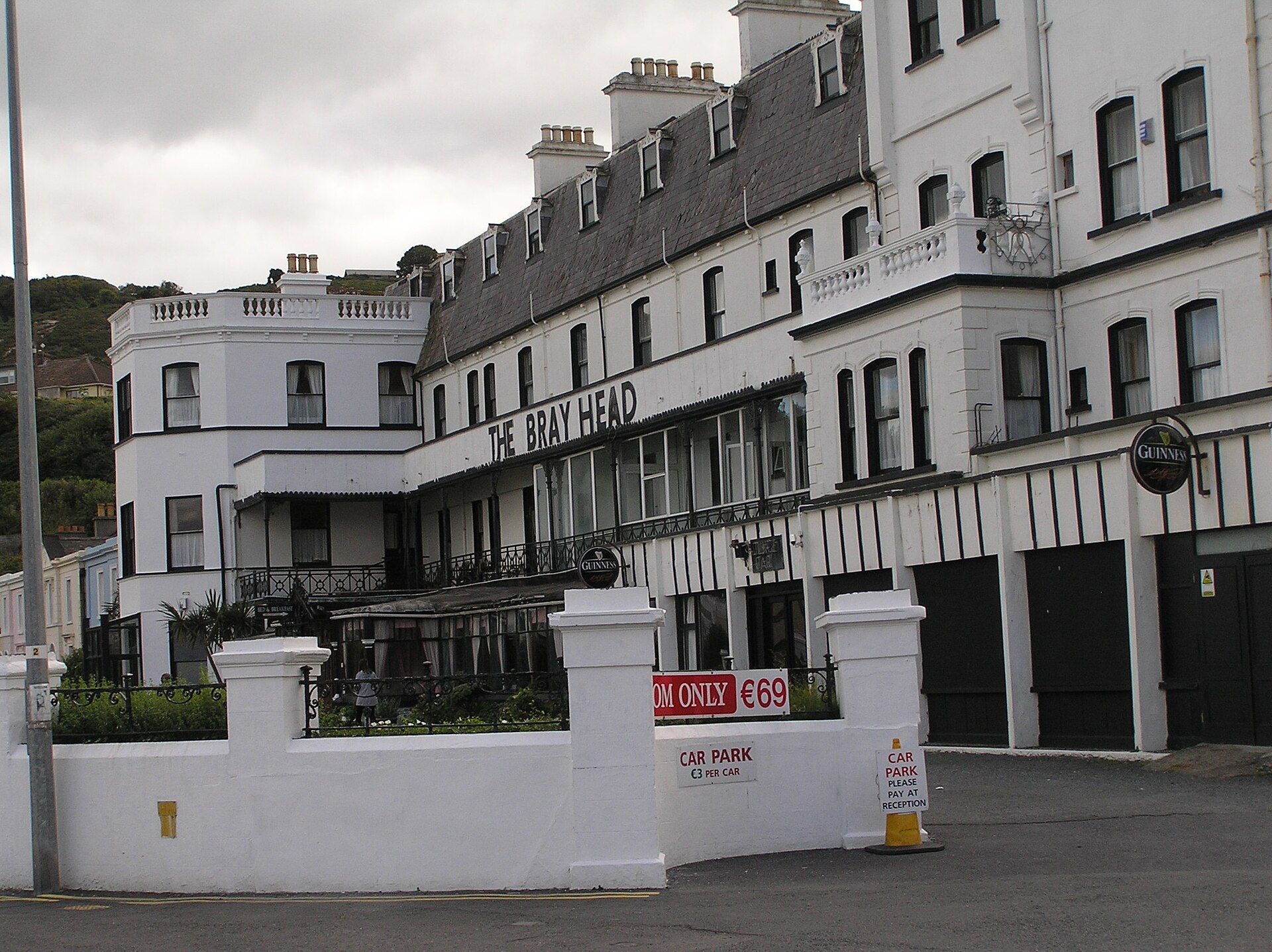
THE BRAY HEAD in dark letters along the first-floor canopy, Guinness signs by the entrance, car park notices on the boundary wall, and the headland rising behind the roof: that is the hotel in a photograph from September 2012, five years before it closed. It went up in the 1860s at the south end of Bray's esplanade, three storeys with a mansard roof, verandas over the ground and first floors and a balustraded parapet, while the town was filling with holidaymakers. It traded until 2017, stood empty, came apart, and has since been rebuilt inside as 49 apartments called Fontenoy Place, on sale from 2024. The developer's sales copy keeps the old name for the walls. There is no going in now.
Wicklow was next on the schedule after Callan. County Wicklow Heritage, the county's local history project, puts the filming inside this hotel, and The Commitments and My Left Foot with it.
Glenavy, County Antrim
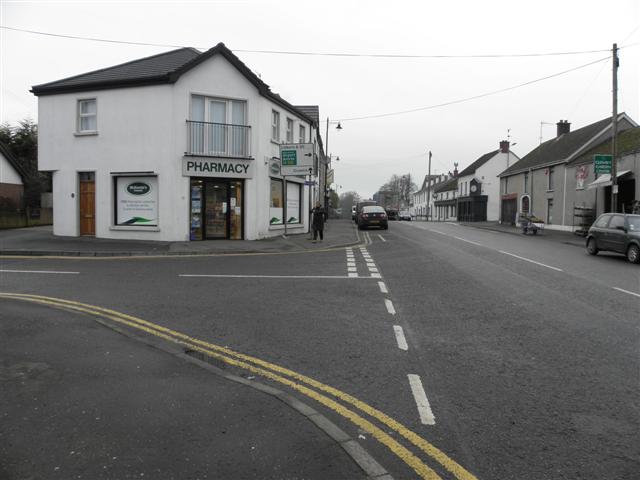
Main Street, Glenavy, County Antrim, January 2010.
The crew was due in Glenavy and Belfast on 7 October 2004, with three weeks of work ahead of it. Glenavy is a village of about a thousand people between Lough Neagh and Belfast. What was filmed here, and in which street, nobody has written down.
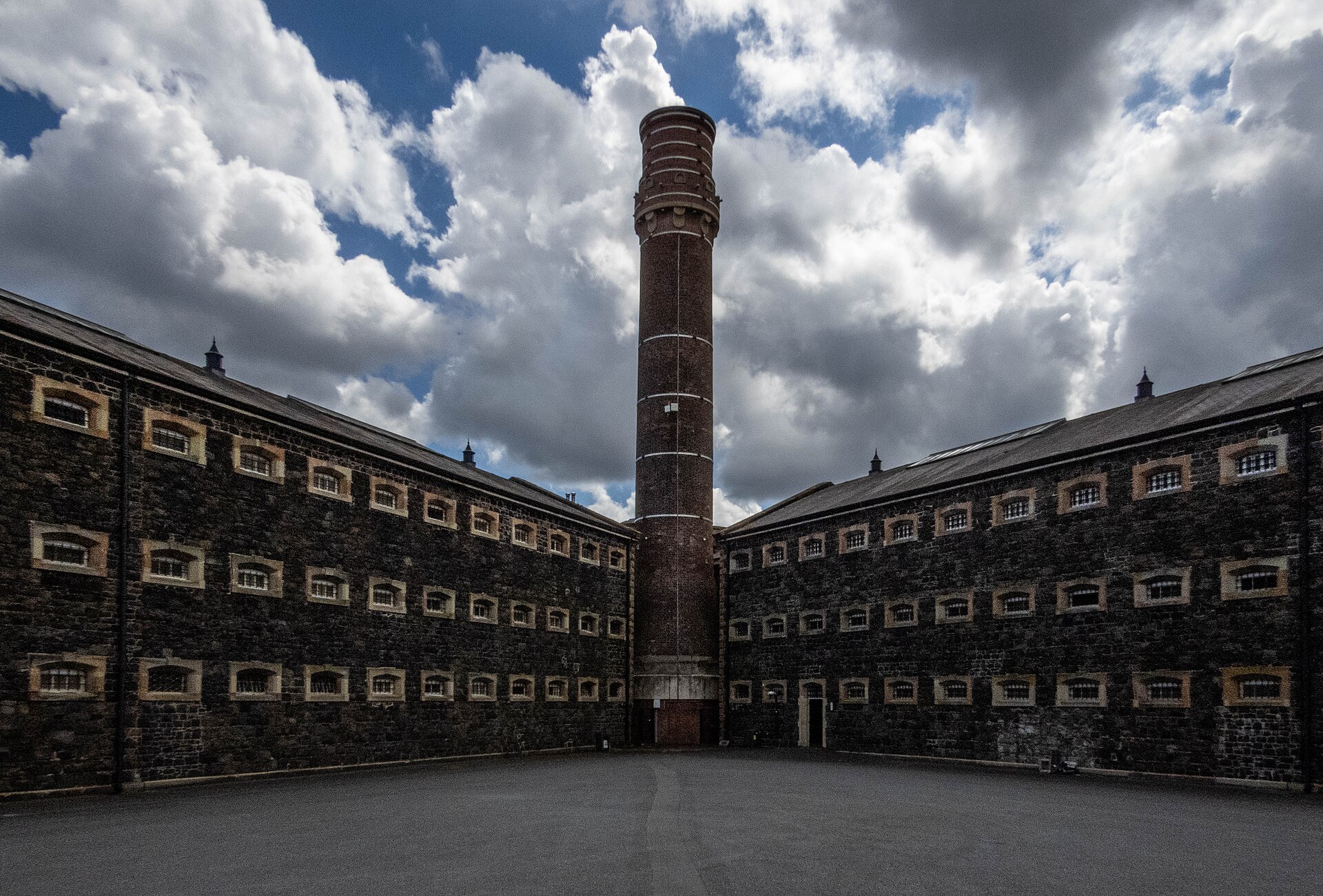
Whatever the crew did on the Crumlin Road that October, they did it in an empty prison. The gaol had closed in March 1996 and did not open again, as somewhere to visit, until 2012. Charles Lanyon designed it, and it went up in 1843-45 in black basalt, four wings running out from the round hall the staff called the Circle.
Northern Ireland's tourist board puts this film inside the gaol. Since the reopening the gaol has hosted a fifth series of Love/Hate and Starred Up.
The place runs tours, has a café and a shop, and hires itself out for filming and for weddings.
The London and Essex filming locations: two stations and a pier
Gloucester Road tube station, Kensington
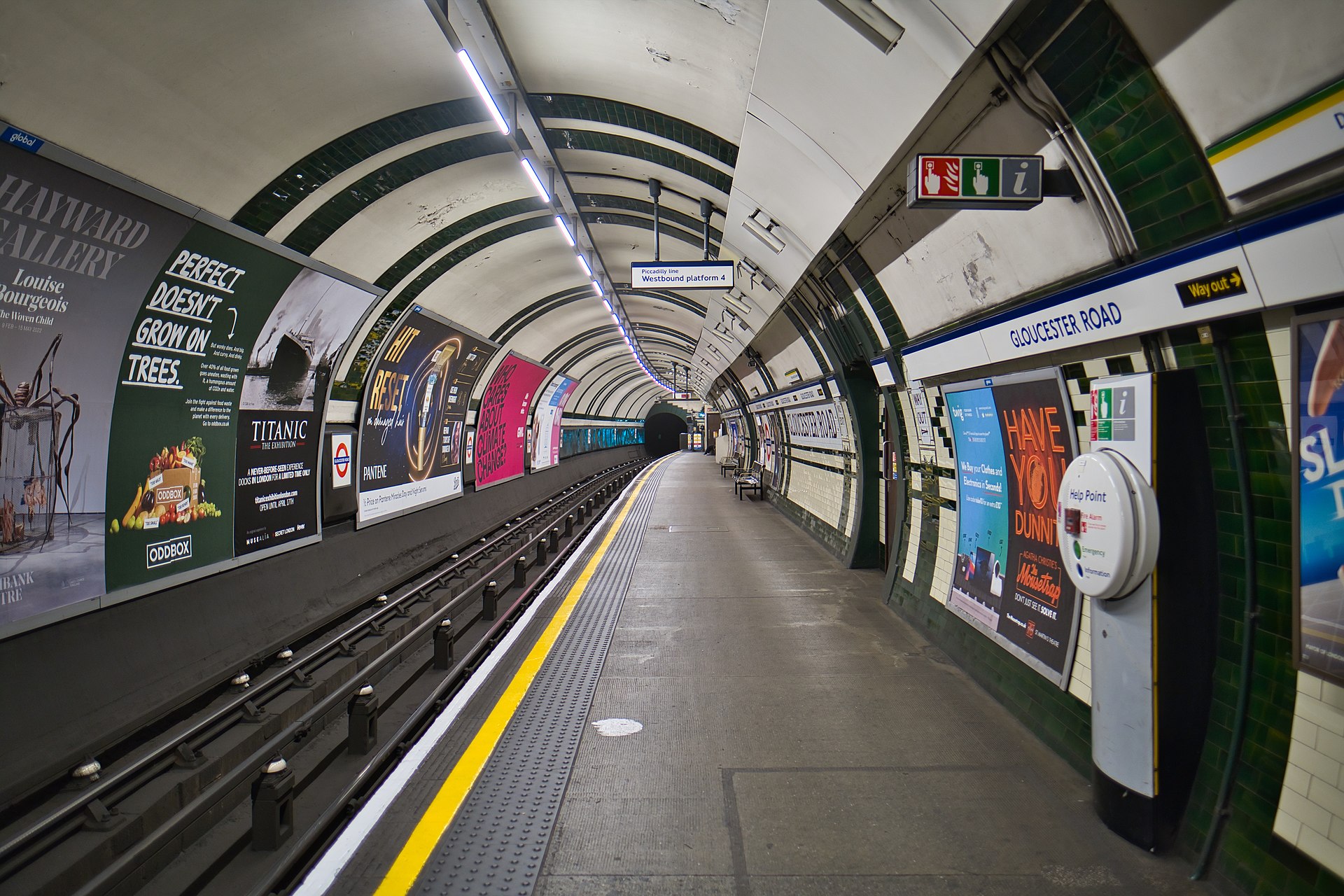
The Piccadilly line westbound platform at Gloucester Road, February 2022.
Kitten tries to get on a Piccadilly line train and fails. The platform is deep under Gloucester Road, and the stock in the shot is the 1973 tube stock, which is still what runs that line. Jonathan Horswell drives trains out of Reading and keeps a database of railways on film; he works out where a scene was shot from what is standing on the track beside it.
The film also has a scene aboard a moving District line train. Horswell puts it somewhere on a line forty miles long.
Ruth Negga on the footbridge over the platforms. Behind her, in a scene set in the 1970s, stand a Class 332 Heathrow Express unit, an HST and a Class 180 Adelante, none of which existed then. In Callan the production had talked a whole street out of its own decade. Here the trains give the date away in one frame.
Southend Pier, Southend-on-Sea
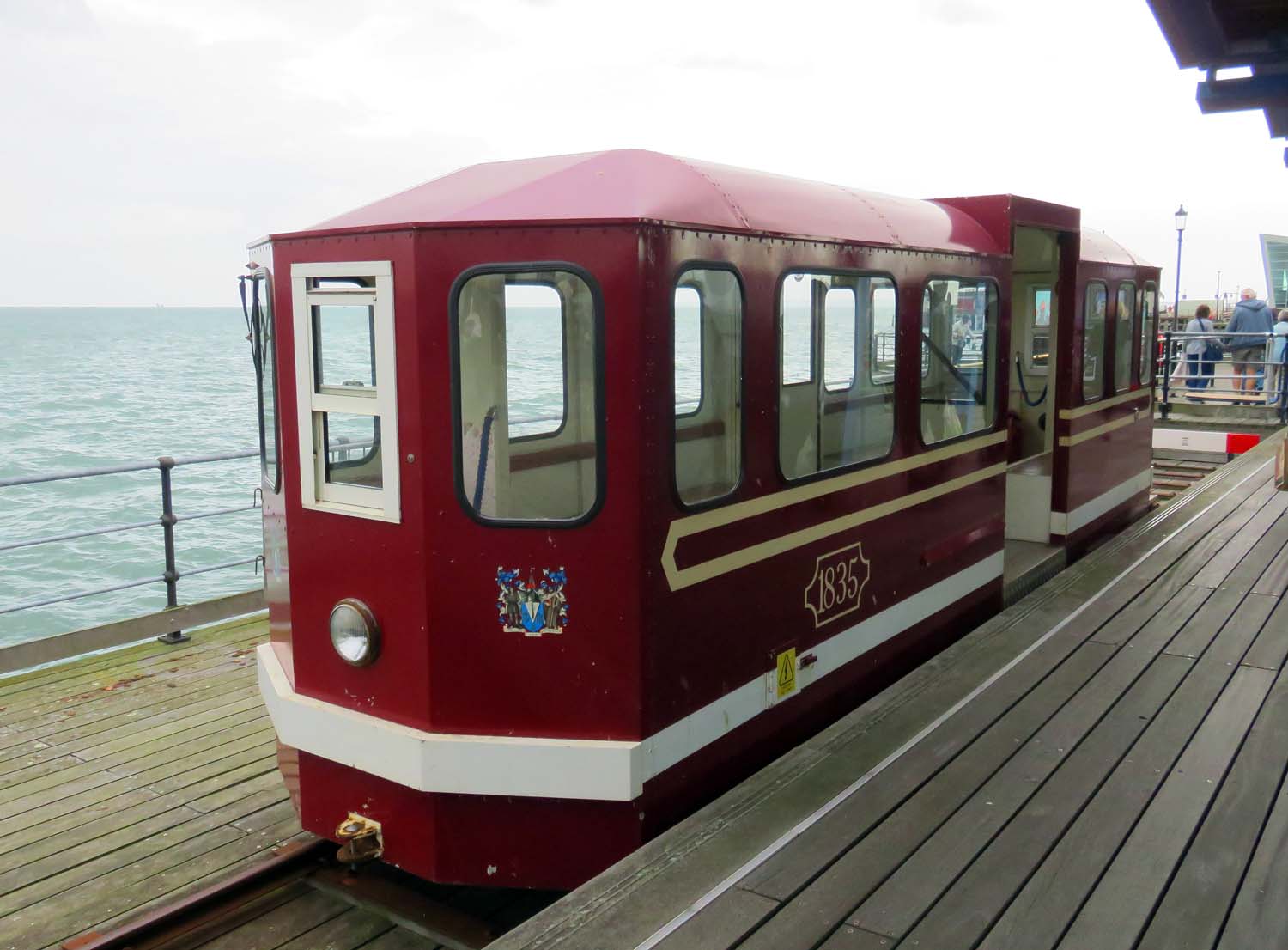
Battery car No. 1835 on the Southend Pier Railway, September 2017.
The day at the sea. Kitten and Bertie go to the coast, and the coast is Southend, where the pleasure pier reaches 1.33 miles out into the estuary, further out than any other pleasure pier, with a 3 ft gauge electric railway laid down the deck. Cillian Murphy and Stephen Rea are at the Shore station. The train that arrives into it is battery car No. 1835, and the number is not a build date. It is the year the pier turned up on Admiralty charts, and the car is the one kept back for winter services. In one long shot the seven-car set Sir John Betjeman, built by Severn Lamb in 1986, is still wearing the burgundy and white livery it lost in 2006.
The pier and the railway are still working, and the pier belongs to the city. A photograph taken on the deck on 29 August 2005, eleven months after the crew left and a week before the film was first shown at Telluride, catches two of the trains passing each other in that burgundy and white.
Where these filming locations stand now
The frost went. Callan was dressed up as Tyreelin and then handed back to itself: the corner that played a café is lettered in gold for Keogh's Model Bakery and sells bread, Margaret Fennelly's house is an arts and events space, and the church that burned in front of the whole town says Mass.
At Southend the film took what was already running on the deck. The pier's own railway, the winter car with 1835 on the side, the livery the trains were wearing at the time: none of it was put there for a camera. The repainting came later, in 2006.
So Callan got its own paint back. The trains on the pier did not.