In a kitchen at the southern edge of County Dublin, a few minutes from the Wicklow border, there is a photograph of Daniel Day-Lewis at a long refectory table. The room is in a private house, one of ten packed into the stable yard of a country house at Rathmichael, and in 2017 the house went on the market with the photograph still on the wall.
7
places on the route
Arbour Hill holds two addresses four hundred metres apart — switch to Dublin with the buttons above. Click a point to jump to its entry.
Christy Brown's Dublin and this film's Dublin barely touch. He grew up and wrote on Stannaway Road, and nothing was shot on it: the coal-lorry scene was taken three kilometres north at Arbour Hill, which plays Kimmage instead. The hospital interiors are in an army hospital on the same hill. More interiors were shot in that stable yard, sixteen kilometres out of town. The rest was made on a stage in Bray. Two Dublin addresses belong to Christy Brown rather than to the film: the maternity hospital he was born in, and his own front door.
filmed herewhere it really happened
The courtyard where the film-makers lived
Old Conna Village, Ferndale Road, Rathmichael, County Dublin
Interiors, in houses belonging to the people making the film. The stables, the forge and the outhouses of Old Conna House were converted into ten dwellings around a courtyard, and the film used rooms in two of them: The Long House, which the producer Noel Pearson sold in the early 1990s, and The Coach House, which belonged to Peter Sheridan, the director's brother. Both houses went back on the market between 2005 and 2017.
Nothing here is open to anyone. The yard is reached through the old stable archway at the end of a tree-lined avenue behind electric gates, and the ten houses are homes.
Three more productions were shot in the yard: Zardoz, Braveheart and the television series The Irish R.M. Sean Connery stood in that yard in his Zardoz costume, on the patch of ground the residents now use for the children's Halloween bonfire.
The big house whose stables these were, Old Conna House, also called Aravon, was sold by the songwriter Chris de Burgh to John Scottus School in 2016. Three hundred metres up the same road stands Old Connaught House, Georgian, dated 1784, now fifty apartments. Almost the same name, a different house, and not the one with the yard.
Four hundred metres at Arbour Hill
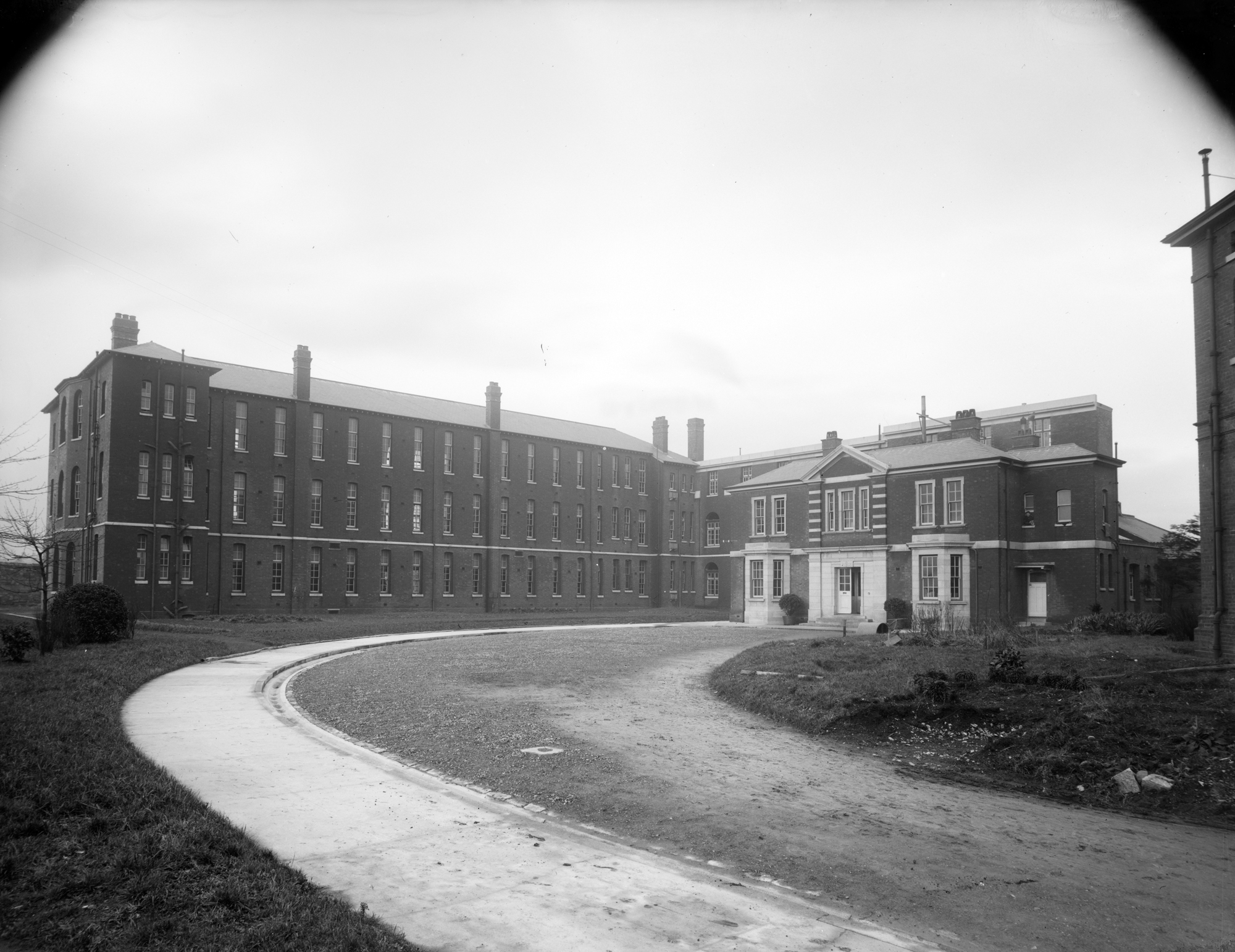
St Bricin's Military Hospital, Arbour Hill, Dublin 7
The National Library of Ireland published this as an institutional building in an unknown location. Readers of the library's photostream named it as the hospital at Arbour Hill and dated it to about 1910.
Photo: National Library of Ireland on The Commons · Public domain · Wikimedia Commons
The hospital interiors. Long ward rooms with a dayroom at the sunny end of each, corridors with round-headed windows down both sides. The Royal Engineers built it in stages from 1902 for the British garrison, it opened in 1913 as the King George V Hospital, and the Free State army took it over in 1922.
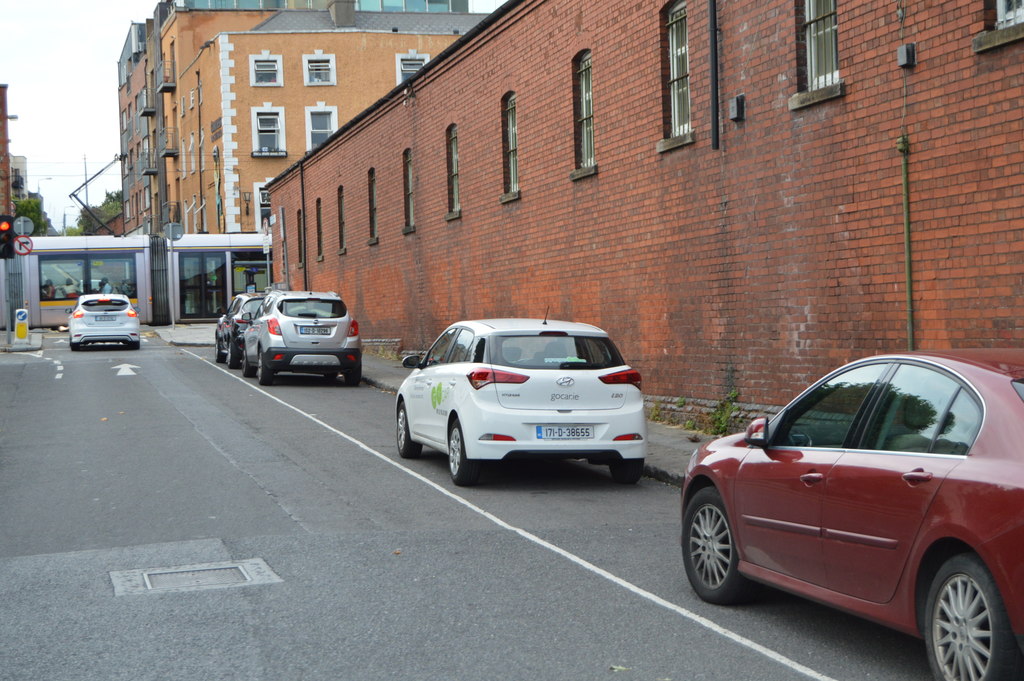
The coal-lorry scene: the Browns have no coal, Christy works out how to get some, and his brothers do the carrying. Four hundred metres downhill from the hospital, and three kilometres north of the street the family actually lived on. Arbour Hill is playing Kimmage.
The corner is where Temple Street West and Temple Villas run into Montpelier Hill, Arbour Hill and Parkgate Street. What has changed since: the railings behind Collins Barracks are painted another colour now, waste ground along the street has been built on, the Ashling Hotel has gained a large extension, and the newer flats carry satellite dishes and washing lines. The low cottages on Montpelier Hill are where they were.
Collins Barracks itself is the decorative arts and history site of the National Museum of Ireland now, and the Luas red line runs along the bottom of the hill.
A pub papered with playbills
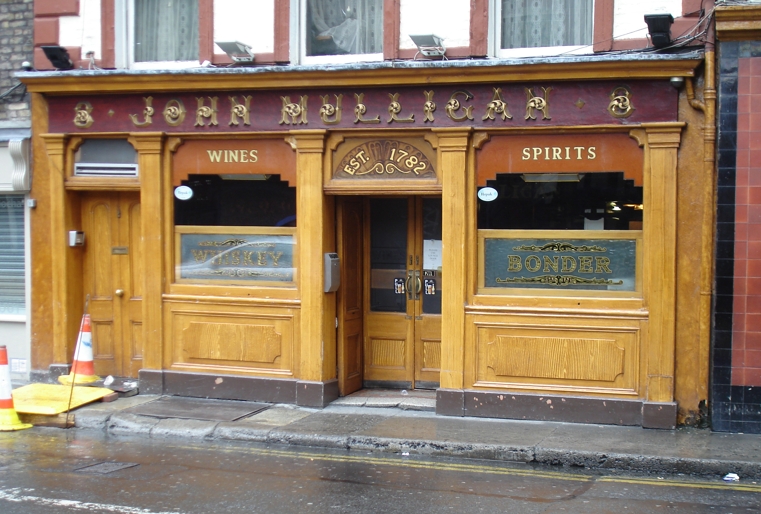
Mulligan's, 8-9 Poolbeg Street, Dublin 2
Mulligan's, 8-9 Poolbeg Street, Dublin, in May 2007.
The pub the father drinks in: alone over his son first, then with Christy beside him, standing him a drink for having learned to write. Whether the camera ever went through that door is another question.
The pub keeps its own list of the productions that have used the premises, and this film is not on it. Joseph Strick is. In May 1976 he directed scenes here for his Portrait of the Artist as a Young Man, with the actors Danny Cummins and Bosco Hogan, who played Stephen Dedalus. The Irish Press printed the photograph on 11 May.
There has been a pub on the site since 1854, and the licence behind it runs back to 1782, one of the oldest in Dublin. The old Theatre Royal stood across the road until it came down, which is why the walls are papered with playbills.
Bray: a house and a stage
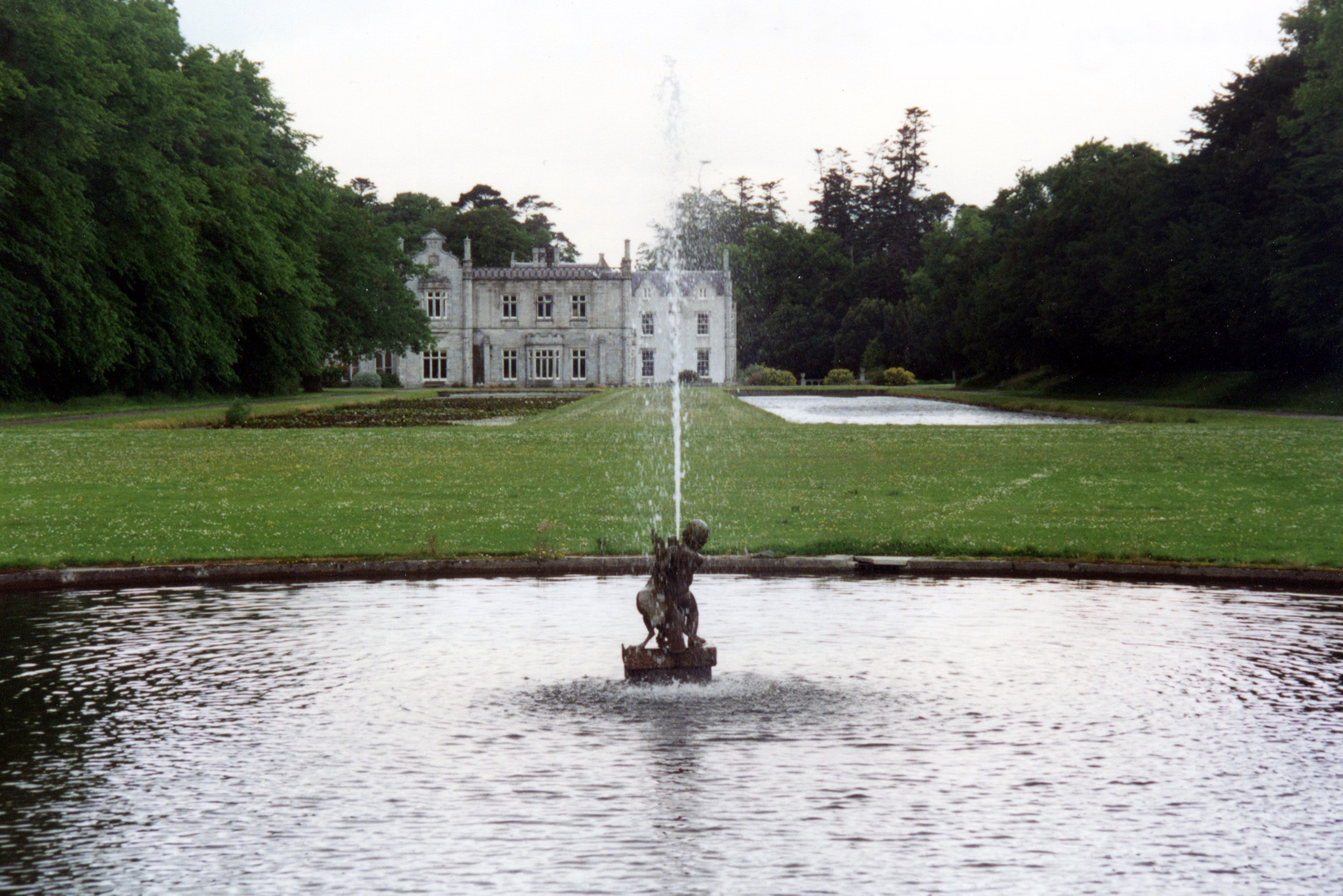
Killruddery House, Southern Cross, Bray, County Wicklow
What the film did here nobody has written down. Excalibur, Far and Away, Angela's Ashes, The Tudors and Camelot came to the same house.
The Brabazon family, Earls of Meath, have held Killruddery since 1618. The Elizabethan-revival front and the domed conservatory came out of a rebuilding in the 1820s. The formal garden behind, with its twin canals, is seventeenth-century. The house and the gardens take visitors, there is a farm shop and a café in the grain store, and the family lives in it.
Ardmore Studios, Herbert Road, Bray
This is where most of the film was made, and it is a sound stage. The shoot ran nine weeks, split between Dublin and Ardmore. The lot had been shut in effect at the start of the 1980s, when government funding was withdrawn, and it reopened under Tara Productions with MTM.
More scenes went to Bray's back streets, and Wicklow Head, forty kilometres further south, appears briefly.
Where it really happened
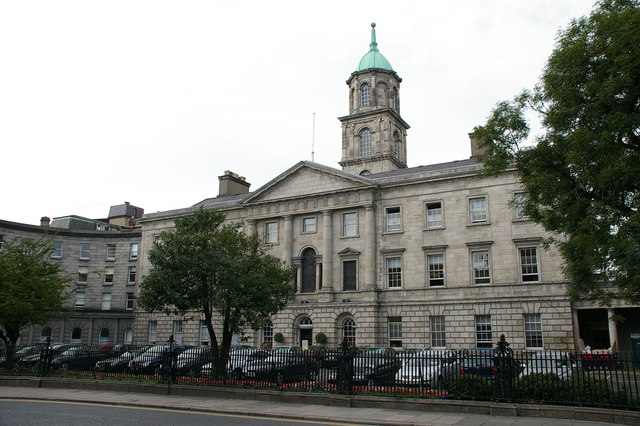
The Rotunda Hospital, Parnell Square, Dublin 1
The Rotunda Hospital, Parnell Street, Dublin, September 2006.
Christy Brown was born here on 5 June 1932, and the 1954 memoir the film takes its name from opens by saying so. The Rotunda opened in 1745 and is still delivering babies, which by its own account makes it the oldest maternity hospital in continuous operation anywhere. The assembly rooms next door to it are the Gate Theatre and the Ambassador.
Sandymount, Dublin 4
Brown was taught, on and off, at St Brendan's School-Clinic in Sandymount. Robert Collis, the doctor who found him and got his writing published, worked there. Day-Lewis spent weeks at the cerebral palsy clinic in Sandymount before the shoot and came back afterwards with his Oscar.
Collis founded the organisation in 1948; by the early 1950s its clinic, by then in Sandymount, had become the first school in Ireland for disabled children; the organisation is Enable Ireland now, and its Sandymount school stands on Sandymount Avenue. Whether that building holds the room Christy Brown sat in, no one has said.
The terraced house he grew up in and wrote in. The road is called Kimmage by some and Crumlin by others, and it runs along the line between them. Nothing in the film was shot on it.
A garden opened across the road on 5 June 2026, ninety-four years to the day after he was born: five granite flagstones cut with lines from his poetry and his prose, his signature cast in bronze, native planting, designed by the artist Clodagh Emoe. The neighbours had been campaigning for it since 2021. Jim and Peter Sheridan came to the opening. Daniel Day-Lewis sent a letter.
The kitchen with the photograph of Day-Lewis at the refectory table is sixteen kilometres south-east of here, behind electric gates. This one you can walk into.