Edinburgh Castle is a locked tower house in a field near Dublin Airport. York is a Norman keep on the River Boyne. Westminster Abbey is a roofless church on a private estate in County Meath. Scotland's war of independence was fought, on camera, mostly in Ireland.
14
places on the route
Scotland and Ireland, about 500 km apart — switch with the buttons above. Click a point to jump to its entry.
Was Braveheart filmed in Scotland? For about six weeks it was, by Gibson's own account, and then the production moved. The Irish government offered tax terms and, more usefully, an army: 1,600 members of the Defence Forces were hired as extras, most of them reservists, who were given leave to grow beards and swapped uniform for medieval kit. The same men played both sides. Principal photography ran from 6 June to 28 October 1994.
The Braveheart filming locations split the way the shoot did. What Scotland gave the film was country: a glen, a ridge above a loch, two more glens, and all of it is still open ground you can walk into. What Ireland gave it was buildings, dressed as English ones, and every one of them has its own door — a guided tour and a board at the walls telling visitors what was shot where, a gate off a country road with no ticket office, a family home, a tower locked since the crew left.
filmed herewhere it really happened
Scotland
Glen Nevis
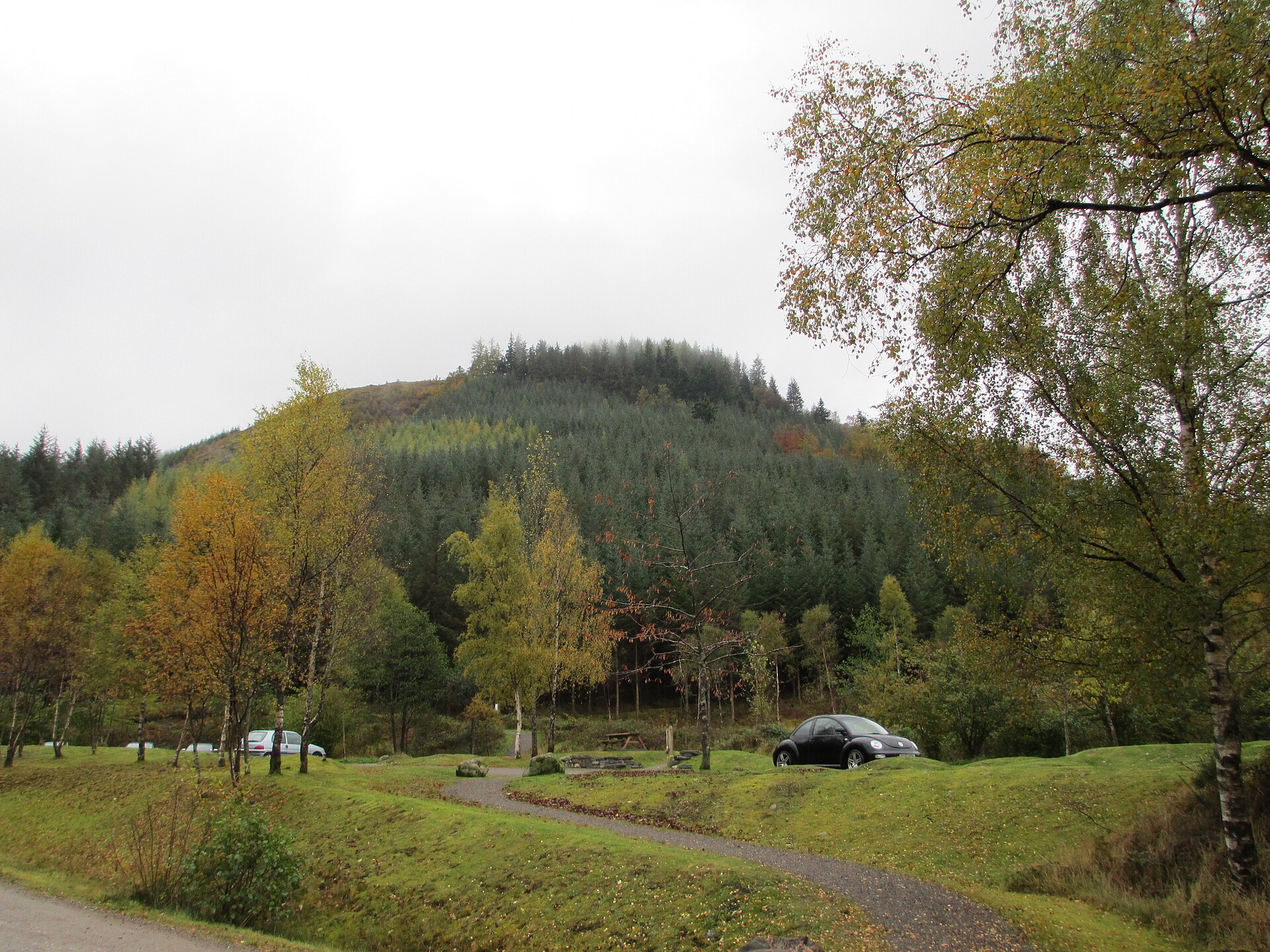
2012 — the car park built for the shoot, and all that is left of the village
The Braveheart village came down when the crew left. It was built beside the River Nevis, under Britain's highest mountain, as the Lanark where young Wallace grows up. What outlasted it is the car park: Forestry and Land Scotland still runs it under the name Braveheart, and it is now the starting point for the woodland paths on this side of the glen, including the circuit of Cow Hill.
The glen keeps getting cast. Robin Williams was here for Bill Forsyth's Being Human. Highlander used it, so did Highlander III: The Sorcerer, Rob Roy and the Harry Potter films.
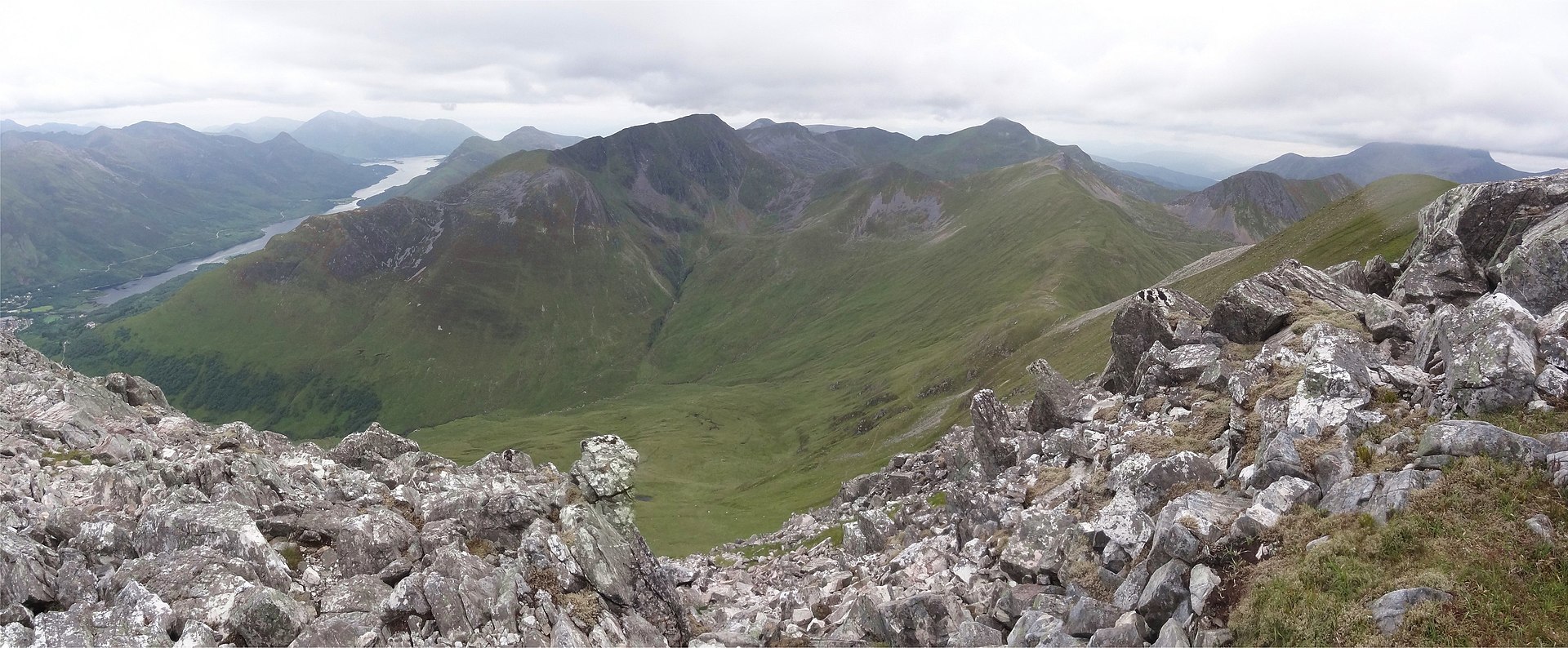
Ten summits on one ridge between Glen Nevis and Glencoe. As Wallace's reputation spreads, the film sends him across them, high above Loch Leven, and a funeral scene was shot with the western end of the range behind it.
Walking the ridge is a full day on exposed rock: the Ring of Steall strings together four Munros. The low-level version of the same scenery is the path to Steall Falls from the head of the Glen Nevis road.
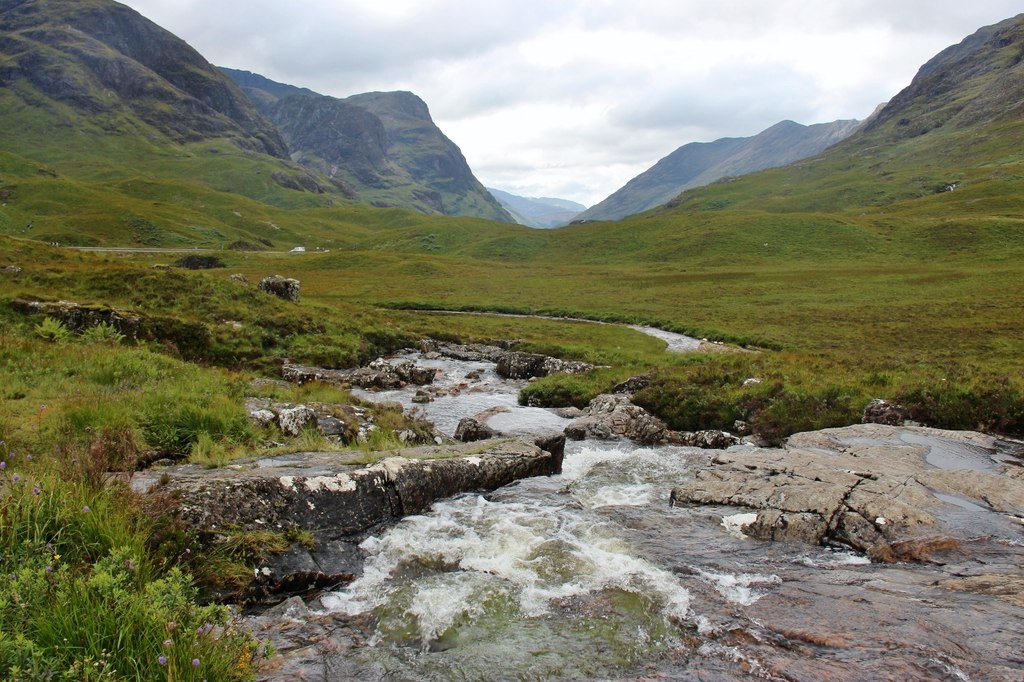
Both glens appear, and both have been working ever since. Glencoe has since been used for Skyfall, Outlaw King, Mary Queen of Scots and several Harry Potter films. Glen Etive, at the end of the dead-end road that runs south off the A82, has The 39 Steps and Harry Potter behind it and Skyfall after it. Dalness Lodge in the glen played Bond's family home, and the traffic that followed left residents dealing with litter and fly-tipping.
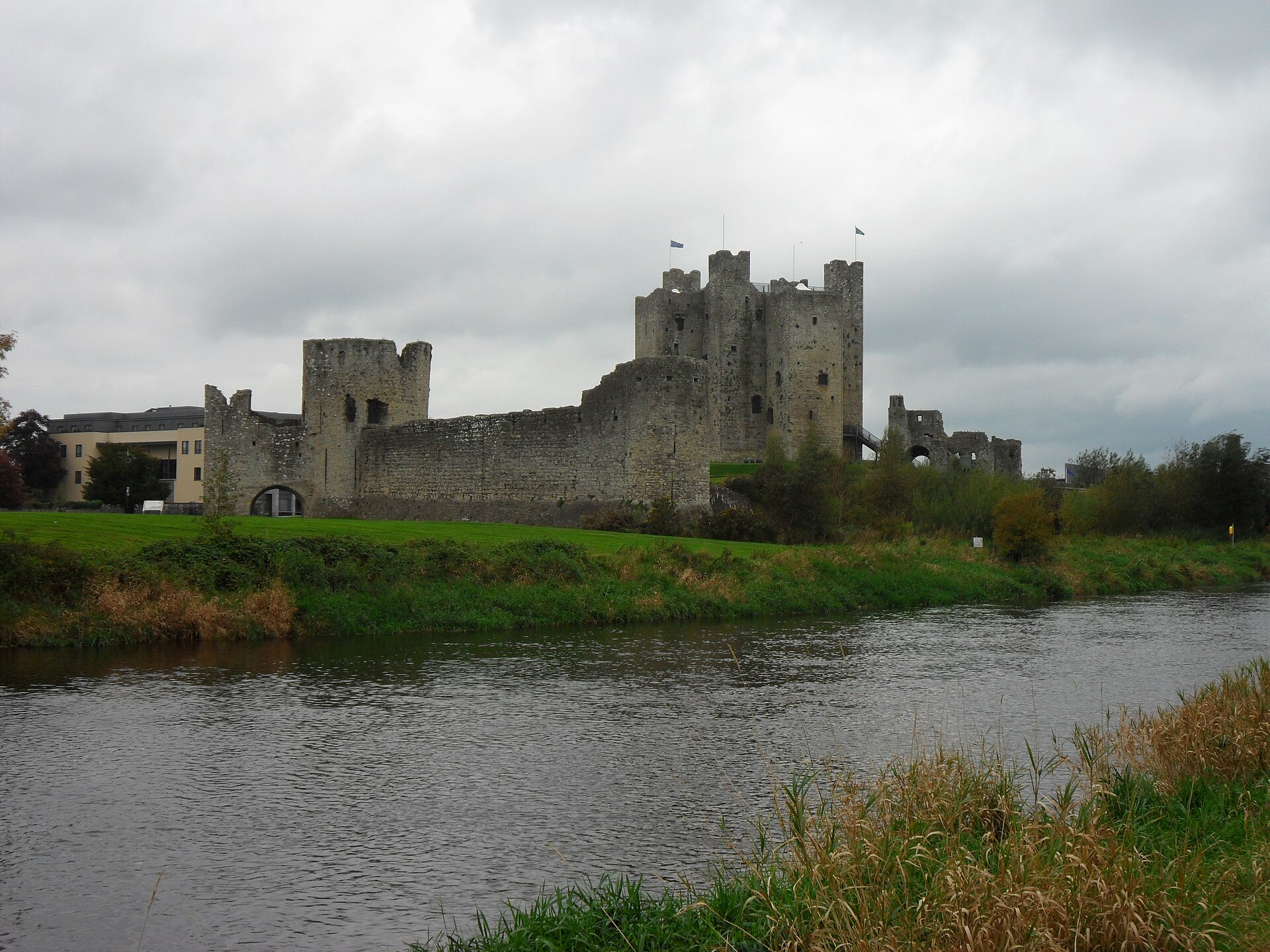
The largest Anglo-Norman castle in Ireland, on the south bank of the Boyne, and the reason the production came to Meath: it was intact, it had space outside the walls, and it was inside easy reach of Dublin.
The ground outside the walls became thirteenth-century York, besieged by Wallace. The keep inside them became the Tower of London, where Wallace is executed. A London square was built on the far side of the wall. York is 378 km from Trim and the Tower is 508 km, and neither city saw a camera.
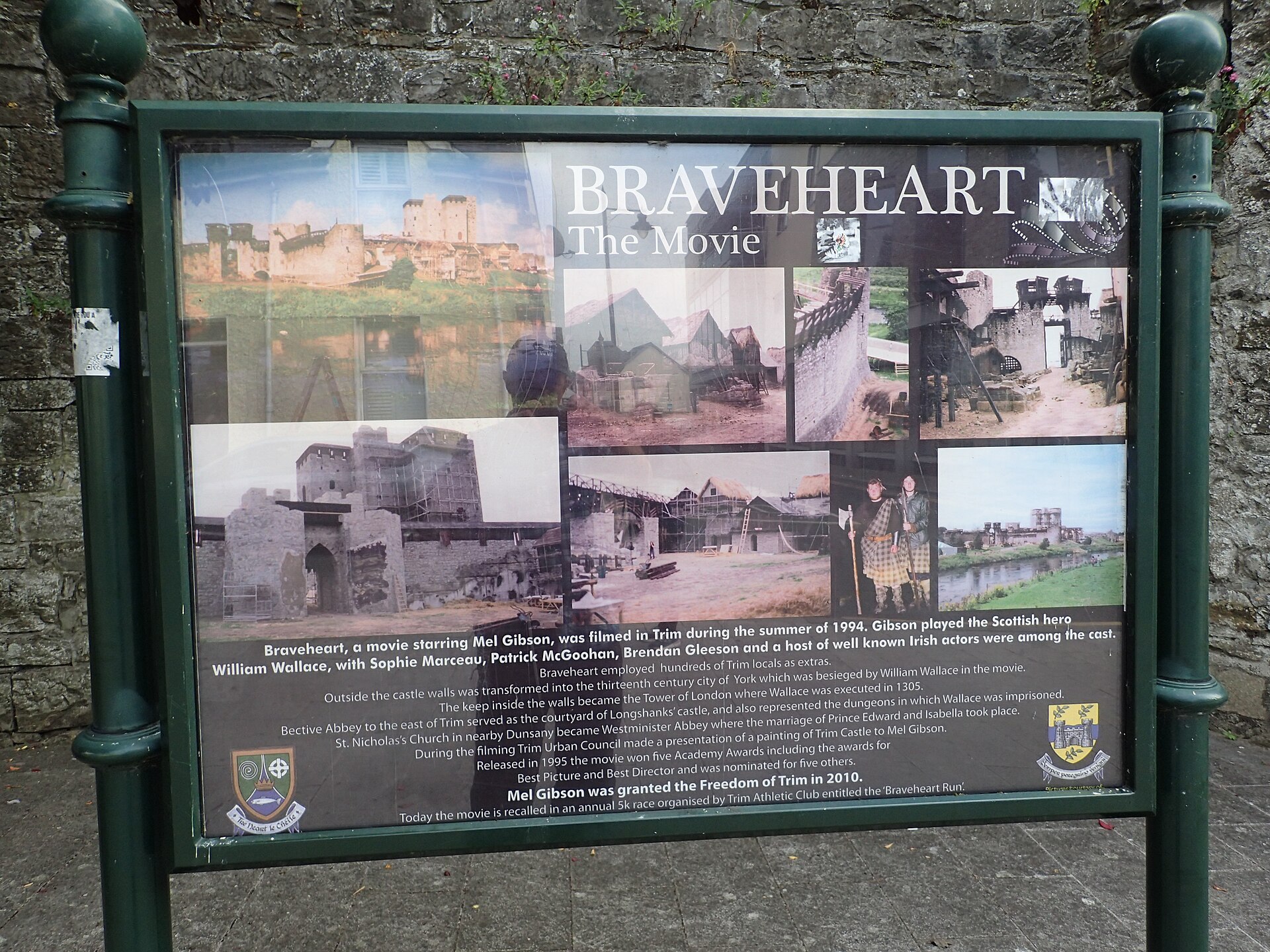
The Office of Public Works runs the site now. The grounds are free, the keep can only be seen on a guided tour, and there is a board by the walls that tells visitors what was shot where. If you came looking for the Braveheart castle, this is the one with a sign on it. Hundreds of people from the town worked as extras. Gibson was given the Freedom of Trim in 2010, and Trim Athletic Club runs an annual 5k called the Braveheart Run. Before all that, the castle had already served in The Big Red One.
2025 — the board by the walls: how the town tells the story itself
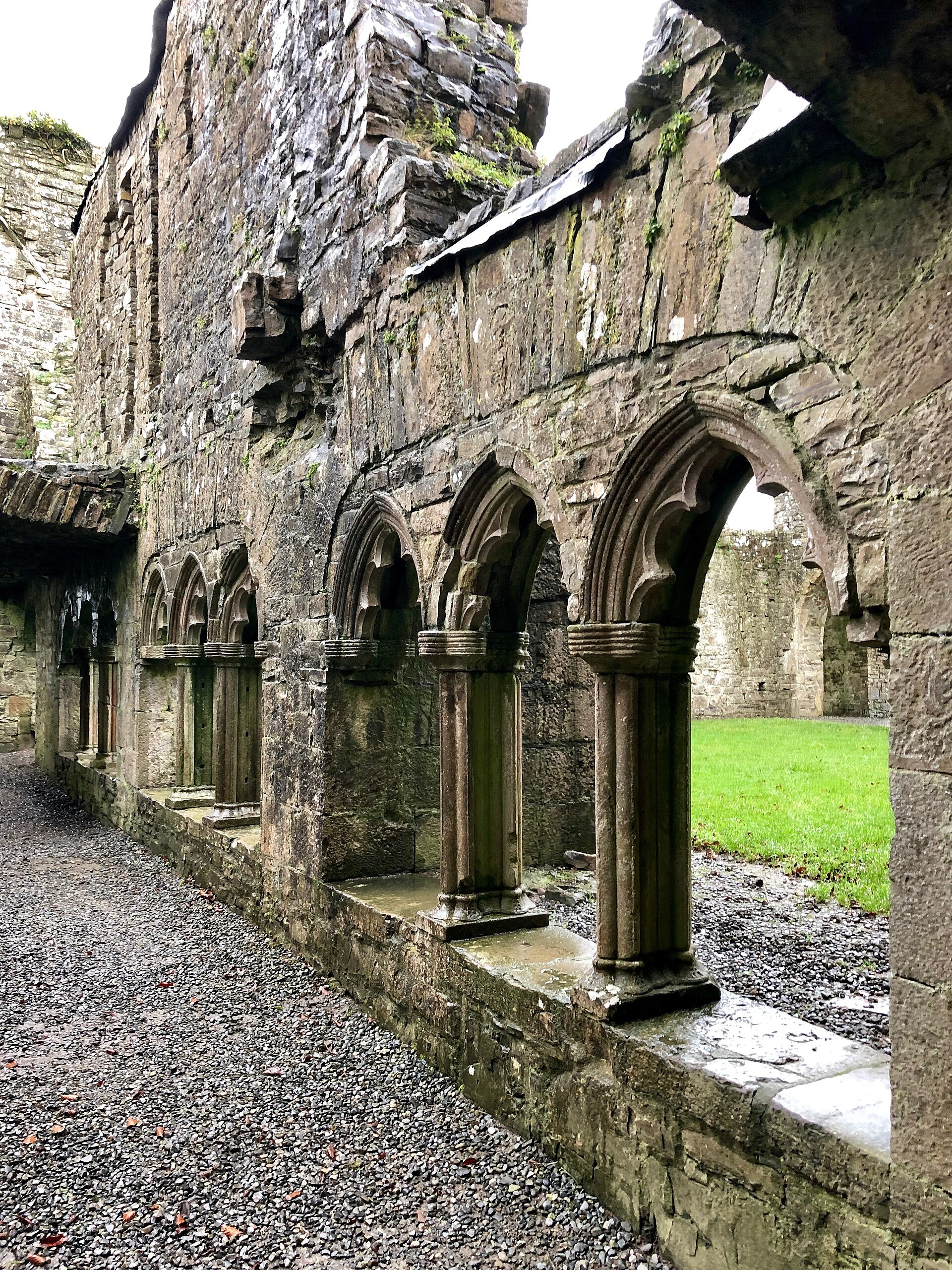
Six and a half kilometres up the Boyne from Trim, a Cistercian house founded in 1147 and the only one the order built in Meath. What stands dates mainly from the thirteenth to the fifteenth century: a cloister with a stone arcade, a tower, a walled square of grass.
The cloister played the courtyard of Longshanks' castle, and the abbey also supplied the dungeon Wallace is thrown into. It is an unguided OPW site. No ticket office, no admission charge, a gate off a country road.
Bective has been hired by Hollywood three times. Rock Hudson was here for Captain Lightfoot in 1955, Gibson in 1994, and Ridley Scott brought The Last Duel in 2020.
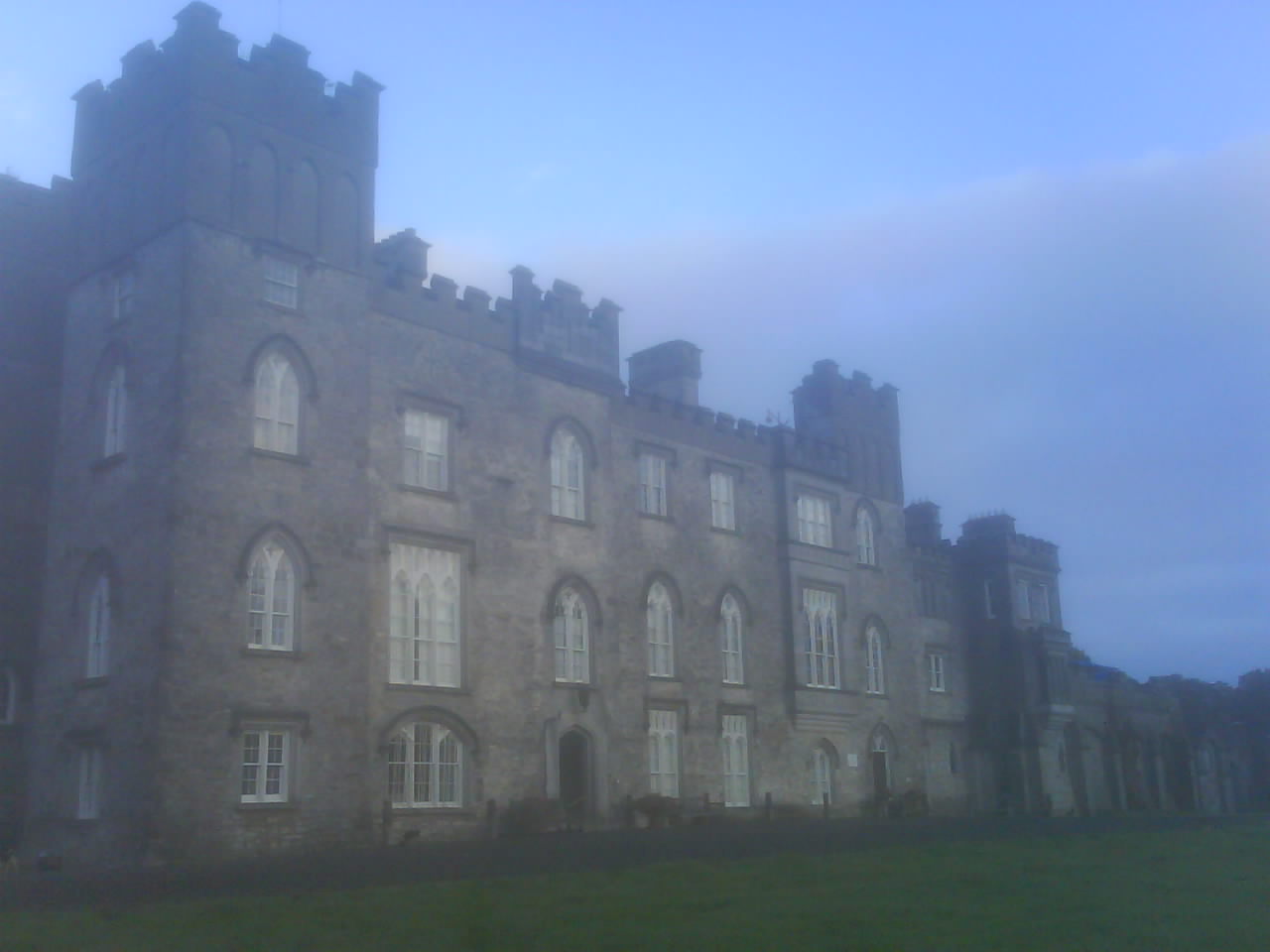
The ruined Church of St Nicholas, in the demesne of Dunsany Castle, became Westminster Abbey for the wedding of Prince Edward and Isabella. It was partly restored for the shoot. A temporary roof went on again in the early 2000s, when a wedding Mass was celebrated in it by the Bishop of Meath.
This is private land, and the castle is a family home rather than a monument. Interior tours run for a few weeks in summer, from late June to late August, and have to be booked by email; the estate also runs a rewilding project on the grounds. The remake of The Magnificent Ambersons was shot at the castle in 2000.
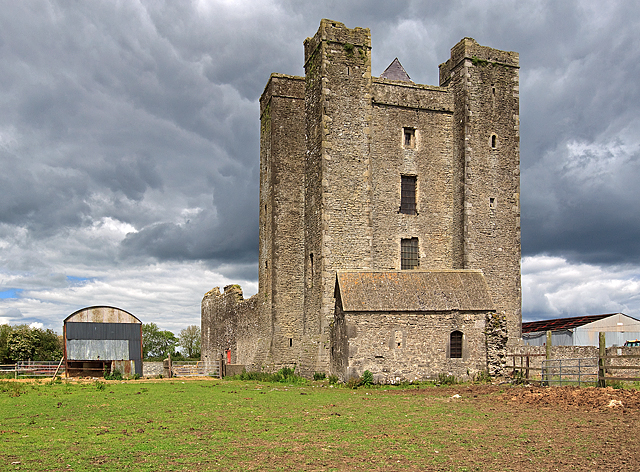
A four-storey tower house built around 1450 for Sir Thomas Plunkett, with four corner turrets and an oak roof frame whose timbers have been dated to 1430. It stands in a field 4.5 km west of Dublin Airport, under the approach.
This is the film's Edinburgh Castle. The real one, 345 km away, was not used.
The tower has belonged to the state since 1914 and is maintained by the Office of Public Works, but it is not an open site. A metal gate went up after the film, and getting inside now means asking the landowner, the OPW or the National Monuments Service. From the lane you can see it clearly enough to recognise the silhouette.
The Curragh, County Kildare
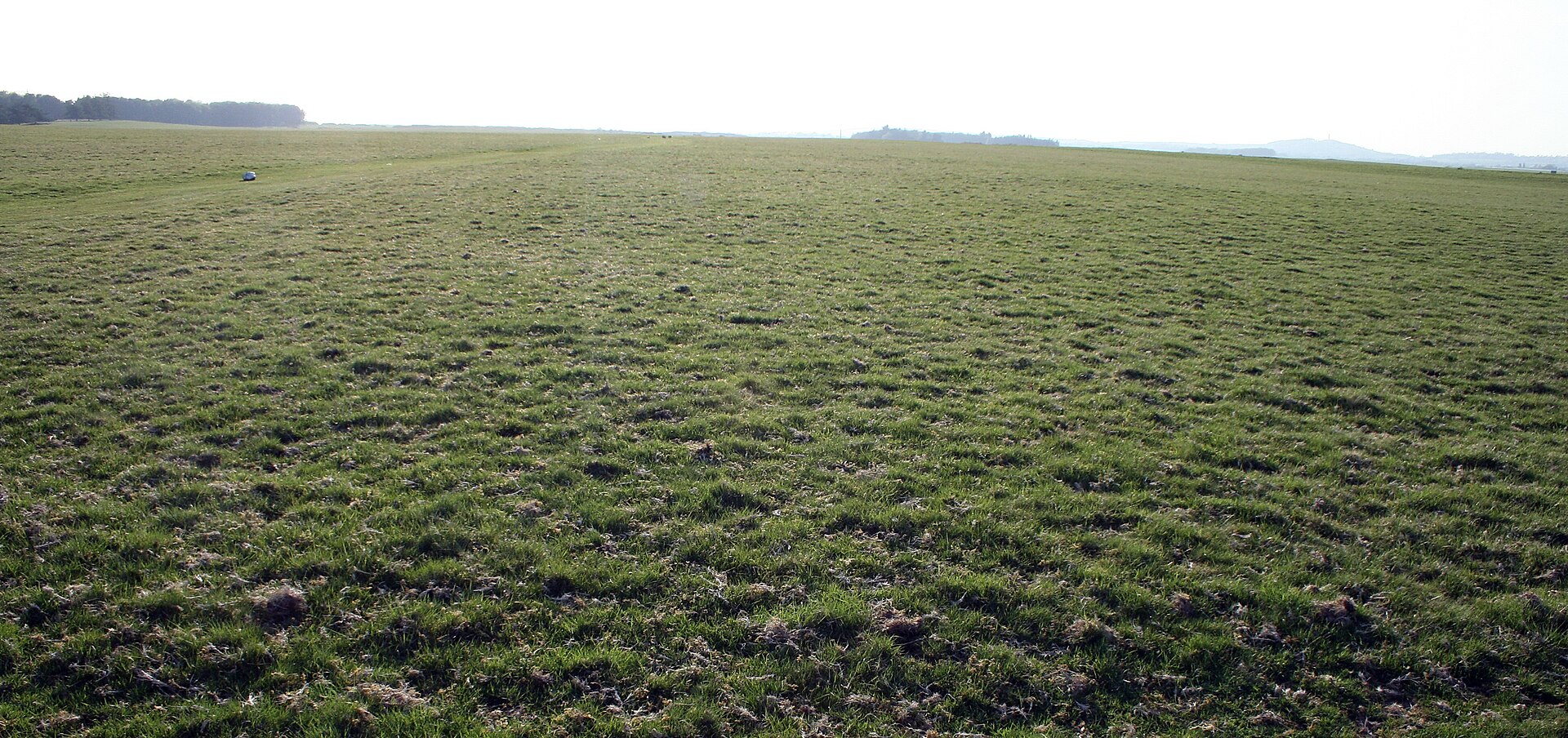
2007 — open grassland, no hedges, no walls
Photo: Sarah777 at English Wikipedia · Public domain · Wikimedia Commons · Transferred from en.wikipedia to Commons by BigrTex .
About 5,000 acres of unenclosed grassland under the Department of Defence, grazed by sheep under rights set out in the Curragh of Kildare Act. Roughly 150 landowners hold some 6,000 of those rights between them; about 30 graziers use them. There are no hedges and no field walls.
The battle scenes were filmed here, with the reservists from the camp on the plain, and one rise is known locally as Braveheart Hill. The battle they are fighting is Stirling, 379 km away in Scotland. Gibson's reason for the switch was blunt enough: in Ireland you could find battlefields that worked and still be close to a major centre, with the ground, the horses and the reserve army all within reach of each other.
The plains are open to walkers. They are also live military ground, and the signs about vehicles and ranges are not decorative.
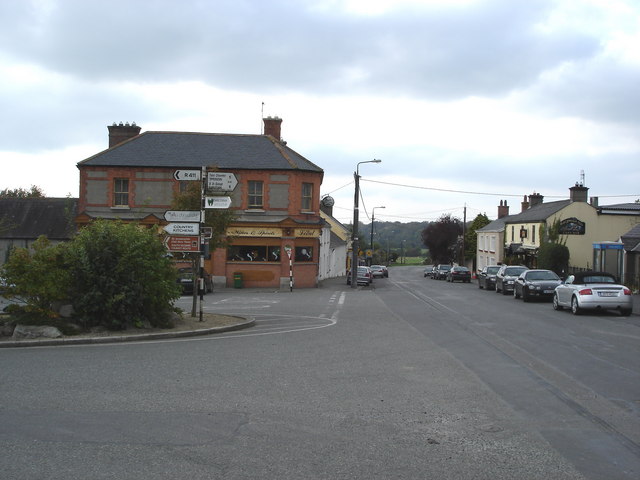
Battle work spread beyond the Curragh to the country around this Kildare village on the Liffey, seven kilometres west of the Blessington lakes.
The area kept its habit of standing in for Britain. In 2003 the production of King Arthur built a mock section of Hadrian's Wall in a field outside the village, the largest set ever put up in Ireland, and took it down again afterwards.
Valleymount and the Blessington Lakes, County Wicklow
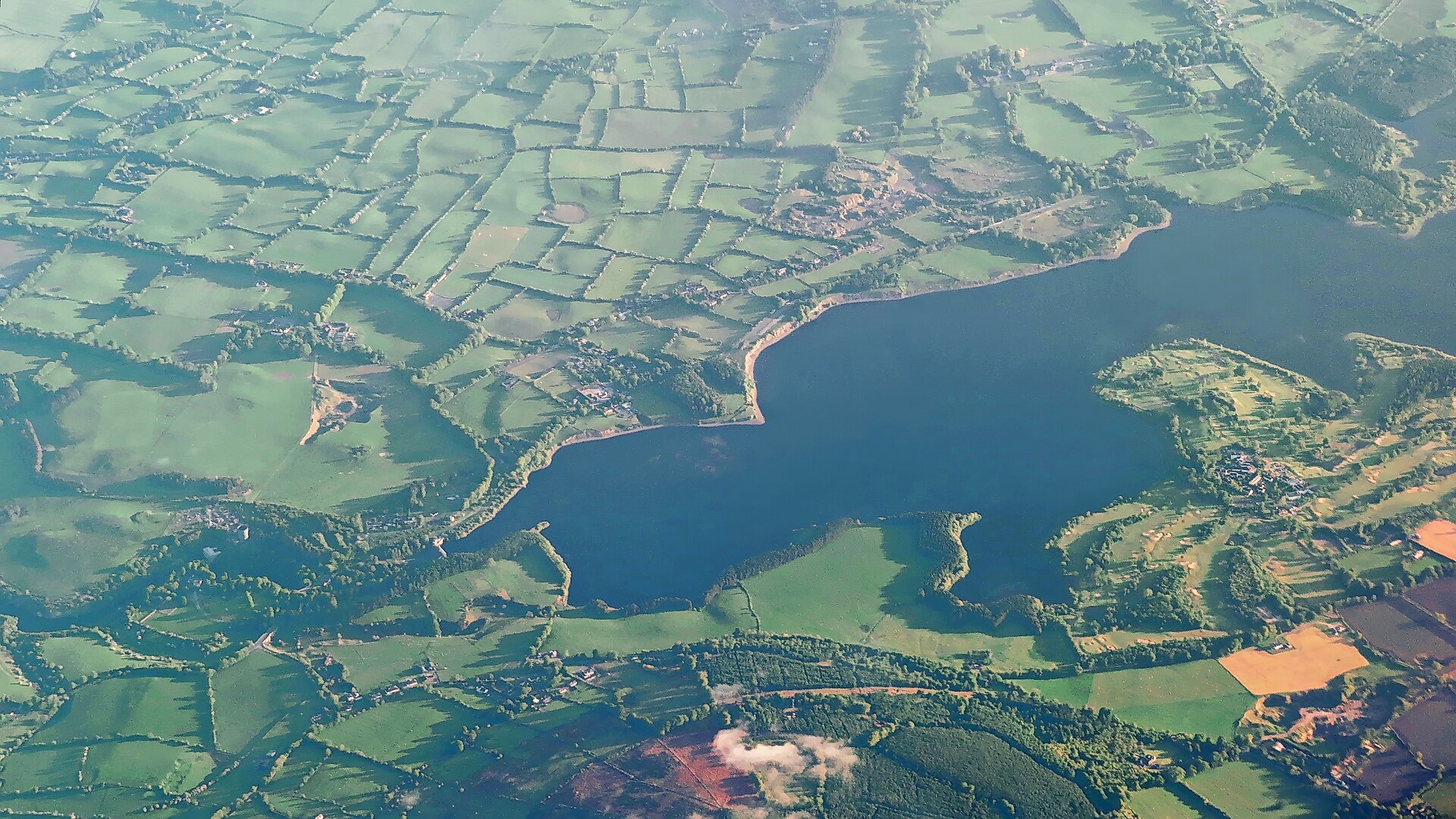
Photo: Robert Linsdell from St. Andrews, Canada · CC BY 2.0 · Wikimedia Commons · Poulaphouca Reservoir, Co. Wicklow (506144)
Several scenes were shot in the west of the Wicklow mountains, in the country around the reservoir. A lakeside route here is called the Braveheart Drive, and the 80 km version of it runs from the village of Hollywood through Blessington, Manor Kilbride, the Sally Gap and Laragh to the Wicklow Gap. The named stops on that route are scenery rather than confirmed Braveheart locations; what is confirmed is that this corner of Wicklow is in the film.
The interiors were built here, at the studio that has been Ireland's production base since 1958. Excalibur, My Left Foot, The Spy Who Came in from the Cold, Veronica Guerin and Breakfast on Pluto all worked out of the same lot. It is a working studio with ten stages and no visitor access.
Stirling, where it actually happened
The Wallace Monument, Abbey Craig
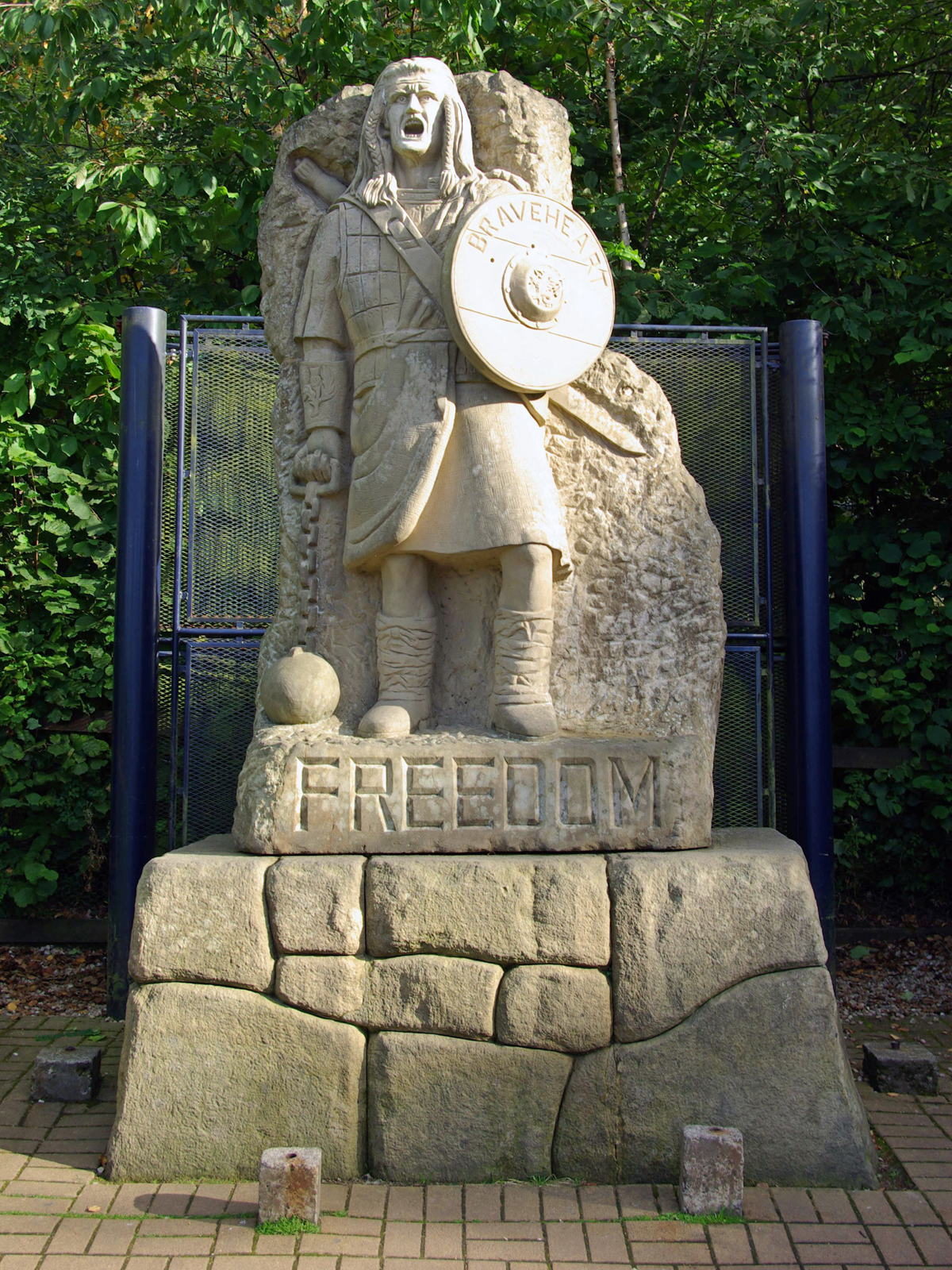
2007 — the Tom Church statue in the car park, removed in 2008
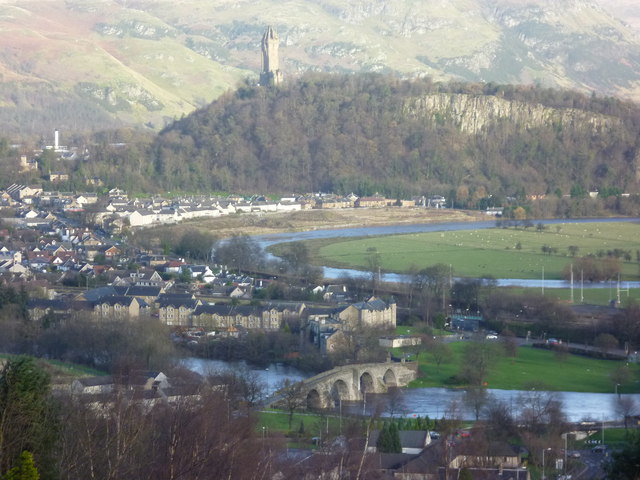
The tower on the crag is Victorian. The crag is the traditional site of the Scottish camp on the morning of the battle, though historians now think Wallace and Moray may have been on Spittal Hill to the west, closer to the causeway.
For eleven years the car park below it had a second monument. In 1997 a sandstone Gibson-as-Wallace by the mason Tom Church was installed there, twelve feet high, thirteen tonnes, with BRAVEHEART cut into the shield. Someone took a hammer to its face in 1998. After the repair it was locked in a cage every night, which made it look imprisoned and annoyed people further. In 2008 it went back to the sculptor to clear ground for the new visitor centre.
On 11 September 1297, William Wallace and Andrew Moray destroyed an English army at a wooden bridge over the Forth. The bridge took two horsemen abreast. The Scots waited on the high ground until about two thousand men were across, then came down and cut them off from the rest. The film's version of that battle has no bridge in it and no Moray. Where Braveheart filmed it is 379 km from here, on flat grassland in Kildare.
The stone bridge standing there now went up around 1500, replacing the wooden ones, and it is closed to traffic. Walk to the middle and the ground is laid out in front of you: the loop of the river, the causeway the English had to use, the crag on the far side. No camera came here. The rise in Kildare that stood in for this is known to the people who live there as Braveheart Hill.