Take the sets out of this one and there is not much left. Hogwarts, the Astronomy Tower, Tom Riddle's orphanage, Diagon Alley and the Burrow were all built on stages at Leavesden, and the inside of the Horcrux cave was never built at all: Stuart Craig had it made out of crystal geometry in a computer. What survives as real ground is a short list. Two cliffs in the west of Ireland, a village in Wiltshire, a cathedral cloister, a footbridge in London, a commuter station in south-west London, a Highland glen, and a mountain railway in Norway.
8
places on the route
Four countries, from County Kerry to the mountains above Romsdalen — switch with the buttons above. Click a point to jump to its entry.
Principal photography ran from 24 September 2007 to 17 May 2008.
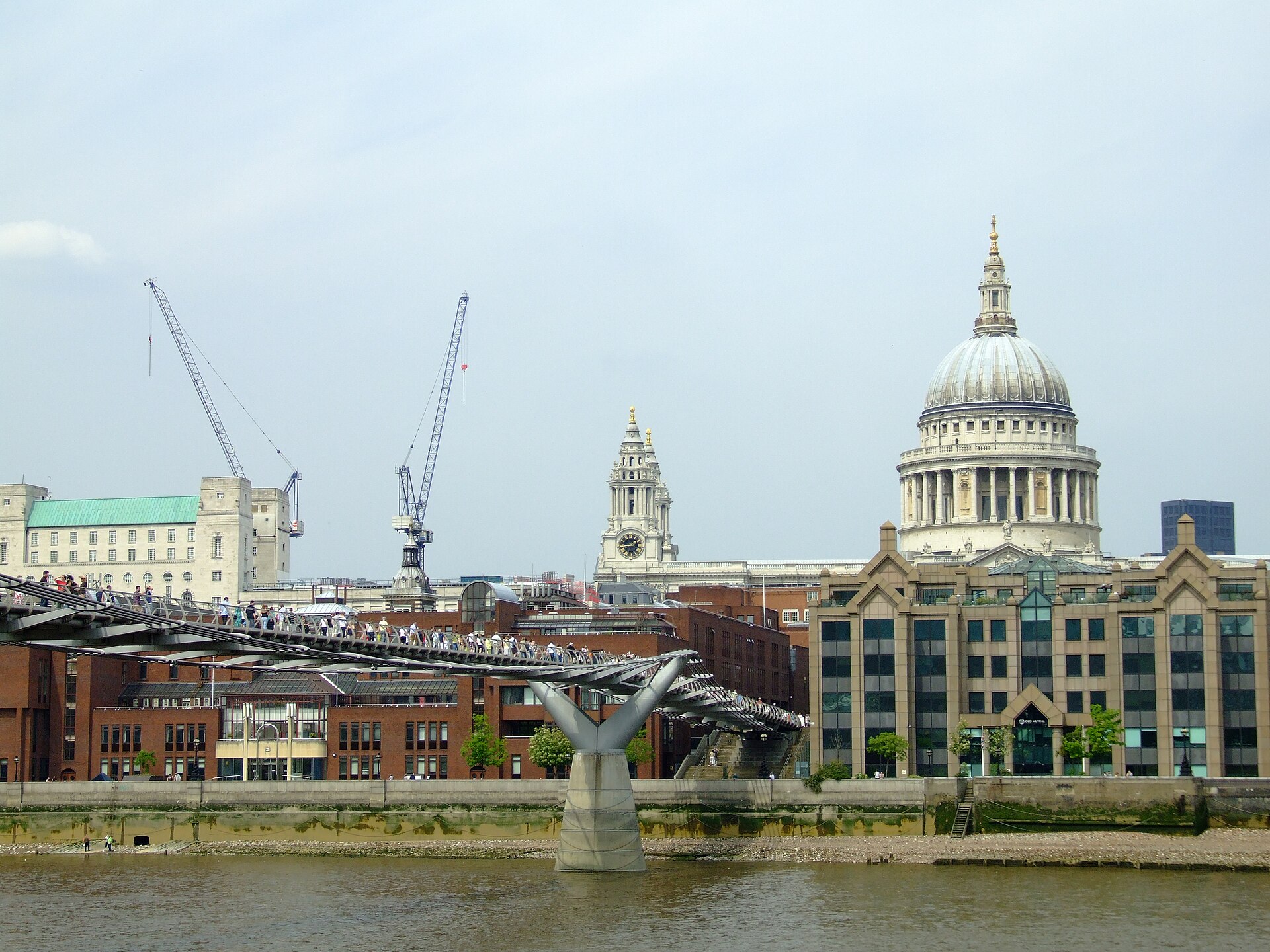
Death Eaters shake the bridge until it folds into the Thames. What actually happened here was orderly. Over the weekend of 8 and 9 March 2008 the bridge was closed to pedestrians, the river was closed to boats between Blackfriars and Southwark bridges, and a helicopter flew low over the deck. None of the main cast was there. It was an effects unit collecting plates.
Picking this particular bridge to wreck is funnier than the film lets on. It opened on 10 June 2000, 90,000 people crossed it that day, and it swung sideways by as much as 70 millimetres. Two days later it shut. The mechanism has a name, synchronous lateral excitation: a walker corrects for a small sway, everybody corrects at the same instant, and the correction feeds the sway. London called it the Wobbly Bridge. It reopened in February 2002 with 37 viscous dampers bolted underneath.
The design is Arup, Foster + Partners and the sculptor Anthony Caro, with the suspension cables slung below the deck instead of above so that nothing gets in the way of the view. That is why the northern approach frames the south face of St Paul's dead centre. The bridge is public, free and never closed, with Tate Modern at one end and the cathedral at the other.
One detail the effects could not fix: the story is set in 1996, and construction did not start until 1998.
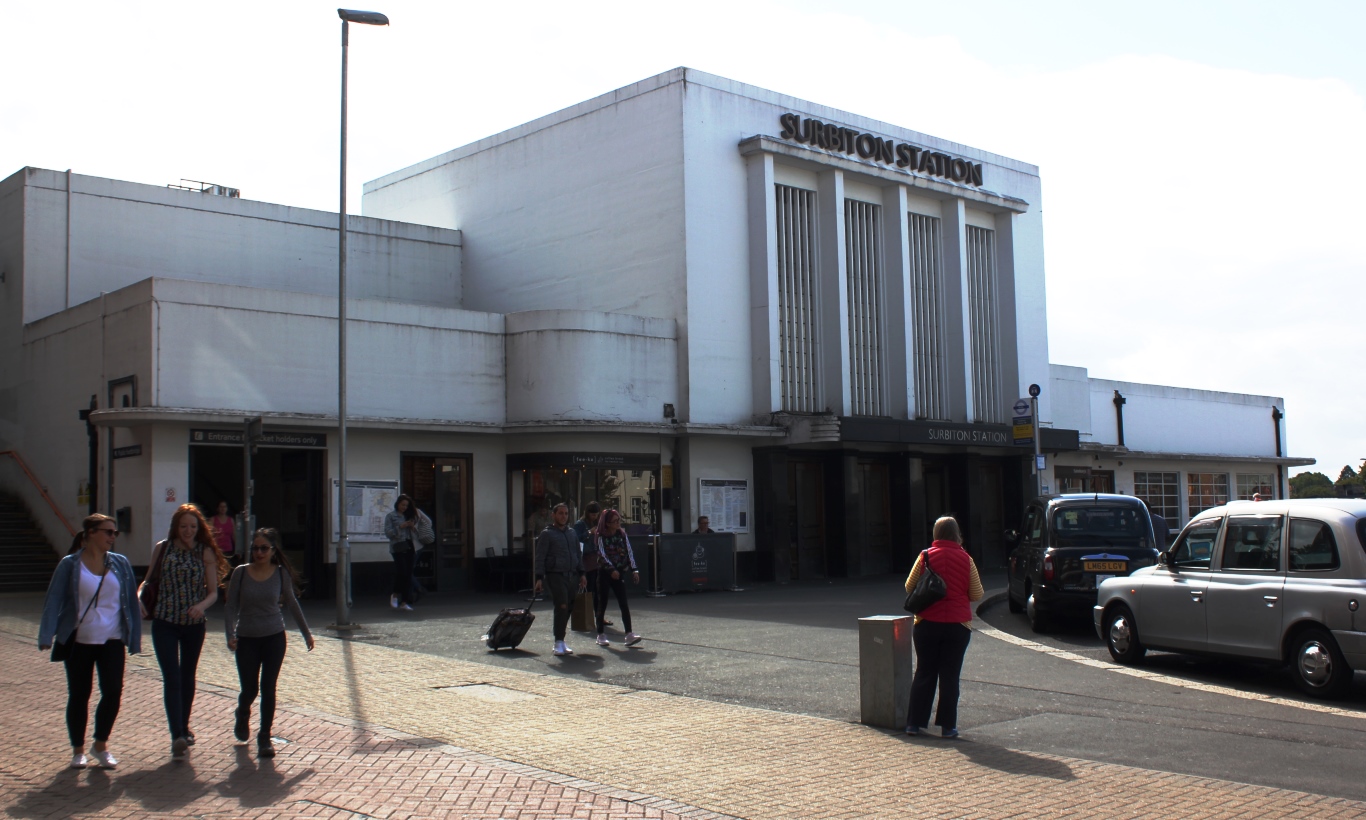
Harry is sitting in a station café with a newspaper and a waitress when Dumbledore turns up to collect him. The unit worked at Surbiton in October 2007 and began in the early hours so that the timetable kept running.
The station was rebuilt in 1937 by James Robb Scott for the Southern Railway, and it is the reason anyone who cares about stations knows the name: rendered white walls, horizontal fins, a free-standing clock tower, no decoration anywhere. Grade II listed, four platforms on two islands, with a fast line running through the middle. Twenty minutes from Waterloo, zone 6.
That same 1930s surface was the point in 1989, when the first episode of ITV's Poirot, "The Adventure of the Clapham Cook", used Surbiton to hold its period.
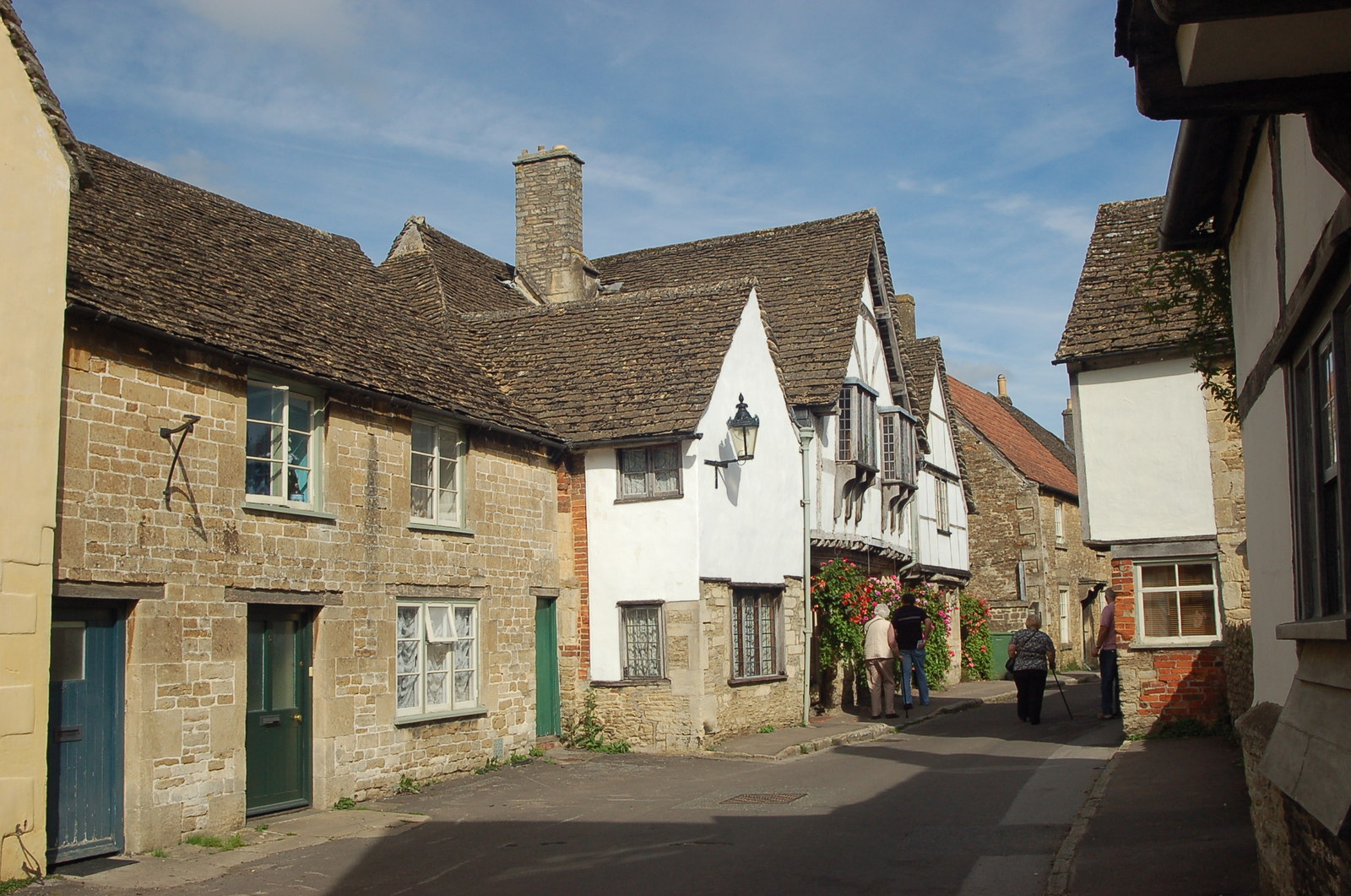
Dumbledore walks Harry into Budleigh Babberton to talk Horace Slughorn out of retirement. Budleigh Babberton is Lacock. The National Trust owns almost the entire village and hands out a map of its own filming spots: Slughorn's house at the west end, the Sign of the Angel as a backdrop, and Harry and Dumbledore walking back through the street afterwards. Shooting ran three nights from 25 October 2007, five in the evening to five in the morning, and residents were asked to black out their windows.
Scenes were shot outside Cantax House, on Cantax Hill above the ford. Early Georgian, seven bays in two storeys of red brick with stone quoins, a pediment with a round window in it and a pair of dormers. It was the village vicarage until 1866 and it is somebody's home.
Lacock came to the Trust in 1944, given by Matilda Talbot with the abbey and 284 acres. Nearly every house is 18th century or older and nothing on the street dates the place, which is why it is booked out year round. The Red Lion was the assembly rooms in Pride and Prejudice. Church Street became a 1920s livestock market for Downton Abbey. The ford took a cavalry charge for The White Princess. St Cyriac's was the market in Moll Flanders, the bakery played the bakery in Cranford, and Wolf Hall, Beauty and the Beast, The Other Boleyn Girl and Fantastic Beasts: The Crimes of Grindelwald have all been through. Harry's parents' house, from the first film, is a couple of minutes' walk from Slughorn's.
The village is free and open. Lacock Abbey and the Fox Talbot Museum are ticketed, and the houses are private.
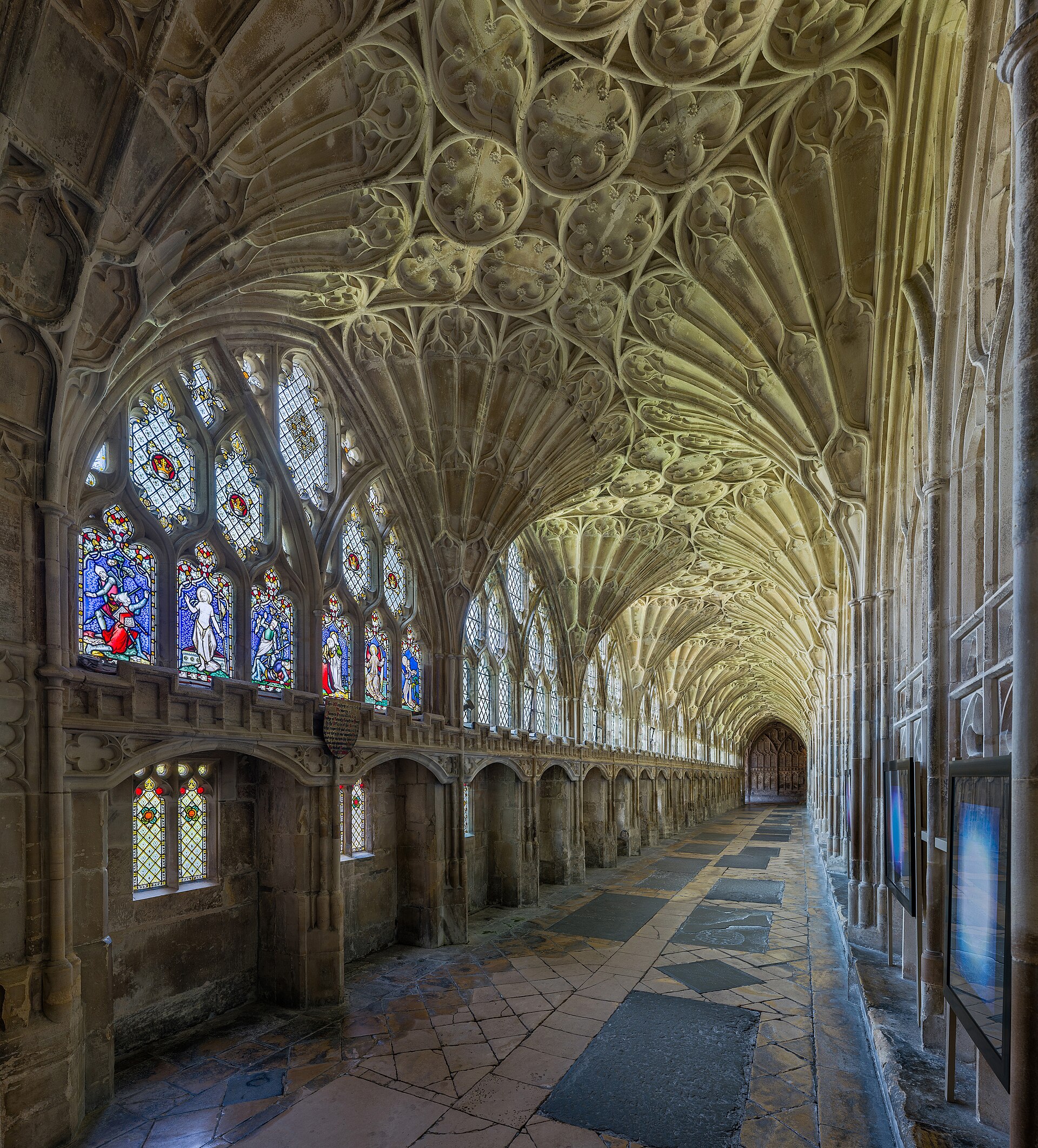
Hogwarts corridors. Harry and Ron lark about in one during a free period until McGonagall catches them and sends them to Potions; in another, Harry listens from cover while Snape and Malfoy get into the Unbreakable Vow. Both were shot in the cloisters, in February 2008, the first Potter production to come back since Chamber of Secrets. The Vow is in the lavatorium, the long stone washing trough on the north walk where the monks cleaned up before meals.
The Great Cloister was begun in 1373 under Abbot Horton and finished under Abbot Frouster by about 1412, and its ceiling is the earliest structural fan vaulting anywhere. The resemblance to a school passage is not a trick of the camera. It is a passage, built to be walked down four times a day.
The cathedral is a working one and the cloisters are part of any visit. There is a screen in there that runs through what was shot where. The building has also carried Doctor Who twice, Wolf Hall, The Hollow Crown, the Sherlock special The Abominable Bride, Mary Queen of Scots, and all three of the Cousins' War series, The White Queen, The White Princess and The Spanish Princess.
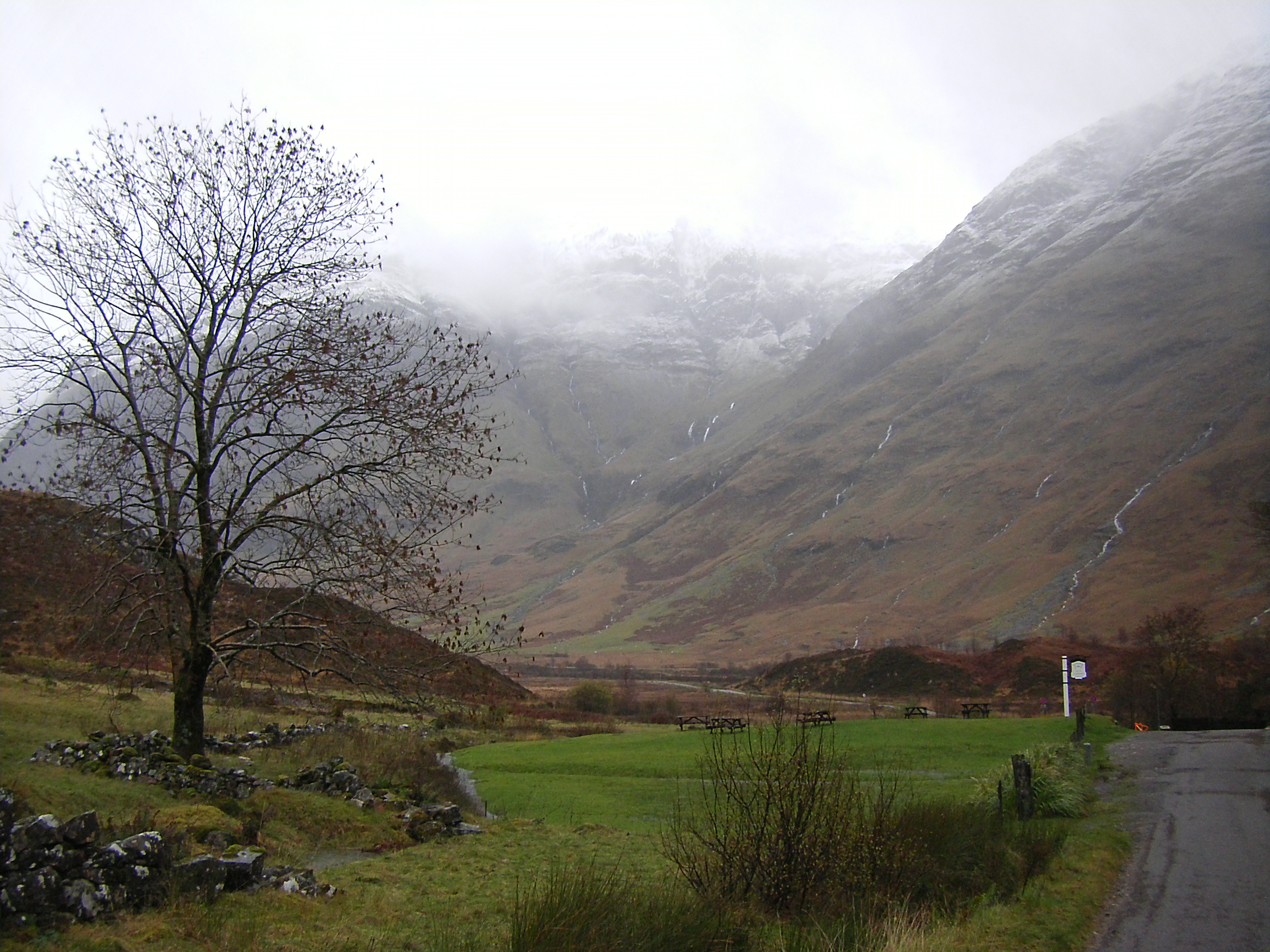
The glen has been in this series since 2003, when Hagrid's hut with its pumpkin patch, a sundial and a turreted gatehouse went up on the slope across the road from the Clachaig Inn for Prisoner of Azkaban. Guards were posted overnight to stop people walking off with the pumpkins. Those sets came down and the hillside went back to grass. In October 2007 the crew was working that same ground again for this film.
It is a glacial trench about 12.5 km long with a floor under 700 m wide, cut through volcanic rock, and the A82 runs the length of it. Thirty-eight men of Clan MacDonald were killed here on 13 February 1692 by government troops who had been billeted with them for a fortnight. The Clachaig Inn sits on the old road below Clachaig Gully and is still a pub. The hills either side are open.
Monty Python shot the Bridge of Death and the Gorge of Eternal Peril in the Pass of Glen Coe. Skyfall used the eastern end.
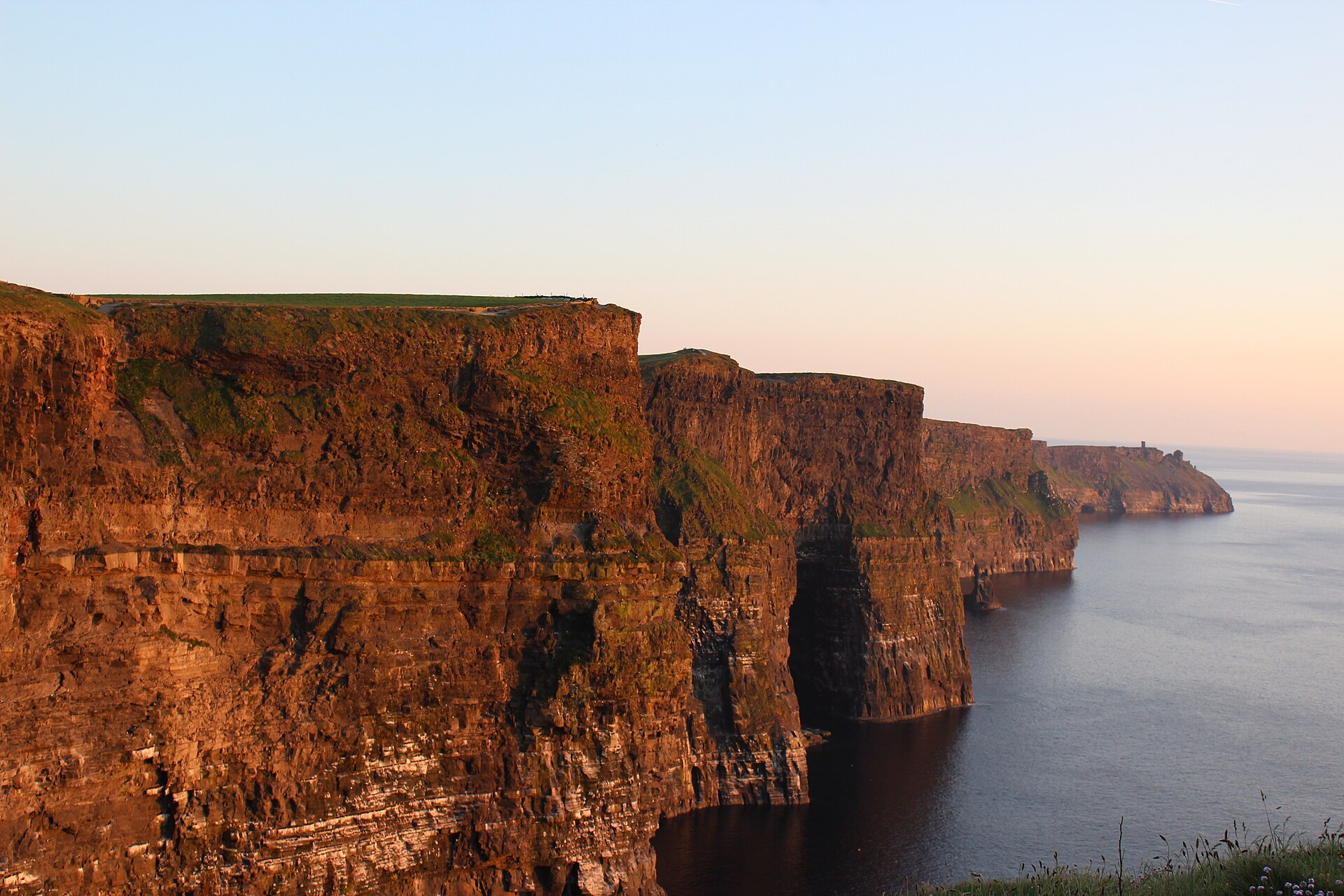
The rock Harry and Dumbledore land on is in County Kerry. The cliff standing over it is in County Clare. They are 148 km apart and the film puts them in the same shot.
Craig's account of finding the place is plain enough: on a location scout down the west coast they came across the Cliffs of Moher and thought at once that they would be spectacular as the mouth of the cave. That scout was in January 2007, eight months before the camera turned. The Irish Film Board helped set it up.
The cliffs run about 14 km along the southwestern edge of the Burren. They are 120 m high at Hag's Head in the south and 214 m at their peak just north of O'Brien's Tower, the round stone lookout Cornelius O'Brien put up in 1835. The rock is Namurian shale and sandstone dumped by a river delta between 313 and 326 million years ago, and it is still going: Branaunmore, the 67 m stack at the foot of the cliffs below the tower, used to be part of the wall until the sea cut the connection. There are real sea caves down there too, undercut into the base where the swell gets in.
About 1.5 million people a year come. The visitor centre, buried in the hillside, cost 32 million euro and opened in February 2007, seven months before the shoot. Bus Éireann route 350 stops at the door from Ennis, Doolin, Lisdoonvarna and Galway, there is an 18 km cliff walk, and the boats out of Doolin will take you along the bottom, which is the angle the film wanted.
The wall has been hired before. It was the Cliffs of Insanity in The Princess Bride, and it turns up in Leap Year and Irish Wish.
A bare rock in open water off the Iveragh peninsula, between the mainland at St Finian's Bay and the Skelligs. This is the ledge in the sea that the two of them appear on before they go into the cliff.
There is no landing and nothing to see when you get there beyond wet stone and birds. It passes off the port side on the Skellig and Puffin Island boats out of Portmagee and Ballinskelligs, which is as close as anyone gets.
Norway
The Rauma Line at Bjorli
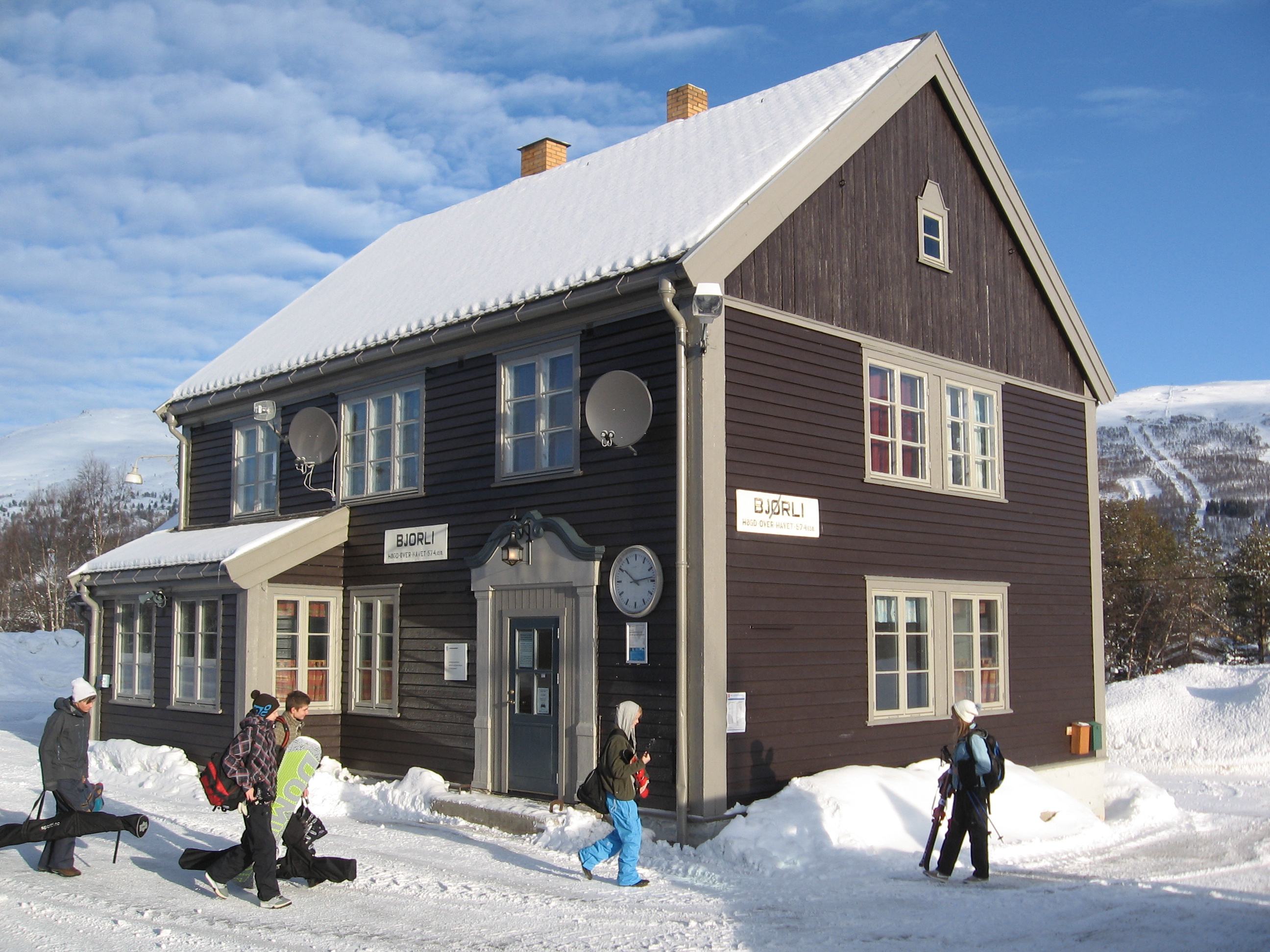
Bjorli station in winter — the snow Britain could not supply
The script wanted the Hogwarts Express running through snow, and Britain would not produce any on the dates the schedule allowed. So the train scenes went to the Rauma Line, in the mountains above Romsdalen, near the village of Bjorli in Innlandet. The conversation between Harry and Ron about the Vow Snape has sworn was shot inside a museum carriage belonging to the Norwegian Railway Club. The crew stayed at the Bjorligard Hotel, which has since closed.
The line runs 114 km from Dombås, at 659 m, down to Åndalsnes at sea level: a 655 m drop, two horseshoe curves, 103 bridges and five tunnels, and no overhead wires. It opened between 1921 and 1924 as the first stage of a railway to Ålesund that was never finished, which is why it stops at a fjord. Five stations are still in use. The showpieces are the Kylling Bridge over the Rauma and the run under Trollveggen and Romsdalshorn.
Four scheduled trains a day, and in summer a tourist service between Åndalsnes and Bjorli, twice daily.
Leavesden, where the rest of it is
Everything else was made at Leavesden, north of Watford. The site was built in 1940 as an aircraft factory for de Havilland and by the end of the war it was, by volume, the largest factory in the world. Rolls-Royce eventually walked away and it sat empty until the GoldenEye production found the hangars in 1994 and gutted them into stages. The Phantom Menace and Sleepy Hollow followed. Heyday Films took the lease in 1999 and all eight Potter films were made there. Warner Bros. bought the place outright in 2010.
Two new stages, J and K, were put up alongside the working ones to hold what was left over, and Warner Bros. Studio Tour London opened in them on 31 March 2012. The Great Hall, Dumbledore's office, Diagon Alley, the Ministry of Magic, the Gryffindor common room, Hagrid's hut and the 1:24 model of the castle that shot every exterior are all standing inside. Allow three and a half hours, book ahead, and take the shuttle from Watford Junction.