Click a point to jump to its film.
The cloister walk at Lacock Abbey is occupied. Protected bats roost in the vaulting, and when Fantastic Beasts: The Crimes of Grindelwald shot there the National Trust put a bat ecologist on the floor to follow where they went. The crew kept its lighting and its noise down. Part of the cast were owls.
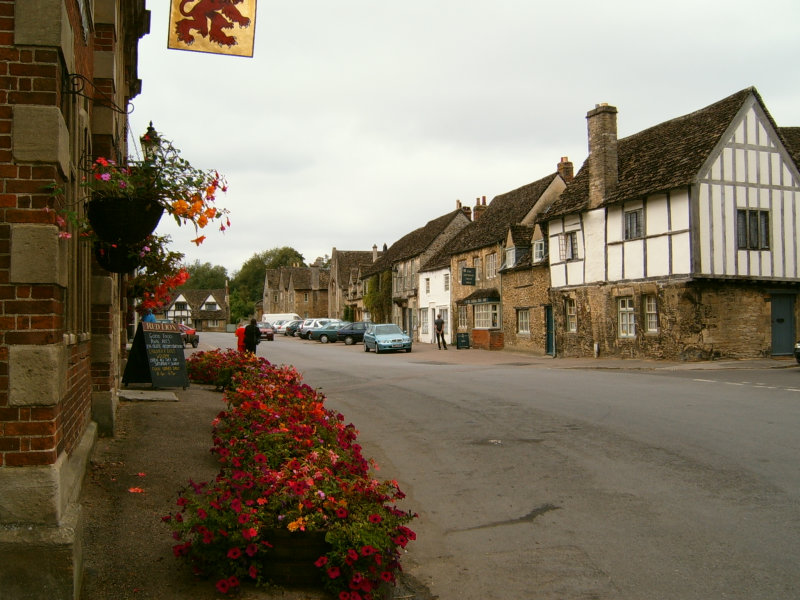
The reason there is anything here to film is that the village went broke. It sold wool and cloth from the 13th century. In 1783 the new road to Bath went round it, the old road through it fell apart, and the cloth trade moved into factories in the neighbouring towns. The county's own history says Lacock then stopped building. The railway was kept away as well, because the Talbots wanted no line near the abbey, so the new housing grew round the station in the east of the parish.
Henry VIII sold the nunnery to William Sharington, who closed the purchase in July 1540. He pulled down the abbey church, used its stone on what was left, and is said to have sold the bells and spent the money on a bridge over the River Ray, so that villagers would cross there instead of passing his door.
The Trust's location office lists what the abbey played in the first Harry Potter film: the Chapter House as the room with the Mirror of Erised, the Sacristy as Snape's potions classroom, the Warming Room, which has a real cauldron in it, as Quirrell's. The 1995 Pride and Prejudice spread dirt over the streets to make Meryton. For the Downton Abbey film the Royal Artillery galloped down Church Street, and the crowd waving flags at the King was the village.
Which it still is. Most of the houses hold families that go back generations here, and the school, the shop, the post office and the bakery are open. The crews come for days at a time. The bats have the cloisters the rest of the year.