A room in Berlin with the Wicklow Mountains in the window. That is the saloon at Powerscourt House in County Wicklow, dressed as a German gaming house and lit by candles, filmed a few months before the house burned down.
27
places on the route
Ireland and England — switch with the buttons above. Click a point to jump to its entry.
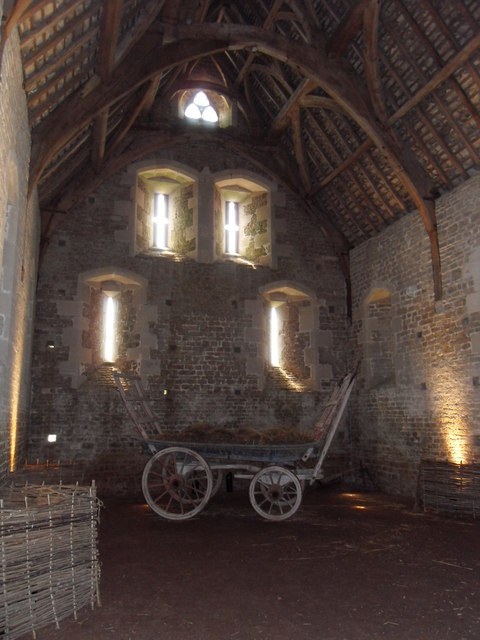
Kubrick built nothing for this picture. John Alcott, who photographed it, said there were no sets at all: every room in the film exists inside a real house in Ireland or the southwest of England. The Prussian army camp is a castle in Tipperary, the Berlin house of a professional gambler is Dublin Castle, and the Berlin street is a palace forecourt in Potsdam, then in East Germany. A castle on the coast of Sutherland plays a spa town in Belgium. England is the exception, and there the great houses play great houses; most of them take visitors, and so do a village guildhall in Suffolk and a tithe barn in Somerset. The Irish half of the shoot ended on a single day, in a Dublin park, on 30 January 1974.
Ireland is Prussia
Cahir Castle, Castle Street, Cahir, County Tipperary
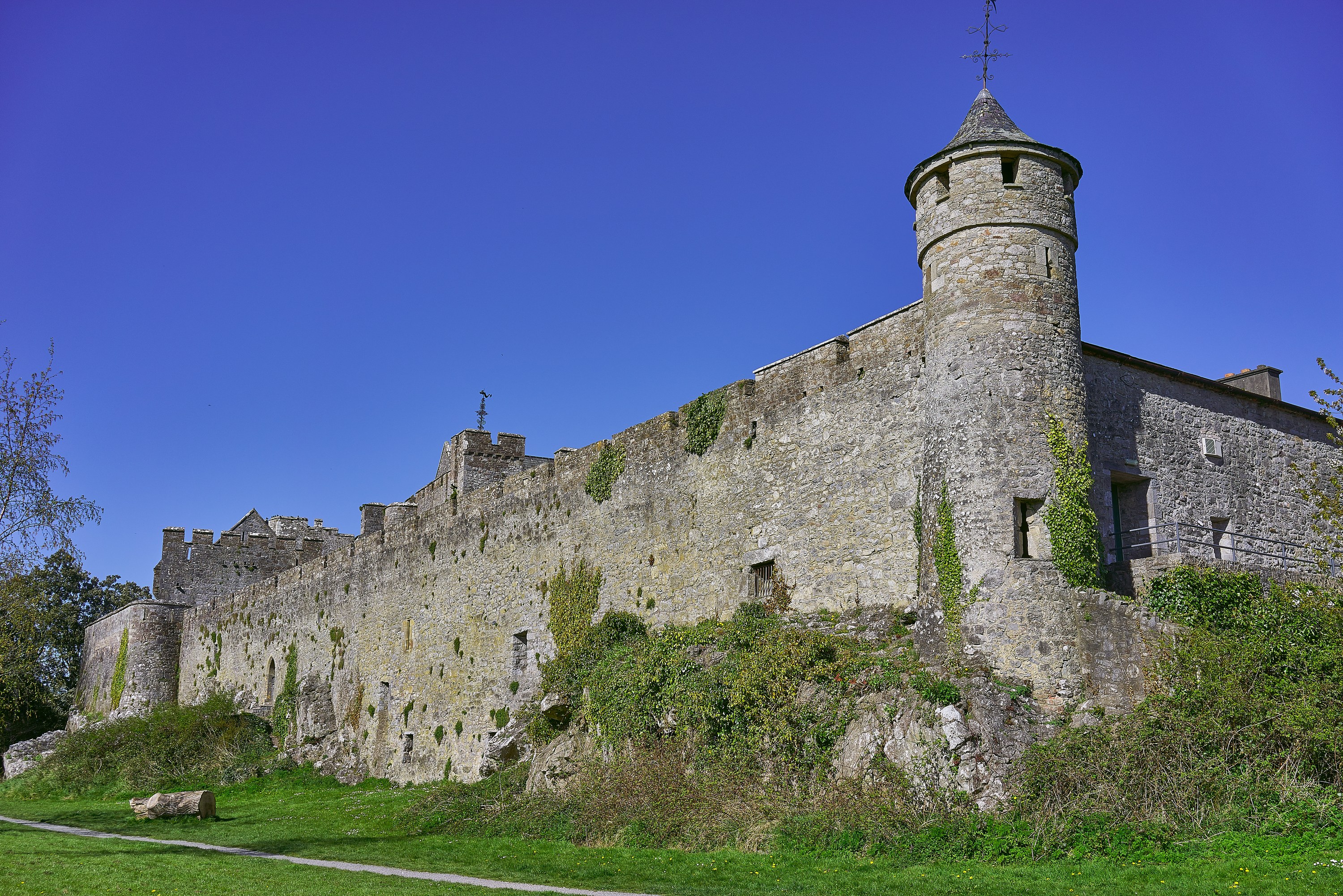
Cahir Castle from the Inch Field, the meadow beside the castle that the Office of Public Works names as one of the Barry Lyndon locations.
Germany, or the part of it where Barry is dragooned into the army of Frederick the Great. The Office of Public Works, which keeps the castle, names the spaces used: the Banqueting Hall, the inner courtyard, and the Inch Field, the meadow immediately outside the walls.
Cahir tells you the rest itself. Information boards just outside the castle name the films made here. John Boorman's Excalibur (1981) is on them, and The Green Knight (2021), and The Last Duel (2021), for which Cahir took the EUFCN European Location Award that year. Before any of those came Catholics (1973), with Martin Sheen and Trevor Howard, and Tristan and Isolt (1979), with Richard Burton. The Tudors used it across its four seasons.
The bare-knuckle fight. Ryan O'Neal, stripped to the waist, boxing a fellow soldier in front of the Norman ruin on the estate. It took days, with the make-up redone between takes.
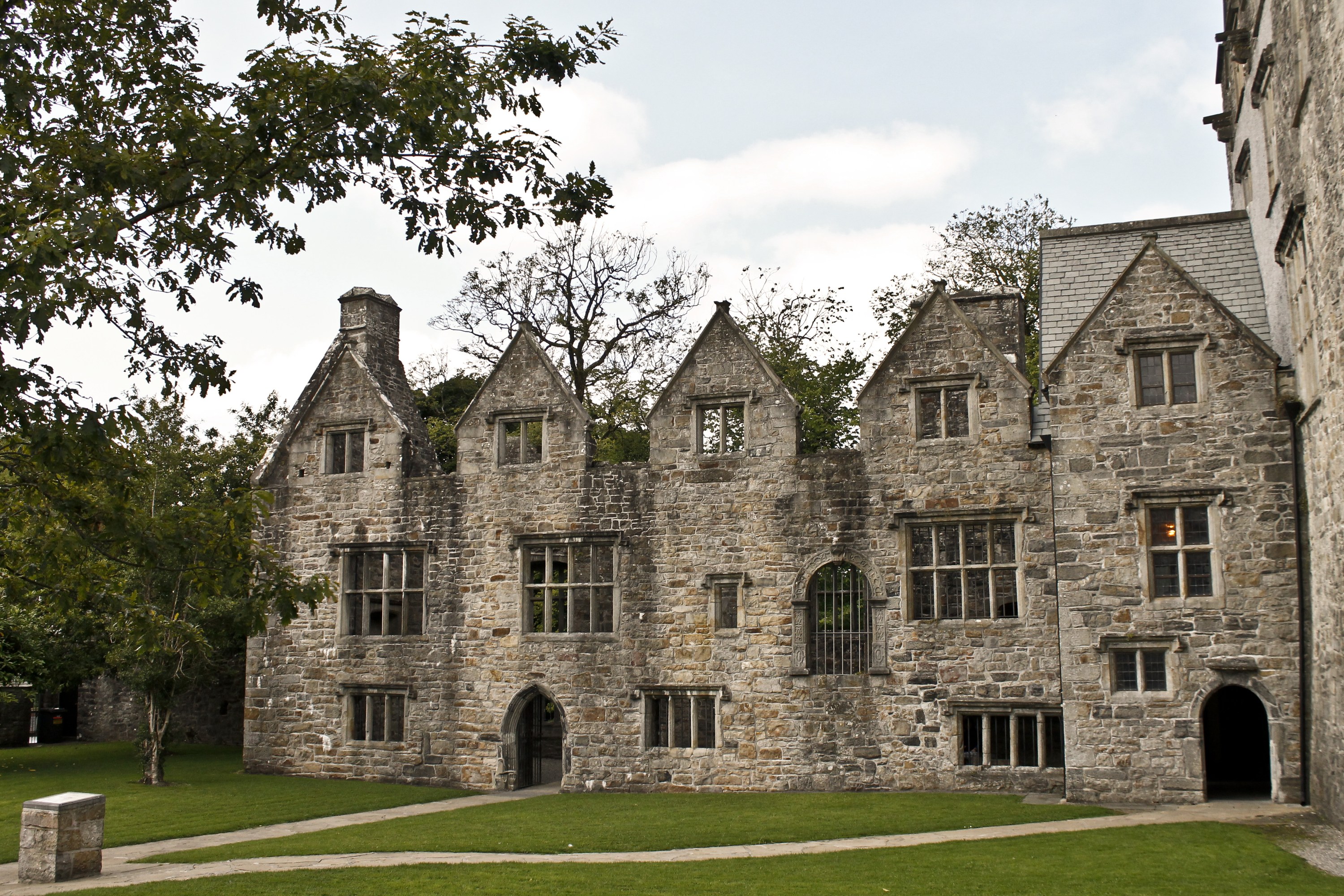
Castlegrace is a private estate under the Knockmealdown Mountains.
Moorstown Castle, between Cahir and Clonmel, County Tipperary
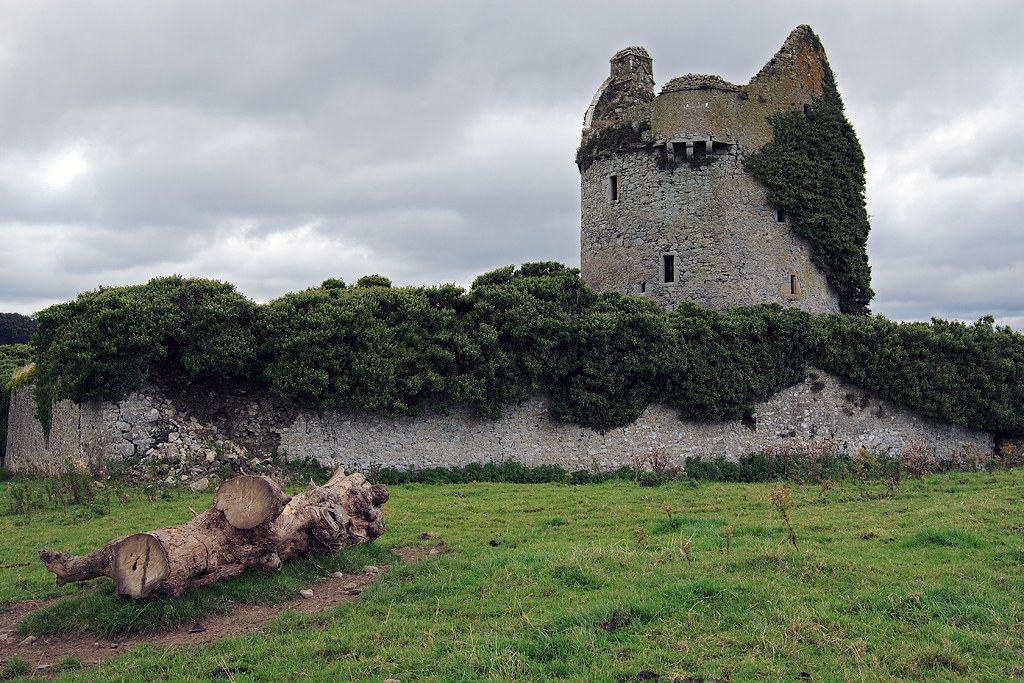
Moorstown Castle, a tower house between Cahir and Clonmel. A Warner Bros. press release describes 500 soldiers marching into it twenty-nine times in one day.
Five hundred men in redcoats marched into Moorstown Castle twenty-nine times between seven in the morning and dusk, and Kubrick was still not satisfied. What he wanted out of the route march was the moment when Barry recognises Captain Grogan.
The tower house is a ruin on private ground.
Kells Priory, Kells, County Kilkenny
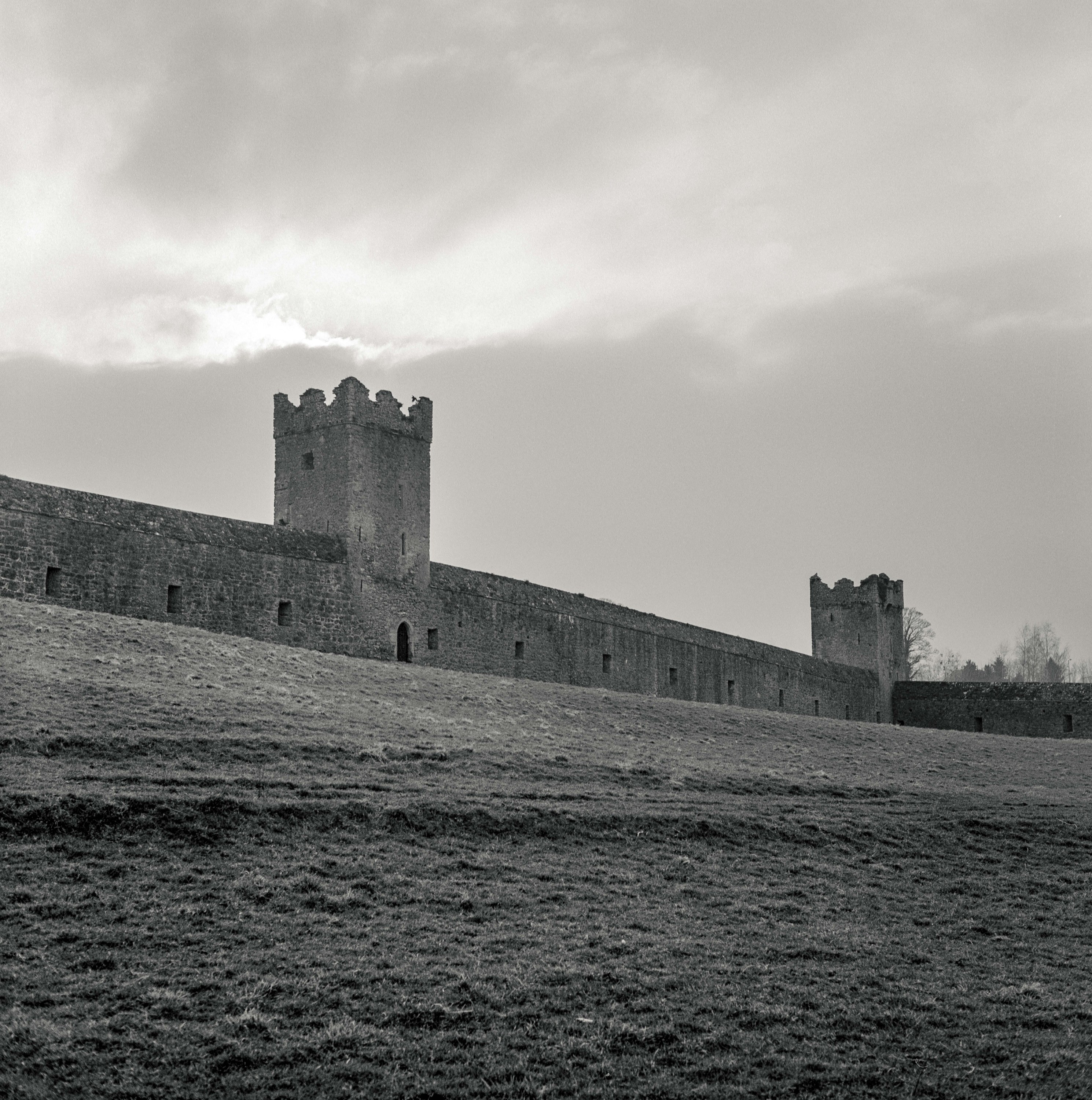
The walled precinct of Kells Priory in County Kilkenny, the enclosure locals call the Seven Castles.
The English redcoats assemble here. Kells is a walled precinct with square towers set along the wall, known locally as the Seven Castles, and the enclosure stands in for a fortified camp.
It is an open site, reached from the car park on the L1023, with a guide on hand in season.
Carrick-on-Suir, County Tipperary
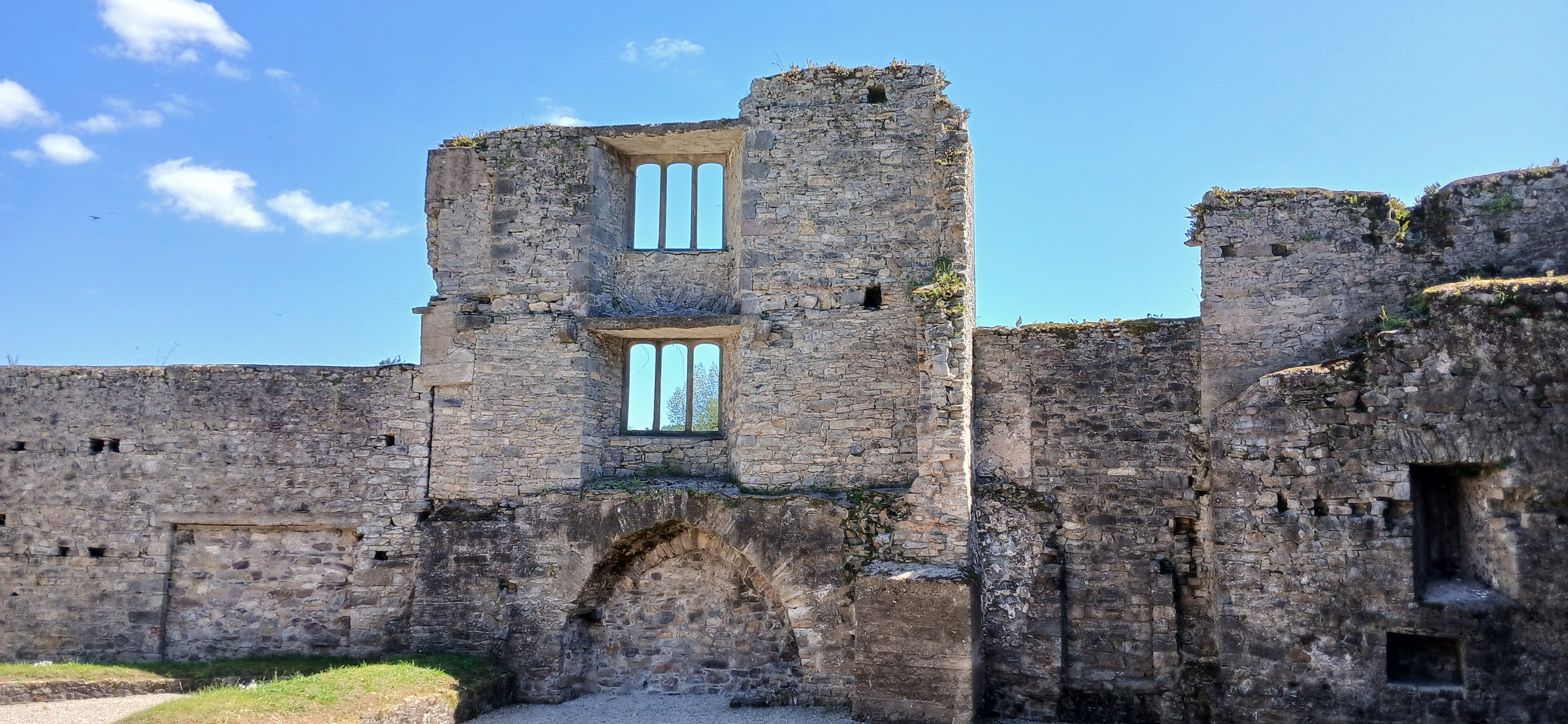
The southern range of Ormonde Castle at Carrick-on-Suir. The town, not this building specifically, is what the Warner Bros. press release names.
Barry's stretch in the English militia uses the town as background. That is as far as the production notes go: the town, not a street and not a building. Ormonde Castle stands in the middle of it, in state care, and it is the obvious candidate.
Dublin Castle, Dame Street, Dublin 2
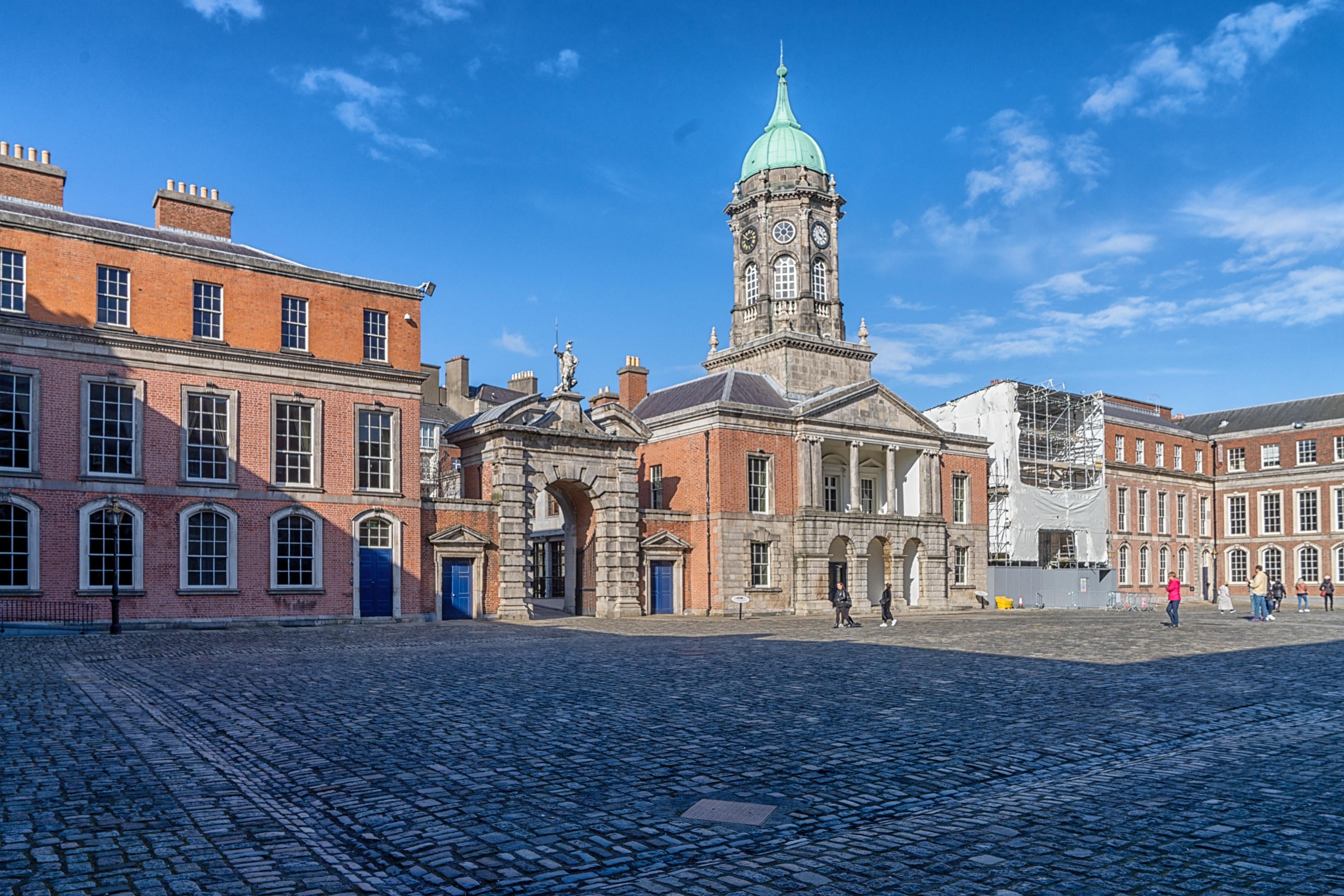
The Upper Castle Yard at Dublin Castle. The State Apartments occupy the range on the right; the Bedford Tower with its clock and copper cupola closes the yard.
Berlin again, and this time with an address: the house of the Chevalier de Balibari, the Irish-born gambler abroad played by Patrick Magee. The state rooms were dressed as a very grand hotel and as a gaming house.
The castle gave up a good deal of its own decor to do it. In the round rooms the portraits of the men who signed the 1916 Proclamation came off the walls and were stacked up with their faces turned in.
The State Apartments are open to visitors. Four more productions have filmed in the castle: Michael Collins (1996), The Medallion (2003), Becoming Jane (2007), and the pilot of The Tudors, in which it stands in for the Vatican.
From Carlow to the Cork coast
Huntington Castle, Clonegal, County Carlow
Huntington Castle at Clonegal, County Carlow, a seventeenth-century plantation castle still lived in by the family that owns it.
The family that owns Huntington still lives in it, and the castle's page for film crews invites you to see what Kubrick saw: a seventeenth-century staircase, an eighteenth-century lattice ceiling. It stops short of saying which of them he pointed a camera at.
The house is also called Clonegal Castle, and it takes visitors in season.
Carton House, Maynooth, County Kildare
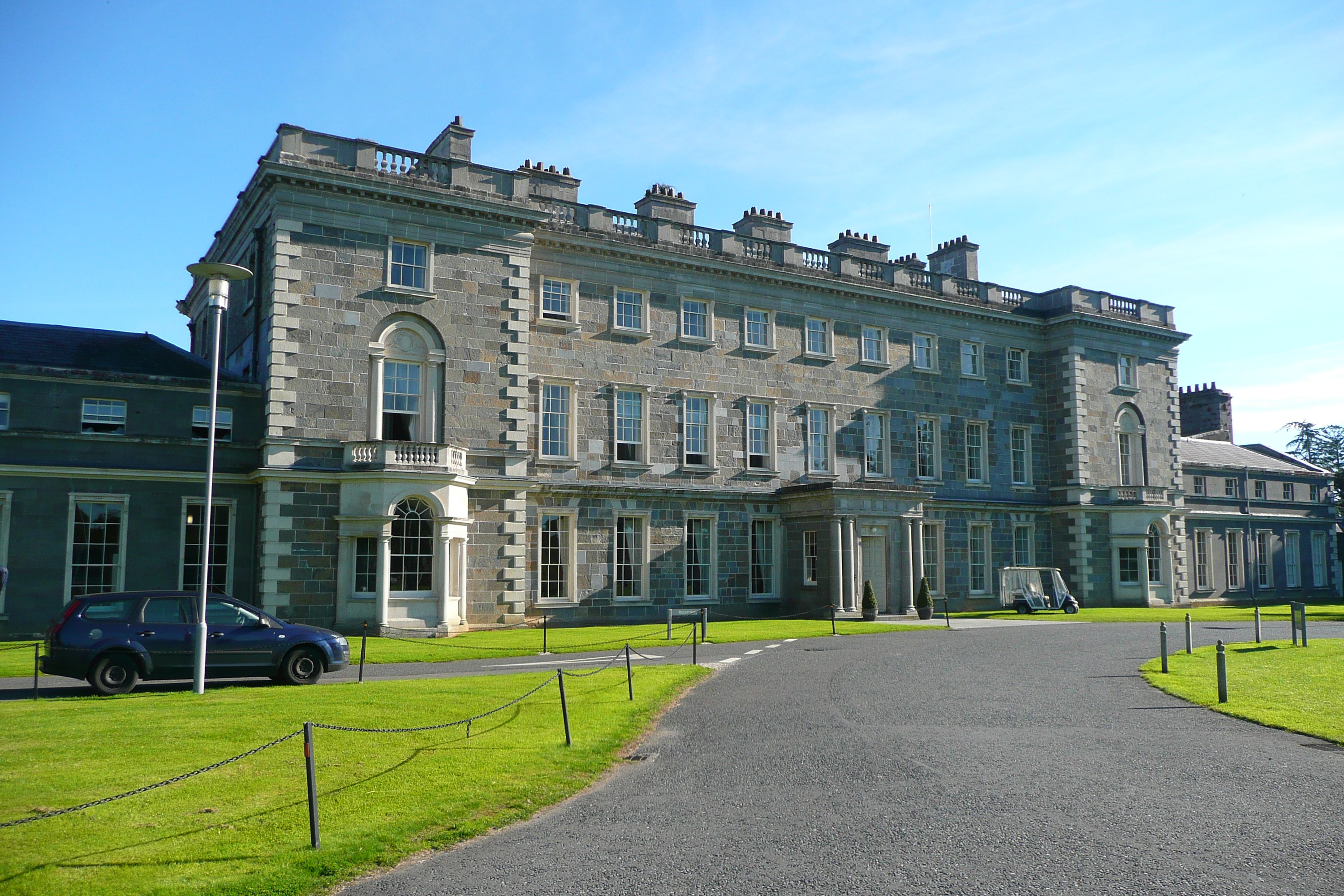
Carton House at Maynooth, County Kildare, now a hotel and golf resort.
Exteriors, somewhere on the island. The castle stands on Little Island in the Suir, and the way across is the chain ferry the hotel runs.
In September 1909 the Fitzgeralds were photographed at their own front door for the National Library of Ireland, sixty-four years before the film unit came out to the island.
Templemichael Castle, County Waterford
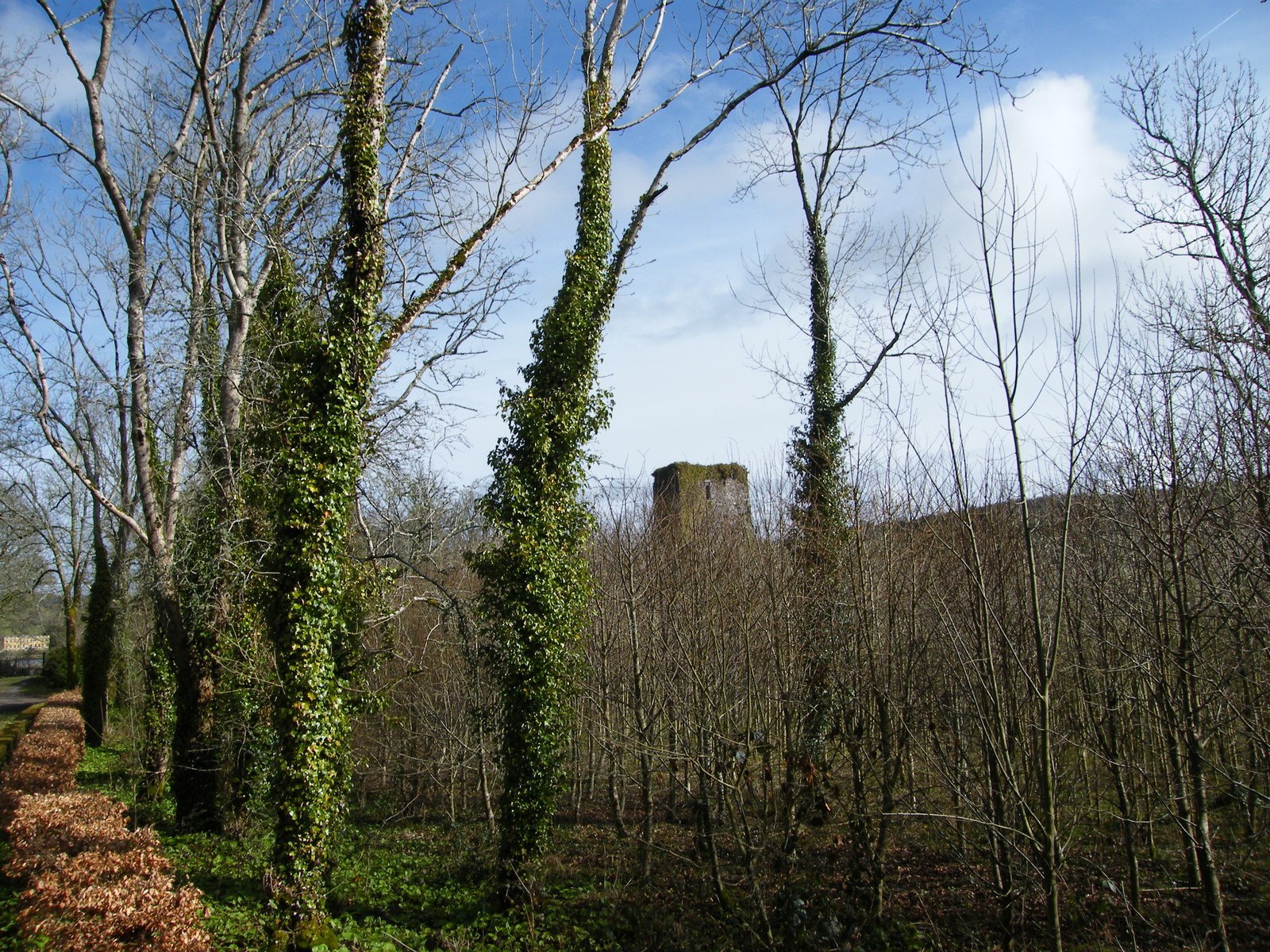
Templemichael Castle above the Blackwater, the tower house in the townland Youghal's own film history page names as a Barry Lyndon location.
A tower house above the Blackwater, six kilometres upriver from Youghal and across the county line. Youghal's own film history puts the Barry Lyndon scenes at Templemichael; the location lists for the film say Youghal, with no street and no building. One place under two names, or two days' work in two counties: nobody has settled it.
The ruin sits on private farmland by the water.
Youghal, County Cork
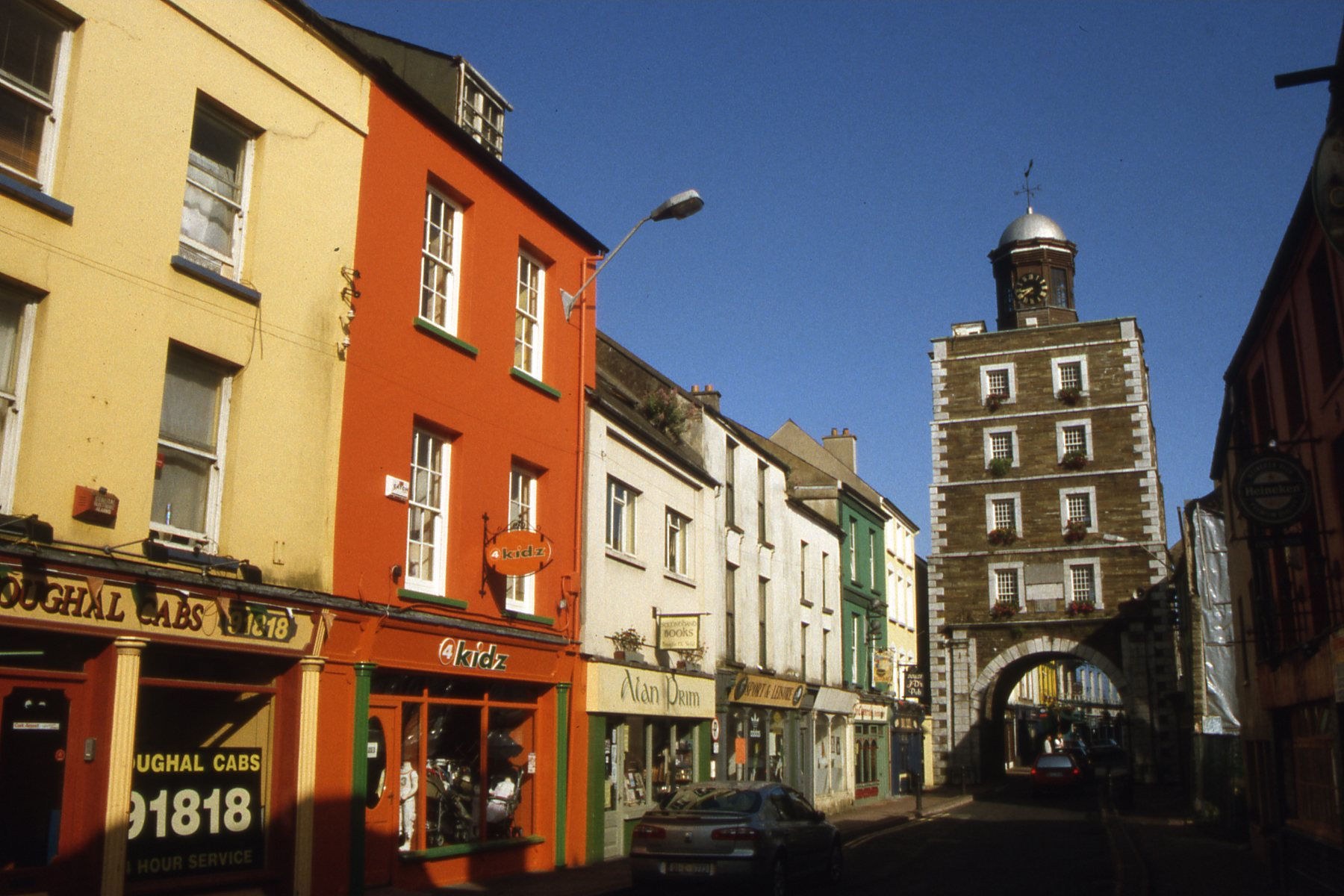
The Clock Gate Tower straddling Main Street in Youghal, County Cork.
Barry Lyndon worked in and around the town, with Templemichael upriver on the Waterford bank.
John Huston brought Moby Dick (1954) here with Gregory Peck, Richard Basehart and Orson Welles, and The Dawning (1988) followed with Anthony Hopkins and Hugh Grant. The Clock Gate Tower still straddles Main Street.
The last day in Ireland
Phoenix Park, Dublin 8
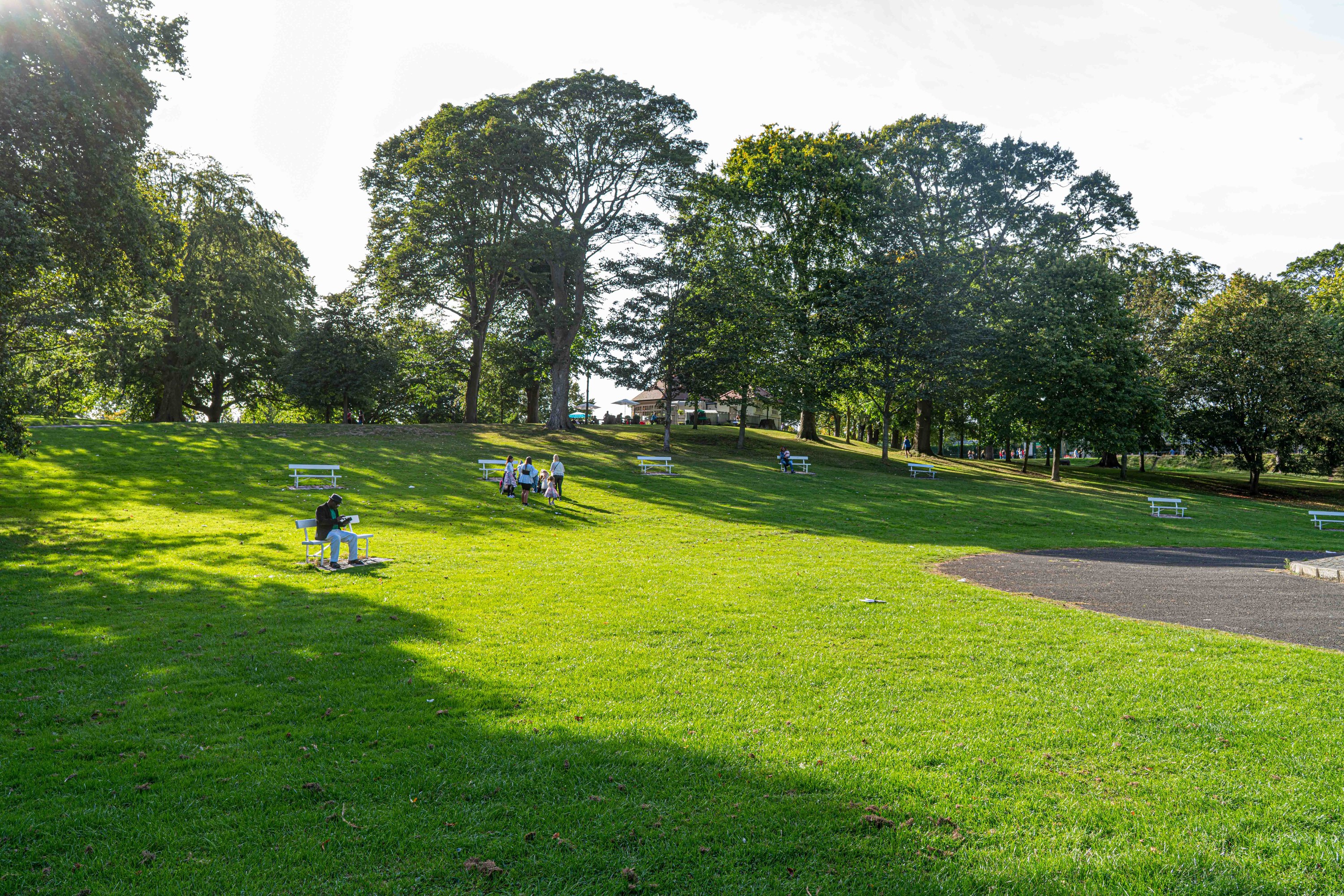
Open ground in the Phoenix Park, Dublin. The last Irish location in the film's schedule, and the day the bomb scares stopped work.
A carriage in a park, Hardy Krüger and Ryan O'Neal riding in it, and Kubrick with the radio on between takes. On 30 January 1974 fourteen bomb warnings went through the city, the day came apart, and the work here was abandoned. He was out of the country within days.
This was the last Irish location on the schedule. The park is 707 hectares of open ground, and which part of it the carriage went through has never been published.
England, where the houses play houses
Wilton House, Wilton, Salisbury, Wiltshire
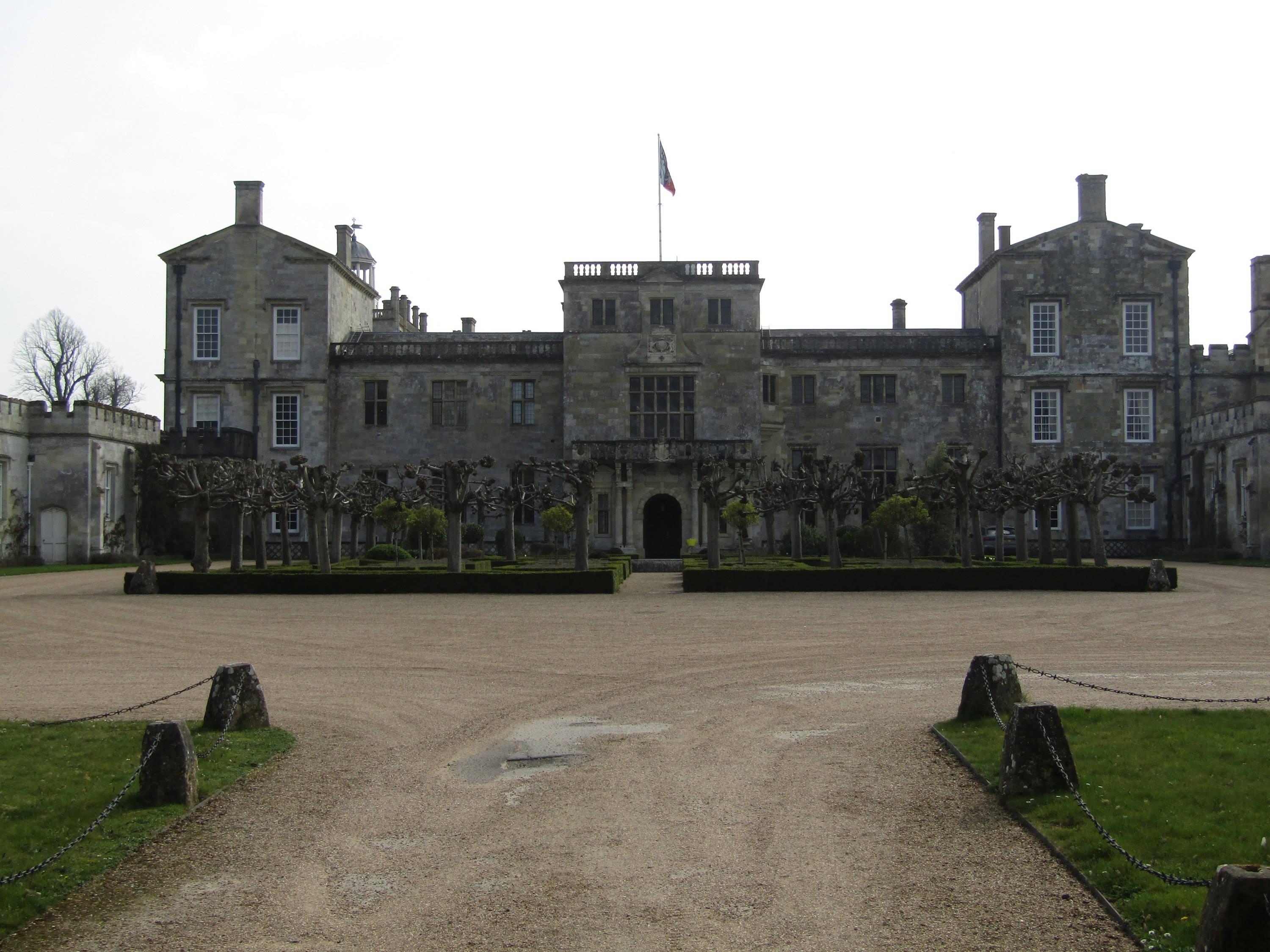
The north front of Wilton House near Salisbury, the house the art director found when the unit fled Ireland.
The art director already had the next location when Ireland ended. It was Wilton, near Salisbury, and the call was for eight o'clock on the Monday morning.
Interiors and exteriors on the Countess of Lyndon's estate were made here. Since then the house has taken The Madness of King George, Sense & Sensibility, Pride & Prejudice, Bridgerton and The Diplomat in 2024.
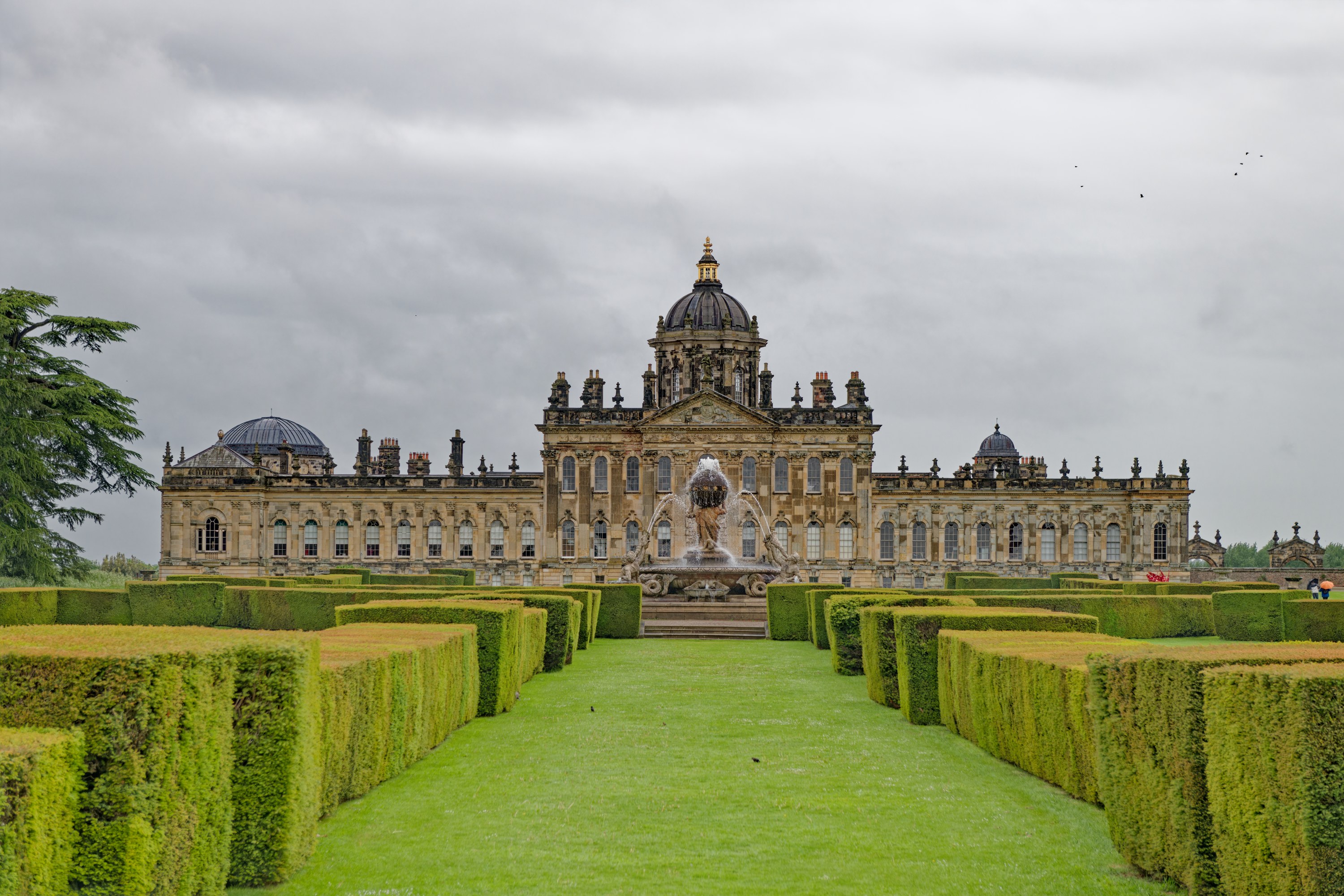
Castle Howard, York, North Yorkshire
Castle Howard from the south, with the Atlas Fountain and the parterre. The house plays the Lyndon family seat.
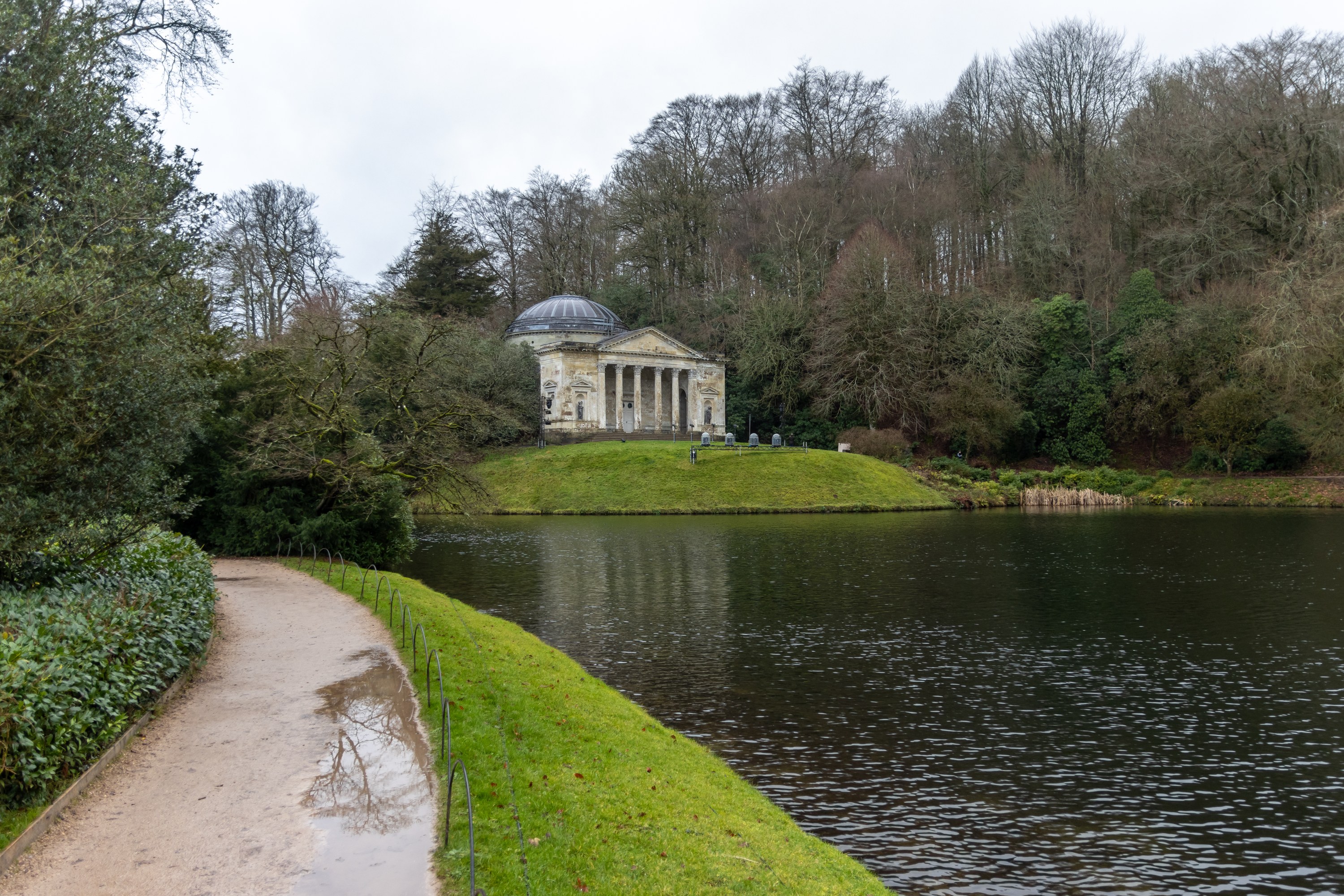
Barry sets eyes on the Countess of Lyndon for the first time in a landscape garden, and the garden is Stourhead: the lake, with the Pantheon on the far bank and the Temple of Apollo above the water.
Thirty years later the same temple carries the proposal scene in the 2005 Pride & Prejudice.
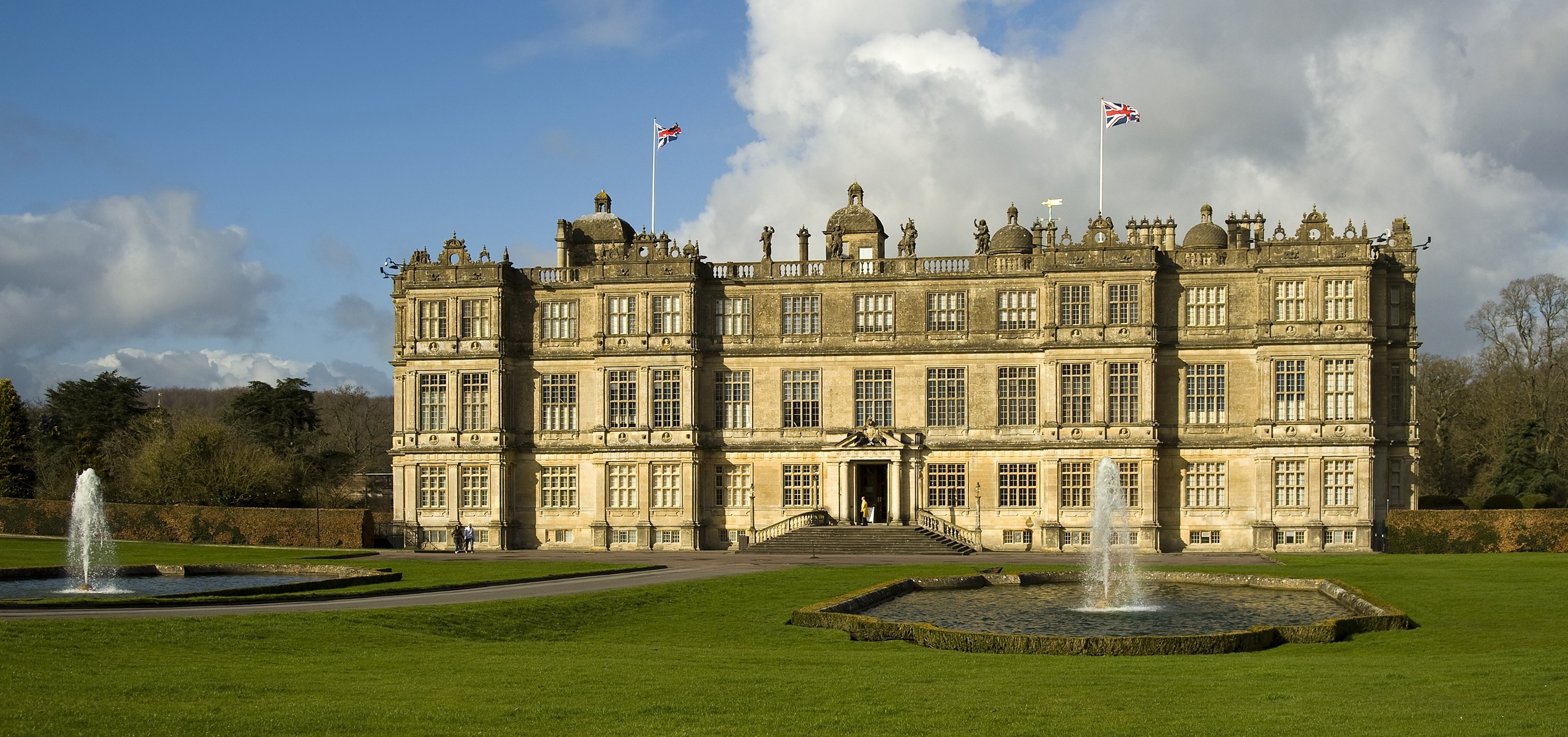
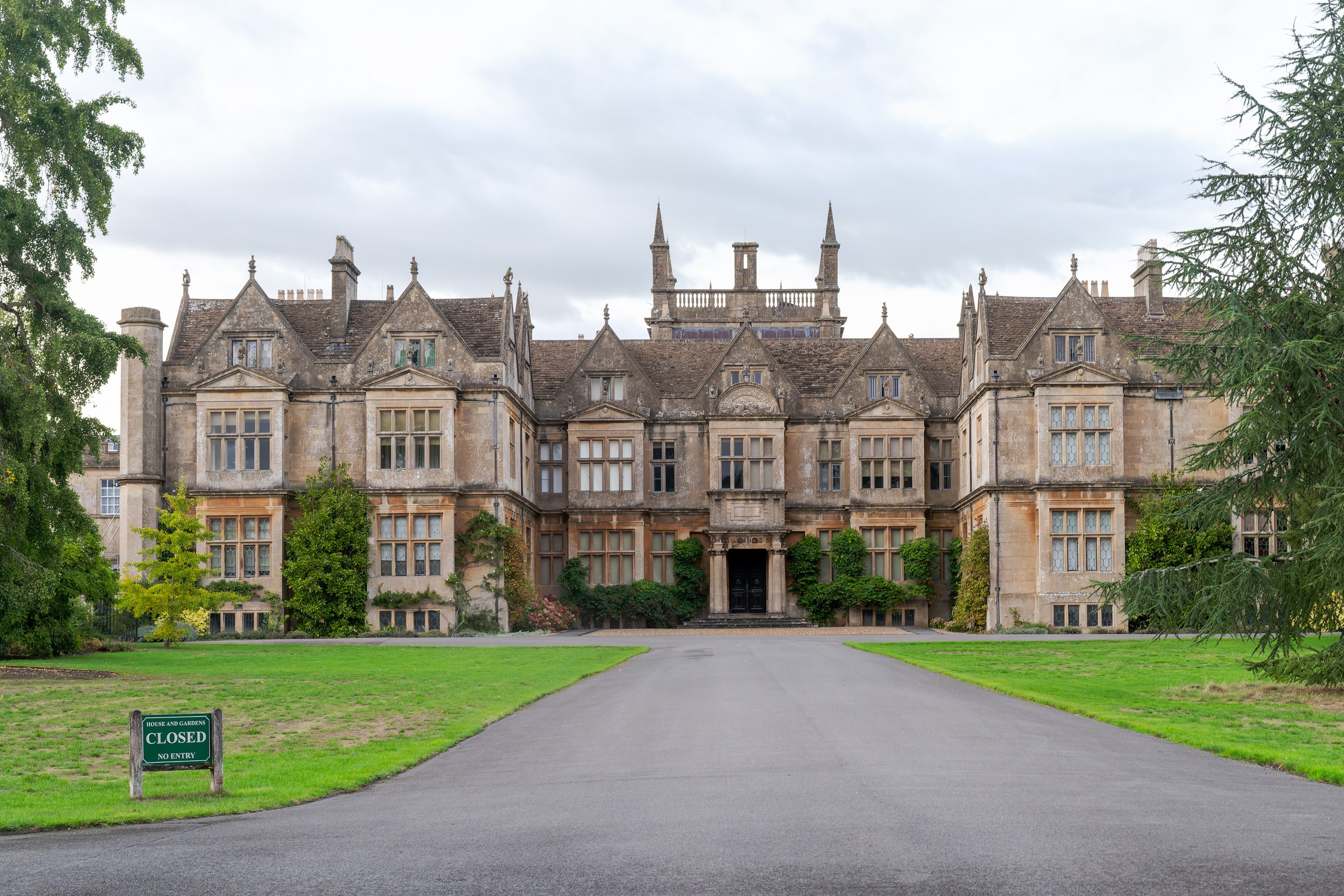
Longleat House, Warminster, Wiltshire
Longleat House in Wiltshire. The chapel here is where Barry marries the Countess of Lyndon.
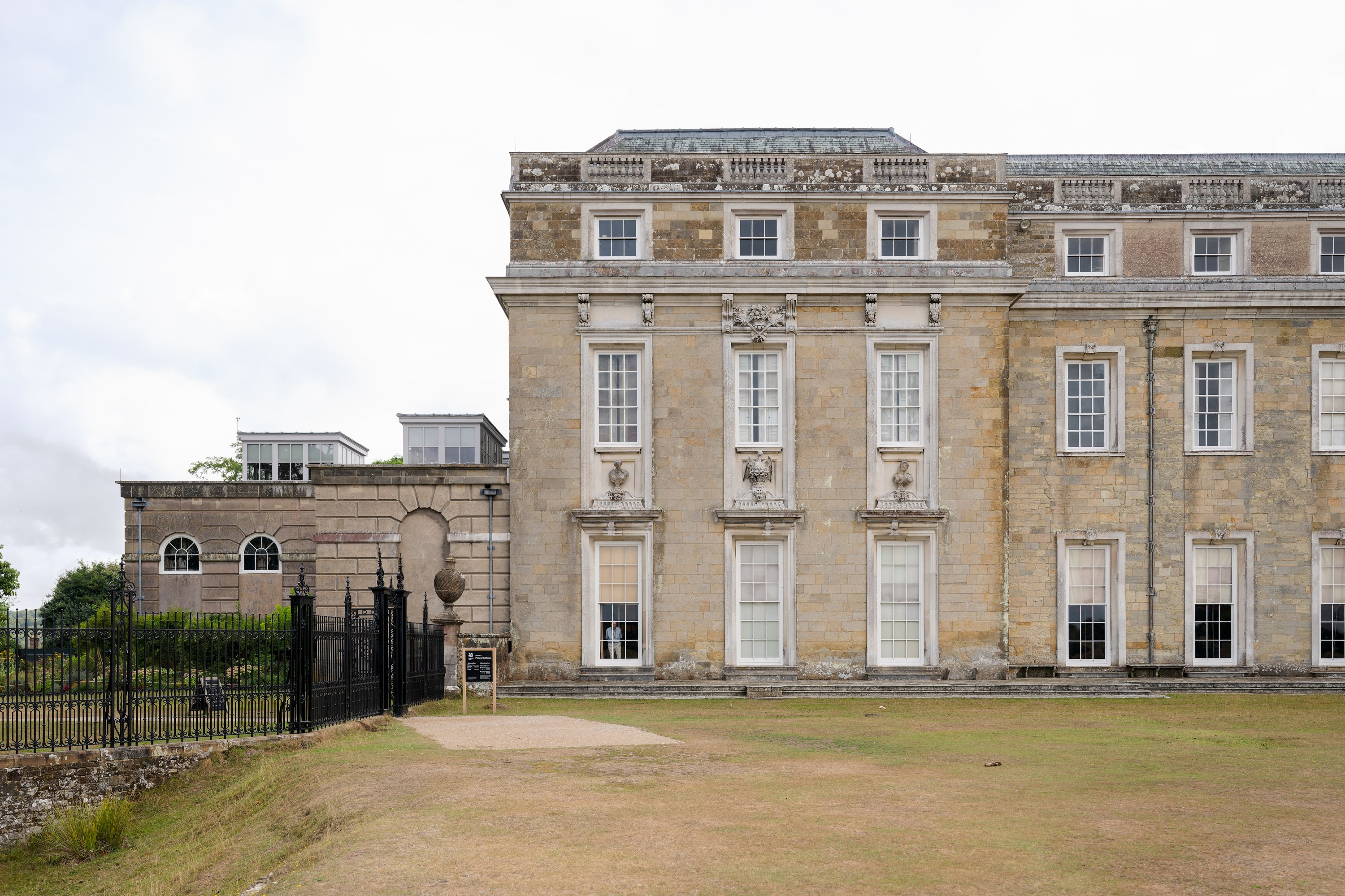
Historic England counts Petworth among the film's buildings. What Petworth gives the film is the chapel, and the chapel is the wedding. The production notes put the wedding at Longleat. Two chapels, one wedding.
The house is not short of other credits: Elizabeth: The Golden Age (2007), Maleficent and Mr Turner (both 2014), Rebecca and Bridgerton (both 2020).
Corsham Court, Church Street, Corsham, Wiltshire
Corsham Court in Wiltshire, where the press release places a musical sequence.
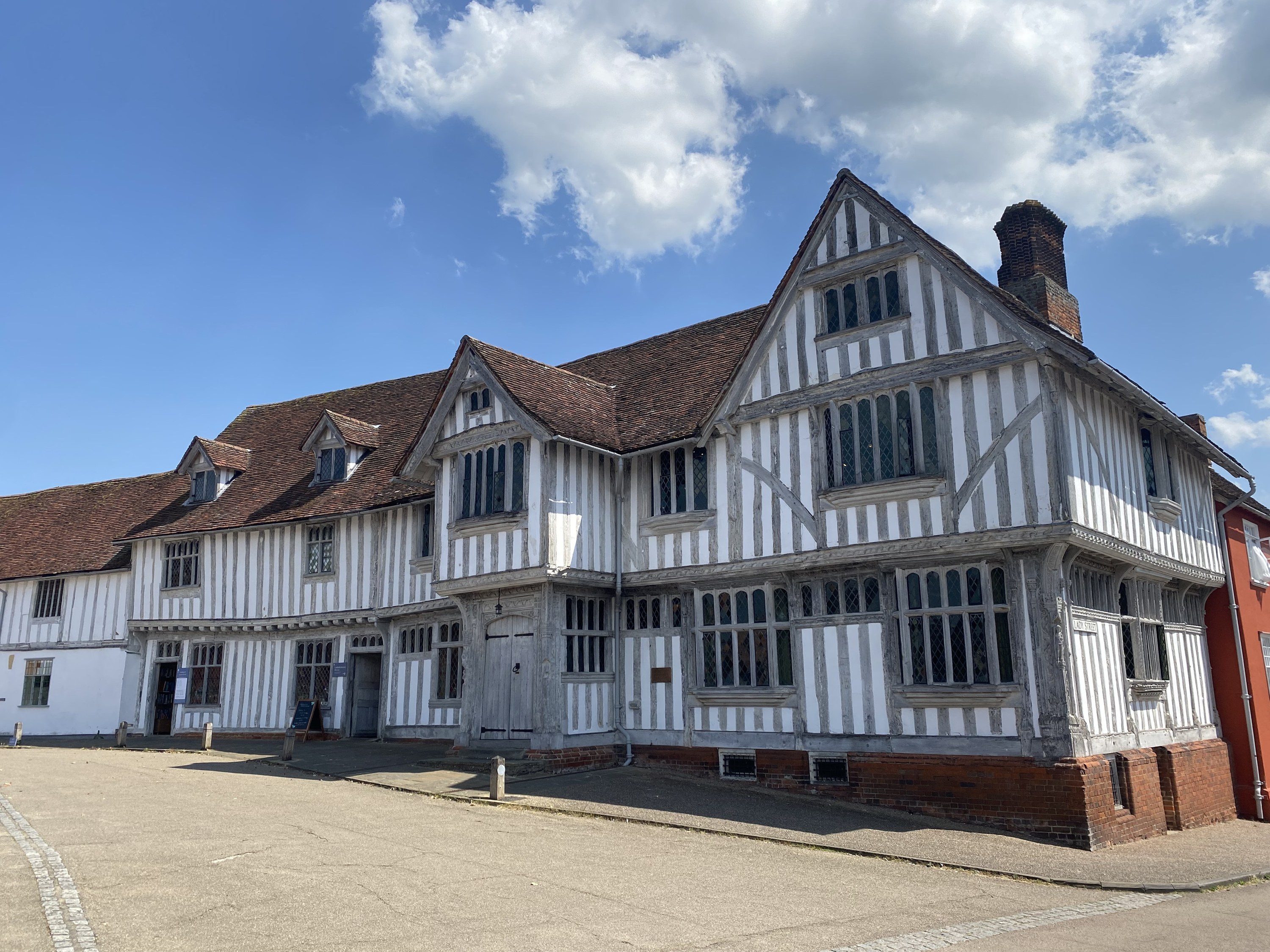
The amputation scene, in a timber-framed hall standing on the market place of a Suffolk village.
The same guildhall is Godric's Hollow in Harry Potter and the Deathly Hallows – Part 1. The square immediately outside was where Witchfinder General staged its witch-burning in 1968, and Pasolini dressed the same village as medieval London for The Canterbury Tales in 1972.
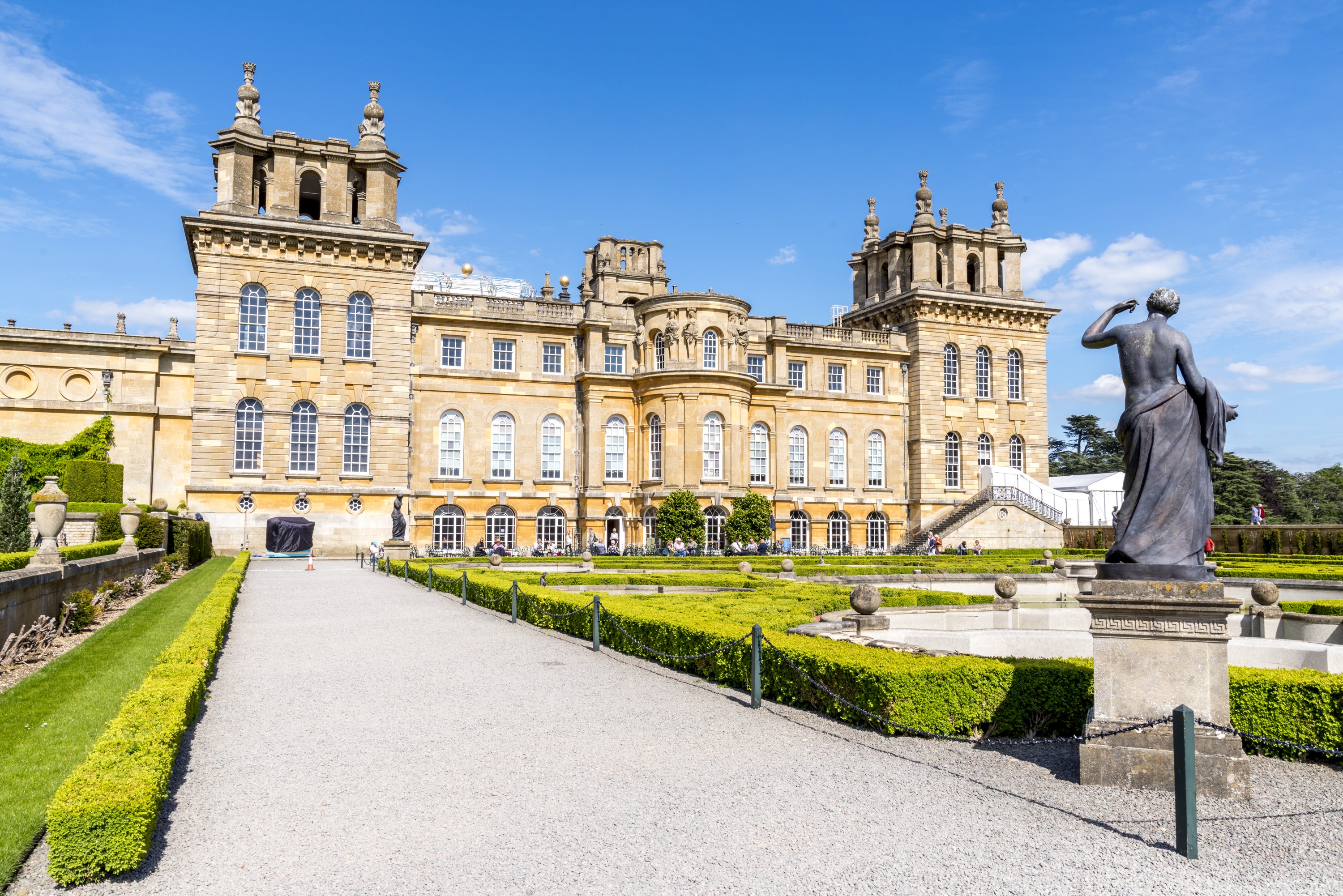
Blenheim is in the film, and what it plays has never been published. The palace was built by the Duke of Marlborough to mark his victory at Blenheim in 1704, and it is Winston Churchill's ancestral home.
Harry Potter, Cinderella, Bridgerton and Queen Charlotte have all filmed there since.
Compton Acres, 164 Canford Cliffs Road, Poole, Dorset
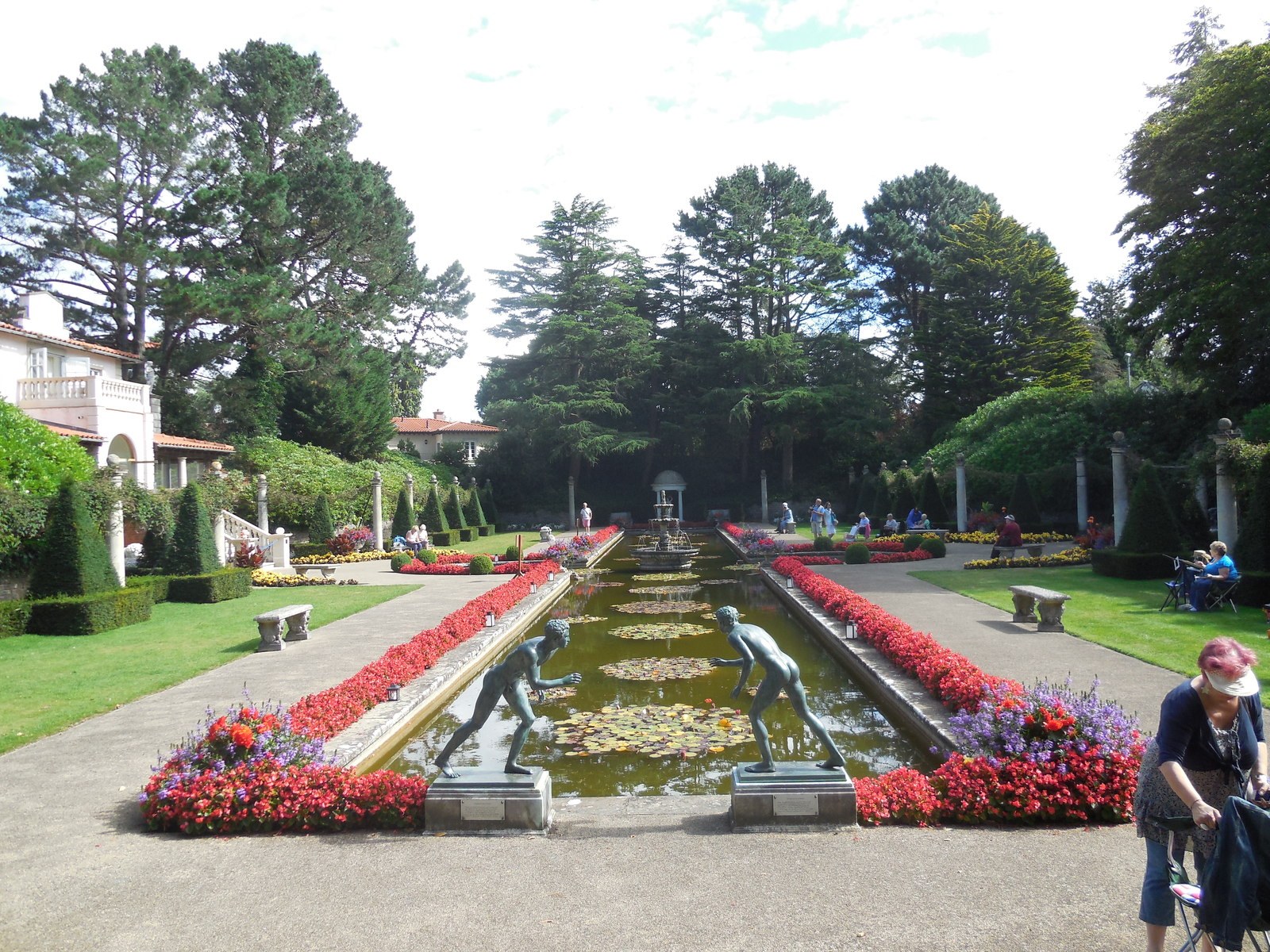
The Italian Garden at Compton Acres in Poole, the Dorset garden Historic England names among the film's landscapes.
The Italianate garden at Compton Acres is one of the film's landscapes: a long formal water canal with fountains, stone urns down the sides of it, and a loggia at the far end. It is a private garden in Poole, open to visitors.
Berlin is in Potsdam
Neues Palais and the Communs, Park Sanssouci, Potsdam
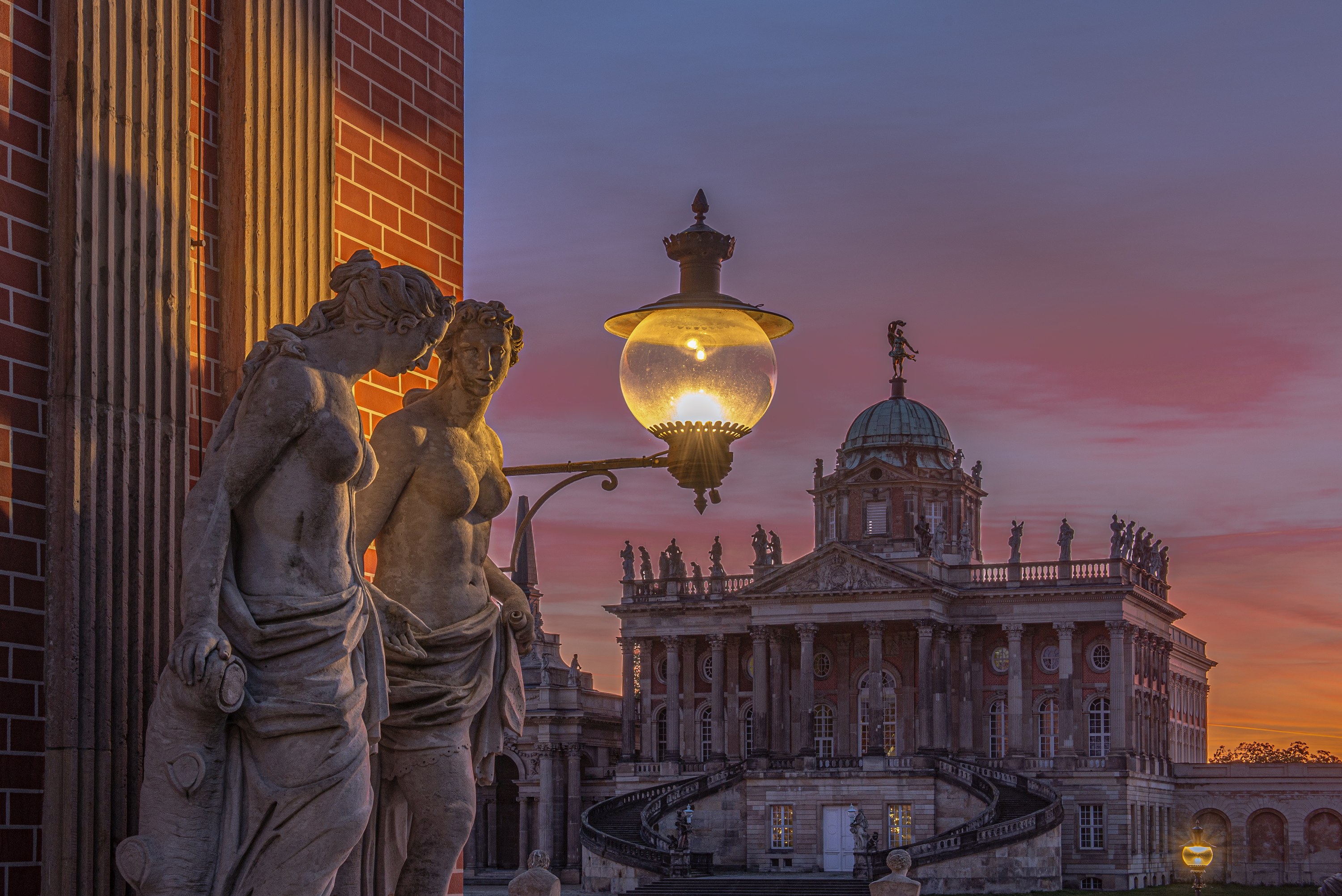
The Neues Palais at Potsdam with the Communs beyond. The palace plays the royal palace in Berlin, the square and the Communs play Unter den Linden.
One of the hardest things to find was a run of period buildings standing close enough together to read as a single grand street in Berlin a few years after the Seven Years' War.
They found it at the western end of Park Sanssouci, in what was then East Germany. The Neues Palais plays the royal palace of Berlin. The Mopke, the great forecourt in front of it, with the two Communs facing each other across the square, plays Unter den Linden. The establishing shot took crowds of extras and horse-drawn carriages, and the coaches came from the East German film studios.
The palace is a museum. The Communs hold part of the University of Potsdam.
West Germany and Scotland
Ludwigsburg Palace, Schlossstraße 30, Ludwigsburg
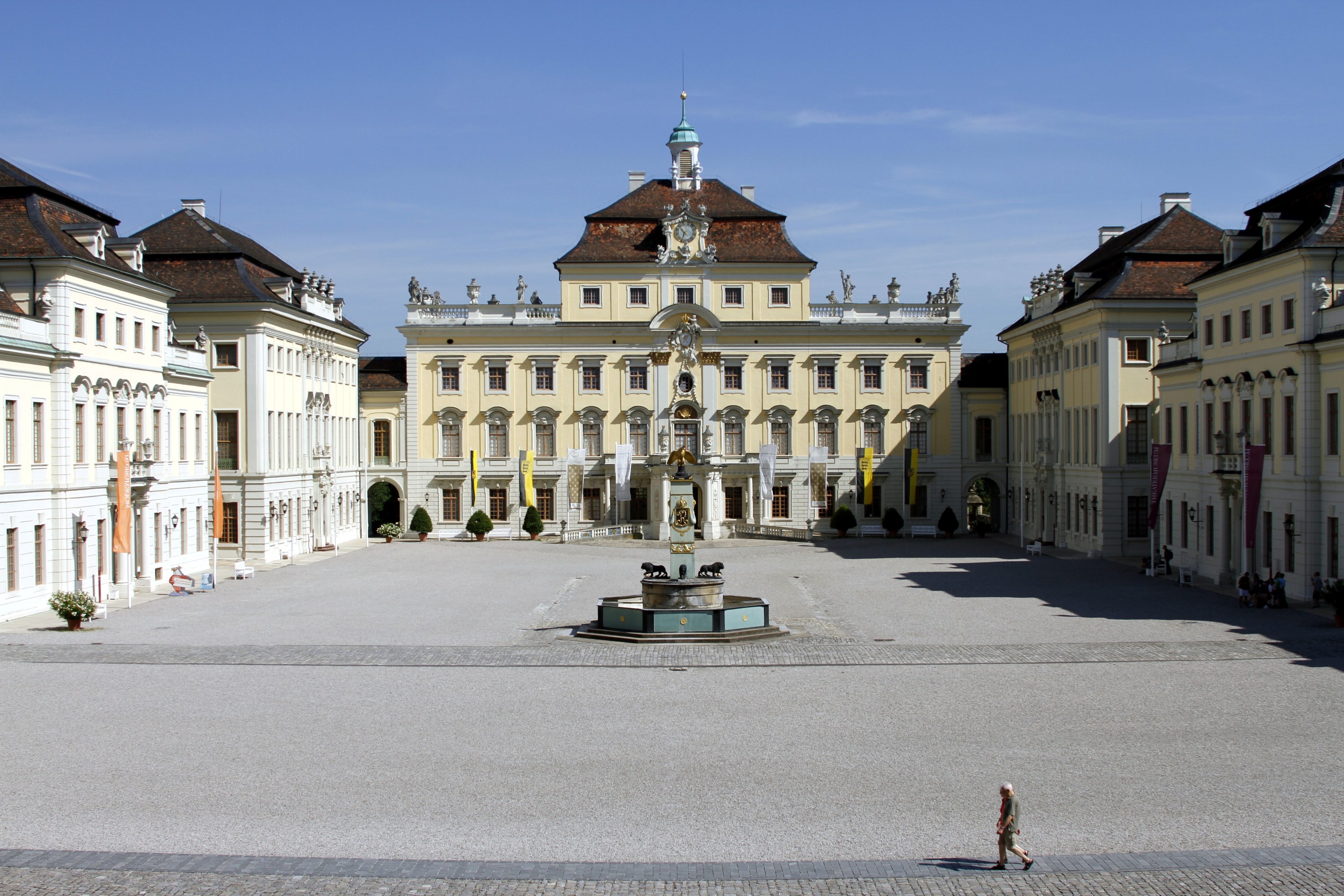
The central court of Ludwigsburg Palace near Stuttgart, looking north.
Warner Bros. told the press in 1975 that the film had been shot in its entirety in southern Ireland, England and East Germany. Ludwigsburg and Hohenzollern are in West Germany, and Dunrobin is in Scotland.
Ludwigsburg, north of Stuttgart, is named as a location by the Kubrick exhibition of the Deutsches Filmmuseum in Frankfurt and by German accounts of the film. What was filmed there, nobody has said. The palace, its museums and the Blühendes Barock gardens are open to visitors.
Hohenzollern Castle, Hechingen
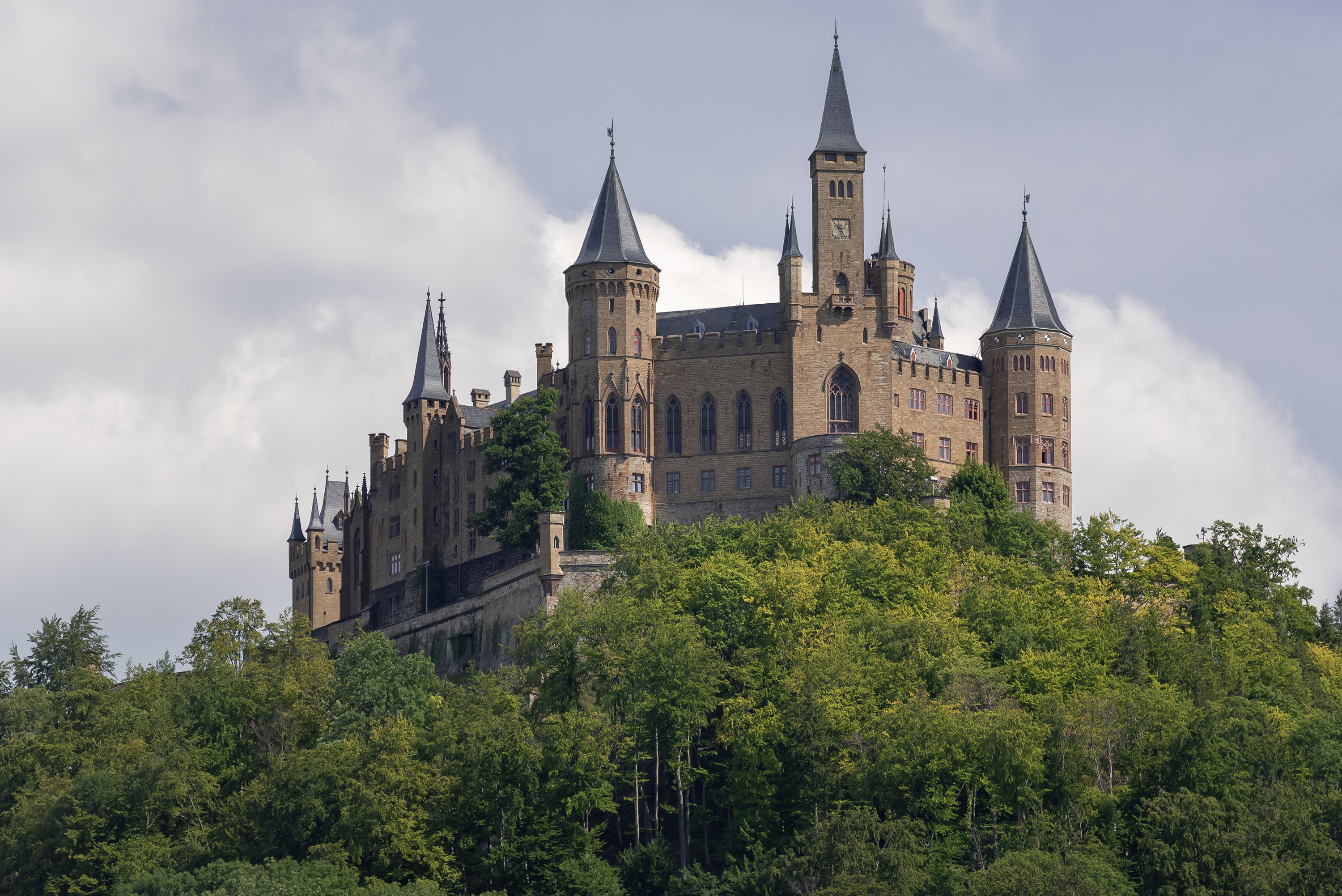
Hohenzollern Castle at Hechingen, one of the southern German locations the set designer Jan Schlubach chose.
Jan Schlubach, the set designer who found the German locations, chose Hohenzollern among them. He is also the man who supervised the establishing shot at Potsdam.
The castle is open to visitors.
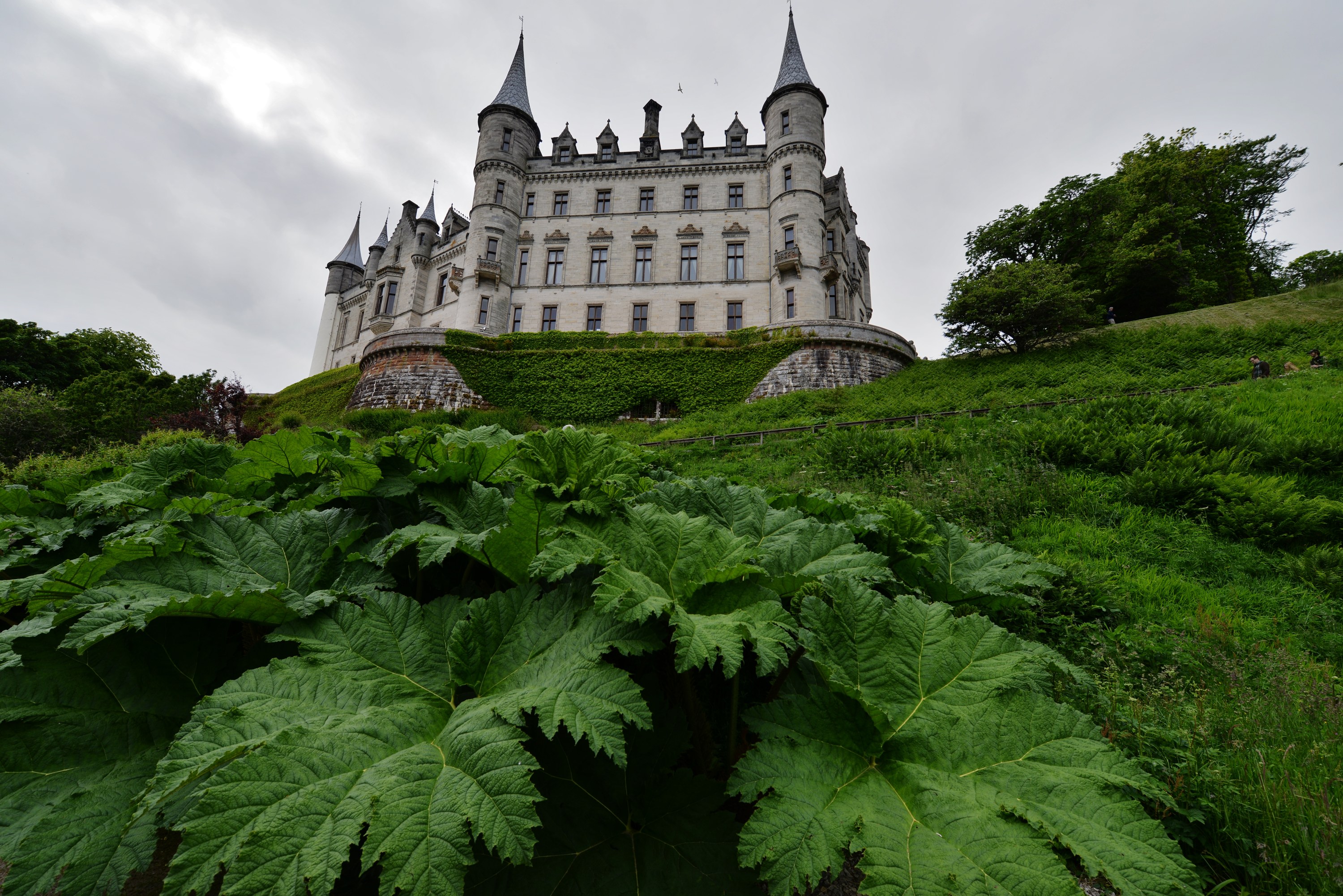
Dunrobin Castle, Golspie, Sutherland
Dunrobin Castle above its formal terraces in Sutherland, the exterior that stands in for the spa at Spa in Belgium.
Barry meets the Countess of Lyndon and Lord Bullingdon at the spa in Spa, Belgium, and the exterior and garden of that spa are at Dunrobin, on the Sutherland coast. The garden is a run of formal terraces below the castle front.
Scotland is outside the studio's sentence altogether. Dunrobin is privately owned, and the castle, its museum and the gardens take visitors in season.
The house that burned
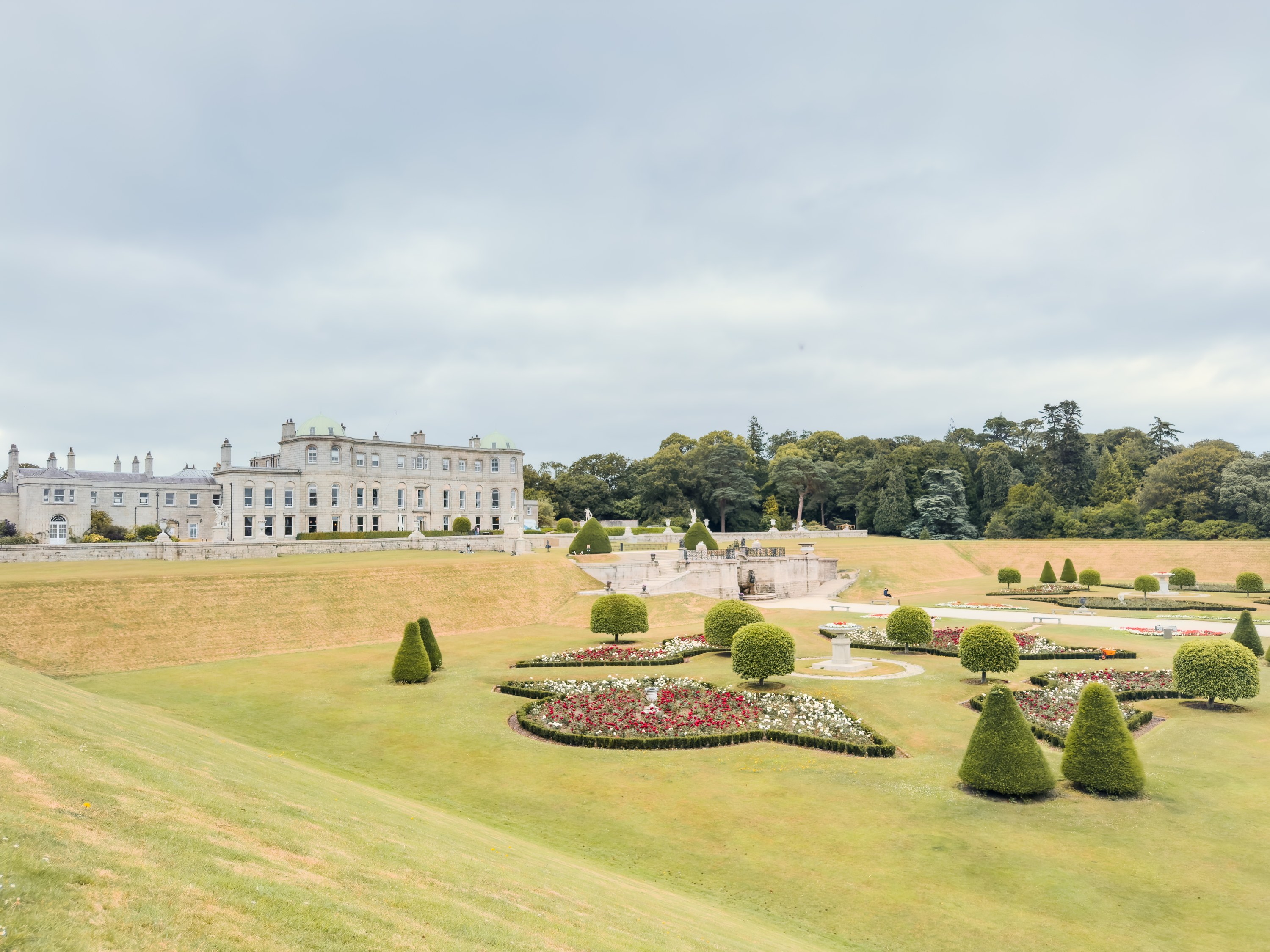
Powerscourt House, Enniskerry, County Wicklow
Powerscourt House above its Italianate terraces, July 2025. The interiors Kubrick filmed here burned in November 1974 and the house was rebuilt from the shell in the 1990s.
Forty Volkswagen vans and the rest of the convoy came in through the gates and up the drive, and the main hall of the house became a German gaming room lit by nothing but candles. There was wax across the floor by the end of it. The production notes say the estate was paid a thousand pounds a day and that the rooms were handed back as they had been found.
The ballroom is where Barry, planted at the table as the Chevalier's confederate, watches the play. The saloon carries more than one scene, and it is the room with the Wicklow Mountains in the window.
Powerscourt had been on screen before. Henry V used the house, the gardens and the waterfall in 1944; The Count of Monte Cristo came in 2002 and The Tudors in 2007.
In November 1974, a few months after the crew left, fire went through the house and took the interiors with it. The shell stood for years and was rebuilt in the 1990s. What is inside now is shops and a restaurant, and what people photograph is the front above the Italianate terraces, with the lily pond at the bottom of them. The rooms the fire took are in this film because Kubrick built none of them: a saloon lit by candles, dressed as a gaming house in Berlin, with the mountains of County Wicklow showing through the window.