Netflix · three episodes · written by Chris Chibnall
Where was Agatha Christie's Seven Dials filmed?
In the story, Seven Dials is a slum in the London of 1925, and the club that gives the series its name keeps its door there. The real Seven Dials, in Covent Garden, is very smart these days, and its streets are full of businesses. Dee Gregson, the supervising location manager, looked everywhere for a cluster of streets like it, but closing all those businesses to dress them for the period was more than the production could afford. A good deal of the neighbourhood on screen was made in post-production, she said, and the club went to Bristol: its rooms were built as sets at a studio there, and its alley and its street were found in the city.
24
places on the route
Bristol first, then Bath, the two Gloucestershire houses, the railway in West Somerset and Ronda — switch with the buttons above. Click a point to jump to its entry.
Where was Seven Dials filmed? In the West of England, over the summer of 2024, and London itself is not on screen anywhere. Bristol plays most of the capital, from Scotland Yard to the club. Bath gives a London street for a car chase and the square of a market town. Chimneys, the Caterhams' hard-up family seat, is Badminton House in South Gloucestershire, and Wyvern Abbey is Westonbirt House near Tetbury. The climactic train runs on the West Somerset Railway, out of Minehead and along the beach at Blue Anchor Bay, and Netflix puts the Foreign Office scenes in Cardiff. When the English shoot was over, a reduced crew went to Ronda, in Andalusia, for the sequences that open the first two episodes.
Where was Seven Dials filmed in Spain?
The series opens in Ronda and returns to it at the start of the second episode. The opening is Chris Chibnall's invention, the executive producer Suzanne Mackie told Variety, but in Christie's manner: the novelist's prologues, Mackie said, sometimes open far from home, somewhere remote and foreign, before the story proper starts. One key location in the town was enough to bring the production to Spain. The Ronda scenes were filmed in September 2024.
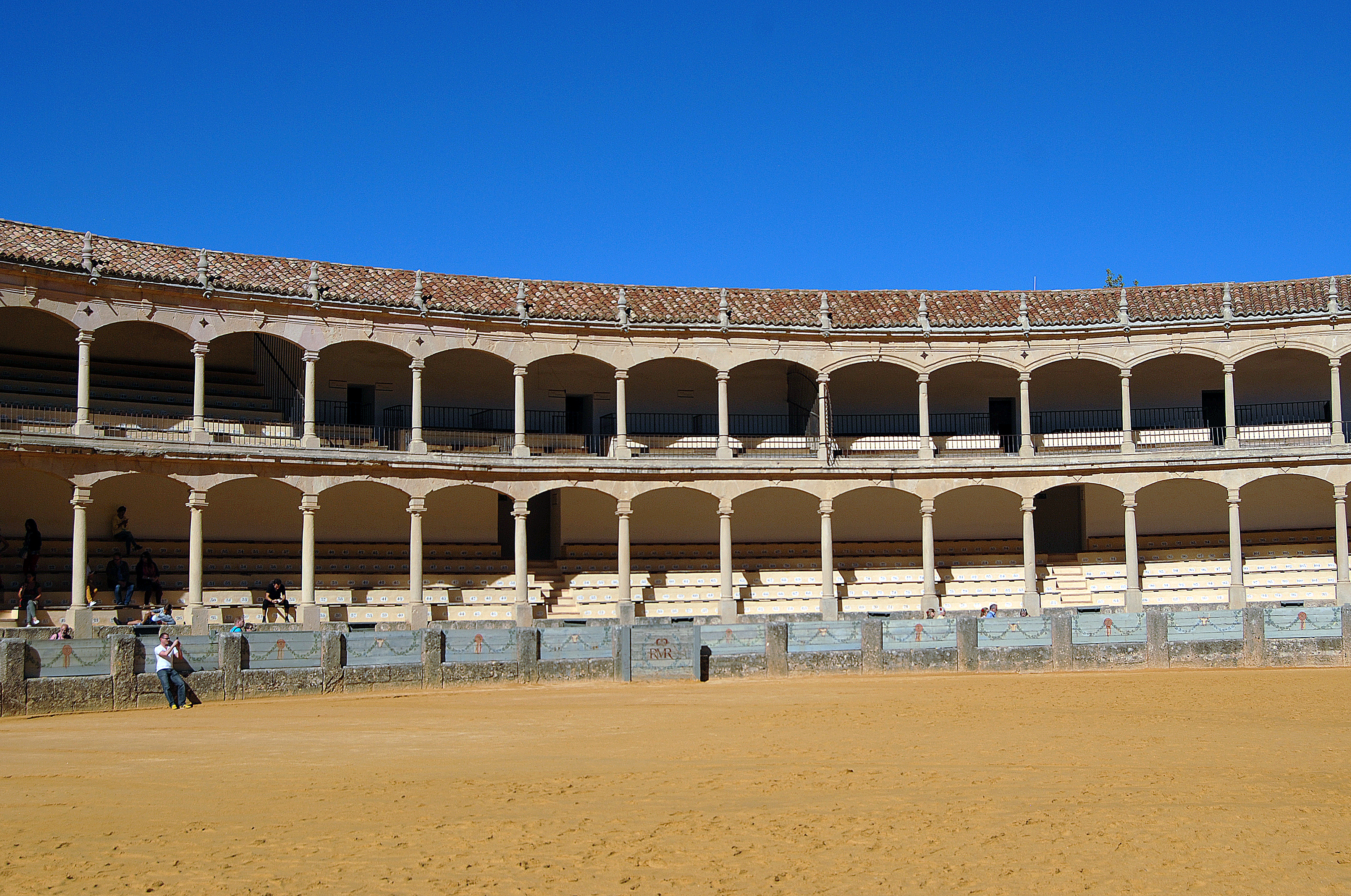
Plaza de Toros de Ronda
Inside the Plaza de Toros de Ronda on 21 October 2015: the sand ring and its two tiers of stone arcades.
The bullring of the Real Maestranza de Caballería, on the western edge of the town centre, about 210 m north-west of the bridge.
Bundle's father, Lord Caterham, played by Iain Glen, dies in this ring in the scene that opens the series. Permission to film inside took months of negotiation, and the Spanish location manager, Enrique Martin Guadamuro, says every camera position was planned around the arena's history and architecture.
On the first day of filming, reporters from the Olive Press, an English-language paper in Spain, watched from the roof terrace of the Catalonia hotel opposite. From there they saw Martin Freeman stride into the ring in a beige safari suit and a Panama hat.
The ring is stone, every seat in it is under a roof, and it was finished in 1785, a year after a first opening ended with part of the stands collapsing. Its design is attributed to José Martín de Aldehuela, the architect of the bridge two minutes' walk away.
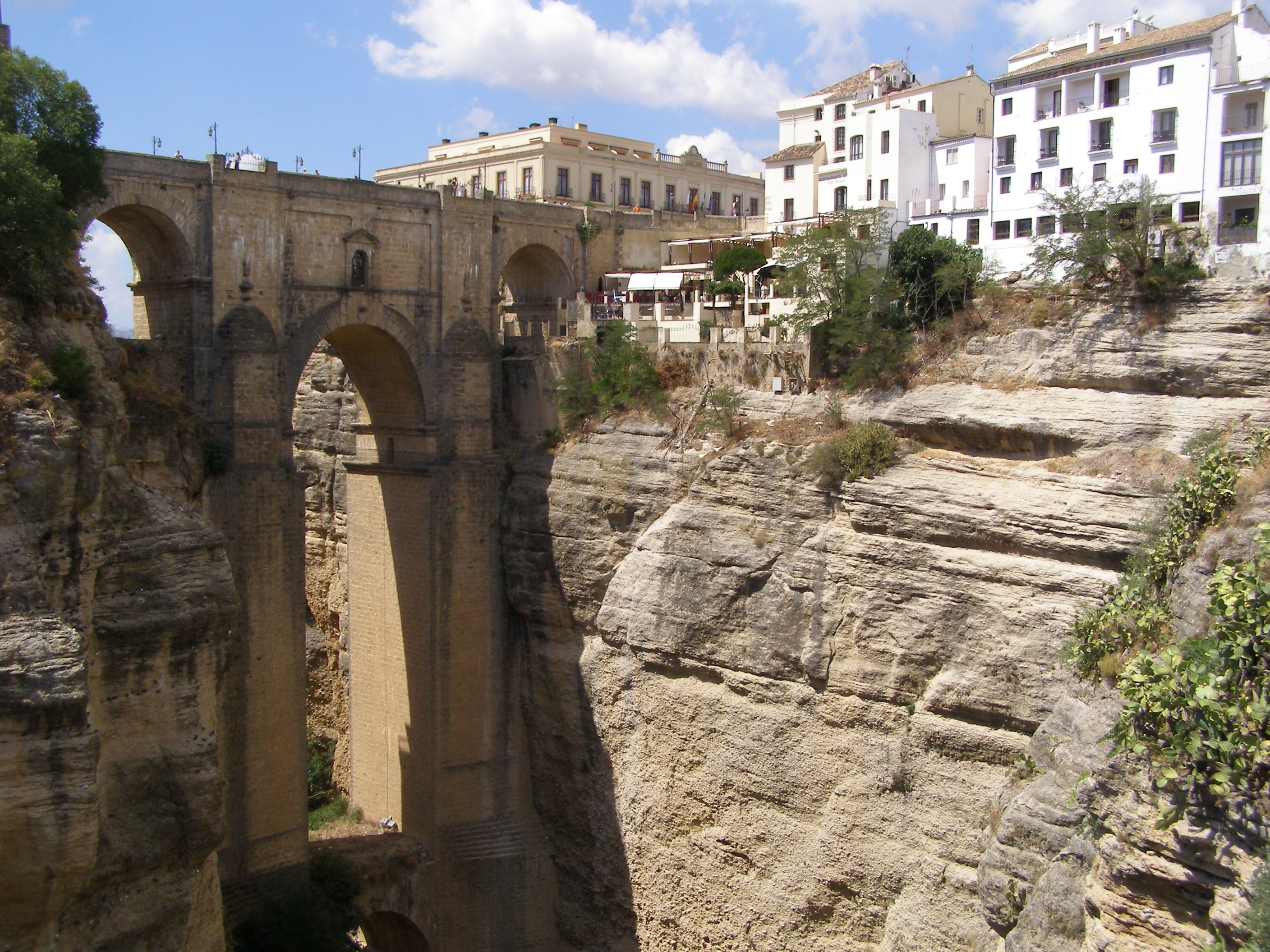
Puente Nuevo
The Puente Nuevo across El Tajo gorge on 4 September 2010.
Across El Tajo gorge, in the middle of Ronda. Open to walk over.
Mackie spoke of "an action sequence across the viaduct", and Guadamuro of a gorge and a historic bridge that gave the scenes a scale no studio could. Neither names the bridge, and three bridges cross the gorge. The Spanish press does name it: the Olive Press and ¡HOLA! both put the filming on the Puente Nuevo, the newest and largest of the three. The confrontation on the bridge is a flashback in the second episode.
The bridge took 34 years to build and was finished in 1793. An earlier bridge at this height collapsed in 1741 and killed 50 people. The chamber above the central arch was once a prison, and you reach it through the old guardhouse, which now holds an exhibition on the bridge.
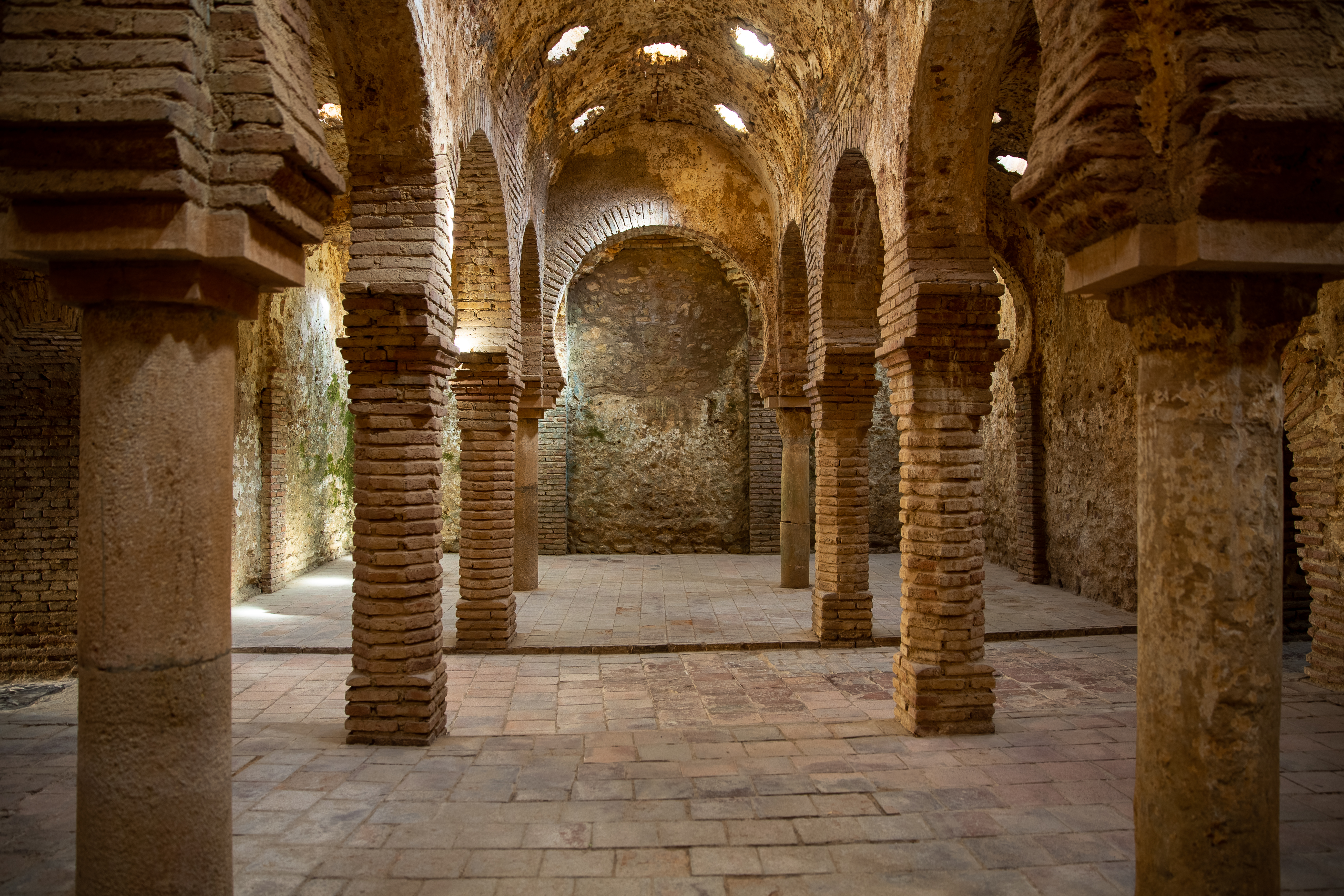
The Alameda del Tajo, the Arab baths and the old town
Horseshoe arches inside the Arab baths of Ronda on 24 October 2021.
Over the same days, the Olive Press reported, Iain Glen was seen filming around the town: in the Alameda del Tajo, the park beside the bullring, on the Plaza de la Duquesa de Parcent, at the Arab baths and at the Fuente de los Ocho Caños. According to ¡HOLA!, the Casa del Rey Moro was among the settings too.
The Alameda ends in a row of balconies on the edge of the gorge. The baths are Muslim-era steam baths that stood at the foot of a city gate, long since gone. The Casa del Rey Moro has a water mine from the same period, which drew water up from the river, and a garden by Jean-Claude Nicolas Forestier; both are open to visitors.
Which house is Chimneys?
Where was Seven Dials filmed for its country houses? In Gloucestershire, at two houses about nine kilometres apart.
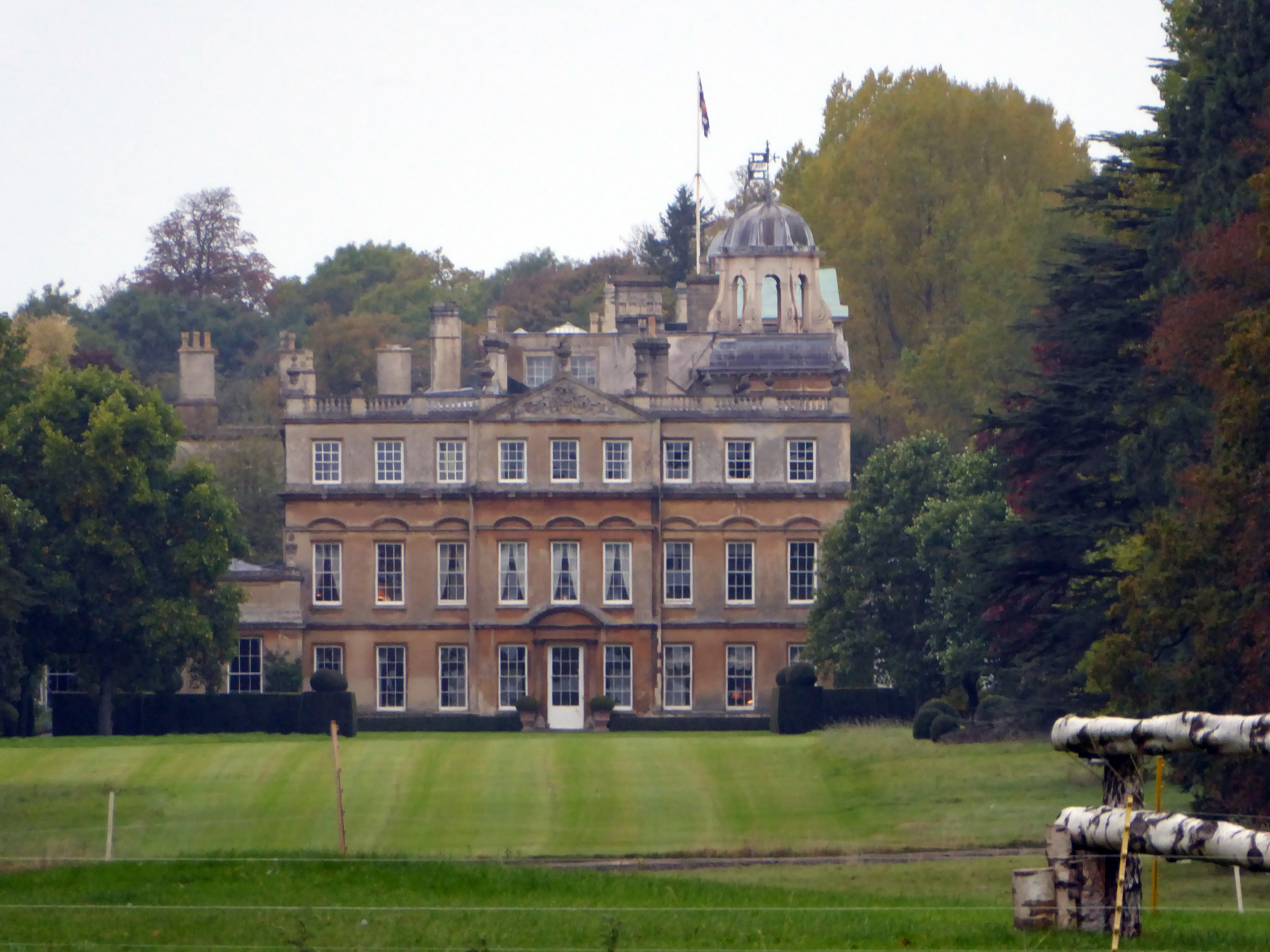
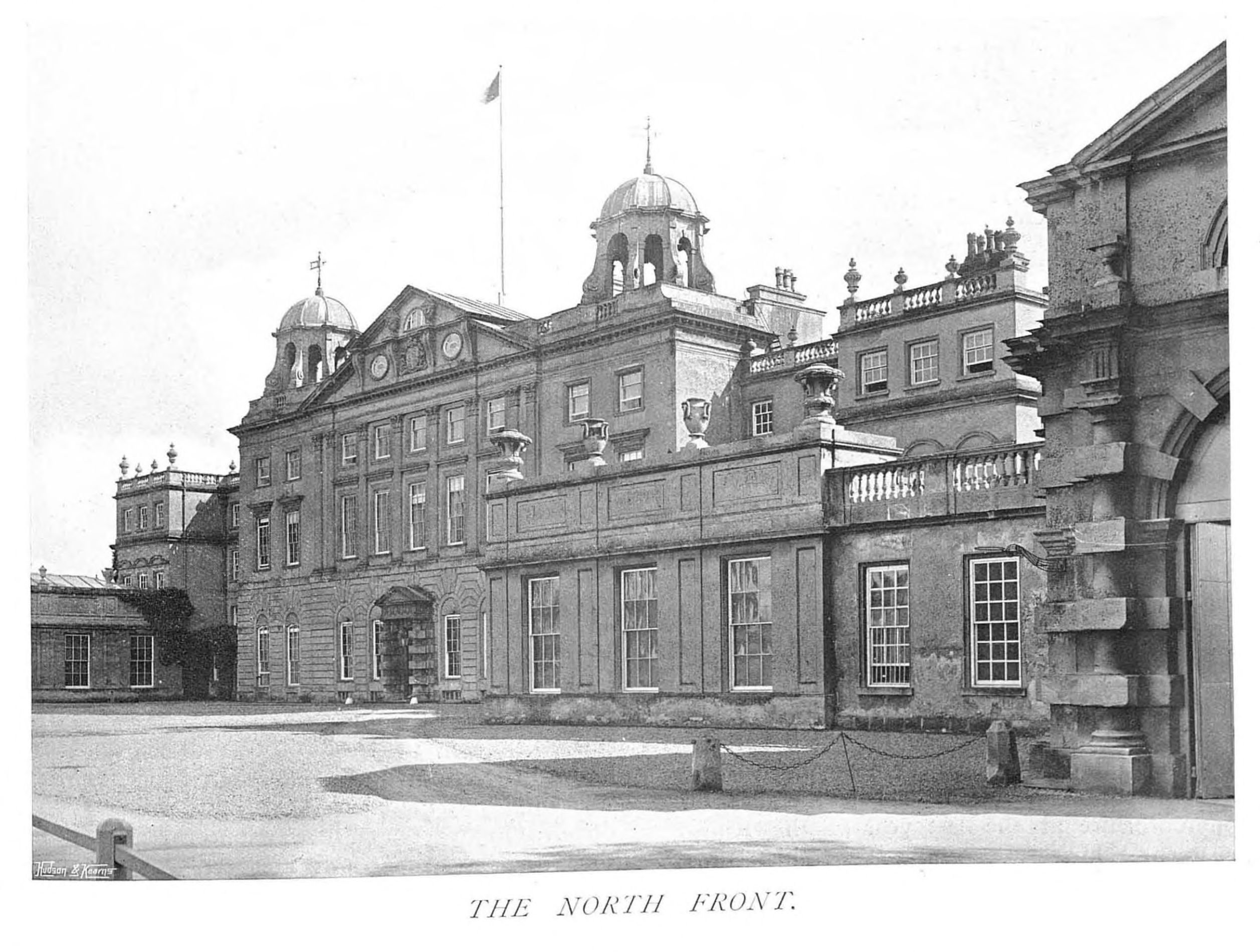
Badminton House: Chimneys
Badminton House across the lawn on 15 October 2016, with the edge of an equestrian jump at the right.
The north front of Badminton House, photographed by Charles Latham for In English Homes around 1909.
Photo: Charles Latham (1847-1912) · Public domain · Wikimedia Commons
Badminton, South Gloucestershire, about 24 km north-east of central Bristol. A private house; the gardens open on a few days a year.
Gregson wanted a big old pile for Chimneys: grand but lived in, with a ballroom for the party that opens the first episode, and outbuildings, because Bundle and her mother have moved into the Garden House and let out the big one. The Caterhams have no money, and the house had to show it. Some of that was already there. The silk wallpaper in the ballroom is torn in places, and the crew used it as it was. The leaking pipe that drips into a corridor was theirs.
The house runs through the whole series. Helena Bonham Carter, as Lady Caterham, was filmed in the conservatories among Badminton's Millfield Gem pelargoniums, and a key scene with Mia McKenna-Bruce in the South Gardens. The estate had been all over Guy Ritchie's The Gentlemen, and while watching it Gregson kept spotting a corner she thought viewers had not seen, only for the characters to be standing outside it a few episodes later.
Badminton has been the seat of the Dukes of Beaufort since the late seventeenth century, and the game of badminton takes its name from the house. You cannot go inside. On the estate's open garden days, visitors can see the outside of the house, the South Gardens, the East Front gardens and the conservatories where Lady Caterham was filmed.
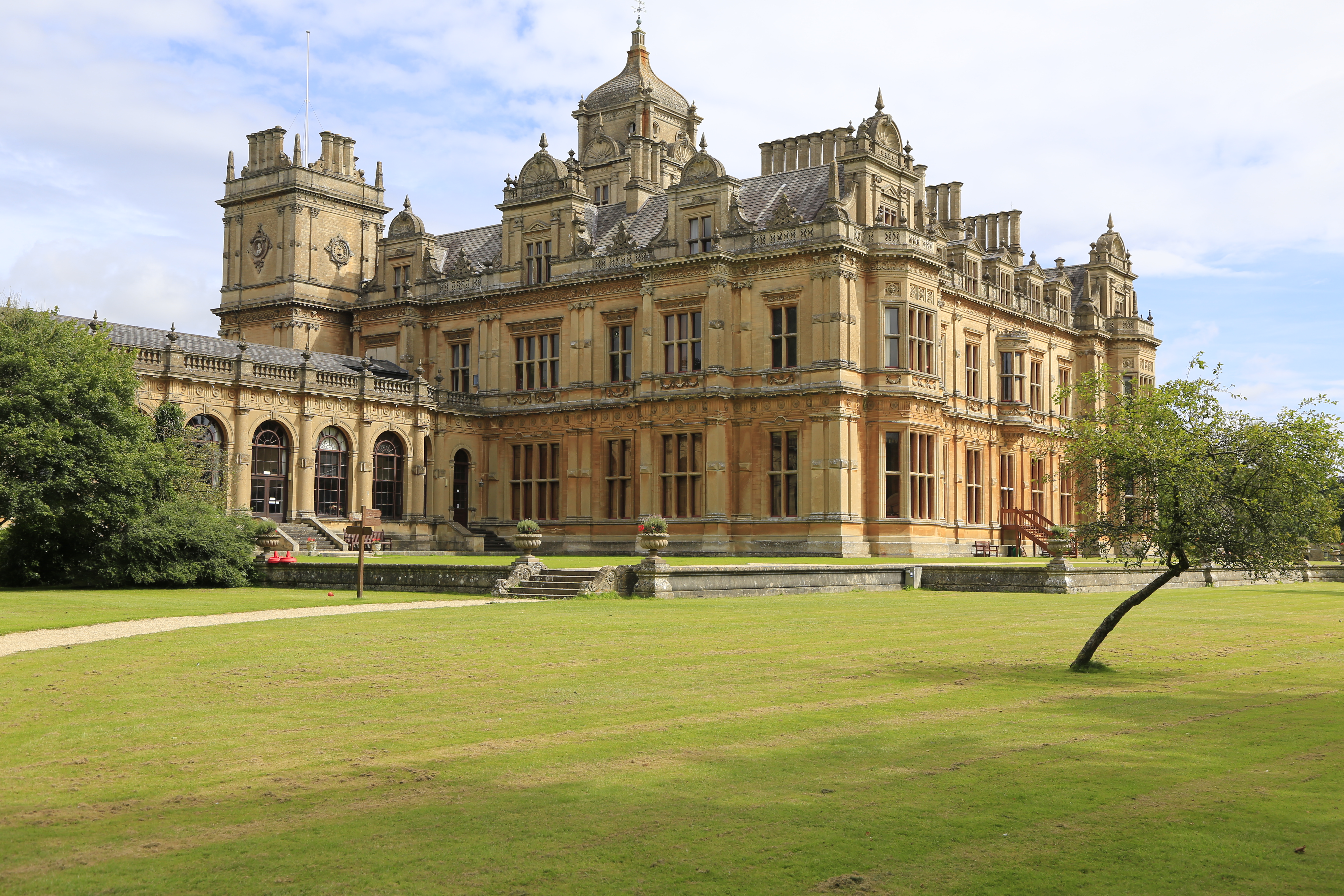
Westonbirt House: Wyvern Abbey
Westonbirt House above its terrace and lawn on 8 August 2016.
Near Tetbury, Gloucestershire, about 9 km north-east of Badminton. A working school; the house is open by invitation only.
Wyvern Abbey, the country house of the government man George Lomax, had to feel more ominous than Chimneys, above all at night, when the friends creep about knowing there may be a murderer in the house. The weekend gathering of the second episode was filmed here. The Great Hall became the arrival point, the Library had an interrogation scene, and a long dinner was laid in the Reading Room.
The Great Hall has a fragile glass roof, so its windows could not be blacked out, and the house was lit at night mostly by firelight and period lamps. One night the crew was shooting before a wedding and had to be off the lawn by six in the morning without leaving a mark on it. For the pheasant shoot they used a hay meadow next to the grounds, with the house in the distance.
Robert Stayner Holford built the house between 1863 and 1870 to designs by Lewis Vulliamy. A school has occupied it since 1928, apart from the Second World War, when the Air Ministry requisitioned it, and the house is also a wedding venue.
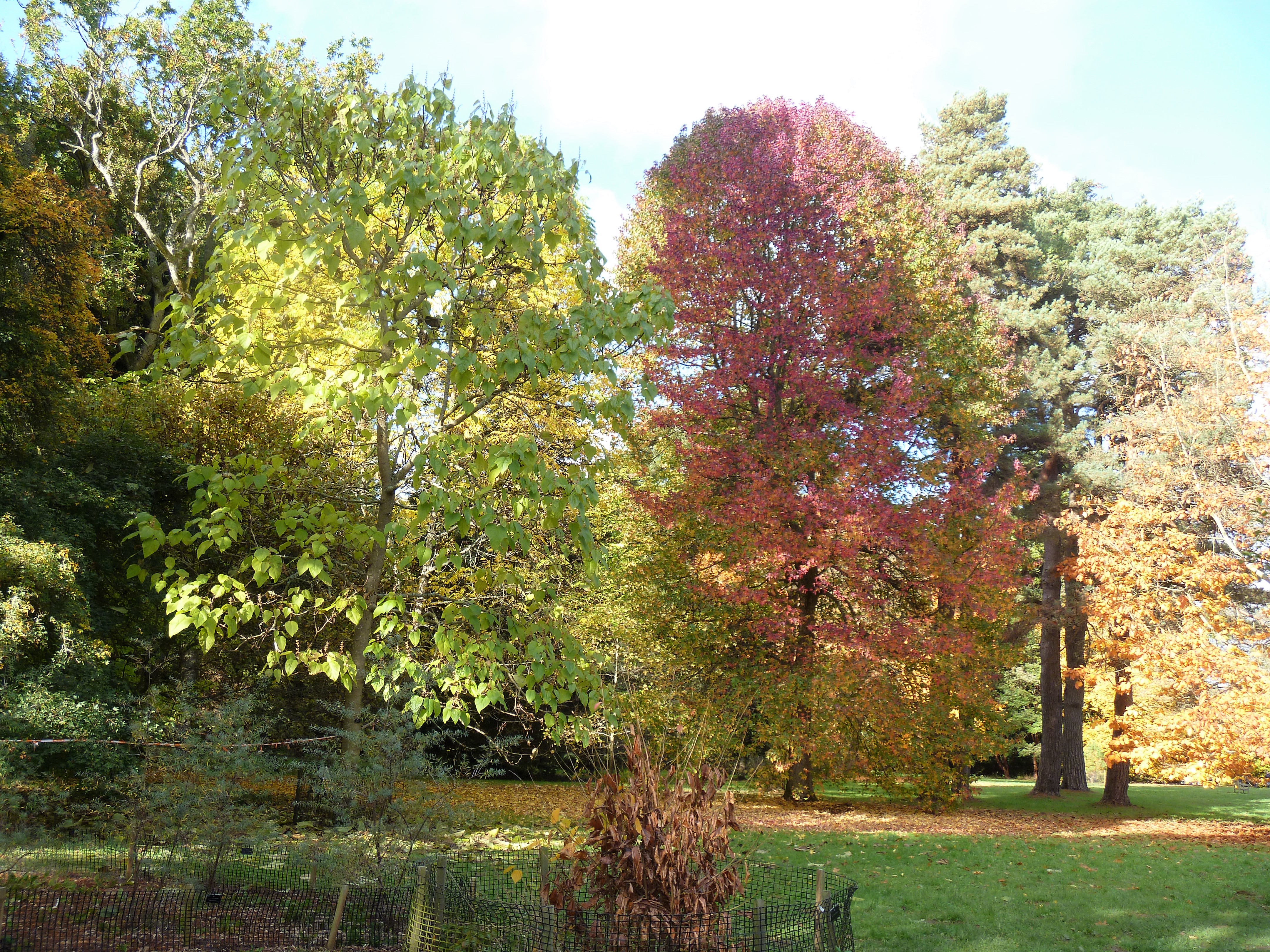
Westonbirt, The National Arboretum
Autumn colour at Westonbirt Arboretum on 2 November 2016.
Across the road from Westonbirt House, about 1.9 km west of it. Run by Forestry England and open to visitors.
Bristol's film office lists Westonbirt Arboretum among the series' locations, and Visit Bristol says filming took place both there and in the house. Which scenes were shot among its trees has not been made public. The arboretum was begun in 1829 on what had been common downland, over the road from the house, with the young Robert Holford involved from the start.
Where was Seven Dials filmed in Bristol?
Netflix says the series was shot mostly in Bristol, and the city plays London. Scotland Yard and the Bon Temps restaurant are a few steps apart on Corn Street, in the Old City. Bristol had been Christie's London before: in 2020 the BBC's The Pale Horse turned St Nicholas Market and Queen Square into the 1960s capital, and kept coming back to Arnos Vale for its atmosphere.
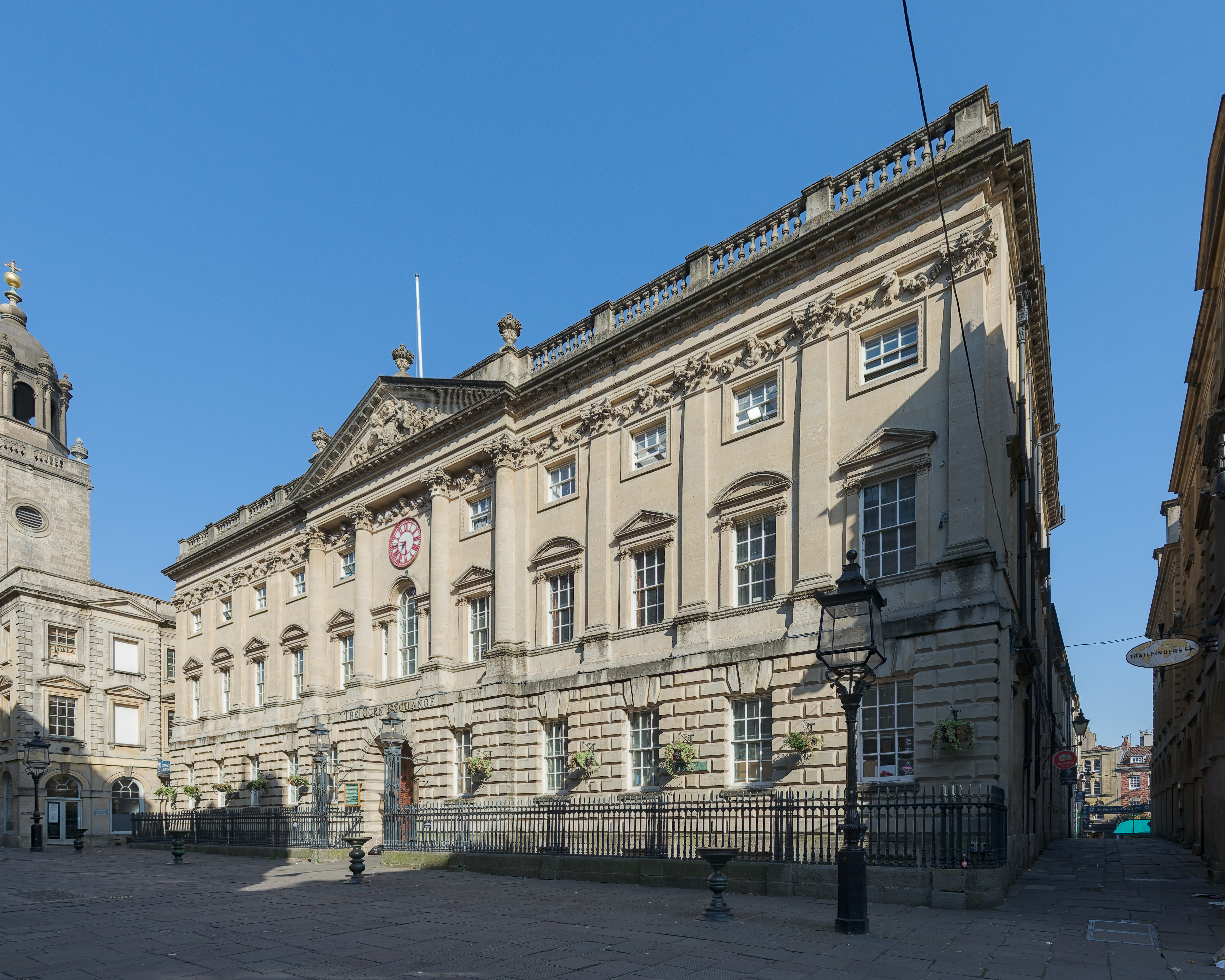
The Exchange, Corn Street: Scotland Yard
The front of the Exchange on Corn Street on 25 June 2026, with its clock above the entrance.
Corn Street, in the Old City. St Nicholas Market inside is open; the offices above it are not.
The Metropolitan Police offices, Battle's among them, were sets built in offices on the upper floor of the Exchange, over St Nicholas Market. The same offices had already been used for The Trial of Christine Keeler.
John Wood the Elder built the Exchange for the city's merchants in 1741–43. On the pavement outside stand four bronze tables, the nails, at which merchants once did their deals, and the clock on the front shows two times: Greenwich Mean Time and Bristol's own.
In the basement of the Commercial Rooms, Corn Street, about 70 m west of the Exchange. A working restaurant.
Bundle and Bill Eversleigh meet at the Bon Temps to talk about the Seven Dials club. Gregson picked The Ox partly because it is underground: the crew could shoot in daylight and call it night without blacking out a window. It looks like a period restaurant, too, she said, art deco with a pre-Raphaelite streak, and it felt a little naughty and a little secretive. The steakhouse opened in 2013.
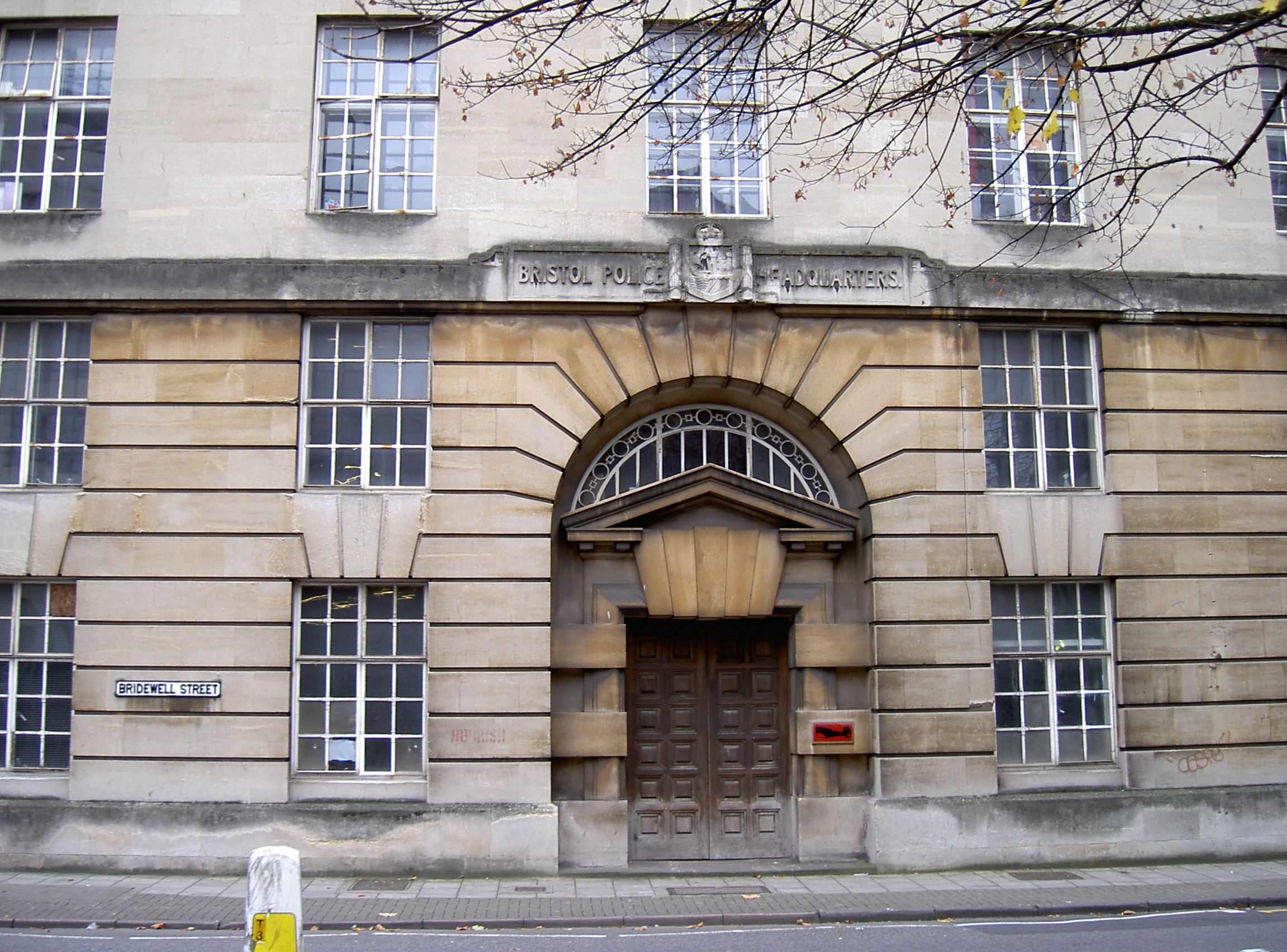
Bridewell Street: Old Scotland Yard
A doorway on Bridewell Street carved with the words Bristol Police Headquarters, 28 November 2011.
In the city centre, about 280 m north of the Exchange. A public street.
The outside of Old Scotland Yard was made in front of Bridewell Street's old police station, with period cars and signs for London streets, and the road was closed for the day. Martin Freeman, as Battle, took the wheel of a 1920s car, drove it towards a green screen and stepped out, again and again, a little faster each take, with extras around him in three-piece suits and hats.
Bath Road, about 2.4 km south-east of the Exchange. Open every day.
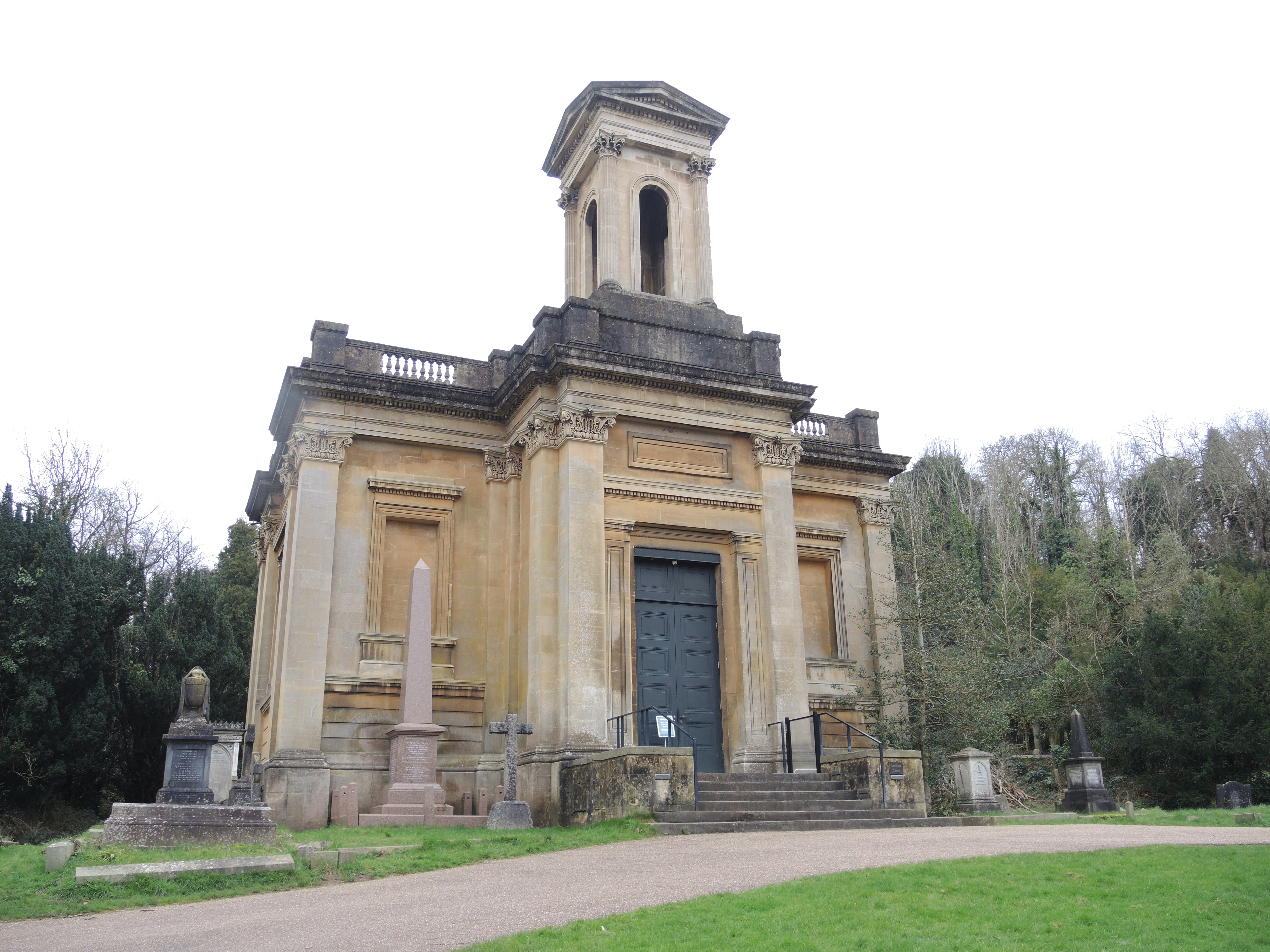
The London cemetery where Bundle and Jimmy go is Arnos Vale, on the road out of Bristol towards Bath. Charles Underwood laid it out in 1837 as a Greek necropolis. It fell into ruin in the twentieth century, and in 1987 the owner announced plans to dig up the graves and build houses; after a public campaign the city council took it by compulsory purchase. It has since been restored: 45 acres of Victorian landscape and old graves.
Where was Seven Dials filmed in Bath?
The crew was in Bath for two days, and the city spent weeks getting ready. Councillor Manda Rigby said her teams went round beforehand removing every trace of modern life they could: bus stops, bins, lighting and modern signs. In Bath, Battle and Bundle take turns following each other.
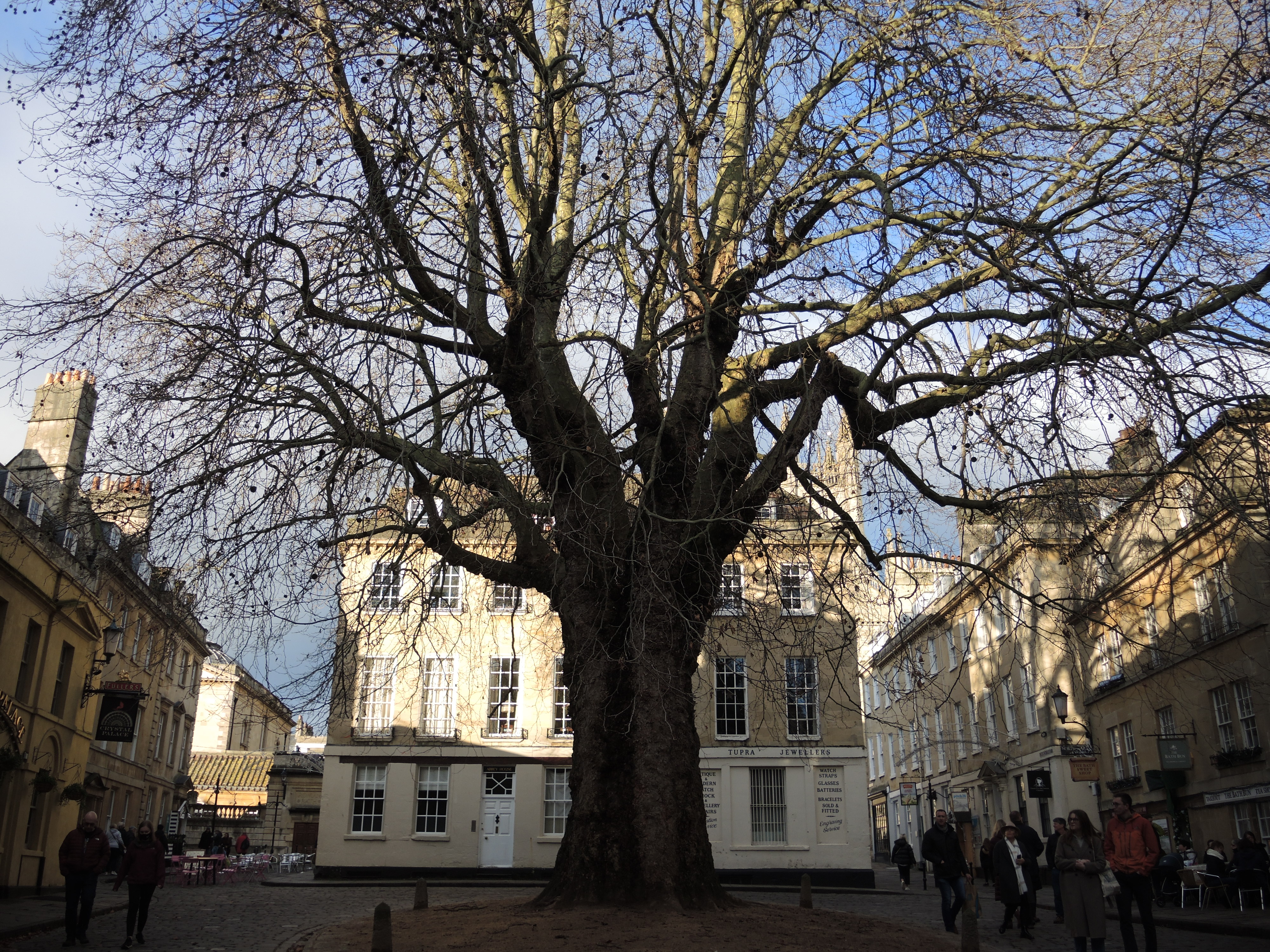
Abbey Green and North Parade Buildings: Market Basing
Abbey Green on 28 December 2021, with a big bare tree in the middle of the square.
Beside Bath Abbey; North Parade Buildings is about 40 m to the east. A public square and lane.
Market Basing is Christie's fictional market town, which turns up in the worlds of Miss Marple, Poirot and, here, Superintendent Battle. On Abbey Green, the cobbled square beside the abbey, Battle shadows Bundle and Ronnie Devereux; Freeman was seen on set here in June 2024. Close by, in North Parade Buildings, a side street near Sally Lunn's, it is the other way about, and Bundle follows Battle.
Great Pulteney Street
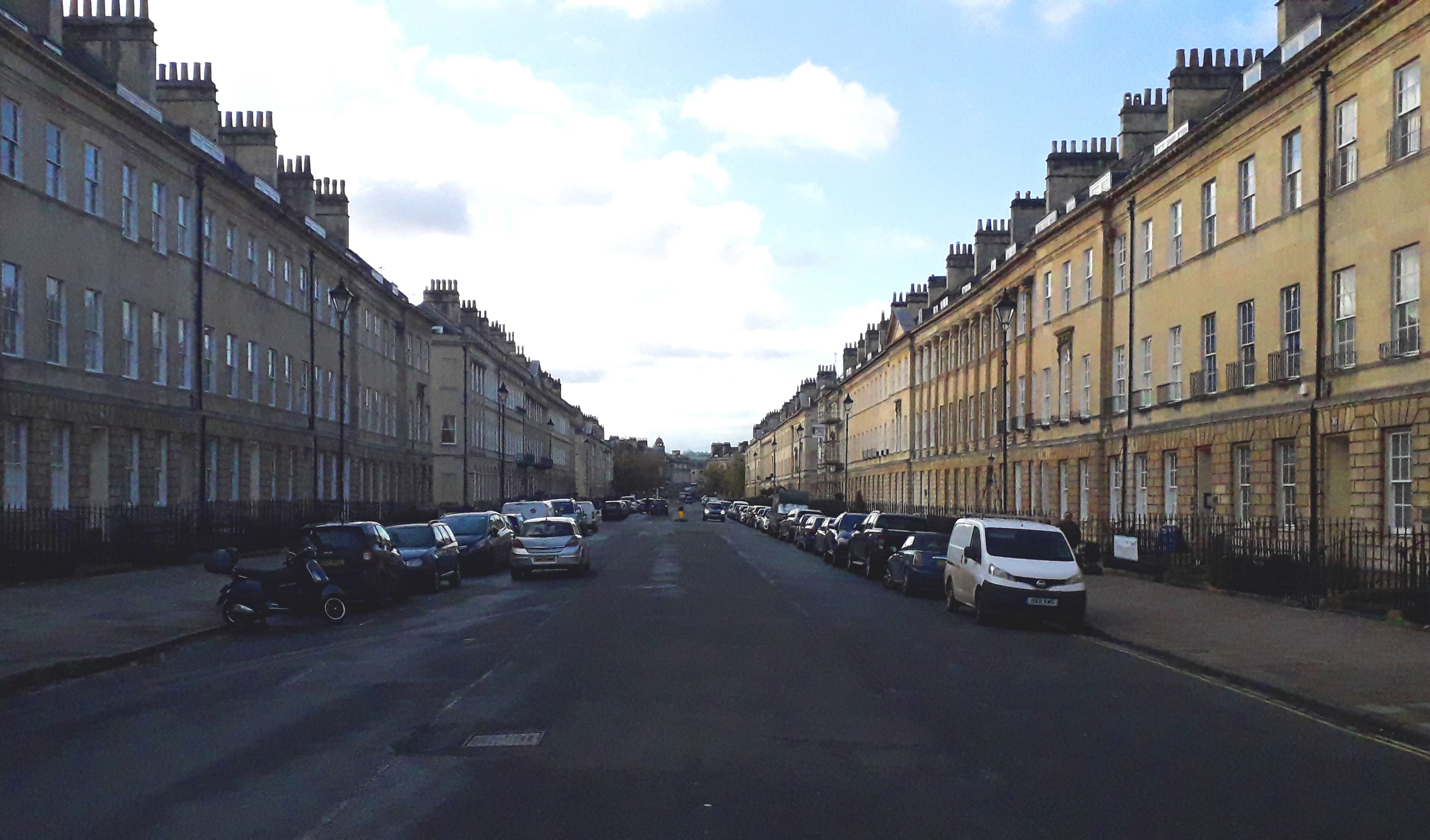
Great Pulteney Street on 8 November 2019, with cars parked along both kerbs.
Bathwick, across Pulteney Bridge from the city centre, about 550 m north-east of Abbey Green. A public street.
The London car chase, with Bundle at the wheel and Battle ahead of her, was shot in a single day on Bath's widest street. Gregson called it probably the most satisfying location of the shoot for its scale and its challenge. It was run like a military operation, she said, with maps on tables and every set-up cut into time slots, and it went so smoothly that they picked up extra shots. There were roadblocks at each end, modern street furniture was boxed in with wooden panels, and a City of London sign went up for Platemere Road and Verlaine Street.
The crowds are partly a trick. A scanning rig about the size of two shipping containers stood near the street for the day, the cars and the extras were scanned in it, and much of the bustle on screen was copied digitally from them afterwards.
Thomas Baldwin designed the street, finished in 1789, but only its fronts. Different owners built the houses behind them, so the terraces look uniform from the pavement, though some were meant as homes and some as hotels.
Where was the Seven Dials club filmed?
In the script, Gregson said, the club was entered from an alleyway, in an old building with several floors and a different scene on each. On screen it is put together from pieces across Bristol. Its main interiors, the secret chamber among them, were sets at The Bottle Yard Studios, south of the centre, in a former winery and bottling plant where Harvey's Bristol Cream was once made. The rest you can find.
33–37 Gordon Road, Clifton, about 1.4 km west of the Exchange. A working pub.
Interior shots of the nightclub were filmed in this pub. Gregson had always liked it for its stained glass and little wooden booths, and it felt period to her. The building went up in 1910 for Georges Bristol Brewery and was refitted inside in 1932, and some of the 1930s panelling and a fireplace are still there. Since 2021 it has been the Barrelhouse, done up as a dive bar of the American Deep South.
Queen Square
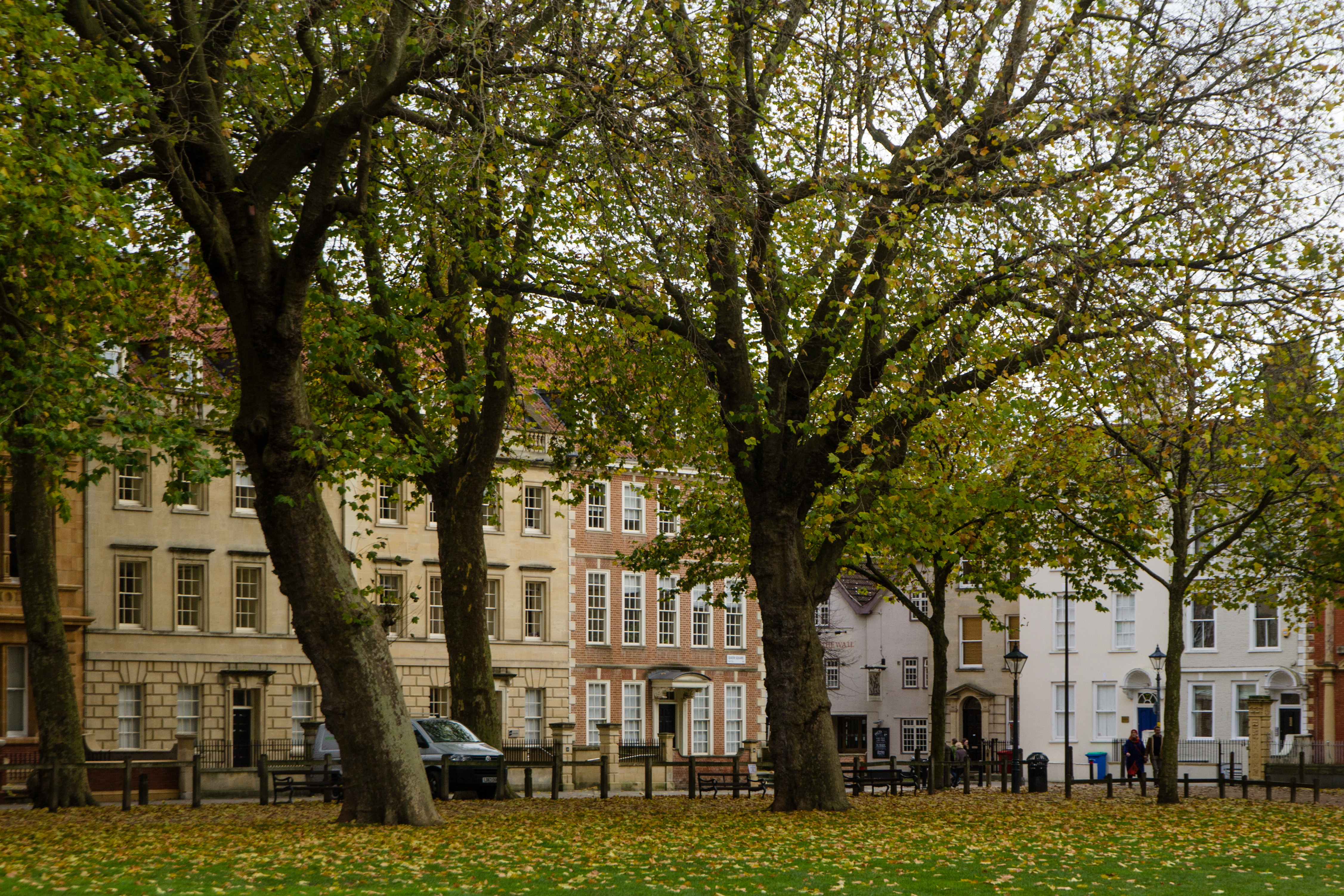
Queen Square on 13 November 2016: trees in autumn colour, with Georgian houses behind.
In the city centre, about 440 m south of the Exchange. A public square.
Shots for a phone-call scene were filmed on the square, and its Georgian terraces were used for exteriors of the club. One of its houses went further. Gregson describes an early eighteenth-century building on the square, listed, well preserved and standing empty at the time, which English Heritage had once used as its headquarters. The crew dressed it for the club's stairways and for rooms in the characters' flats.
The square takes its name from Queen Anne, after her visit to the city in 1702. In the 1930s a dual carriageway was cut across it, and by 1991 some 20,000 vehicles a day were crossing it. In 1992 the road was closed to through traffic for a six-month trial, and it never reopened. From 1999 the square was put back roughly to its layout of 1817.
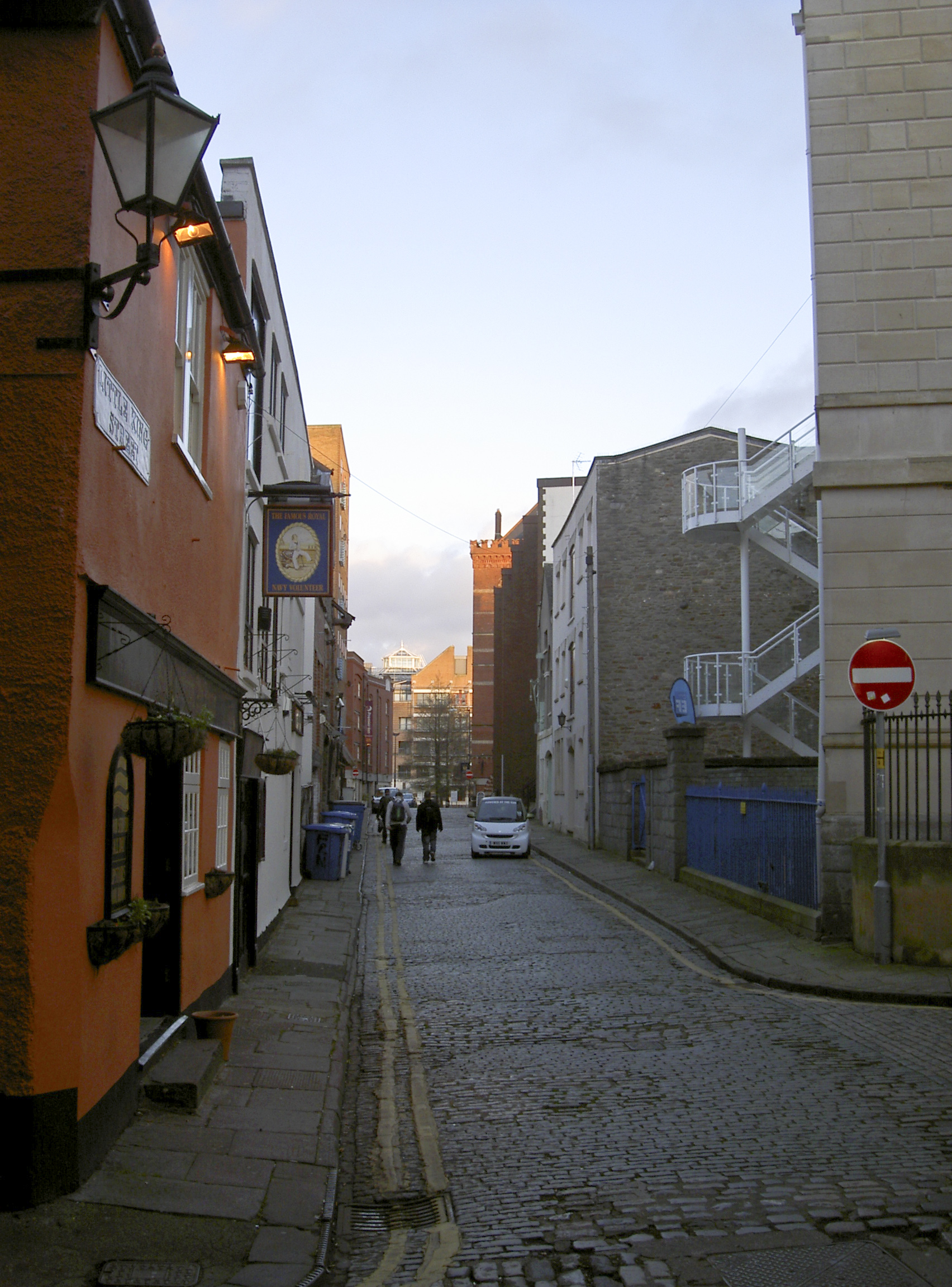
All Saints' Lane and Clare Street
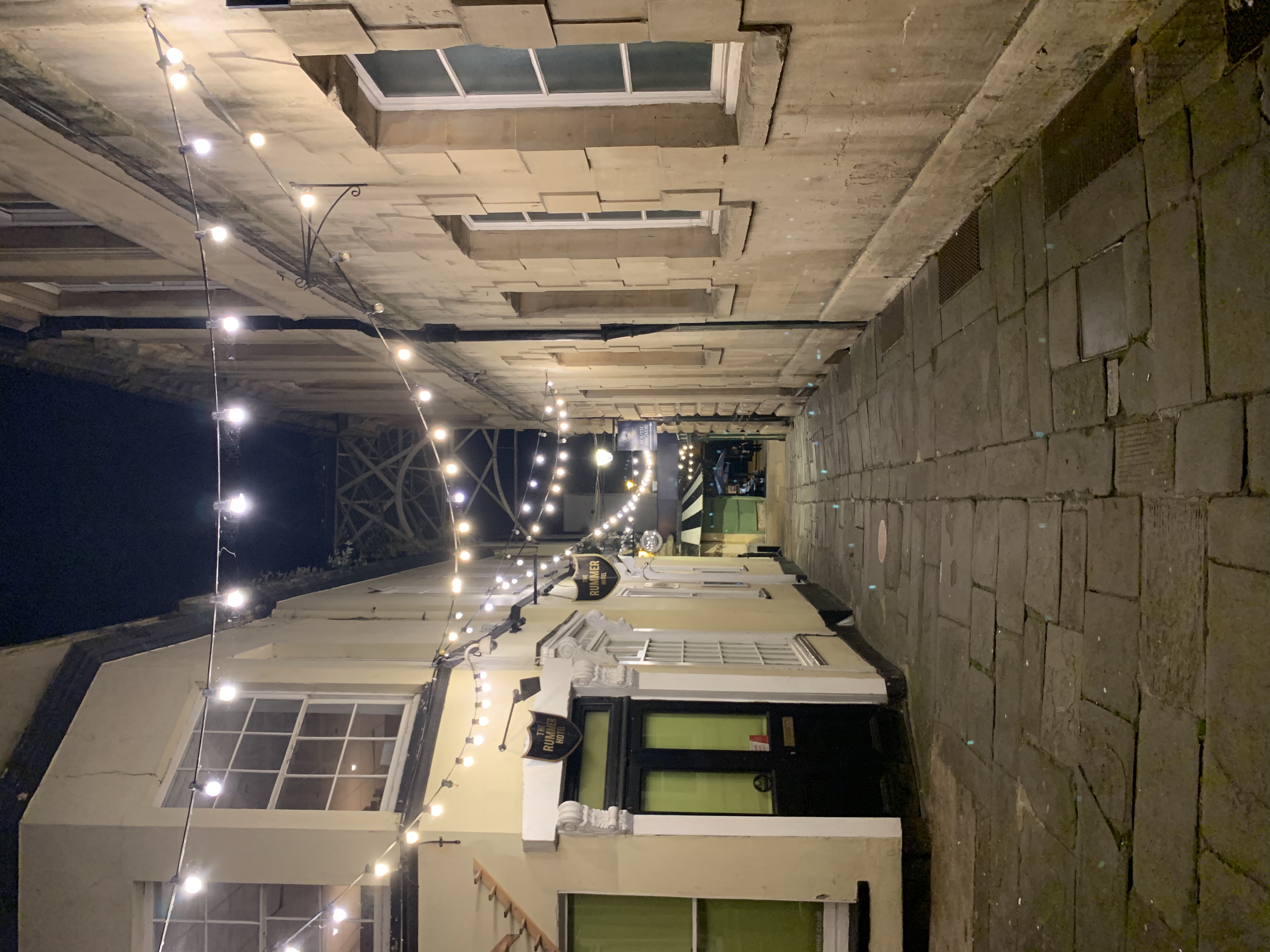
All Saints' Lane at night in July 2022, strung with fairy lights.
All Saints' Lane runs along the side of the Exchange; Clare Street is about 180 m west. A public passage and street.
More of the club's exteriors were filmed in All Saints' Lane, an old passage beside St Nicholas Market, and in Clare Street, a couple of minutes away.
The lane runs along the side of the Exchange, and John Wood's plan of the 1740s put two four-storey houses for tradesmen on that side, facing it.
Where was Seven Dials filmed in Somerset?
On the West Somerset Railway: the mystery comes apart on a train by the sea. Gregson says she had to get to know Britain's steam railways, and she looked at lines in Yorkshire before settling on West Somerset, where a heritage railway runs alongside the beach. The railway ran the crew back and forth on repeated recces while they chose stretches of unspoilt country that would pass for the 1920s.
Minehead station
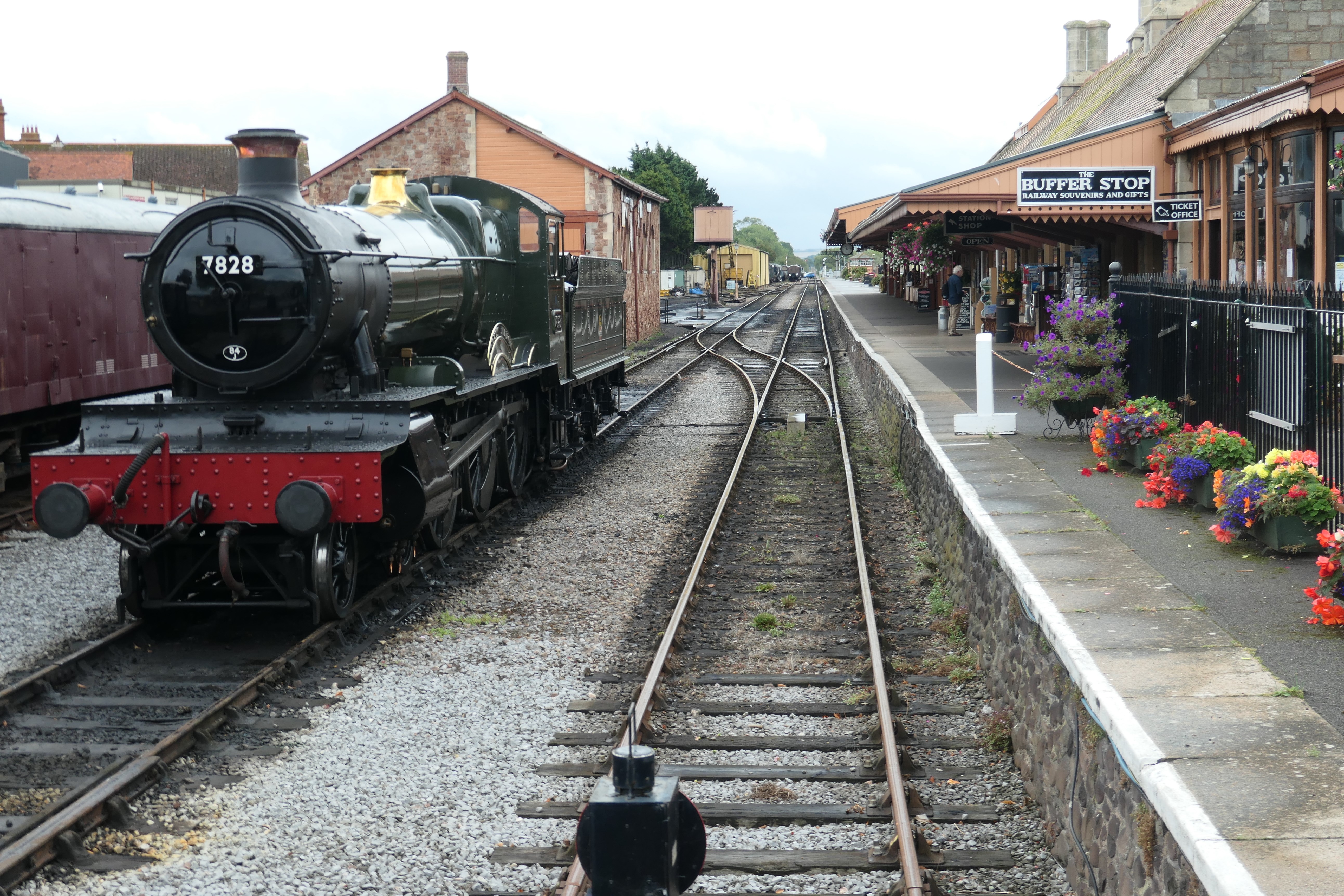
A steam engine beside the long platform at Minehead station on 22 September 2019.
Warren Road, Minehead. The end of the line, and the railway's headquarters.
The production dressed the station in period for the train scenes. It was a hot summer, and with the cast in period costume, air conditioning had to be fitted to the train. The station opened in 1874, closed when British Rail shut the line early in 1971, and reopened in 1976 for the new heritage railway.
Blue Anchor station and Blue Anchor Bay
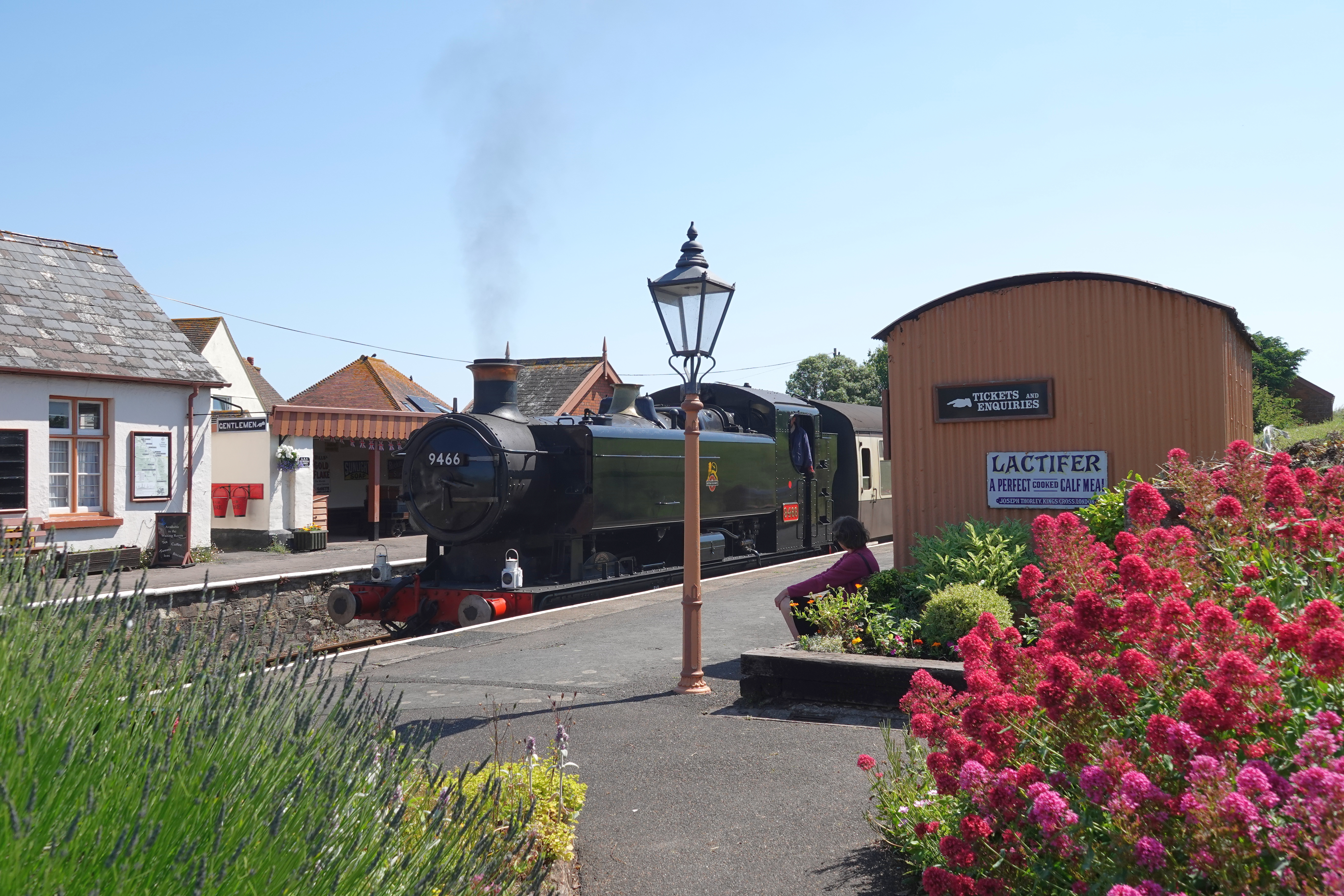
GWR pannier tank 9466 leaving Blue Anchor station on 14 June 2023.
Blue Anchor, about 5.4 km east of Minehead. A station on the West Somerset Railway, beside the beach.
This is where the train stops. Gregson told the BBC the brief was to halt it somewhere scenic, and here the line runs along Blue Anchor Bay, so with the train standing they could see the beach and the countryside.
The village is named after a seventeenth-century inn, and Turner painted the bay and the inn in 1818, more than half a century before the railway. The station came in 1874. Its first platform, the one nearer the beach, is still there, with the signal box and the ticket office on it, and across the tracks the waiting room of the second platform has been a small railway museum since 1986.