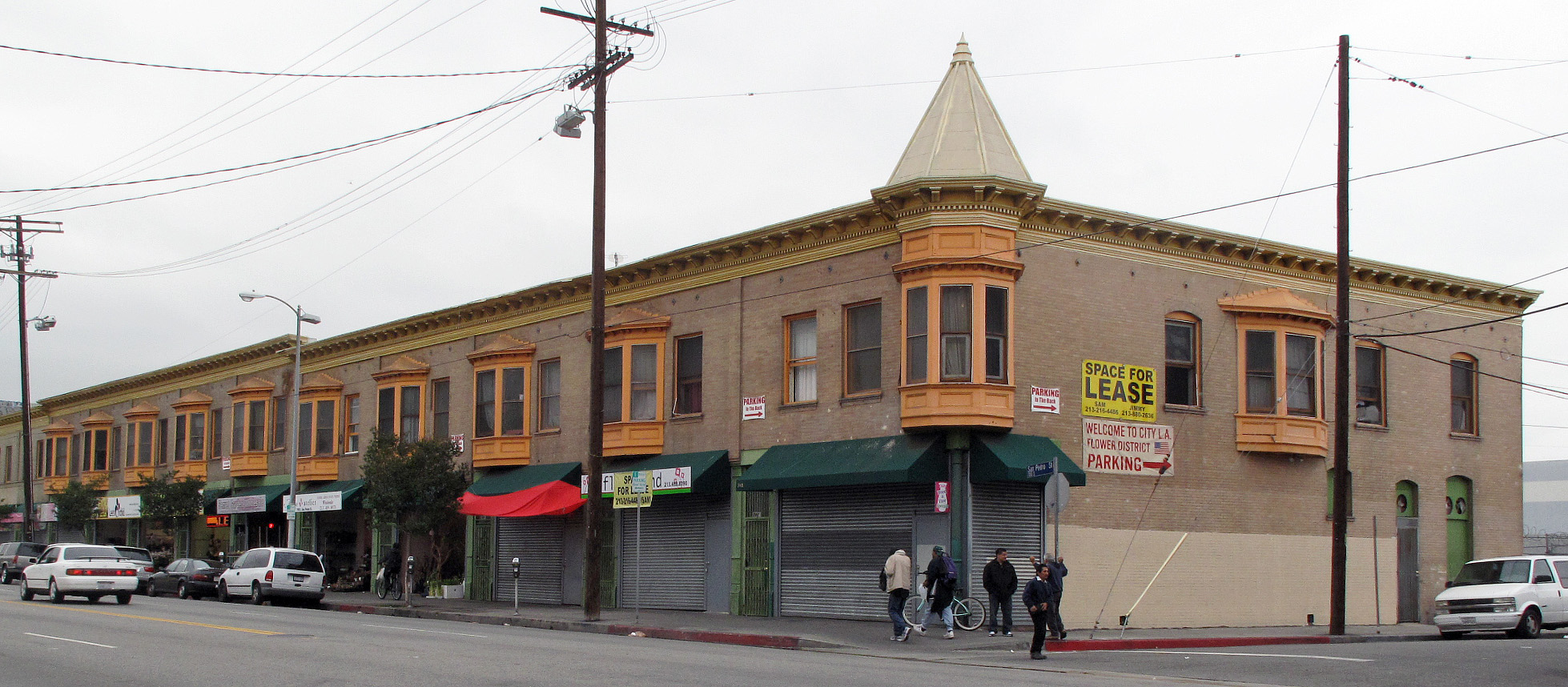
What the location manager liked about a row of storefronts on South San Pedro Street was the bay windows on the second floor. Downtown Los Angeles is not a bay window city. Paul Hargrave's argument for the block was that anyone with a passing knowledge of downtown looks up at those windows and thinks San Francisco. The scene shot there never opens up wide enough to show them properly.
14
places on the route
The core is 1.3 km of downtown; the desert is 75 km north — switch with the buttons above. Click a point to jump to its entry.
The whole method of the film is in that detail. Arthur Max, the production designer, had crews covering up signage and graphics in Spanish to keep the story off the West Coast, and what David Fincher told him, Max says, was that it is not L.A. It held. For twenty years after the release, directors, cinematographers and other location managers kept coming to Hargrave with one question: where was it shot? Most of the filming happened inside a fifteen-minute walk, in the Historic Core of downtown Los Angeles. Both men stop at the same twenty minutes at the end, when the film drives out to the desert: Hargrave calls that the one thing that gives it away, Max a leap he could never rationalise.
The block they started on
744-746 South San Pedro Street
The row of storefronts on South San Pedro Street. The bay windows on the second floor are what got the block cast: they read as San Francisco, not Los Angeles.
Day one of the schedule was also the first scene in the film: Somerset and Mills meeting over a body in an apartment, then taking the argument out to the street. The order was deliberate. Hargrave says they wanted the two detectives to meet on camera the way they would meet in life, in sequence.
Max dressed the ground floor with accordion security gates, opened up the awnings and added to them with plastic and dirty tarpaulins. The instruction he remembers is that everything on screen had to be broken or not working.
The block sits on the edge of the wholesale flower district, 860 m south of the hotel where the film's longest sequence ends.
One precinct, three buildings
Pacific Electric Building, 610 South Main Street
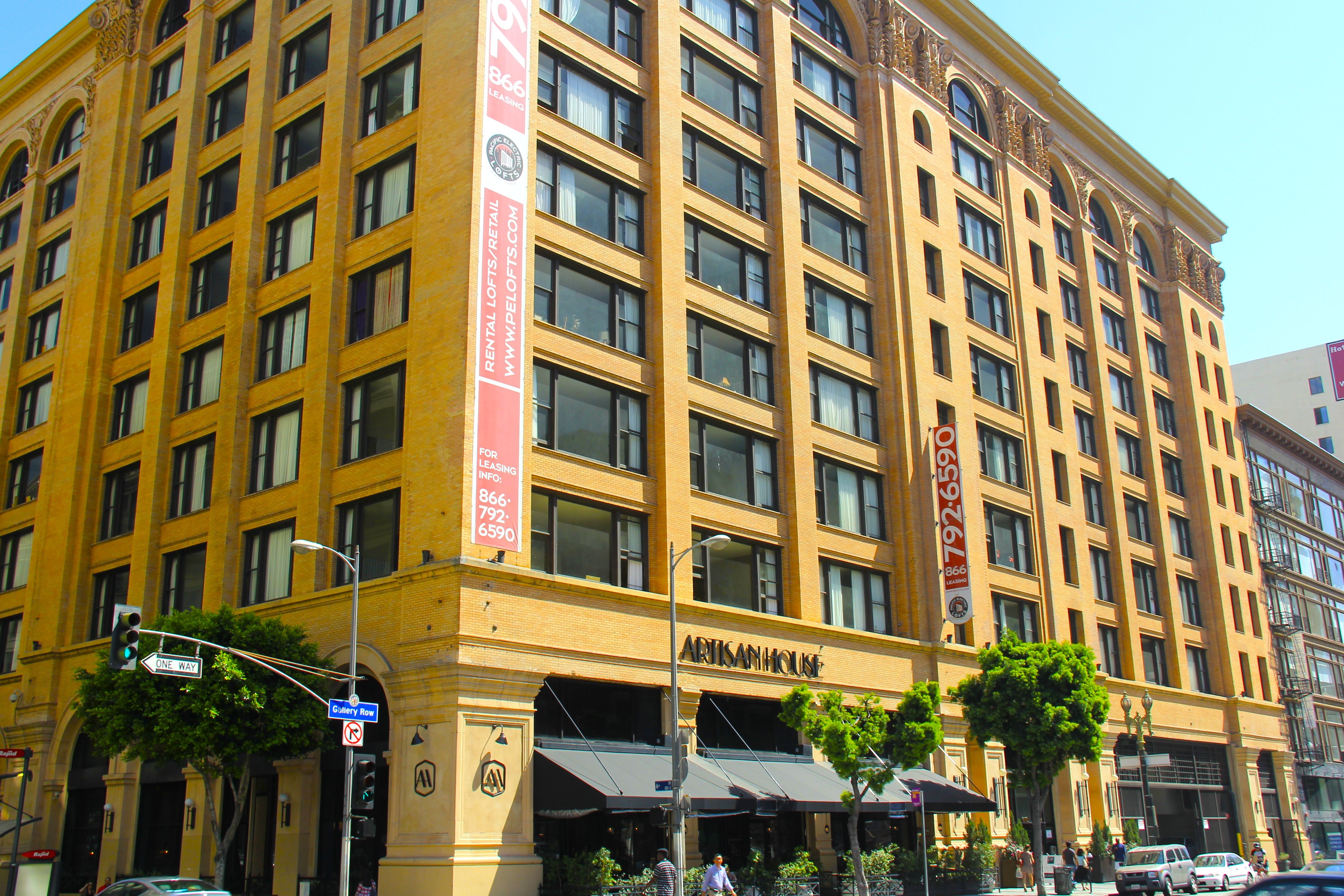
Sixth and Main. The upper floors held the precinct offices and the fingerprint lab; they are flats now.
The inside of the Fourteenth Precinct: offices, the bullpen, the fingerprint lab, corridors lined with glazed doors and transom lights. Max built the layout out of his own memory of working as a copy boy in a New York newspaper office around 1959, down to the rows of desks, the columns, the water cooler and the light from above.
The building opened in 1905 as the terminal of Henry Huntington's interurban railway, with the cars running in through the ground floor and back out onto Main Street. After the last of them stopped, the upper floors emptied out. That is why the production could have the run of it: by the 1990s there was nothing in the building to displace, which was true of a good deal of downtown at the time. Two years later L.A. Confidential came back and built a bigger 1950s police station in the same building.
It has been flats since 2005. Cole's, the bar that opened on the ground floor in 1908 and claims to have invented the French dip, closed on 29 March 2026 after five announced closing dates.
Rosslyn Hotel, 451 South Main Street
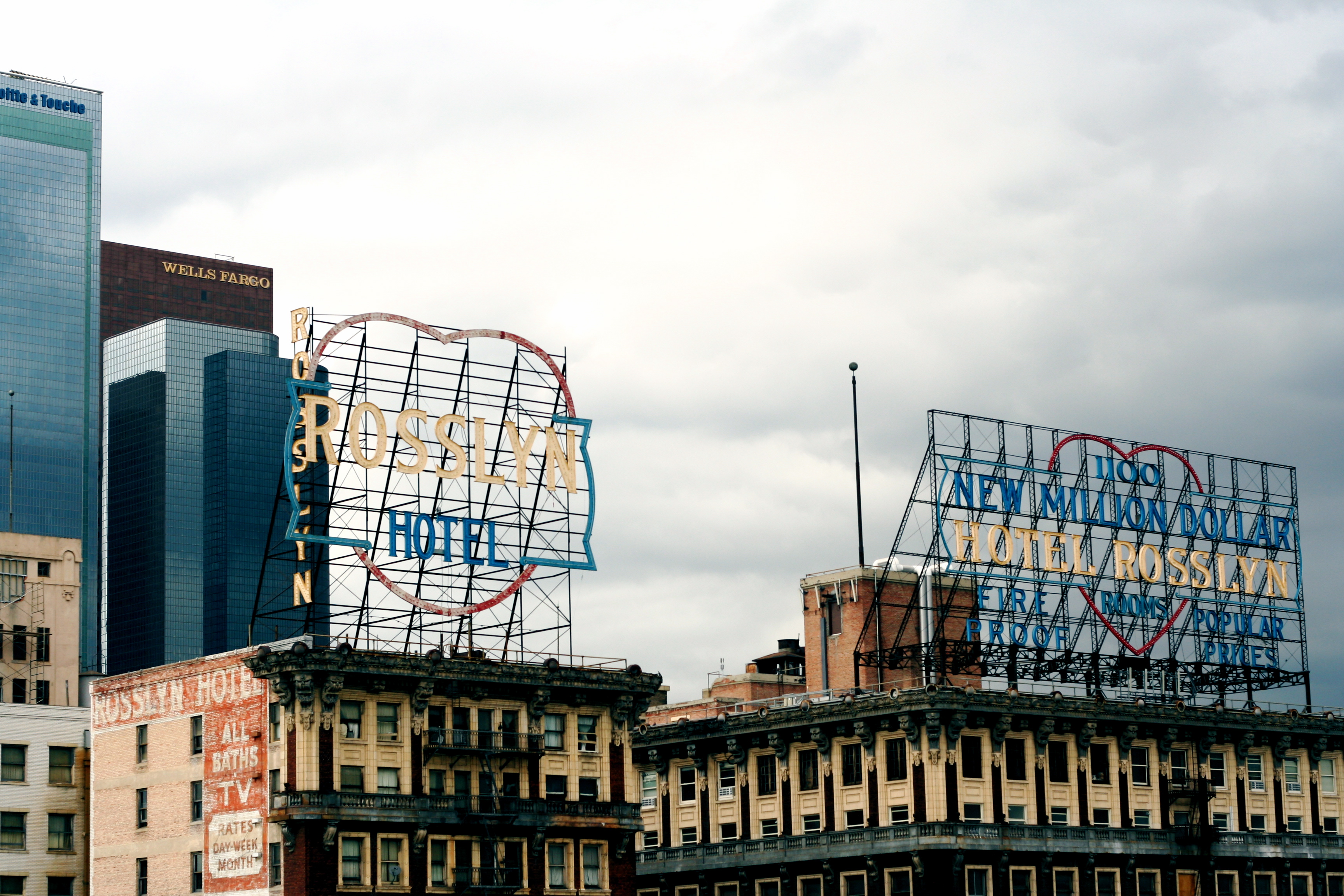
Two hotels, one name, two heart-shaped signs, facing each other across Main Street. Which of them holds the precinct lobby has been got wrong in print before.
The precinct lobby is a block north, in a different building. Max wanted it for the turn-of-the-century mouldings, the applied plaster, the walnut and the marble staircase, and for the porcelain floor tile, which he rates as indestructible. The floor earns its keep: it is what John Doe lies face down on when he walks in covered in blood and gives himself up.
The Rosslyn and its annexe stand across Main Street from each other, twin Beaux Arts hotels built by the Hart brothers, whose name explains the heart-shaped signs still up on both roofs. A million dollars went into putting up one of the two, which is how the words Million Dollar Hotel came to stand in steel letters over Main Street. Which of the two holds the lobby has been printed wrong before. Hargrave and Max, who were in it, put it in the older building on the east side, not the annexe.
When the crew arrived the hotel was called the Frontier, after the family that bought it in the late 1970s. The lobby has since been divided, and the staircase the scene is built around is sealed behind a wall.
Biscuit Company Lofts, 673 South Mateo Street
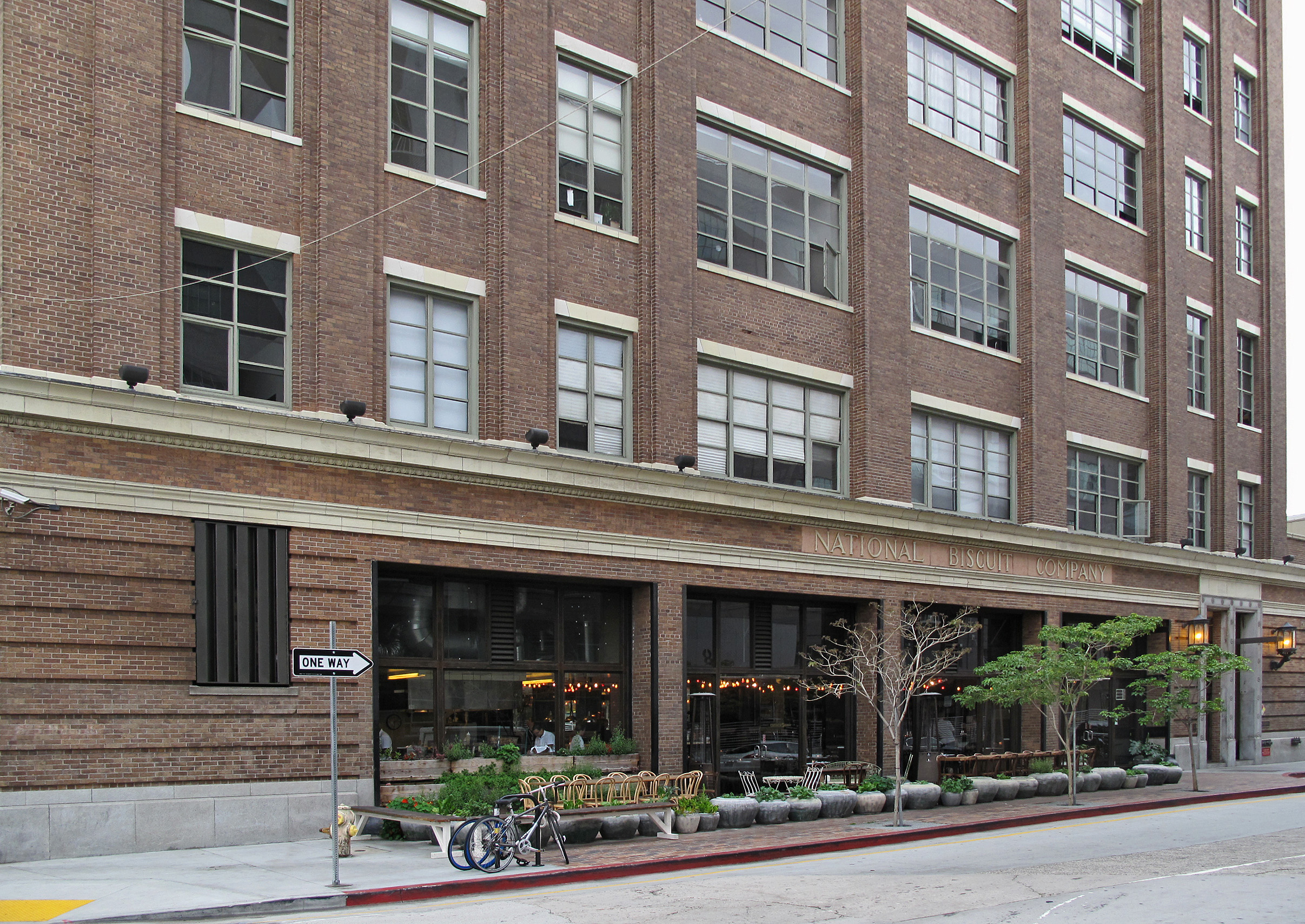
The precinct front, with the biscuit company's name still cut into the stone above the windows.
The front door of the same police station stands 2 km east, in the Arts District. It is the building John Doe walks up to when he surrenders, and it was put up in 1925 as the west coast headquarters of the National Biscuit Company. Its name is cut into the stone above the ground floor windows. The city listed it as a monument in 2007.
One station, three buildings, a block and two kilometres apart. Hargrave thinks the care taken over those joins is a large part of why people were still asking him about the film thirty years later.
The library where Somerset reads up on the deadly sins was an empty banking hall. Every table, every shelf and every book came in through the door. Even that was not enough: Max says his crew rented every book available for hire from the prop houses in Hollywood and still could not fill the room, so two dozen people spent a week making fake ones and labelling them by the Dewey Decimal system.
The hall was built in 1924 by Schultze and Weaver for the Hellman Commercial Trust and Savings Bank, and was the national headquarters of Bank of America from 1930 to 1972. It is an events venue now, called The Majestic, and the bank fittings stayed: sculpted marble columns, the original marble floor, a painted Italian ceiling. The owners hire the hall out as a bank, a bridal shop, a courthouse, a library or a museum, whichever a production wants. Ghost, The Mask, Spider-Man 2, The Prestige and The Dark Knight have all filmed in the building.
The barber shop where the detectives sit waiting for the FBI list is the old Owl, 35 m across 6th Street from the Pacific Electric Building. The unit barely moved. The Owl had once run around the clock to catch passengers coming off the interurban cars at the depot opposite; it stopped being the Owl in 2004 and is still a barber shop under another name.
A couple of doors along, in a vacant storefront, the production built Wild Bill's Leather from nothing. Hargrave says this was one of a handful of blocks in the city that could be dressed to play anywhere, and that his crews used it for New York and for Chicago.
What was already there
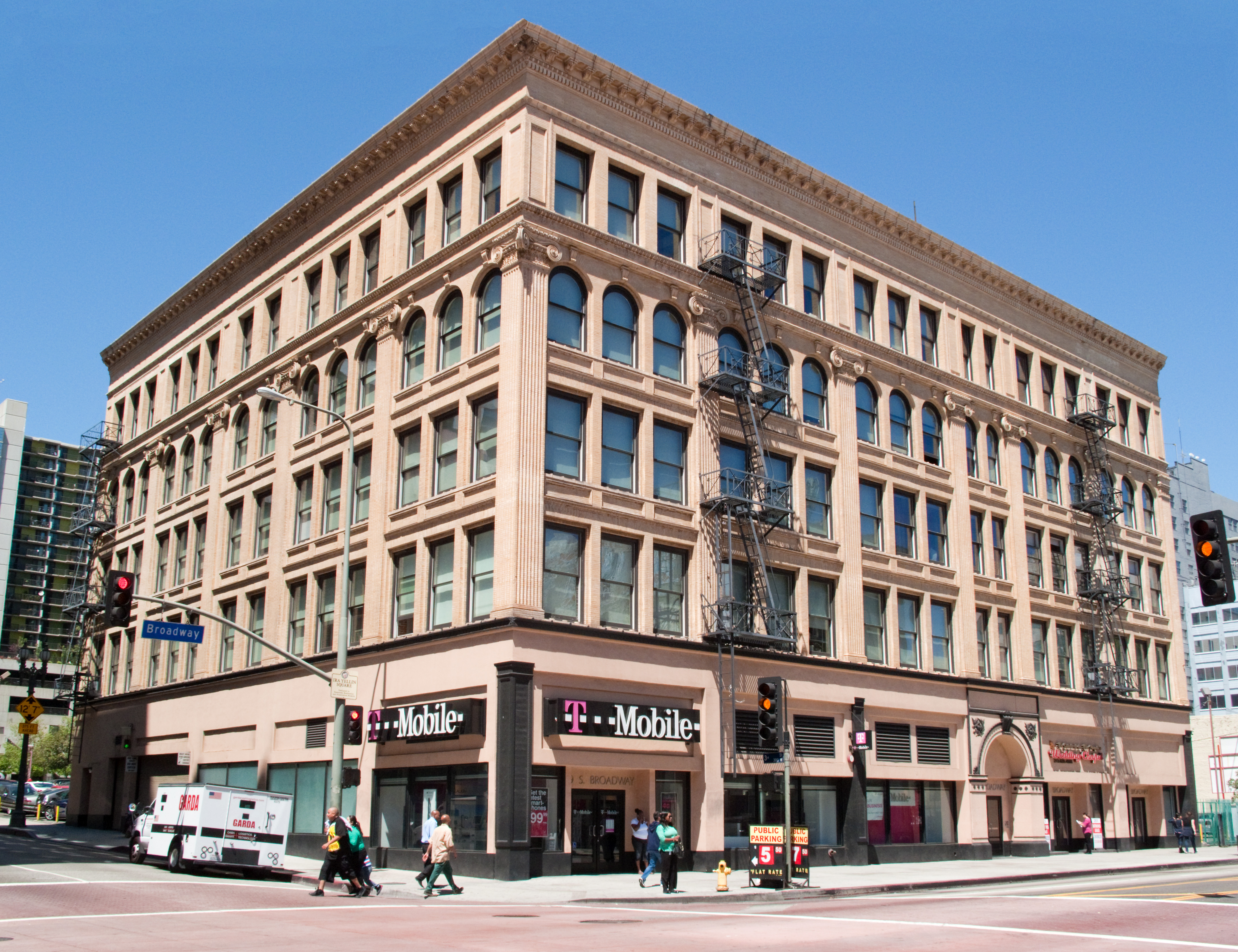
Irvine-Byrne Building, Third and Broadway
Third and Broadway. The sloth room was the top floor; the fire escape SWAT climbs is on the far side.
Getting into the sloth room took an asbestos abatement team. Pigeons had been roosting in the vacant top floor for years, the droppings tested badly enough that nobody could work up there until they were cleared, and the floor was deteriorating enough to need steel jacks under it. Max liked the place for the same reason it was a problem: nothing in it had been touched for decades. SWAT comes up the fire escape at the back, and the man tied to the bed has been there a year.
This is the second-oldest commercial building in the historic core. The oldest is the Bradbury, on the same intersection, designed and built by the same two men. Blade Runner used both: Deckard's last fight is in the Bradbury, and this one, whose entrance arch carries the words Pan American in raised letters, plays a hotel.
The ground floor was a five-and-dime called Giant Penny from the late 1950s until the shop closed. Locally that is still the name of the building.
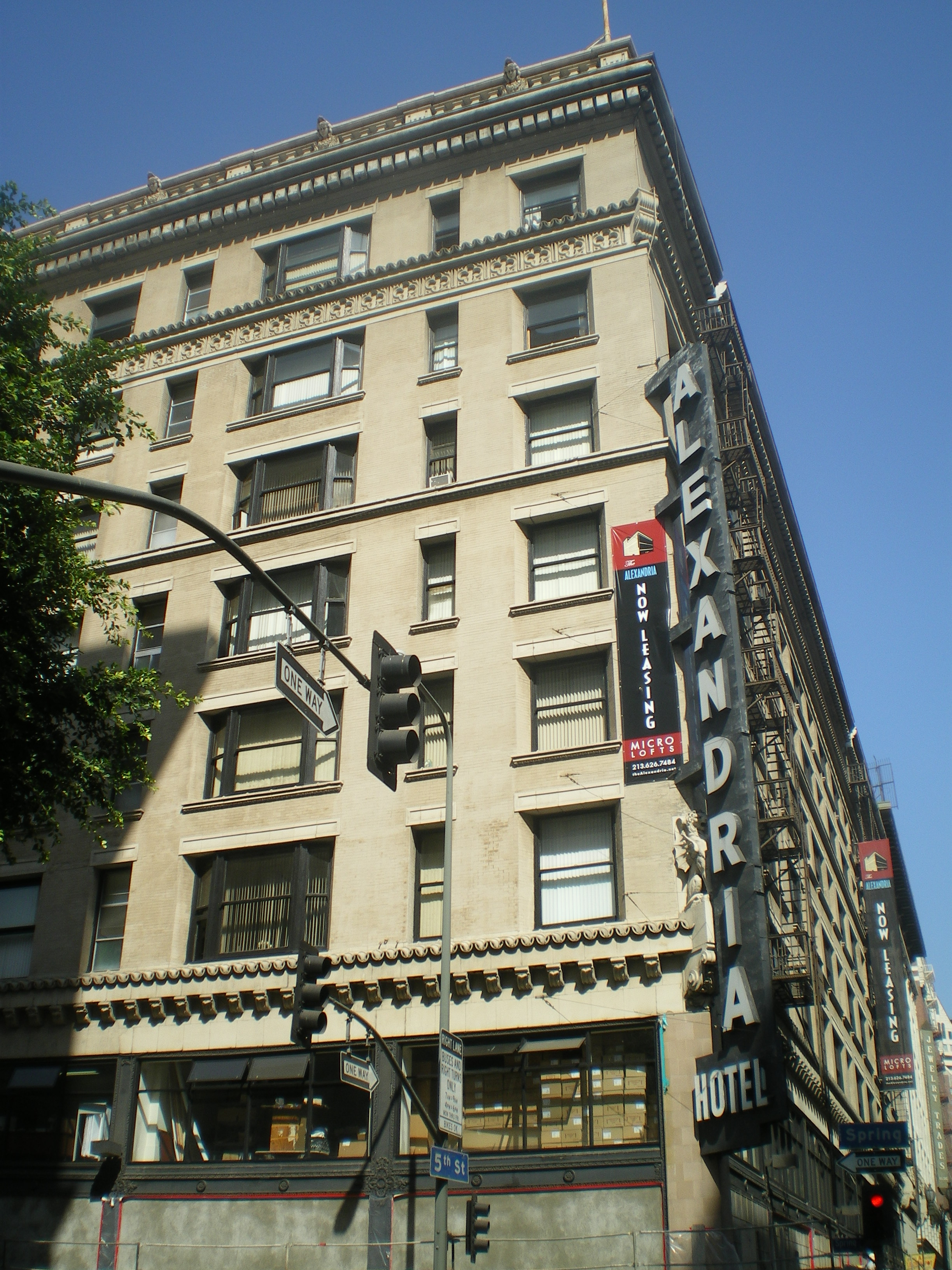
Hotel Alexandria, 501 South Spring Street
Spring Street at Fifth. The griffins over the entrance are original; the chase runs through the floors above.
Mills knocks on a door on an upper floor and the film runs for nearly seven minutes without leaving the property: corridors, mezzanines, stairwells, flats and then the alley at the back. Doe's flat was made by knocking through the walls between three adjoining units. The alley turns a corner, and Hargrave points to that as one reason the sequence unsettles people, because downtown alleys run bone straight from one street to the next and this one does not.
The hotel opened in 1906 on the corner of Spring and 5th, designed by John Parkinson, with griffins over the entrance and a marble lobby that ran two storeys up to a gold leaf ceiling. It was the grandest hotel in the city until the Biltmore opened in 1923, went bankrupt in 1932, and sold its fittings in 1934 to pay debts. A mezzanine was dropped into the lobby in 1954 and cut its height in half.
By the 1980s the building was single-room occupancy housing on the edge of Skid Row, and that is what it still was in the winter of 1994. The people living there worked as extras. Max remembers tenants putting their heads out of their doors as the chase went past.
The Palm Court ballroom of 1911, with its stained glass ceiling, has been a city landmark since 1971 and is the part of the building that gets hired out. The rest is flats. Dreamgirls, Spider-Man 3, Water for Elephants and Domino have all shot here since.
Which city is it
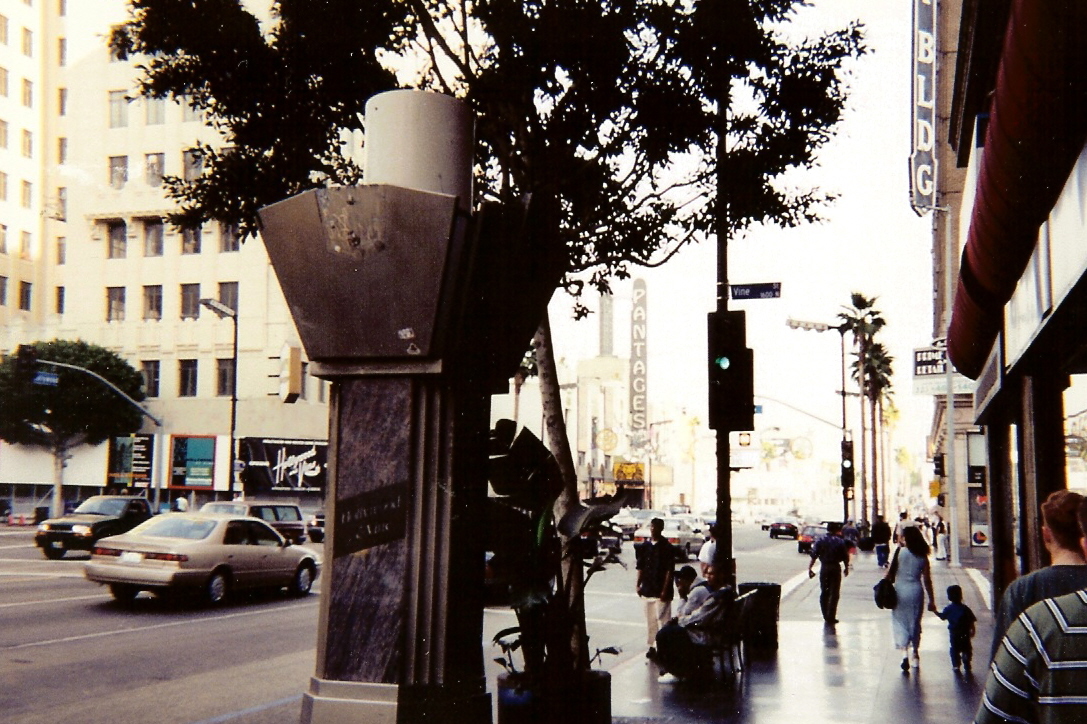
Hollywood and Vine
Looking east from the same corner in December 2000, five years after the crew ate lunch there.
Halfway through the film the two detectives buy their information in a corner pizza place, and on the table in front of Mills sits a blue and white paper cup with the Parthenon on it, a knock-off of the cup that comes with coffee in New York. The two men who built the film's city do not agree about what that cup is doing there. Hargrave, who was born in Cleveland, says the setting was always understood as an unnamed Midwestern city and nothing more than that. Max, who grew up in Manhattan and later lived in Long Island City, says every set he designed came out of New York and nobody wanted to say so out loud.
The pizza place was New York Pizza Express, on the corner of Hollywood and Vine, 9 km north-west of the downtown blocks. The business is gone.
Closed, and open for filming
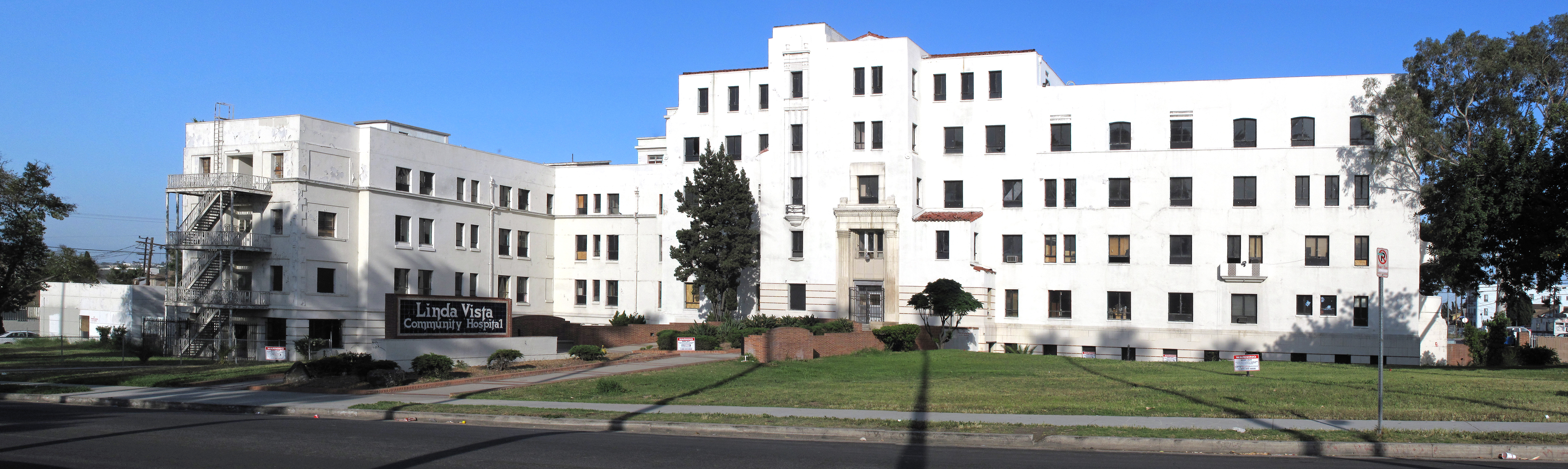
Linda Vista Community Hospital, Boyle Heights
Linda Vista in the years when it was empty and film crews had it to themselves. It is flats for older tenants now.
The hospital stands in Boyle Heights, 3 km east of the Historic Core, and it had been empty for three years when the film got to it.
It opened in 1905 for employees of the Santa Fe railway, with its own Jersey cows, chickens and vegetable garden to keep patients in milk, eggs and greens, was replaced by the present Mission Revival block in 1938, and stopped being a hospital in 1991. After that it became a place where hospitals are filmed: the pilot of ER used a tiled room in the basement. Since 2015 it has been sheltered housing for older tenants, so the empty shell that crews came for is gone.
Mark Romanek shot part of the video for Nine Inch Nails' Closer inside the same empty building in April 1994, eight months before this crew came. Fincher liked that video enough to want Romanek for his title sequence; Kyle Cooper got the job and cut it to a remix of the same song.
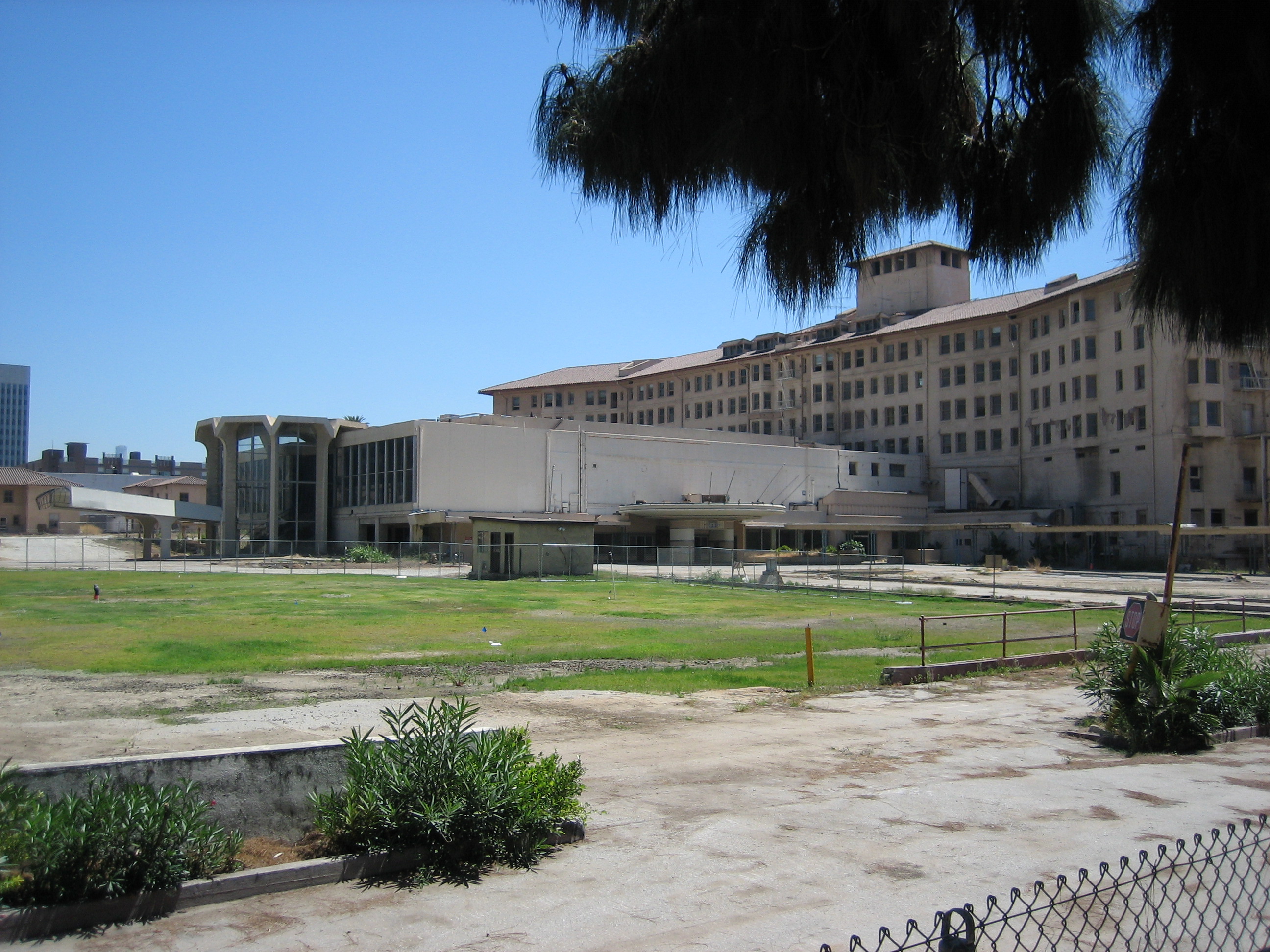
Ambassador Hotel bungalows, 3400 Wilshire Boulevard
The Ambassador behind chain link near the end, closed to guests and waiting for the wrecking crews.
The bungalows stood detached in the grounds, on 24 acres set back from Wilshire Boulevard. The film used them.
The Ambassador had closed to guests in 1989 but stayed open to film crews, and that is the state it was in when this production arrived. It came down across 2005 and 2006, and six schools named for Robert F. Kennedy stand on the site. Pretty Woman, Apollo 13 and Catch Me If You Can filmed there too, the last of those seven years after this crew; the last production in was Bobby, which took establishing shots in late 2005 with parts of the hotel already down.
Leaving town
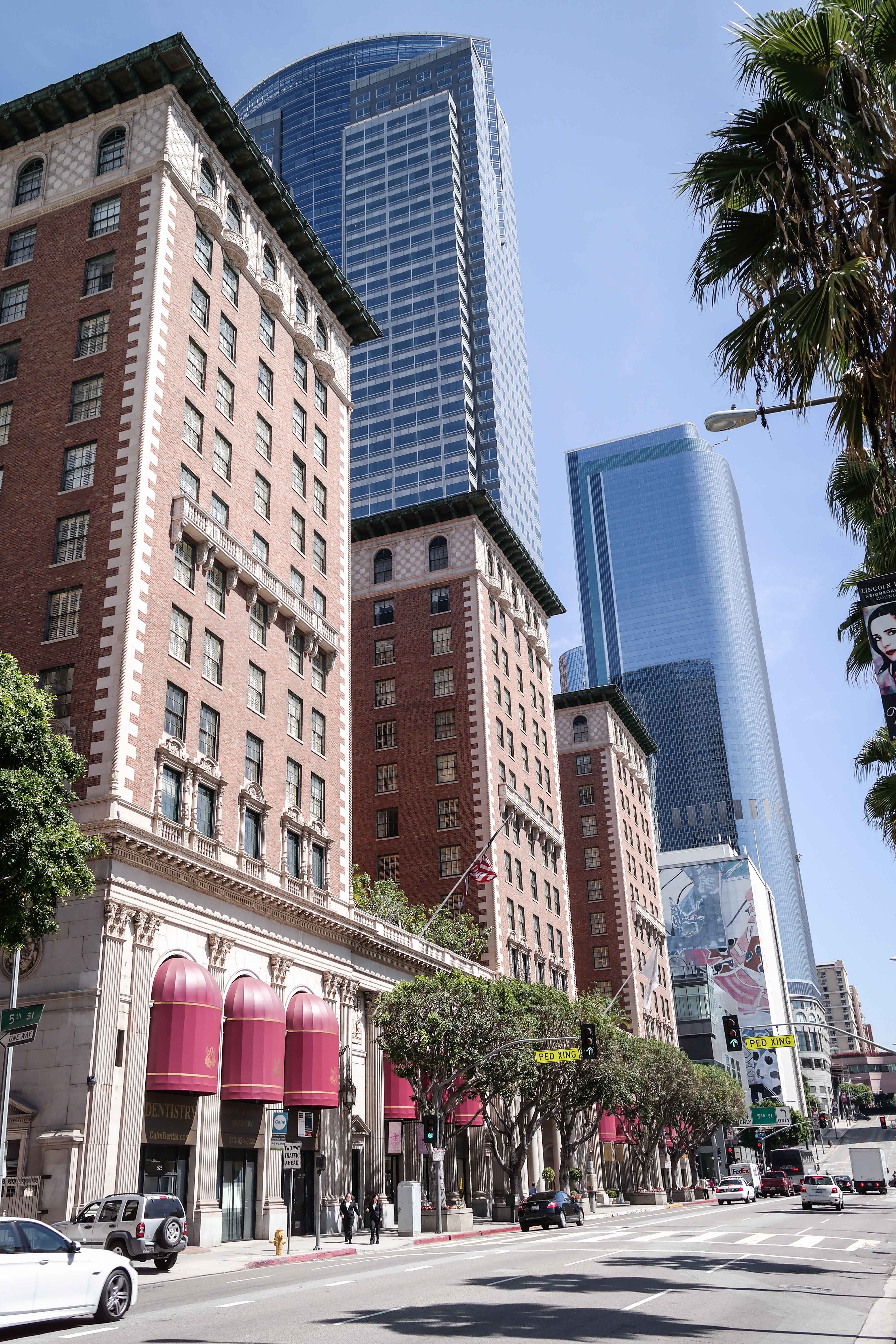
Grand Avenue at the Biltmore
The Grand Avenue side of the Biltmore, and the stretch of pavement a location photographer matched to the shot of Mills running through the rain.
Mills running through the rain to his car, 380 m from the Alexandria. This is the back of the Biltmore, the Grand Avenue side: the guest rooms along it were turned into offices in the 1980s, a 24-storey tower went up beside them, and the hotel's main entrance moved round to Grand Avenue, into what had been the Music Room. Jared Cowan, a photographer who writes about filming locations in Los Angeles and runs tours of them, set his photograph of this pavement beside the frame of Mills running.
The convoy carrying Doe out of the city passes under a railway bridge. Cowan puts it on Vignes Street, where tracks cross the road beside the county jail, 2 km north-east of the Historic Core. Nobody who worked on the film says so.
Scrub, a dirt road, a line of transmission towers, out in the Antelope Valley at Lancaster, seventy-odd kilometres north of downtown.
The towers are not scenery. In the script Doe chooses the spot because the power lines will interfere with police radio, and on the day the lines interfered with the crew's radios instead, so the actors ended up talking to the crew by mobile phone from a distance. Max, who could never rationalise the jump from the city to open ground, took to calling it the deserts of New Jersey.
The helicopter shots were filmed months after everyone went home. The schedule had run out of time, not money: the studio had agreed to pay for extra scenes if any turned out to be needed. By the time the machine went up, the green ground had turned brown, and the footage shot on the day had to be colour-corrected to match what came back.
For twenty years the question people brought Hargrave was where the film was shot. Downtown, he can answer it to the street number: the bay windows on San Pedro, the porcelain floor in the Rosslyn lobby, the barber's chair across the street from the depot.