The Beverly Wilshire sells a package called Pretty Woman For a Day and calls itself the central filming location of the picture. Albert Brenner, who designed the film, says the production asked once, was told no, and shot only the outside. For the hotel interiors the crew went six miles east down Wilshire Boulevard, into a hotel that had already closed.
15
places on the route
Almost all of it is Los Angeles; one museum is 3 500 km east — switch with the buttons above. Click a point to jump to its entry.
Most of the film's map works like that. Its Beverly Wilshire is three separate buildings, its San Francisco opera house is a museum front in Pittsburgh with a rotunda in Exposition Park behind it and a balcony built against a soundstage wall, and its hotel pool is in Westwood. The places that are what the film says they are sit at either end of the story: the shops at the top of Rodeo Drive, and the corner of Hollywood and Las Palmas with the fire escape a minute's walk off it. Some of this you can walk into today. The Ambassador came down across 2005 and 2006, and the coffee shop closed around 1999.
The hotel is three buildings
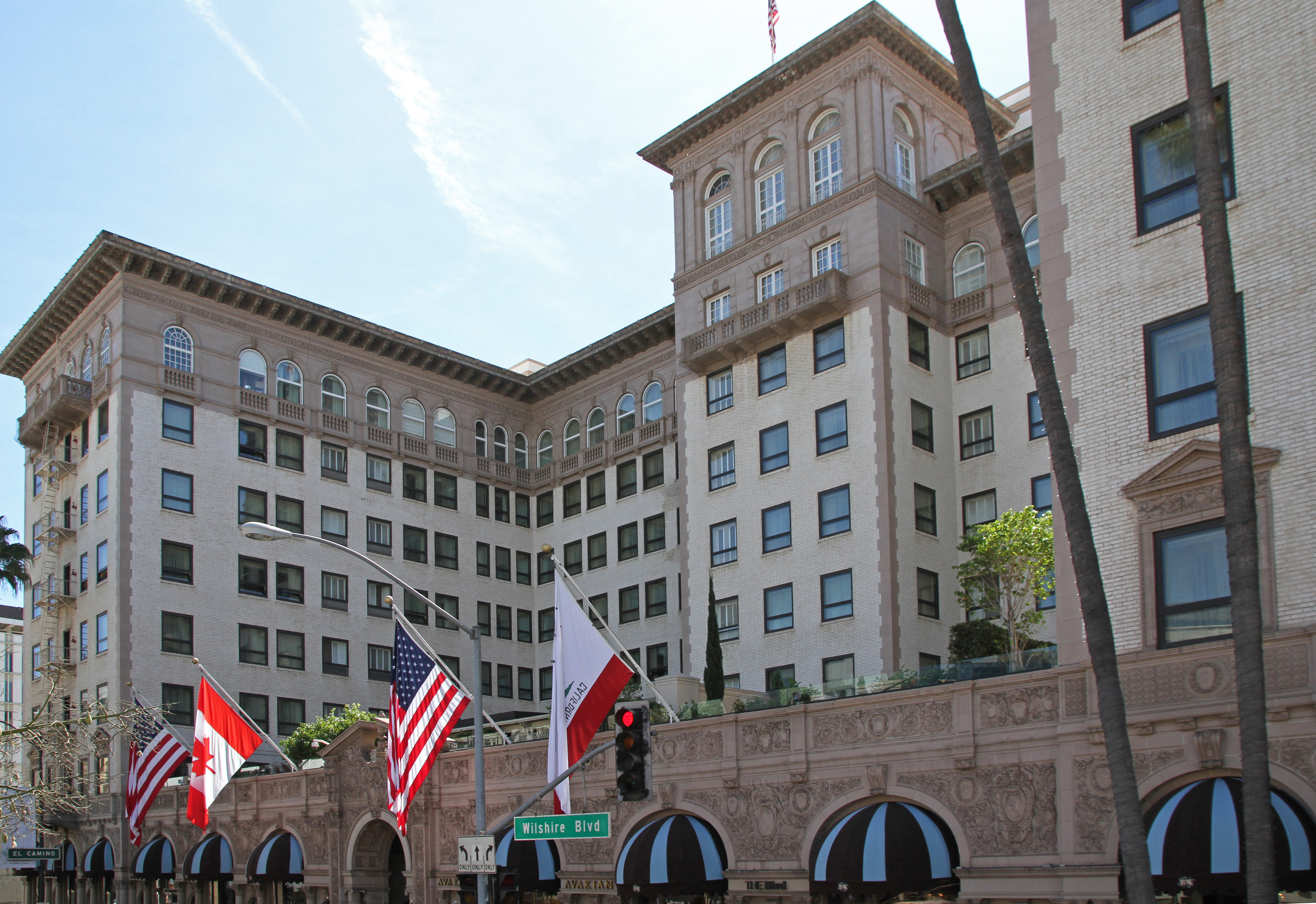
Beverly Wilshire Hotel, 9500 Wilshire Boulevard
The Beverly Wilshire on the Wilshire Boulevard front in 2014.
The E-shaped stone building at the foot of Rodeo Drive opened on the first day of 1928, on ground that had been the Beverly Hills Speedway. It is on screen for something under three minutes of a two-hour film, all of it exterior: the Lotus arriving, and Vivian waiting outside afterwards at the bus stop for a ride back to Hollywood.
Brenner told Los Angeles Magazine in 2020 that the question of shooting inside took one conversation. Even a yes would have arrived with conditions, he said, because a working hotel was not going to inconvenience its guests for a film crew. Thirty years later the hotel sells the film back. The package runs four nights minimum in a specialty suite and includes a wardrobe consultant for Rodeo Drive and a dining etiquette lesson. The shopping really is on Rodeo Drive. The etiquette lesson is six miles east of the front desk.
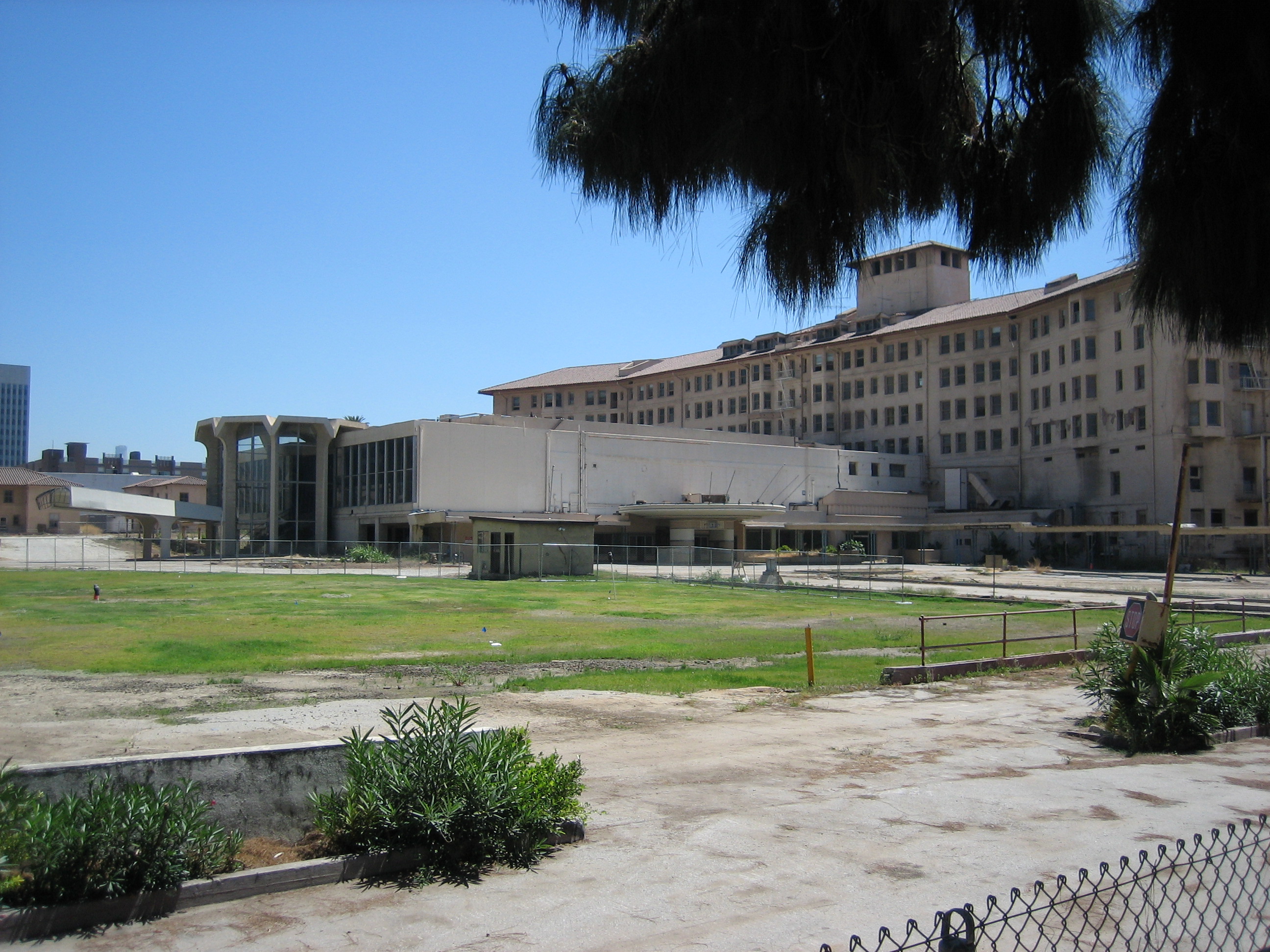
Ambassador Hotel, Wilshire Boulevard
The hotel in August 2005, fenced off, with the demolition already under way.
Barney teaches Vivian which fork to use in the Embassy Ballroom, the room where Robert Kennedy gave his victory speech on the night he was shot in the hotel kitchen in June 1968. This is where the interiors were shot after the Beverly Wilshire said no. The lobby is the Ambassador lobby, and Brenner had to dress it and the corridors around it from nothing, because the place had been emptied or wrecked.
The penthouse is a set, and the two accounts of it disagree. Brenner says he built it inside the hotel's presidential suite, where he could control every angle. The AFI catalogue, working from the trade papers of 1989, puts the same set on a soundstage at Walt Disney Studios in Burbank. Neither puts it in Beverly Hills.
The Ambassador had stopped taking guests in 1989, and for the next sixteen years it earned its keep almost entirely as a filming location. This film was near the front of that queue: Forrest Gump, Se7en and Catch Me If You Can used the building later. It came down across 2005 and 2006, and six schools named for Robert Kennedy stand there now.
The hotel interiors: the lobby, which the crew had to dress from nothing, and the Embassy Ballroom for Barney's table-manners lesson.
The poolside conversation between Vivian and Kit, which reads as the Beverly Wilshire pool, is at a hotel in Westwood, a little over two miles west.
Look behind Julia Roberts on the loungers and there are flowers set into the shot. Mauve and purple run through the film: the penthouse walls and carpet, the tablecloths and napkins at the escargot dinner, those flowers. Asked what the colour meant, Brenner said the reporter was looking for something that is not there. They chose a palette and used it.
Places that had to look expensive
The Boulmiche storefront, 479 North Rodeo Drive
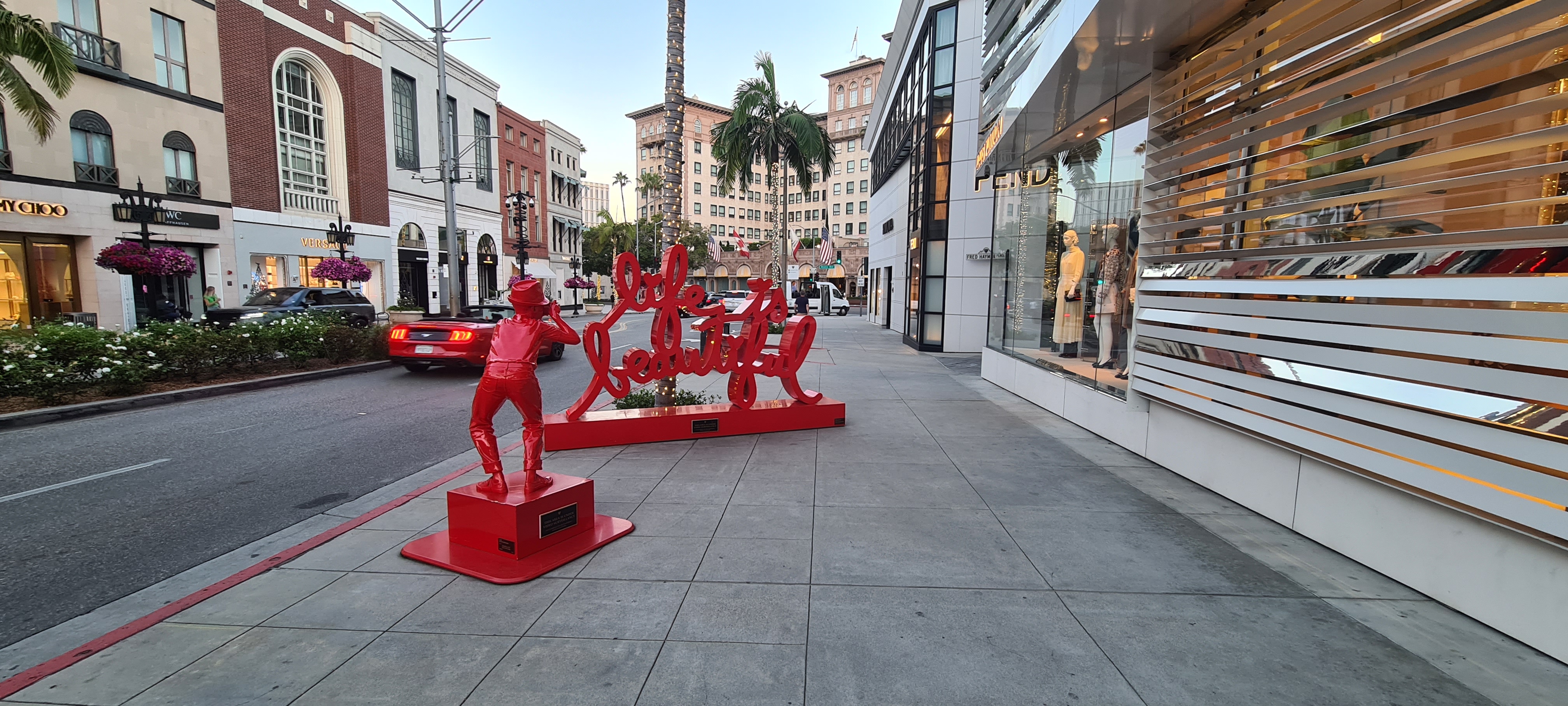
Rodeo Drive from the north end, with the Beverly Wilshire closing the view at Wilshire Boulevard.
The shop where the sales clerks look at Vivian's clothes and ask her to leave stood on the corner of Rodeo and South Santa Monica Boulevard. Brenner picked it for the sightline: from that corner Garry Marshall could hold a long shot down Santa Monica as she walked up. The shop had a balcony that would have given him a high wide angle, and the owners would not risk their fittings under the weight of the equipment, so Brenner built the director a platform of his own.
Rodeo Drive was worked on Sundays, when the street is quiet. Boulmiche later moved to Beverly Drive.
Cicada, 617 South Olive Street
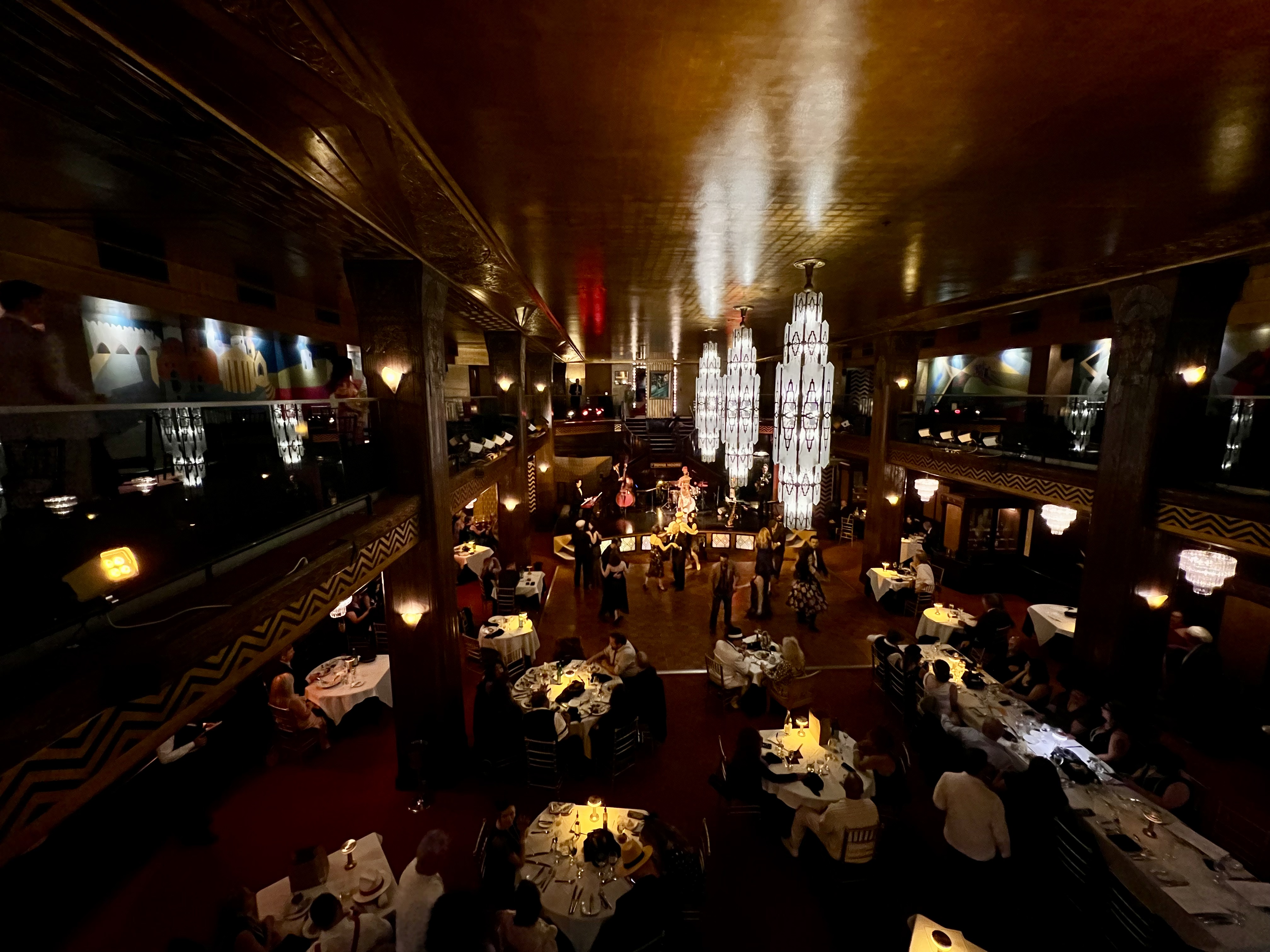
The old shop floor of the Oviatt Building, now the Cicada dining room.
The escargot dinner, where the tongs get away from Vivian and a snail goes across the room. The room is the old shop floor of Alexander & Oviatt, a haberdashery that built itself a tower in 1928 and ordered thirty tons of Lalique glass for the forecourt. Lalique did the mailboxes and the elevator doors too. Most of the glass has been sold or lost over the years; a few pieces survive in the panels at the tops of the lobby columns.
The plaster ceiling and the stair rails in the shot are the ones still there. The chandeliers are not: the ones in the room now came off the set of American Horror Story: Hotel.
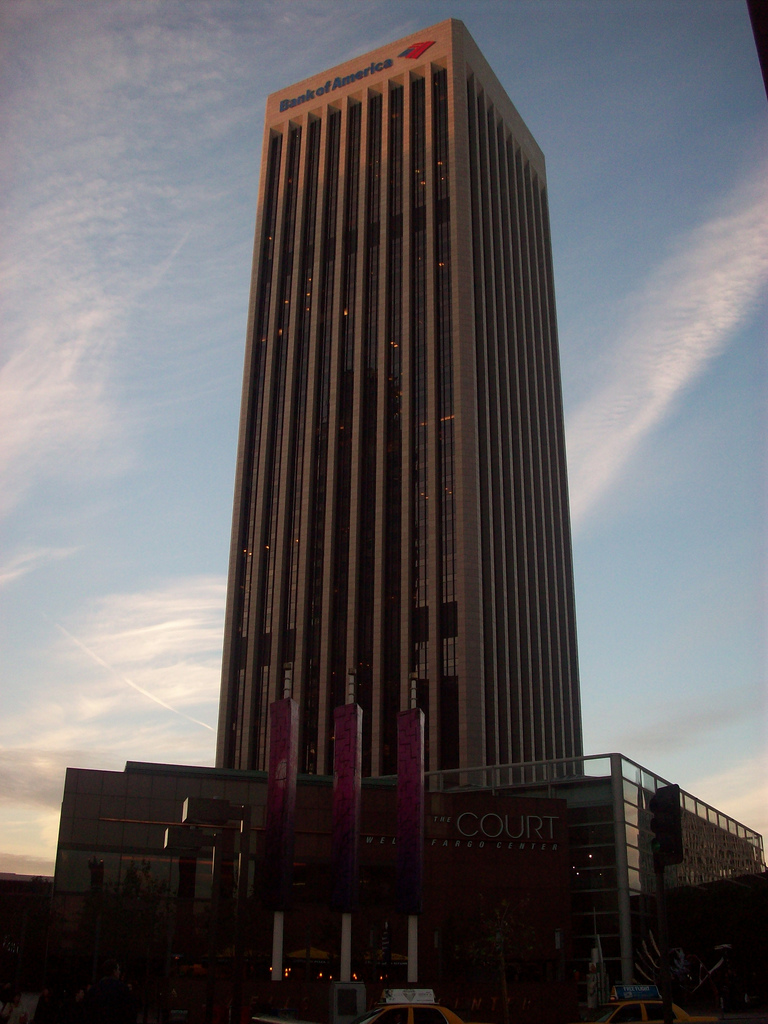
Bank of America Plaza, 333 South Hope Street
The tower at 333 South Hope Street from the plaza.
Philip Stuckey's office. Edward watches a father and son playing on the plaza and steps out from behind a Calder, forty-two feet of steel called Four Arches. Brenner's reason for the address was flat: downtown in 1989 was scruffier than it is now, hard to make look chic and wealthy, and this plaza was the one piece of it that already read as money.
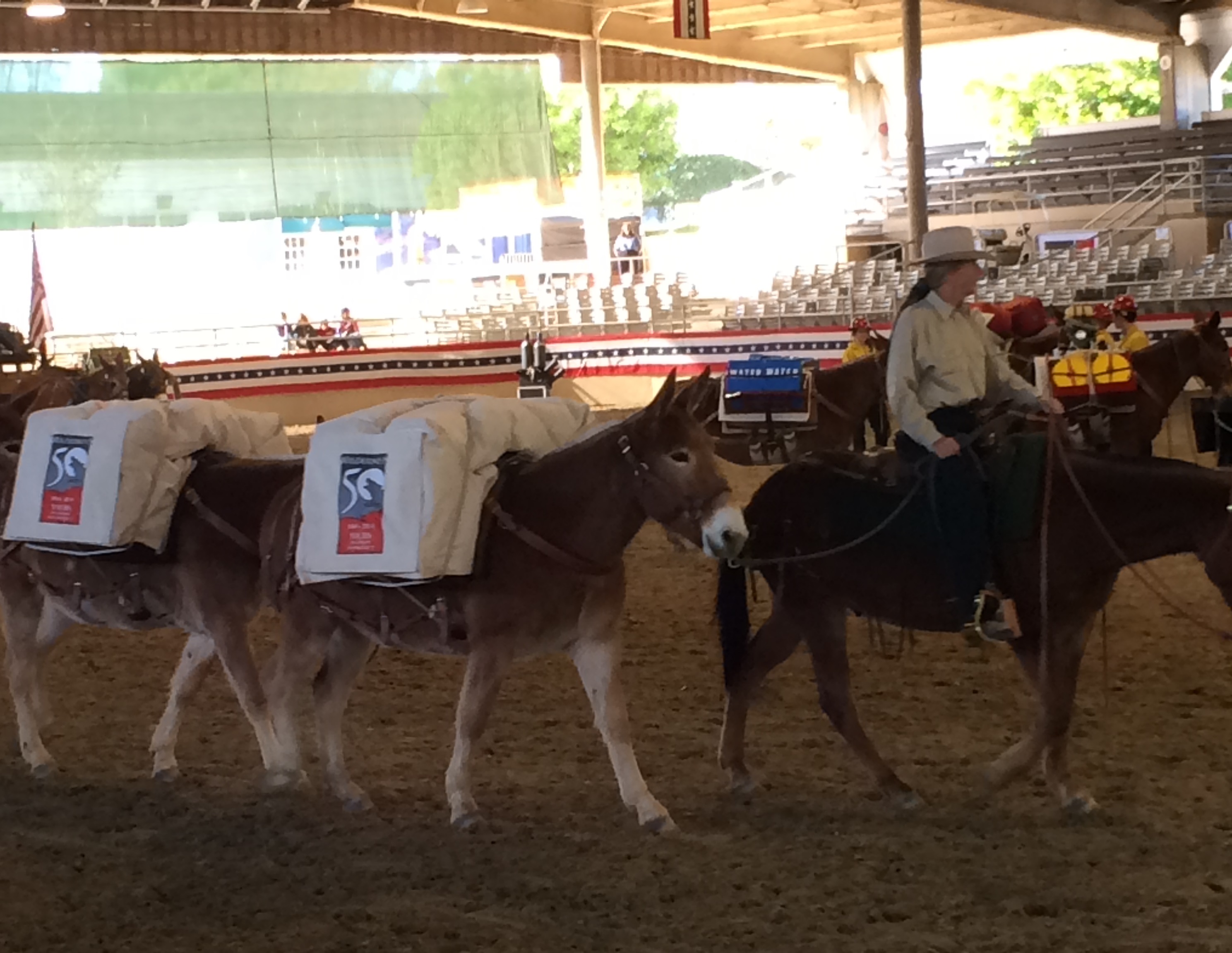
Los Angeles Equestrian Center, 480 Riverside Drive
Inside the covered arena at the Los Angeles Equestrian Center during a Rose Parade rehearsal. The polo is played on the fields outside.
Photo: U.S. Forest Service, Pacific Southwest Region · Public domain · Wikimedia Commons
The polo match, where Edward's lawyer works out what Vivian is, and the horses at sunset afterwards. Asked why here, Brenner's answer was that they needed an equestrian centre and this one was there. The polo is played on the fields outside, not in the covered arena at the centre of the site.
The day off
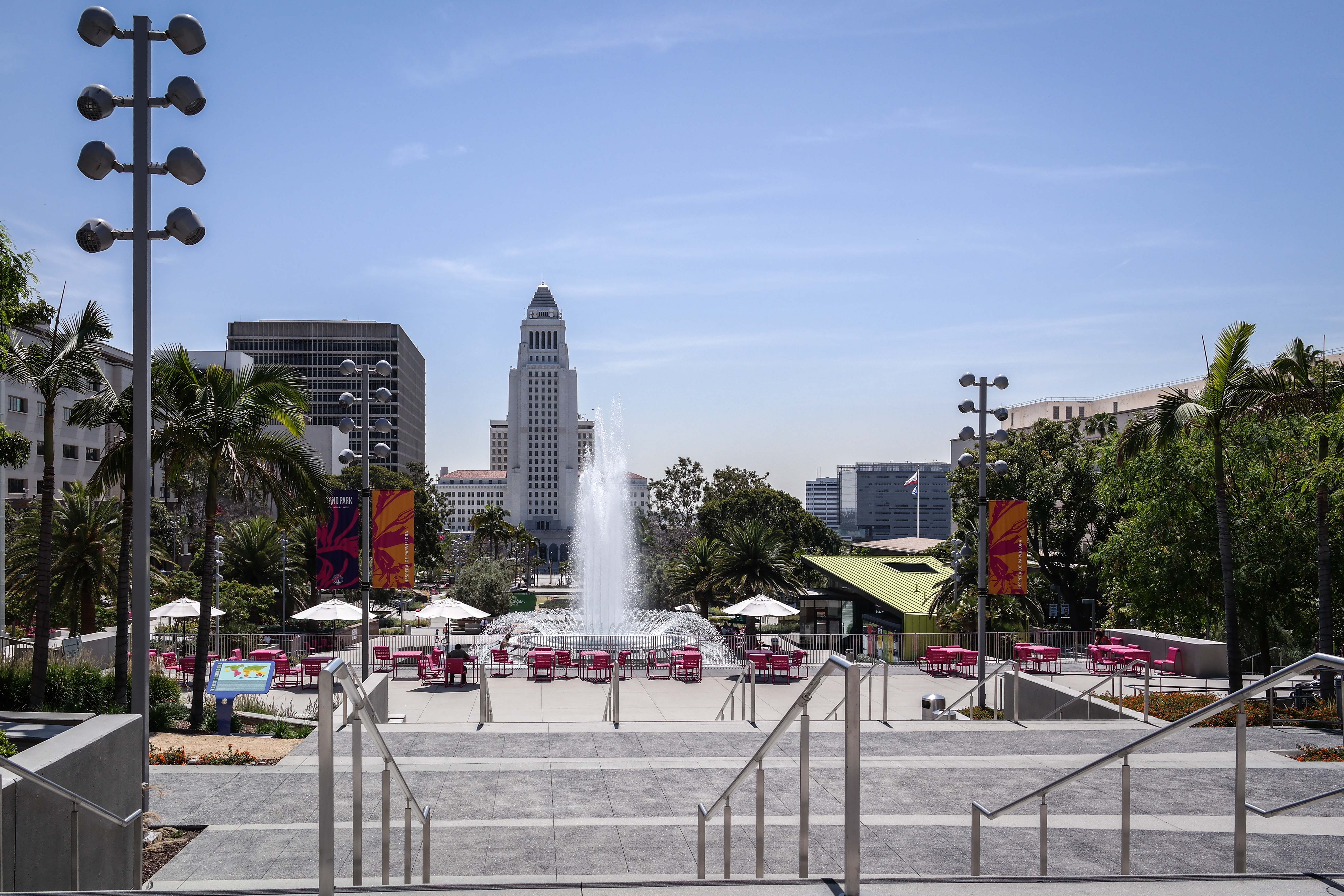
Grand Park, Civic Center
The same ground as Grand Park in 2014, looking towards City Hall.
Shoes off, on the grass, in the strip between City Hall and the Music Center. In 1989 this was the Civic Center Mall, laid out in 1966 with plazas, fountains and a Court of Flags. It was dug up and rebuilt and reopened in 2012 under the name it has now. The lawn in the film is not the lawn you would sit on.
The day ends over coffee in a hole in the wall, six miles from the park. It is one fast shot, taken from the street through the window, and Brenner says the point of it was loneliness: the crew worked from Hopper's Nighthawks, the same late-night counter with the light coming out onto an empty pavement, down to the splashes of red, green and blue light around the window.
The woman visible behind Julia Roberts owned the place. Barbara Knox started as a waitress at Lou's Quickie Grill in 1954, when it was a year old and stood at Santa Monica and Highland; the grill moved west to this block in 1960, and the dozen orange swivel stools filled up with people from the studios nearby. In 1987 Lou and Anita Shulkin retired and signed the business over to her. She ran it about twelve years and closed it around 1999, when Alzheimer's made that impossible.
The opera house is not in San Francisco
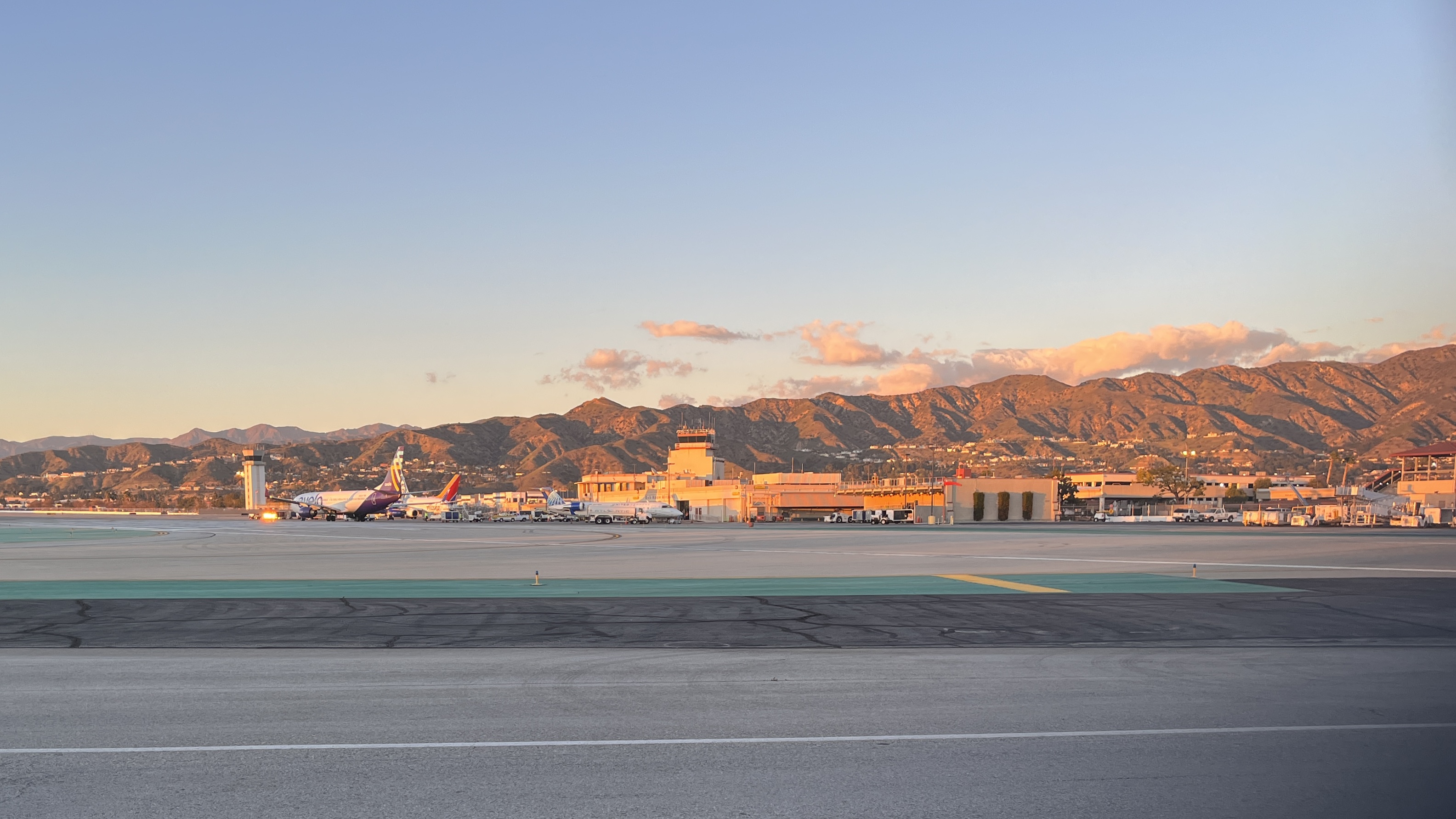
Hollywood Burbank Airport
Burbank airport across the field, with the San Gabriels behind.
Edward flies Vivian to the opera from a private jet terminal on the Empire Avenue side of the field, and there is still a private terminal there. Brenner remembers a much sleepier airport than the one now. It is also the only place from the film he has been back to in thirty years.
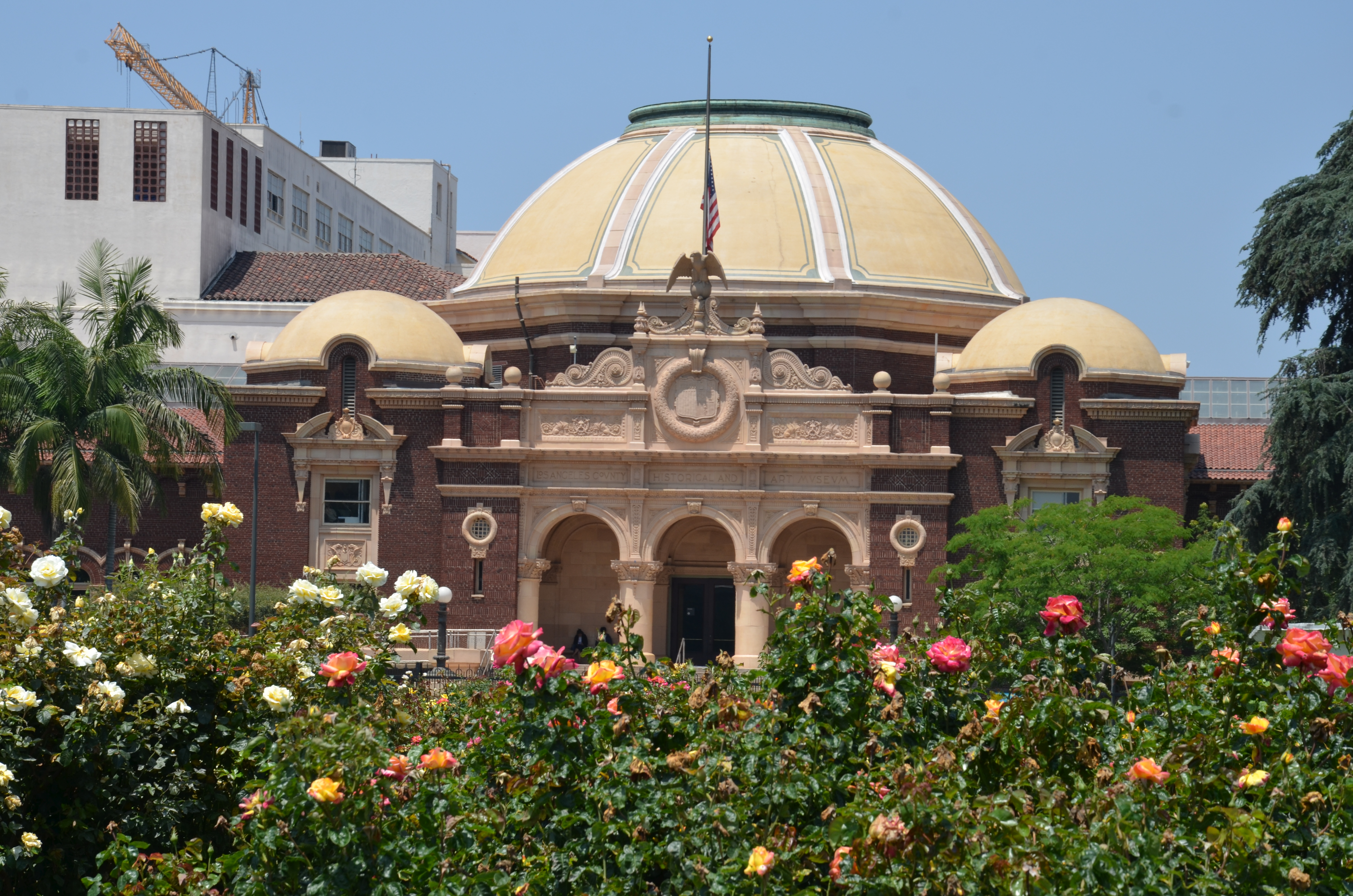
Natural History Museum of Los Angeles County, Exposition Park
One shot, and it is the opera house lobby: Vivian and Edward crossing a marble rotunda in evening dress. The rotunda belongs to the museum's 1913 building, which reopened in 2009 after two years of restoration, stained glass skylight and all. Brenner remembers a dinosaur standing just outside the frame.
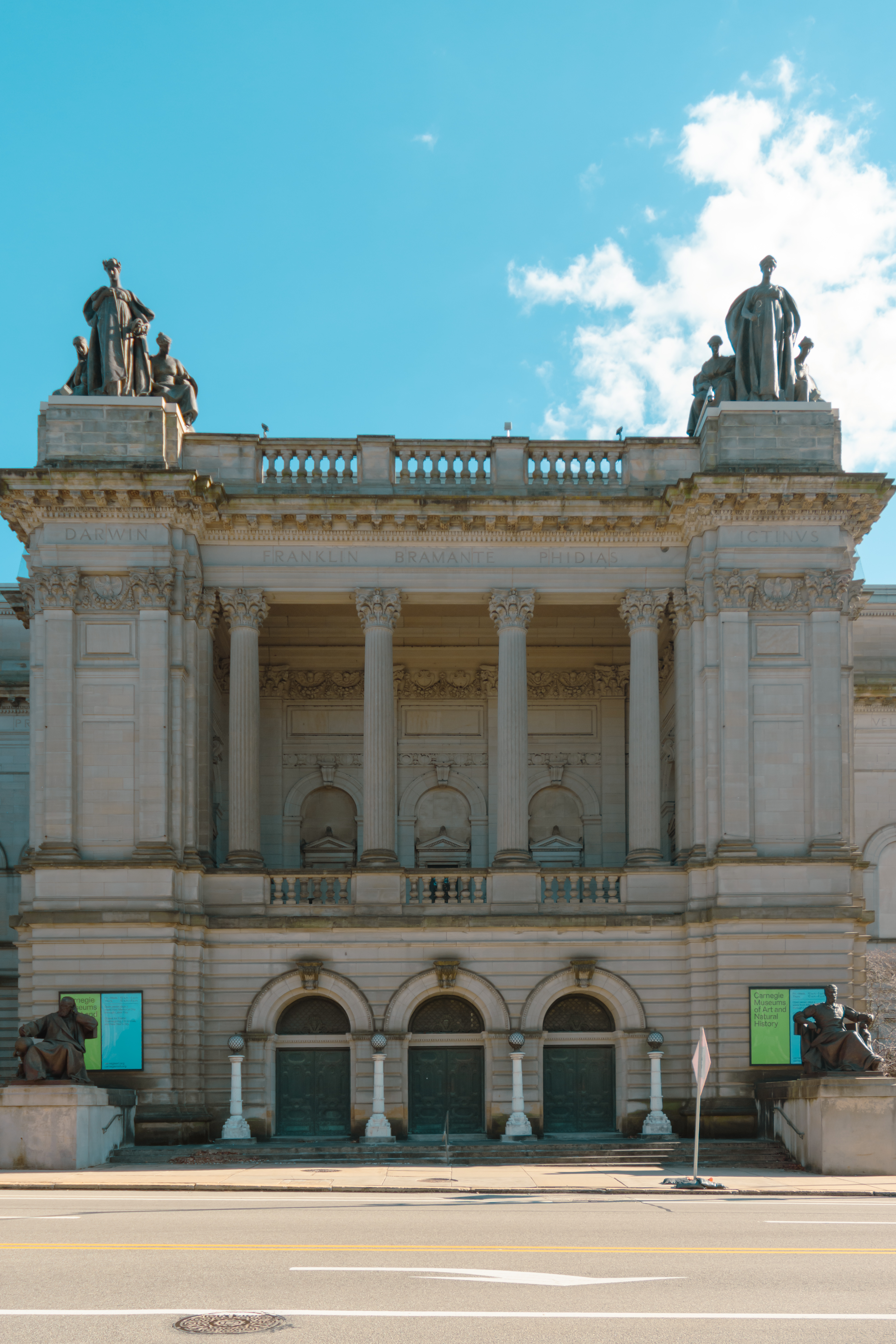
Carnegie Museum of Natural History, Pittsburgh
The Forbes Avenue front of the Carnegie Museum of Natural History, which the film uses as an opera house.
The plan had been to shoot at the War Memorial Opera House in San Francisco. In October 1989 the Loma Prieta earthquake badly damaged the building, and that was that. Brenner looked at the Los Angeles theatres and none of them read as San Francisco, so the balcony went up against a soundstage wall, the lobby became the rotunda in Exposition Park, and a second unit flew to Pittsburgh for the front of a natural history museum. It has the colonnade, the balustrade and the seated statues along the roofline, and from the far pavement it will pass for an opera house.
Brenner is the only person who says this happened.
Hollywood
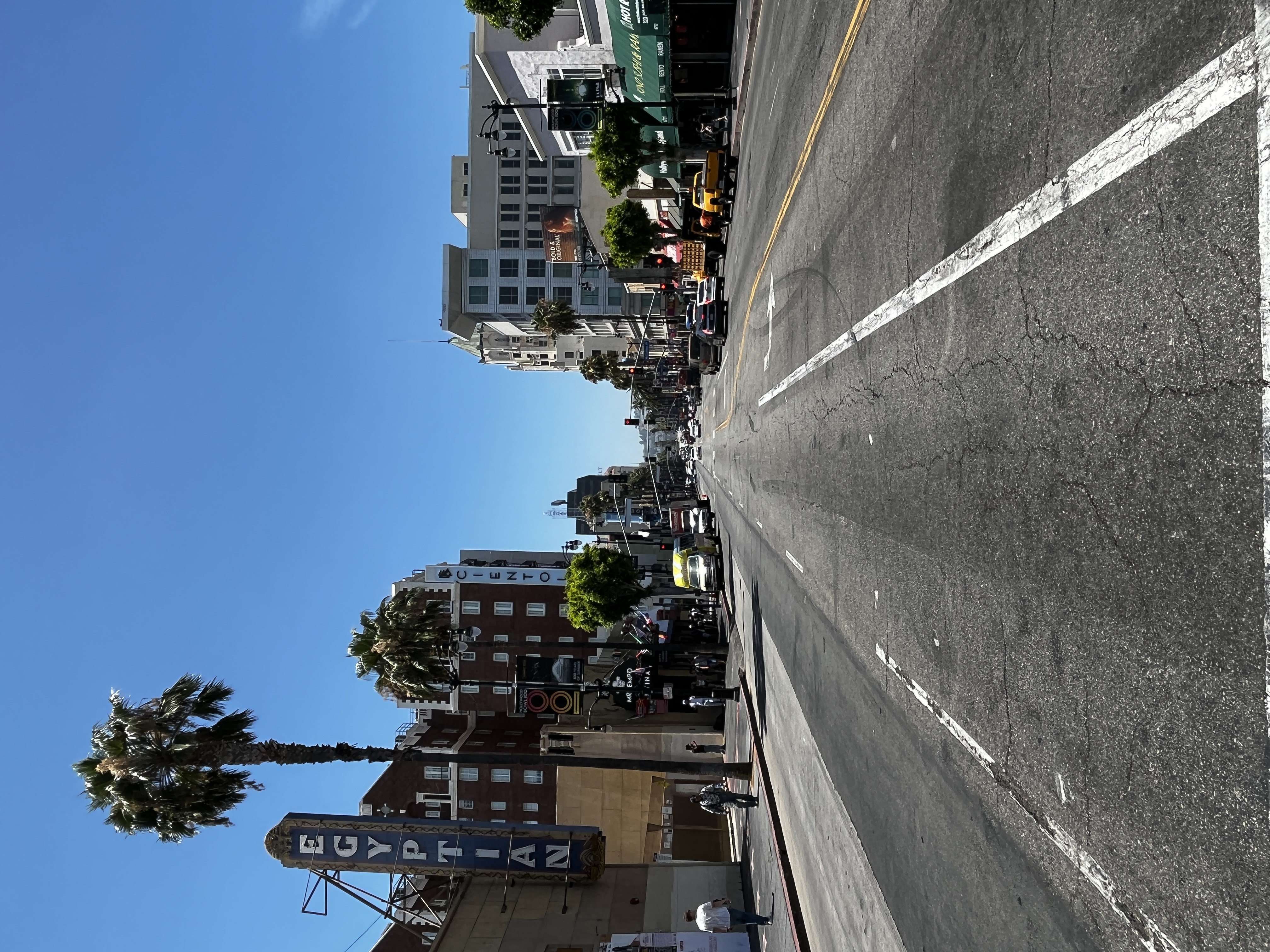
Hollywood Boulevard at Las Palmas Avenue
Hollywood Boulevard beside the Egyptian, a few doors from Las Palmas Avenue.
The corner the film is built around. A Los Angeles Times piece from January 1988 describes the intersection as a magnet for pimps, amateur pornographers and street kids, with drug deals to be had outside George's cafe. The cafe is in the film. The crew arrived eighteen months after that piece ran.
A few streets away, outside a bungalow, Edward asks a homeless man the way to Beverly Hills. The answer, dubbed in later by Marshall himself, is that he is already there, and that the house across the way belongs to Sylvester Stallone.
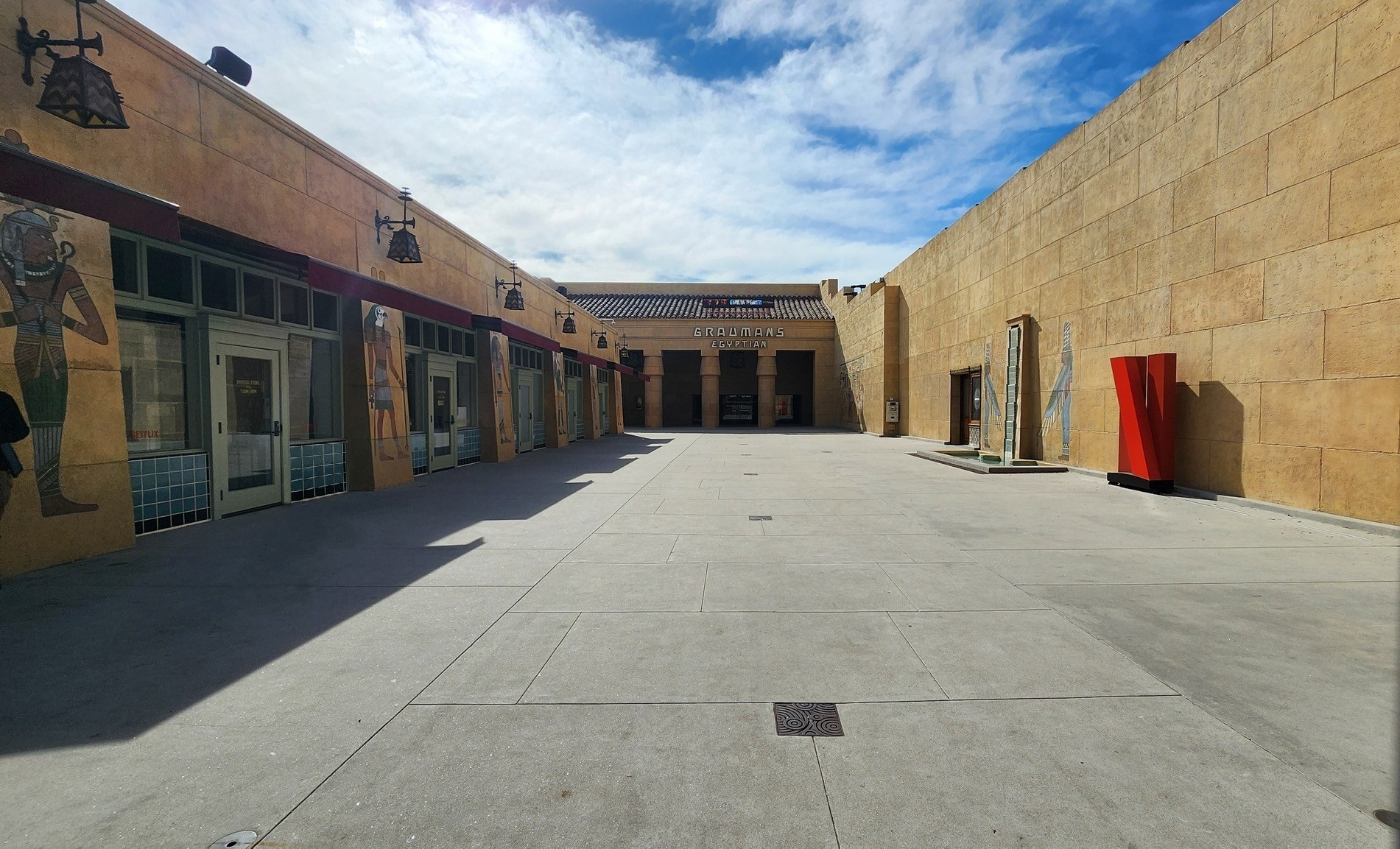
Grauman's Egyptian Theatre, 6712 Hollywood Boulevard
The Egyptian's forecourt in 2024, with the retail units along the left-hand wall.
The Blue Banana, the nightclub, was built as a set in one of the retail units off the theatre's forecourt. There are several of them along that wall.
The theatre opened in 1922 and was the site of the first film premiere; five years later Grauman's Chinese opened down the boulevard and the crowds went there. The American Cinematheque restored the Egyptian in 1998 and ran it until Netflix bought it in 2020. After a second restoration it reopened in 2023, programmed by Netflix on weekdays and by the Cinematheque at weekends.
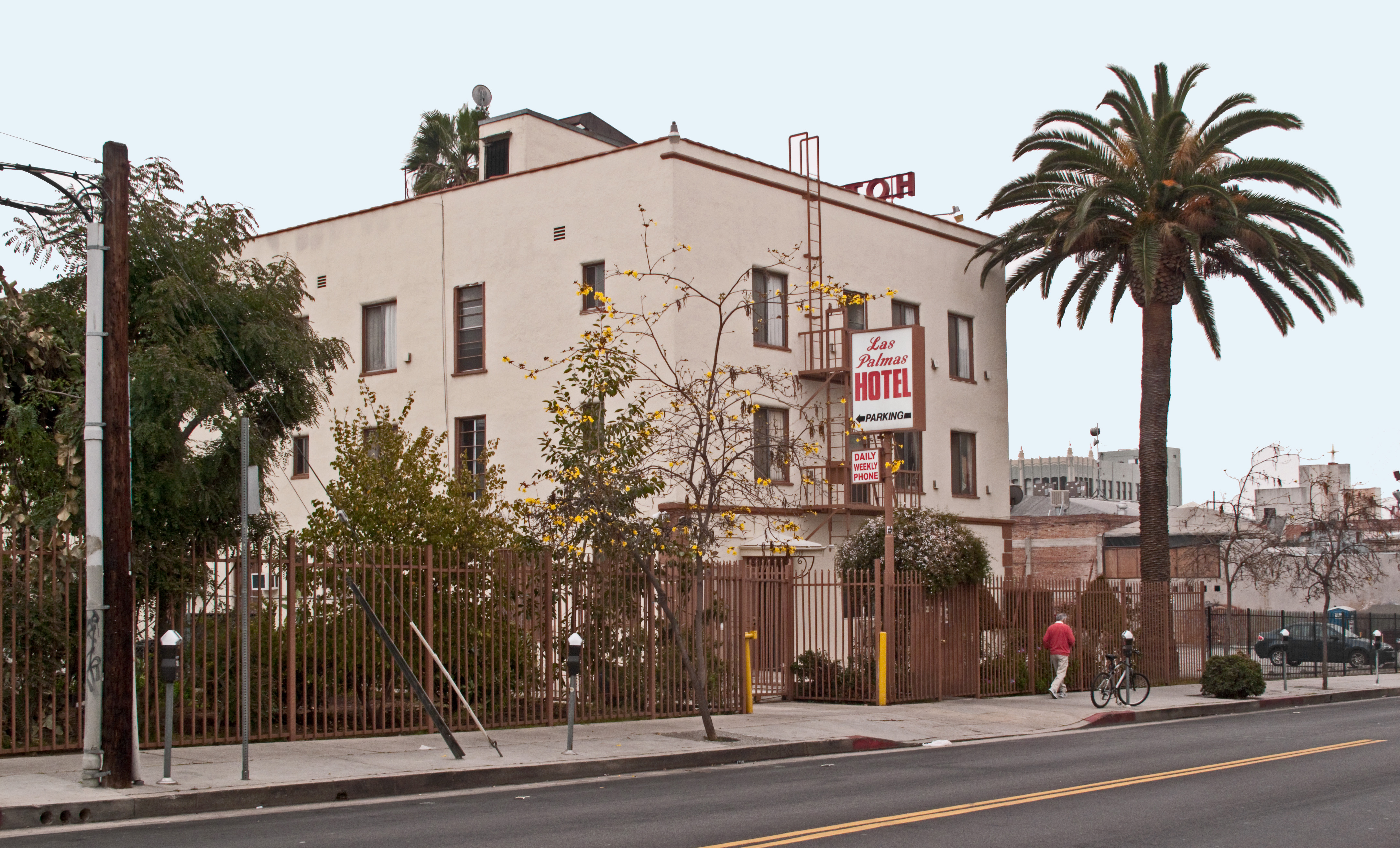
Las Palmas Hotel, 1738 North Las Palmas Avenue
The Las Palmas Hotel from the street, fire escape on the side wall.
Vivian and Kit's apartment, and the fire escape Edward climbs at the end, afraid of heights. Marshall wanted that fire escape. On the DVD commentary he says it put him in mind of a five-floor walk-up in Greenwich Village where he had lived, one that looked like it would burn down any minute. Brenner's reason was the practical one: the hotel had an empty apartment they could use.
Rental listings for it run in the Los Angeles Times back to 1951, and it still rents rooms by the night. The tour buses stop outside; Brenner found that out from a reporter in 2020 and said he had not known.
Both hotels in this story sell the film now. The Beverly Wilshire wants four nights and six figures, and the suite it puts you in is not the penthouse from the picture, because that one was built at the other end of Wilshire Boulevard, or on a soundstage in Burbank, depending on whom you ask. The Las Palmas wants the price of a room, and its fire escape is the one Edward climbs.