Fifteen addresses, three regions, one of the most argued-about mansions in American film. Most of these places are still standing and most of them are open to anyone who turns up.
13
places on the route
The locations sit in three separate regions — switch with the buttons above. Click a point to jump to its entry.
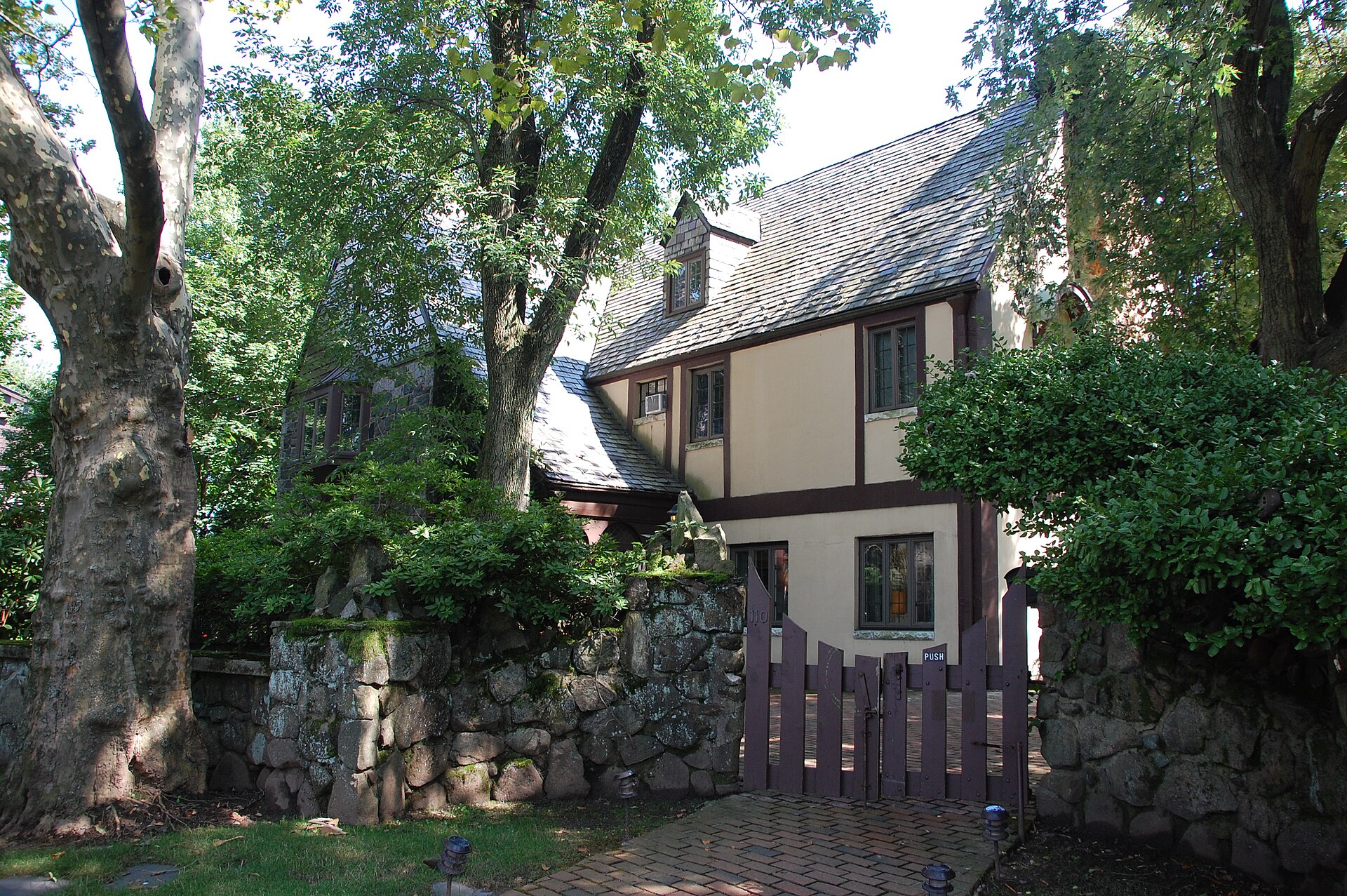
A private house at the end of a quiet cul-de-sac in Todt Hill, and the reason half the audience thinks the wedding was on Long Island. It wasn't. Coppola shot the opening on Staten Island and the mistake has outlived everyone involved.
To turn a suburban lot into a walled compound the crew built a fake wall and gate straight across the street and pointed the cameras inward. Almost 750 neighbours came in as extras, which is why Connie's wedding looks like a wedding and not like a casting call.
The wall came down in 1971. The house did not. People live there.
The highest ground on the Atlantic seaboard south of Maine, which is a strange thing to find twenty minutes from the Staten Island Ferry. Quiet, wooded, expensive. Nothing about it announces itself.
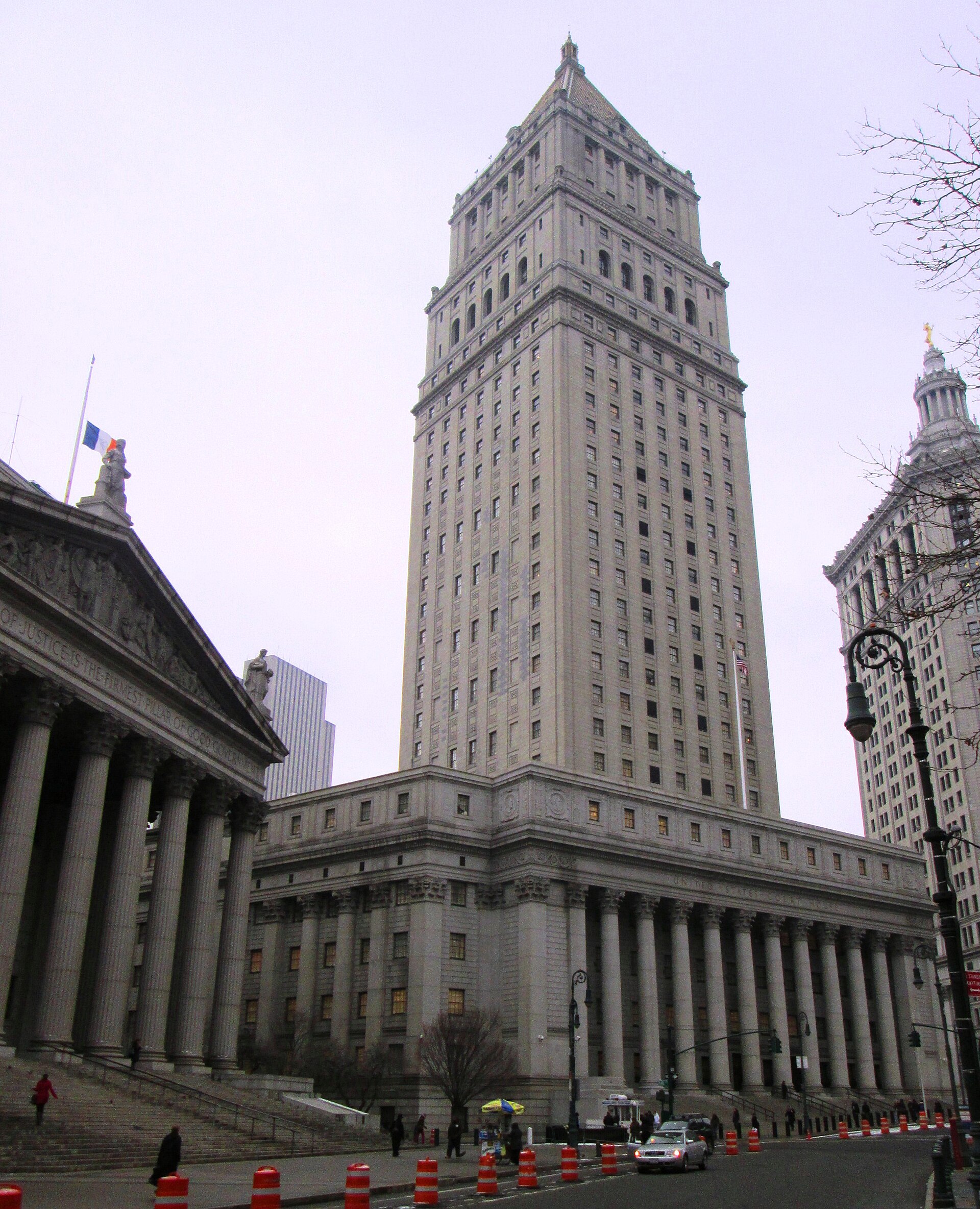
A courthouse plaza with a fountain, five minutes' walk from Chinatown, and one of the most filmed pieces of pavement in New York. Barzini takes his bullets on the steps behind it.
The building is the New York County Courthouse and it is a working court. On weekdays the steps belong to lawyers and jurors eating lunch.
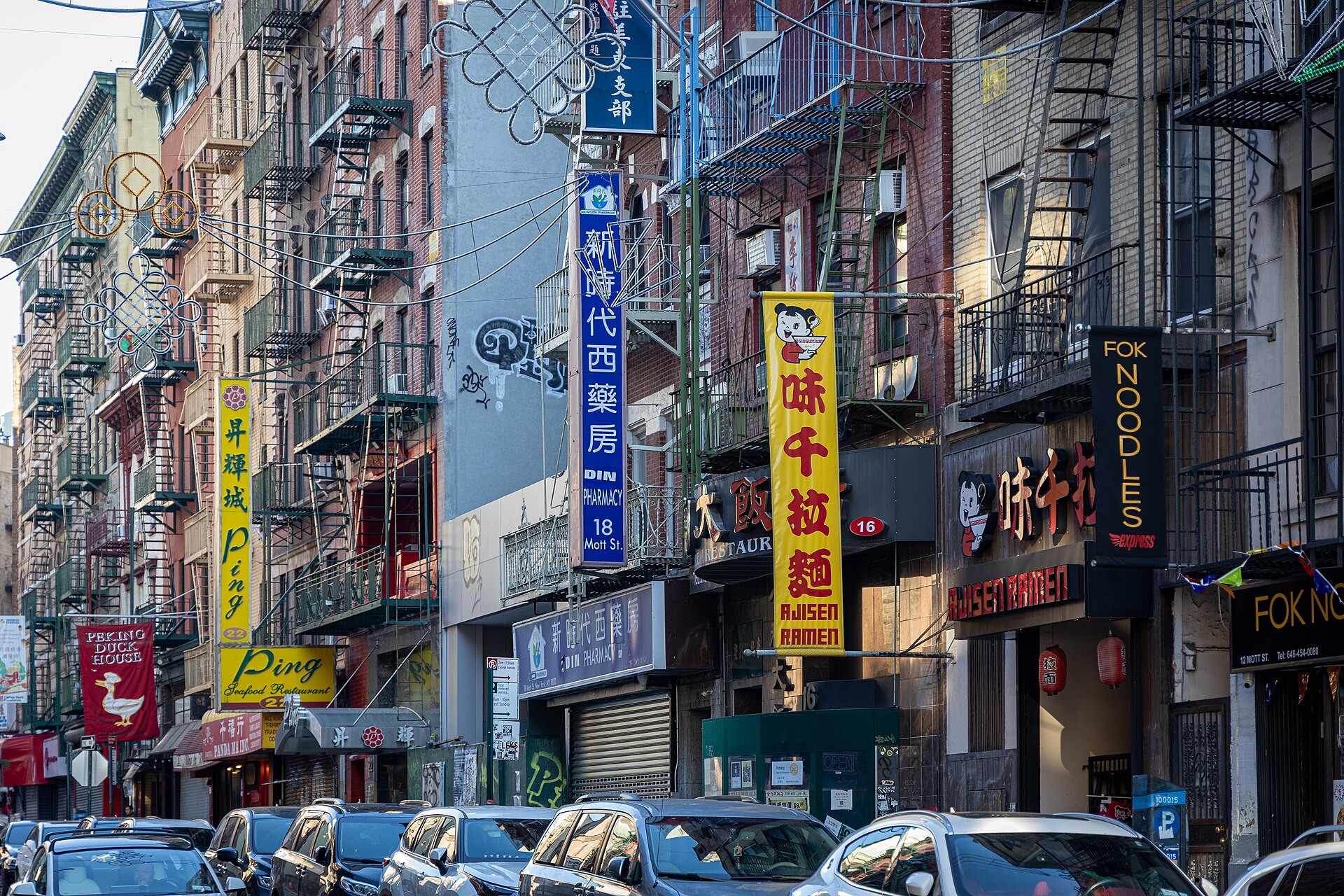
The Corleone olive oil business ran out of Little Italy, and in 1971 Mott Street needed almost nothing done to it to pass for Mott Street in 1945. It is a street rather than a point, which is why it runs as a line on the map instead of sitting under a pin.
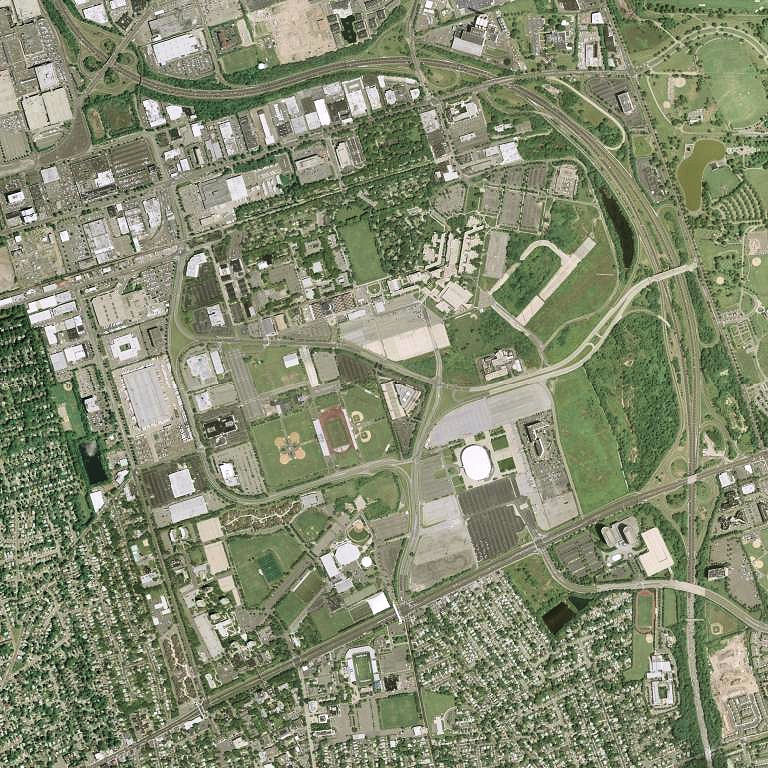
Sonny dies at a tollbooth on a causeway. The causeway is an airfield.
By 1971 Mitchel Field had stopped being an air base and a community college had moved onto the site. On 22 June the crew took a stretch of open runway and built the whole approach on it: three tollbooths, guard rails, billboards. The car was a 1941 Lincoln Continental drilled with holes where the bullets were meant to go. Three days of shooting and over $100,000, from a budget Paramount had spent months trying to shrink.
John Huston had used the same field four years earlier for Reflections in a Golden Eye, when it was still government property and he needed permission to get in.
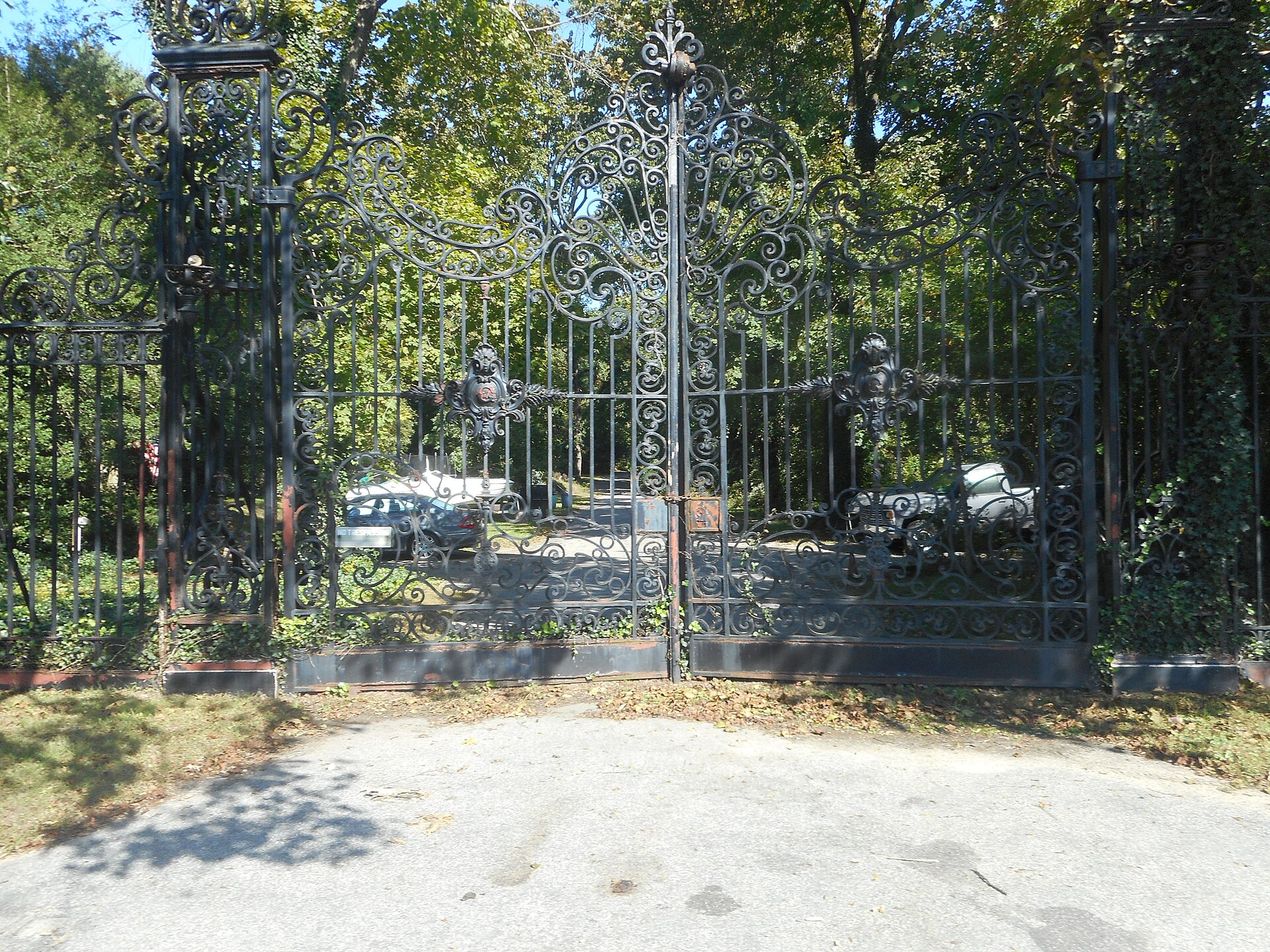
A Guggenheim house on the North Shore, and one of the two candidates for the horse's head.
It has kept working since. The pilot of Kings was shot here, and so was Running Wilde. The estate is a preserve now and open to visitors, which is more than can be said for most of the addresses on this page.
Falaise
The second house on the same grounds. Accounts split between the two, and both are marked.
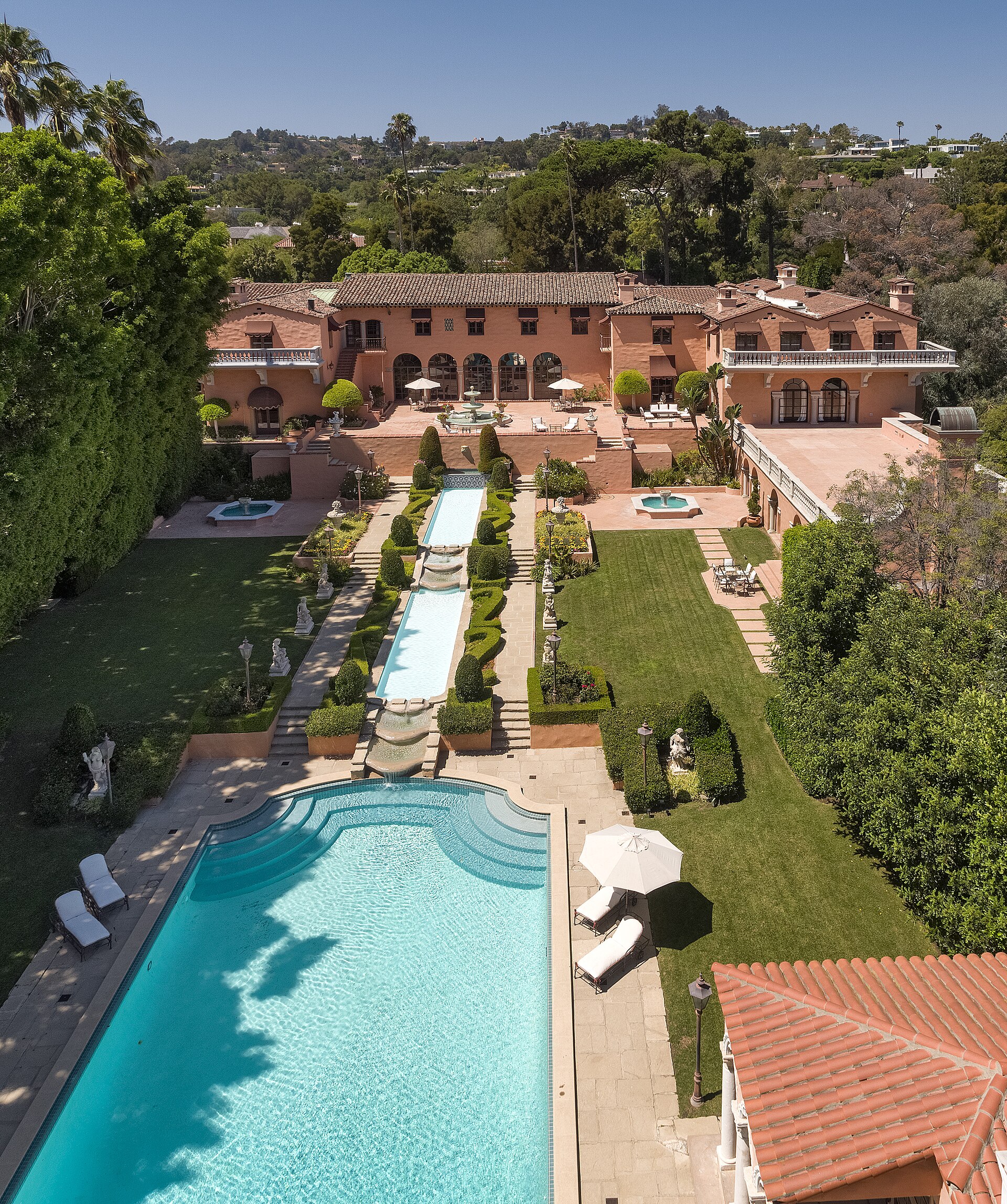
The other candidate for the horse's head, three thousand miles from the first.
Whatever happened in 1971, the house has had a long career. Paul Newman used it as the Sampson family estate in Harper in 1966. Kevin Costner and Whitney Houston were there for The Bodyguard. Beyoncé filmed Black Is King on the grounds in 2020. Fifty-four years between the first and the last.
Coppola took criticism for the scene. The head was real, sourced from a dog-food company from a horse already bound for slaughter, and saying so settled nothing.
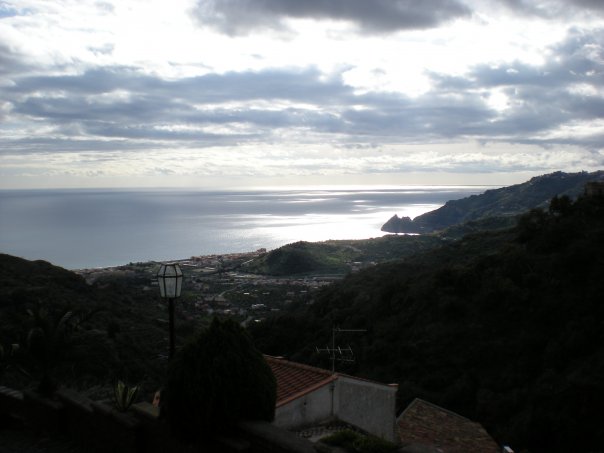
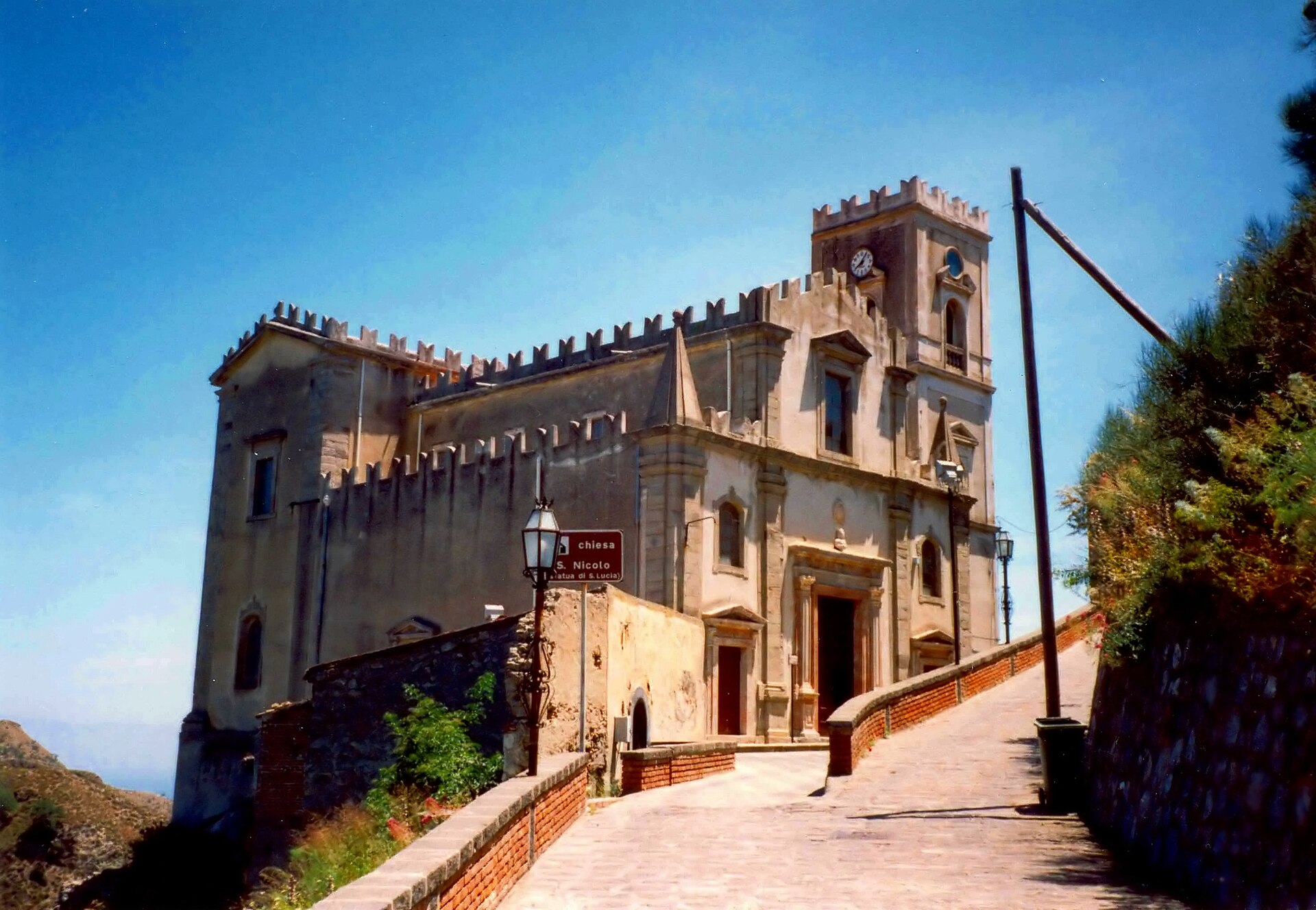
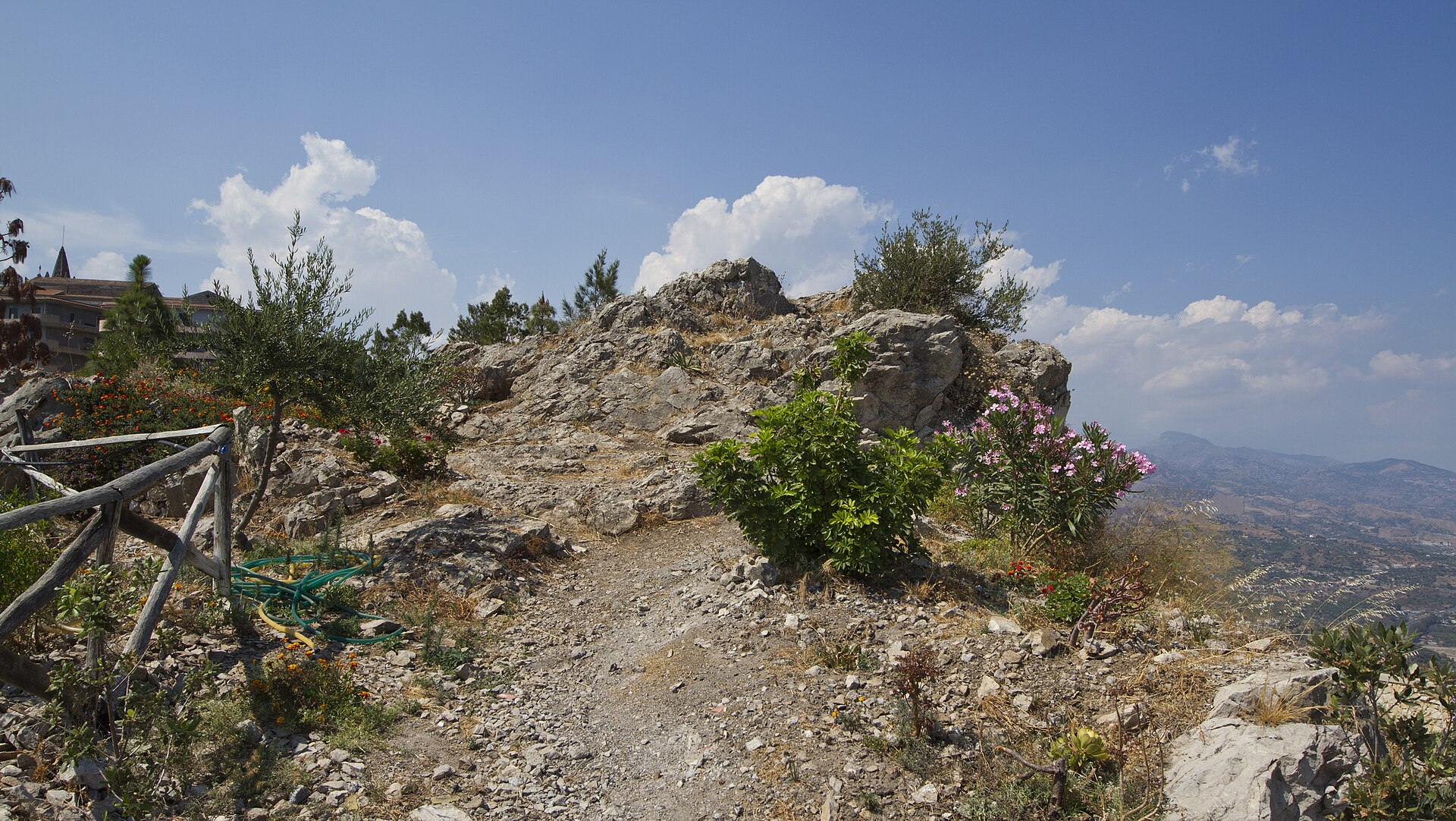
Coppola did not shoot in Corleone. He went to two hill villages in the province of Messina instead and left the family's namesake town out of the picture entirely.
Michael's exile is mostly Savoca. Steep, small, stone.
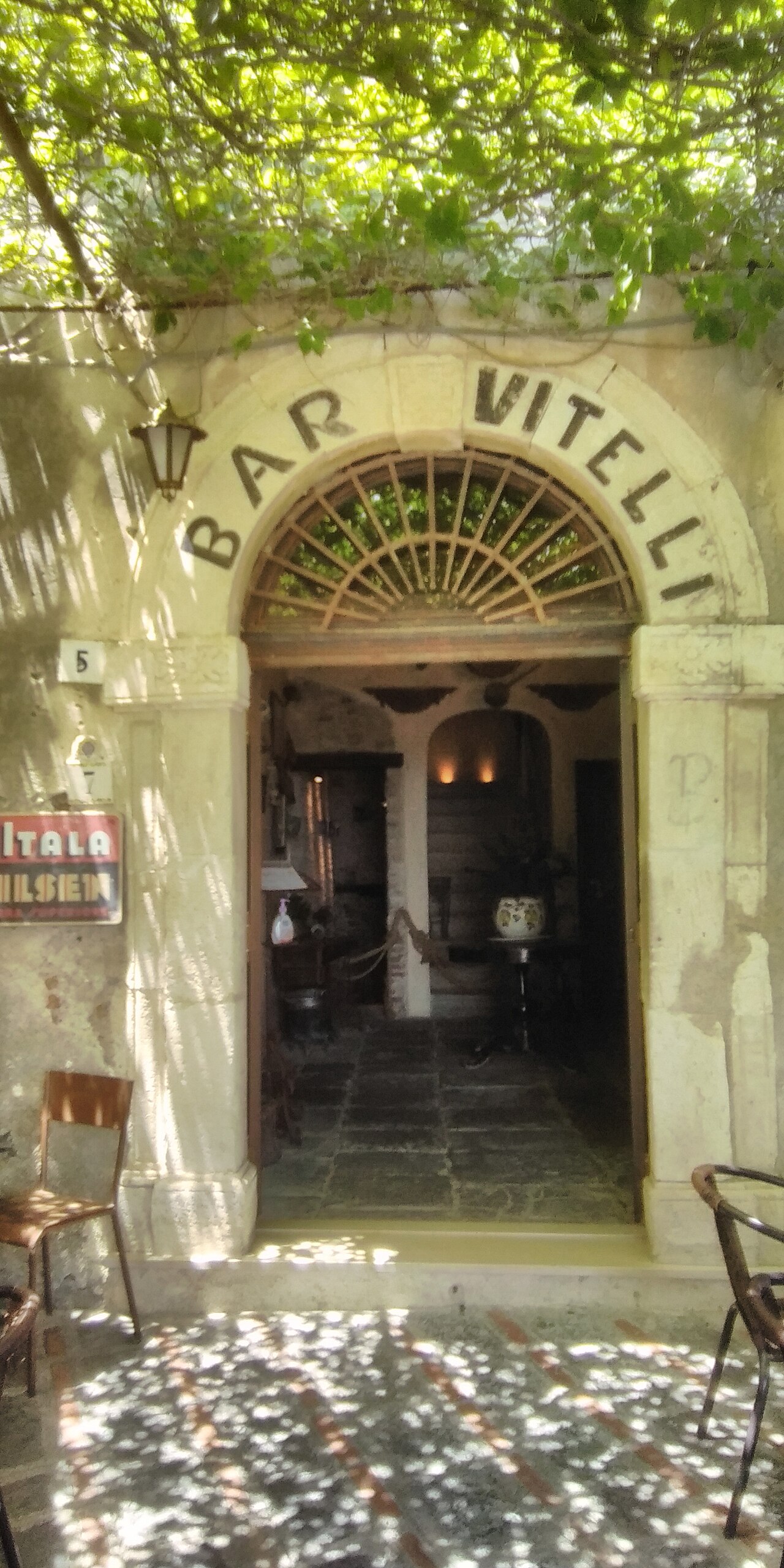
Ground floor of the Palazzo Trimarchi. Michael asks a father for his daughter here, and the bar has been living off those few days of 1971 ever since. It is still open.
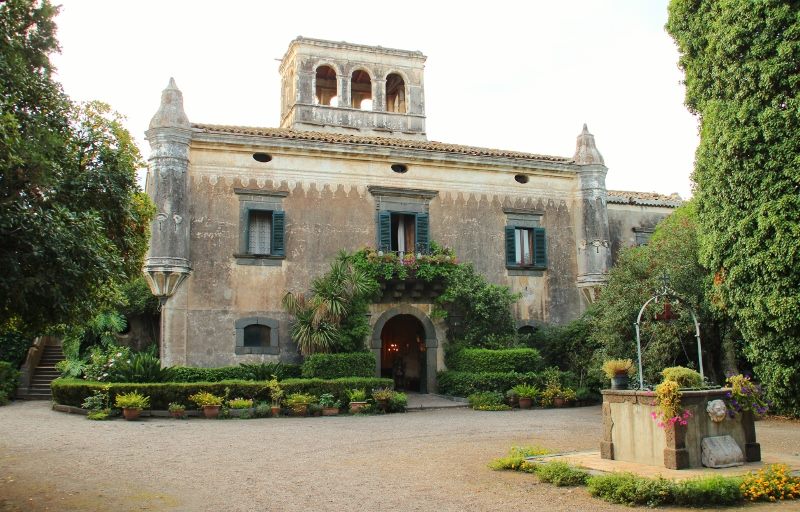
An eighteenth-century villa near Fiumefreddo di Sicilia.
Not on the map
Las Vegas. The production could not afford Nevada, so everything set there was built somewhere else.
Most of the interiors as well. They stayed east, at the Filmways studio in East Harlem, instead of moving to a Paramount stage in California. For a film the studio had wanted made three thousand miles away, remarkably little of it looks like a soundstage — which is largely down to Gordon Willis, who turned the job down at first, called the production chaotic, then came back and agreed with Coppola to work without helicopters or zoom lenses and to underexpose the negative until the whole thing went amber.