By the end of the 1985 dry season the waterfall that plays Echo Lake had almost stopped running. Craig Bolles, who found the locations for this film and worked on it as second assistant director, sent half a dozen men up a few days early to dam the creek, so that when the widescreen shots came round there would be water going over the edge. Getting trucks and buses anywhere near the place had already meant hiring someone to grade a track in. In all the time the crew was there, he says, they saw nobody at all.
9
places on the route
Kakadu, a Queensland pub 1 600 km away, and New York on the other side of the world — switch with the buttons above. Click a point to jump to its entry.
Nearly everything Mick Dundee walks through in Australia is a real place playing itself, and the film went to some trouble to make those places behave. Forty years on the trouble runs the other way. The rock he calls his backyard keeps hours set by Commonwealth regulation and posted on a sign at the gate, drones over it need a permit that is usually refused, and the falls he swims under were shut for six years after a track was cut to the top of them without the certificate the law requires. The New York half has the opposite problem. Six weeks of shooting went into that city, and a good deal of the Manhattan Mick walks through has never been named.
The pub is the one from the film. The ground is not
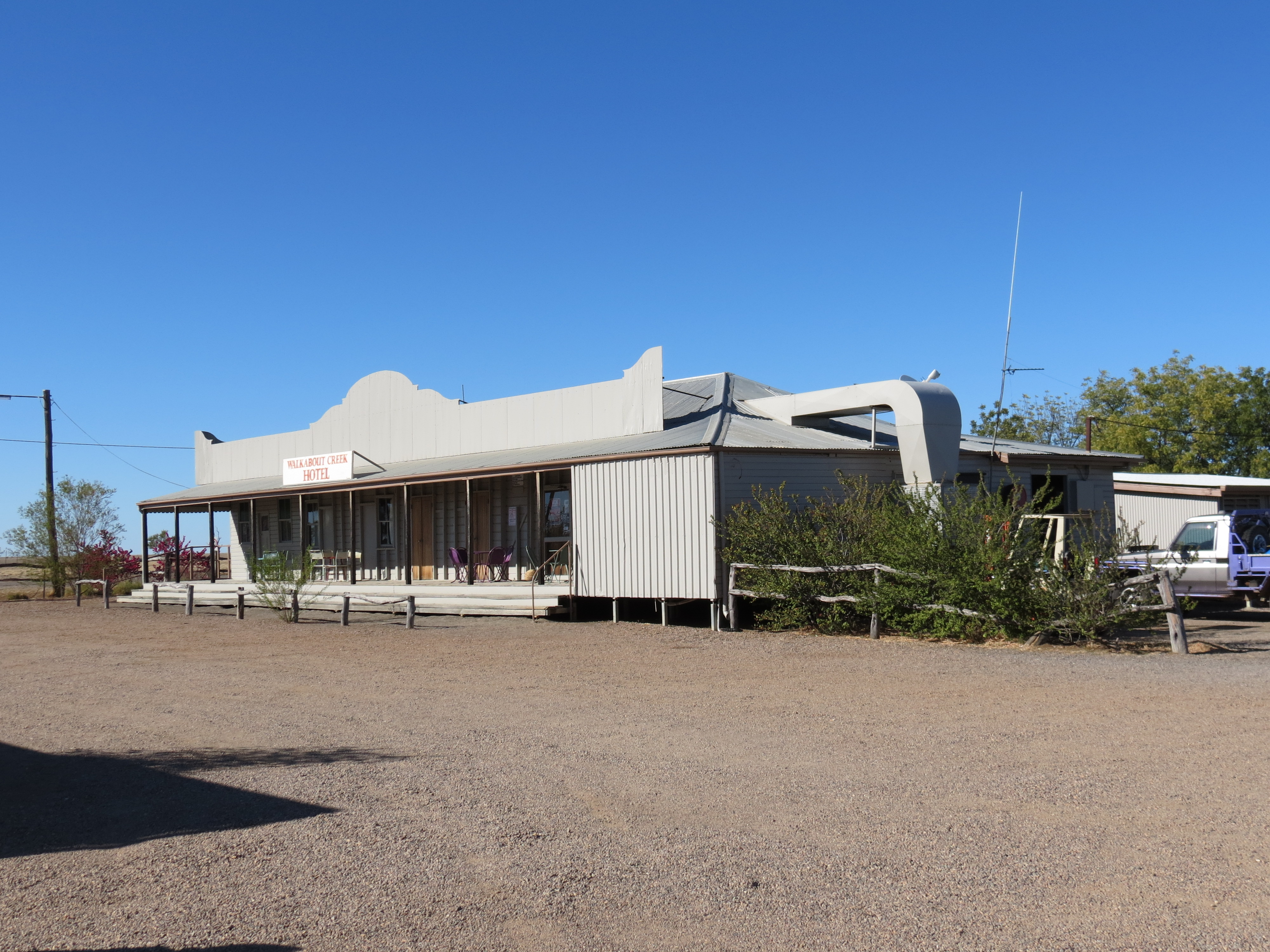
Walkabout Creek Hotel, McKinlay, Queensland
The Walkabout Creek Hotel as it stands now, on the Landsborough Highway at the corner of Kirby and Wylde Streets.
The film opens with Mick coming through a pub door with a dead crocodile under his arm. The pub is in McKinlay, a town of 162 people on the Landsborough Highway between Cloncurry and Winton, and in 1985 it was the Federal Hotel, built in 1900 and licensed the year after. The crew dressed a false front onto it; the hardwood floors inside were the original ones, warped and polished. The name in the film stuck to the building afterwards and has never come off.
Then the ground moved out from under the story. In 1996 the building was picked up and moved from its first site at the end of Middleton Street, one street west, to the corner of Kirby and Wylde on the highway. Middleton Street begins about 100 m from that corner, ends about 400 m from it, and then runs on as a track for another kilometre. The building Mick walks out of is this one. The ground he walks out onto lies a few hundred metres west.
Inside is a working pub in a town whose only other business is a coffee van. It is also the post office and it runs the mail out to the surrounding stations, and in the wet it fills up with truck drivers who cannot go on. John Cornell, one of the producers, gave the set to the pub when the shoot was over, and the bar from the film stands in the beer garden and gets opened for functions. The place has been up for sale for years.
Mick's backyard
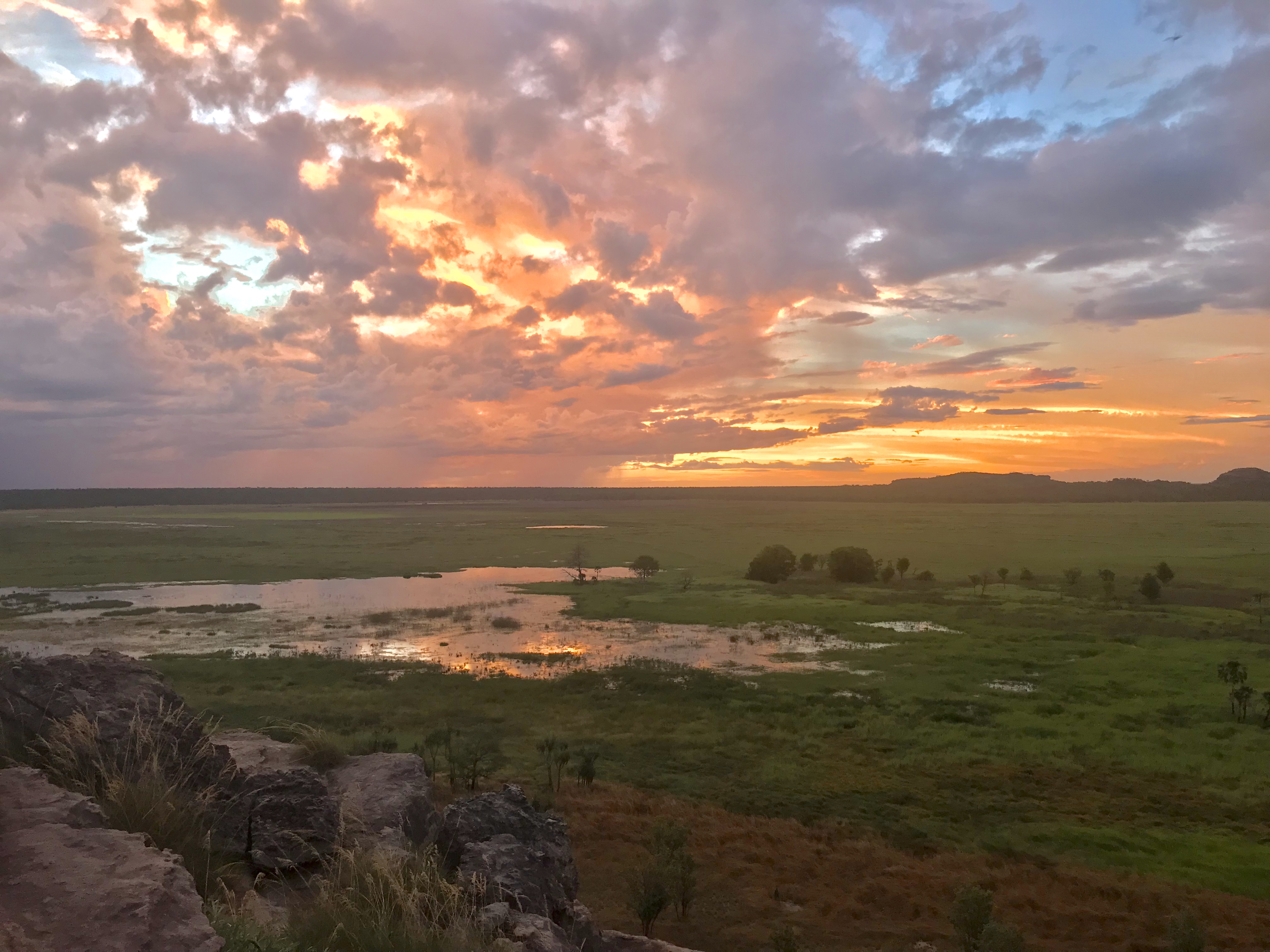
Ubirr
Sunset from the top of Ubirr, looking out over the Nadab floodplain - the view the film uses for Mick Dundee's backyard.
The view from the top of Ubirr is the film's Australia in one frame: the Nadab floodplain running flat and green to the horizon, Arnhem Land behind it, and a 360-degree pan across the lot. Bolles calls Ubirr a relatively accessible location and then says filming there was an ordeal anyway, because every metre of camera track and every case of gear went up by hand, and in 1985 the gear was heavy.
It still goes up by hand. The lookout is a steep 250 m climb at the end of a one-kilometre circuit past the rock art galleries. At the entrance stands a white metal sign, and the hours on it are law: under the Environment Protection and Biodiversity Conservation Regulations 2000, entry beyond the gate is restricted to the times printed there, which start later in the wet season than in the dry and end at sunset in both. Coming in at any other time is an offence. The penalty is printed underneath and has been rubbed out, $5 and then nothing. On the right-hand panel is a map with a block of country marked AREA OF RESTRICTED ACCESS, bounded by the East Alligator River. Alcohol is not permitted at Ubirr for cultural reasons.
The Traditional Owners here are Bininj. When someone in the community dies, Ubirr closes, and so do Burrungkuy, Anbangbang, Nawurlandja, the Manngarre and Bardedjilidji walks and the platform at Cahills Crossing, and the notice can go up the same day.
The sequel came back to this corner of the park. Bolles says he took a four-wheel drive out along the Bardedjilidji walk and found the spot where a good deal of Crocodile Dundee II was shot.
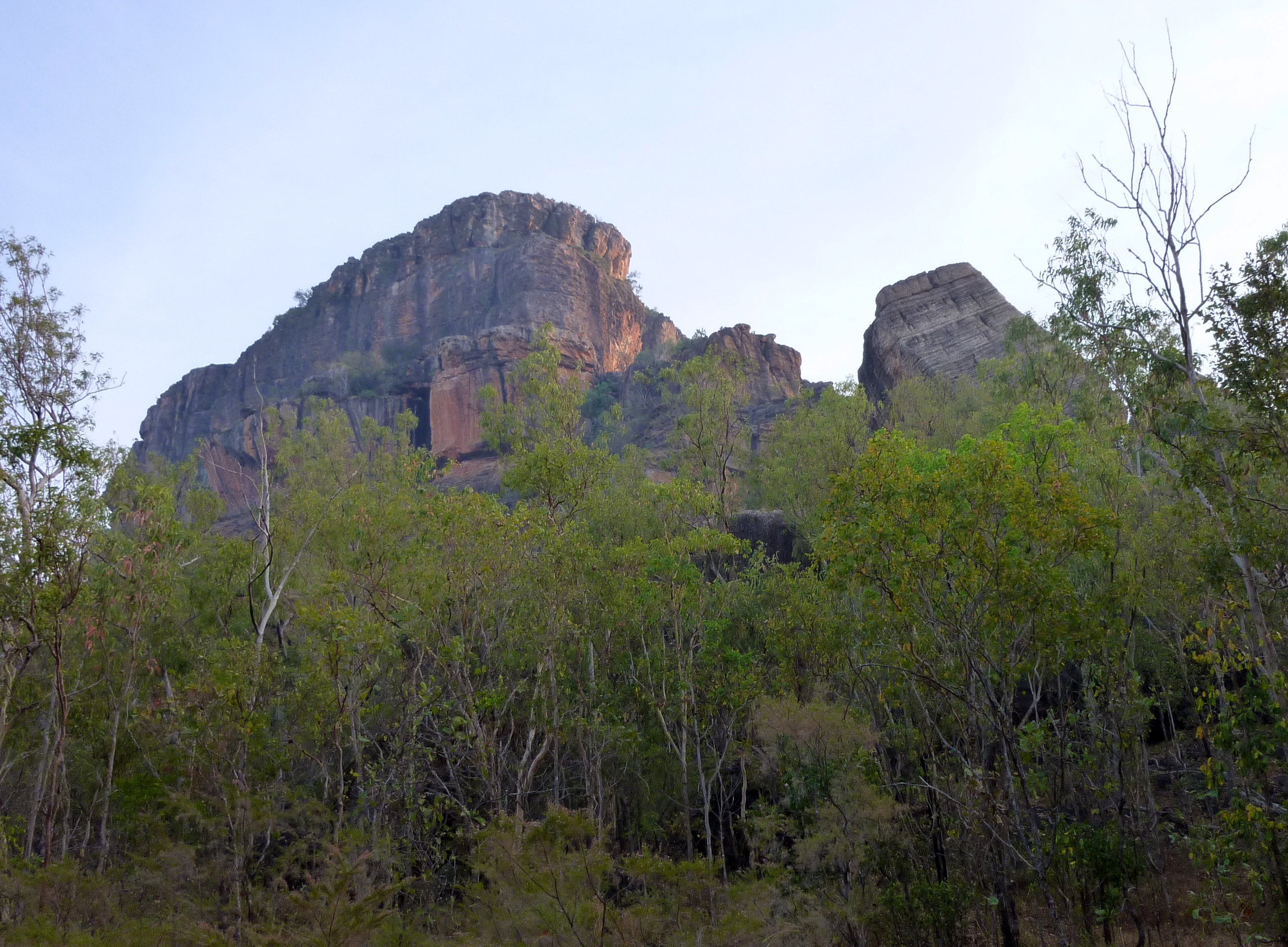
Burrungkuy (Nourlangie)
Burrungkuy (Nourlangie) from the Barrk walk in the morning.
The tranquil outback sunset in the film was shot looking out from Nourlangie with a hundred and twenty people standing off camera, all the hustle of a film set just outside the frame. Bolles says it still looked magical on screen. Nourlangie is not one lookout but a whole outcrop: the main gallery at Anbangbang, the Kunwarddewardde lookout, Nawurlandja, the top of the escarpment. Which of them held the camera has not been written down.
The rock art site sits behind a gate that is locked overnight. The path to the main gallery is flat and takes wheelchairs; everything else is flights of steps. The Barrk sandstone walk, which starts from the same car park, has been shut at the Traditional Owners' request. That is how closures arrive here, one line on a notice, not a season.
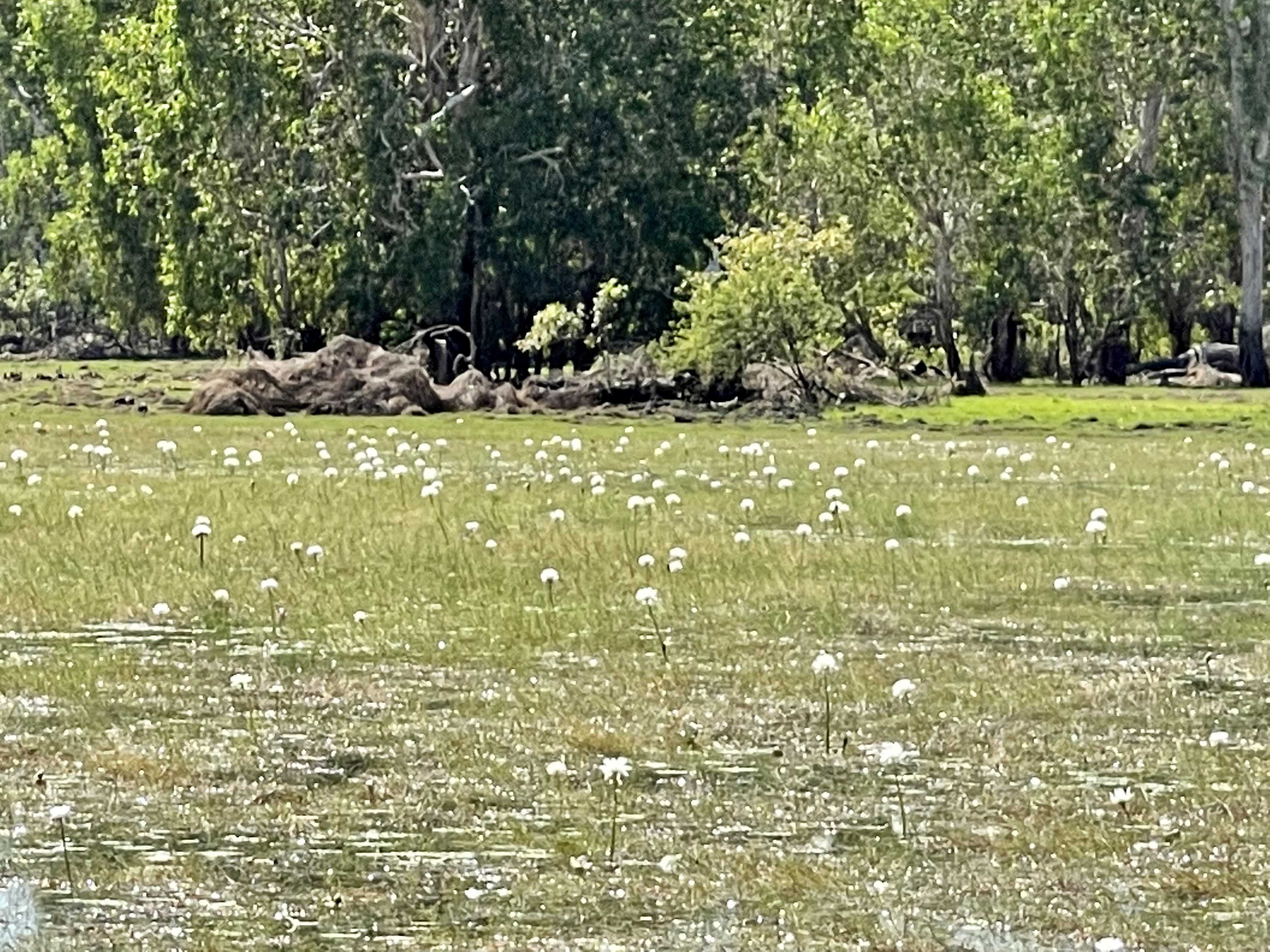
Anbangbang Billabong
Anbangbang Billabong: a shallow sheet of water in flower, ringed by paperbarks.
Mick and Sue camp out for the night beside a billabong with the ridges of Nourlangie behind them, and Mick pretends to shave with a knife the size of his forearm. The billabong is Anbangbang, a shallow sheet of water in flower, ringed with paperbarks and loud with birds, with a short flat circuit and picnic tables round it.
Kakadu Tourism, a commercial operator running tours inside the park, published a self-guided route around the film for its fortieth anniversary, and that route puts Sue's crocodile attack at this billabong too. Bolles, who chose the locations, puts the crocodile 300 km away.
The same route sends people down the road between Jabiru and Gunbalanya to look for the buffalo Mick hypnotises. That is a road tens of kilometres long, and past Cahills Crossing it leaves the park for Arnhem Land, where you need a permit. The crossing itself is a tidal causeway reckoned to hold more than a hundred saltwater crocodiles in a two-kilometre stretch, and the park says plainly that it is never safe to walk on.
The crocodile that lunges out of the water and takes Sue's water bottle does not do it in Kakadu. It does it at Girraween Lagoon, 33 km south-east of Darwin and some 300 km from everything else this film shot in the Northern Territory. The reason is that the crocodile was mechanical and came with a crowd of people to operate it, and Bolles did not want to drag either down to Kakadu. They took the shot an hour out of Darwin instead, with a crocodile expert from the town standing by. He adds that it looked real enough.
The lagoon is 400 m across and sits inside a rural-residential locality of the same name. It is a significant Aboriginal site on Larrakia country. The work that has gone on there since is scientific: a research team floated a custom-built rig out to the middle on a raft and spent five days pulling up almost 20 m of sediment from the bed, reading it for the arrival of people, the loss of the megafauna and the shape of the climate 130,000 years ago. They went in only after long discussions with the Larrakia Nation.
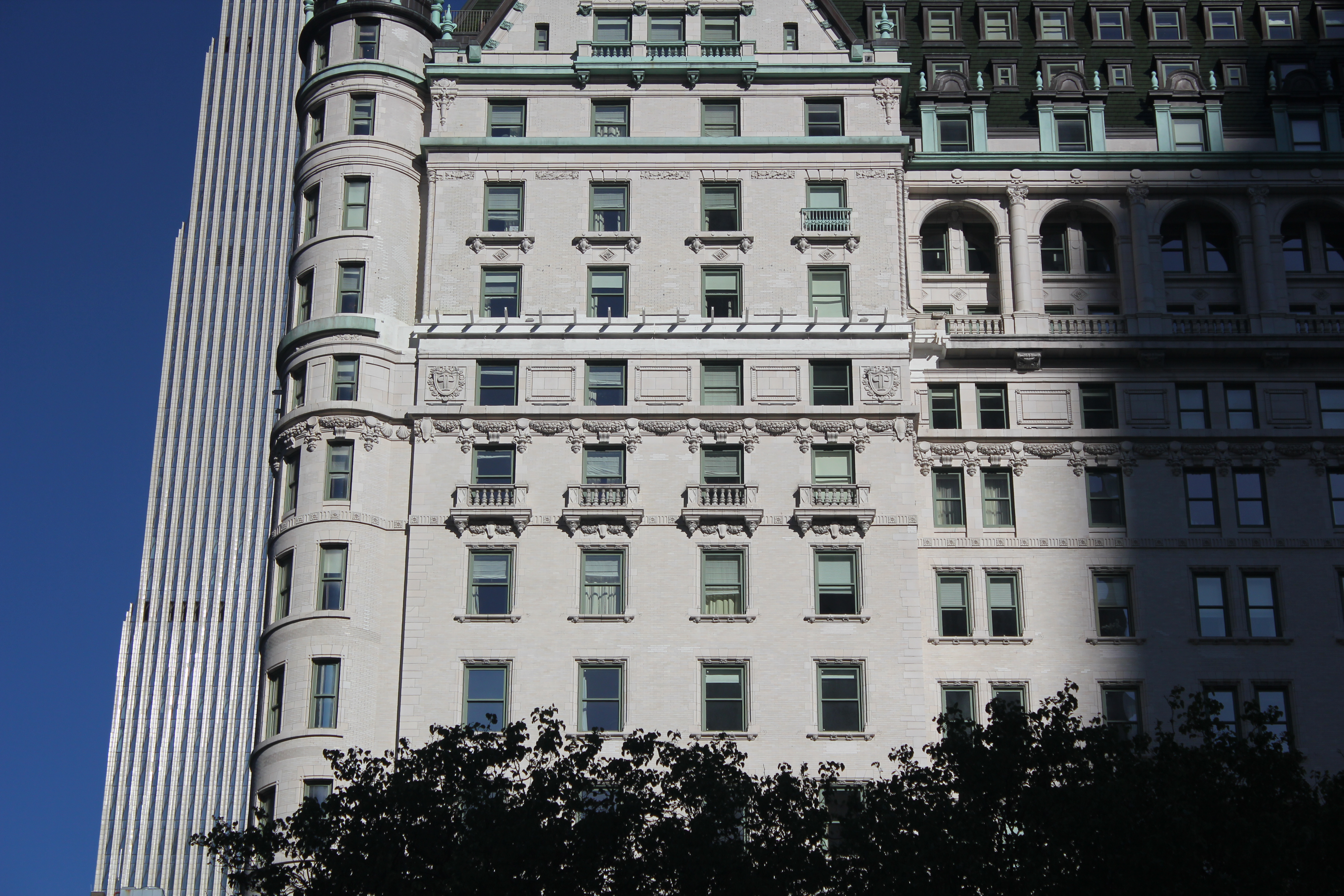
Mick's New York hotel is the Plaza, and what the film does with it is marble, tipping he has to work out from first principles, and a bathroom with two dunnies in it.
Crews have been coming to the corner of Fifth Avenue and Central Park South since the 1950s. North by Northwest, Barefoot in the Park, Funny Girl, Plaza Suite, The Way We Were, Midnight Cowboy, The Great Gatsby and The Pickle all worked here. When the crew of Home Alone 2 pulled up the rug in the foyer so Macaulay Culkin could slide across the floor, they uncovered a mosaic underneath, and it was never covered again. And when the producers of Big Business asked to film at the Plaza in the late 1980s, the hotel said no, so they built their own Plaza on a soundstage. The lobby and the restaurants are open to anyone who walks in; the guest floors are not, and the main public interiors have been a protected city landmark since 2005.
Manhattan Municipal Building, 1 Centre Street
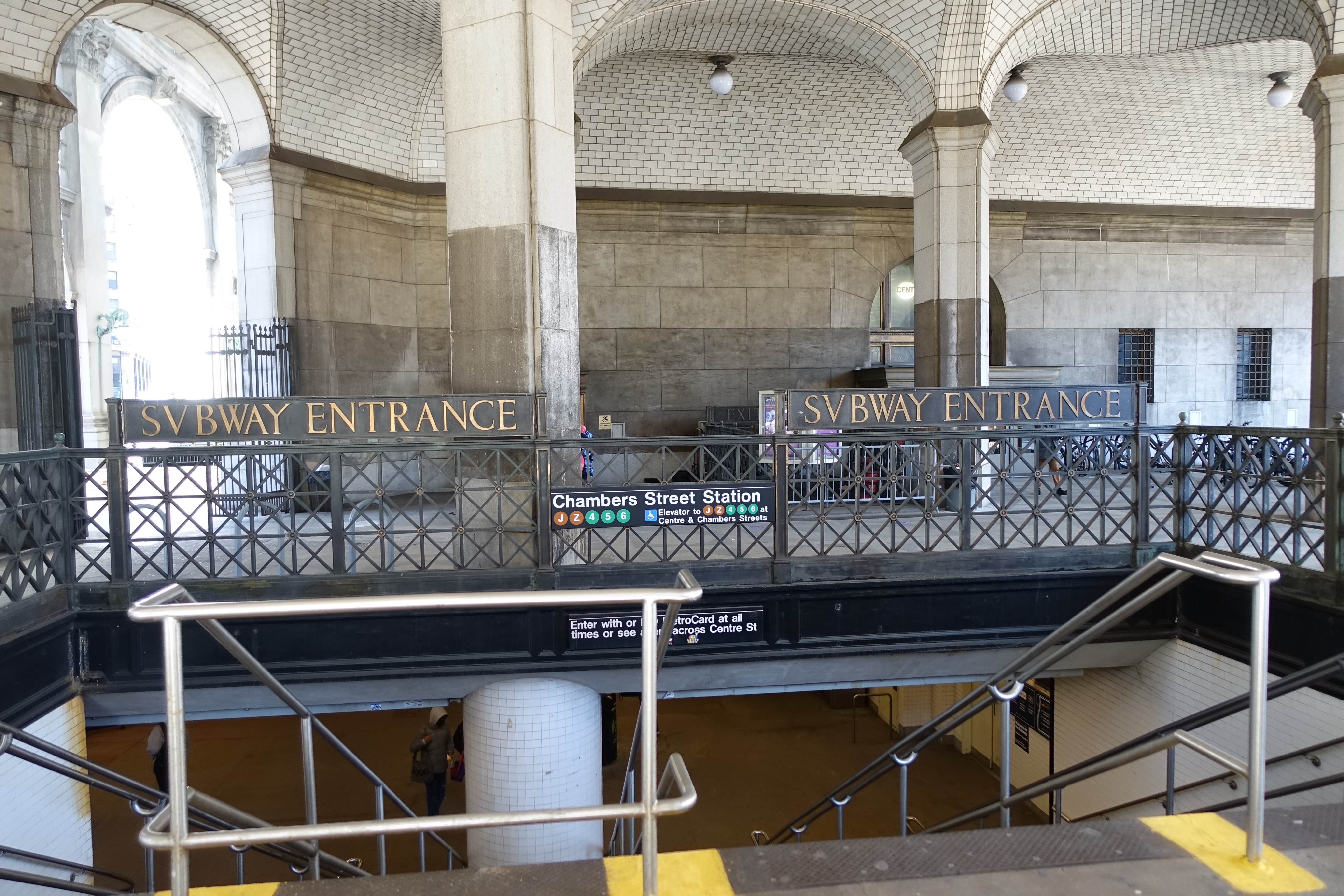
The subway entrance in the arcade under the Manhattan Municipal Building - SVBWAY ENTRANCE cut into the tile, stairs down to Chambers Street.
The knife scene happens underneath a working city office building. Muggers pull a switchblade on Mick and Sue at the subway entrance in the arcade below the Municipal Building, and the exchange about what is and is not a knife follows there.
The arcade under it is a vaulted hall of small white Guastavino tiles on heavy stone piers, with SVBWAY ENTRANCE cut into the wall above two stairways going down to the Chambers Street platforms, spelled the Roman way, and trains run under it at every hour. The stairway under the surviving loggia was built 64 feet wide, sized in 1910 to move more than a thousand people a minute. Above all this are city offices, which are not open.
Other crews have used the place. In Ghostbusters the team sets out from this building to go and meet Gozer; in One Fine Day a chase ends up on the roof.
Mick arrives in America at an airport in New Jersey. The six weeks of New York shooting took in the airport that serves the city, and in 1985 it was not called Newark Liberty: Liberty went onto the name in 2002. The terminals standing that year have since been rebuilt or replaced, so whatever door he comes through is not there to walk into.
Echo Lake, closed and reopened
Gunlom Falls, Mary River region, Kakadu
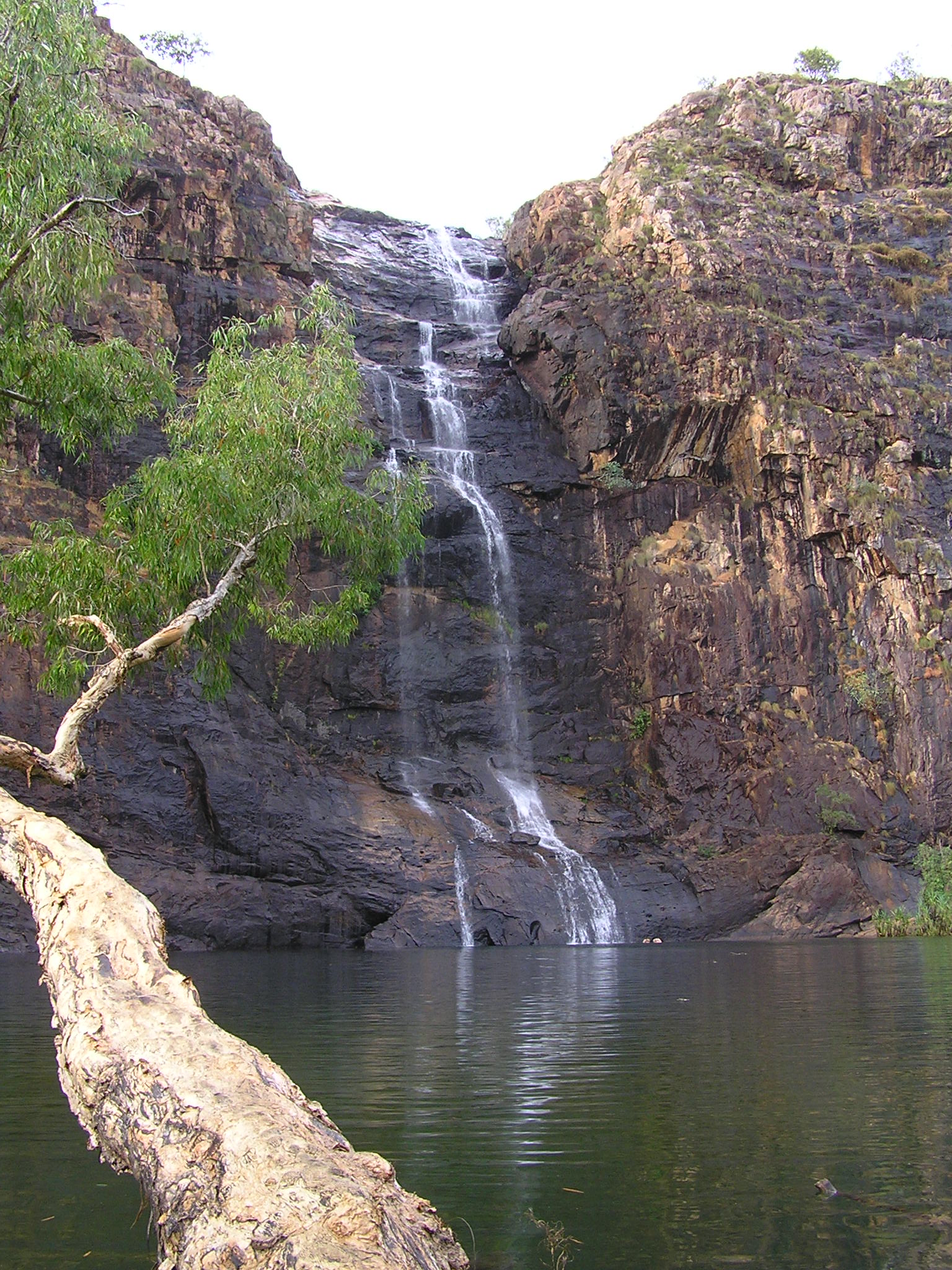
Gunlom from below: the fall coming down the escarpment into the bottom plunge pool. Swimming in this pool is now prohibited.
Back in Kakadu, one of the film's locations spent six years shut, and the reason for that went to court.
Gunlom is Echo Lake, where Mick spears a fish, cooks a goanna and swims. In the 1980s it was called UDP Falls, and finding it took Bolles into country he describes as still dangerous, with a grader sent ahead so the vehicles could follow. The water in the wide shots is the water his men dammed. Three decades later another film came here: High Ground shot in the Gunlom area, with parts of it closed to visitors while the cameras were up.
Then the top of the falls closed to everybody. In September 2019 Traditional Owners raised concerns about a new walking track that Parks Australia had built to the top. The Aboriginal Areas Protection Authority prosecuted the Director of National Parks for building it without an authority certificate. The Director afterwards obtained a certificate allowing a section of the track to be moved, and stated that the walk would stay shut until the work was finished and the track followed a line the Traditional Owners found acceptable. It stayed shut for about six years.
What you climb to now is a run of shallow rock pools on a sandstone shelf at the very lip of the drop, with Kakadu going away south in front of you, and rock that the rangers describe as extremely slippery when wet. The pool at the bottom, where the fall lands, is fenced and closed to swimming while crocodile work goes on there. The road in takes high-clearance four-wheel drives and nothing else.
On 7 July 2025 the Jawoyn Traditional Owners, the rangers and the first visitors walked up the new line of the track together, and the senior Jawoyn owner, who chairs the park's board of management, asked people coming to Gunlom to learn about the country and to stay on the marked tracks while they were on it. Forty years earlier the same creek was being dammed by half a dozen men so that a film could have a waterfall, and Bolles says that in all the weeks they were up there, nobody came.