In 2017 Gurinder Chadha went back to Sutton Square in Heston, the green she had filmed sixteen years earlier as the street outside Jess's family home. A group of lads came over and told her that this was the Bend It Like Beckham house. She nodded. Visitors like her turned up to photograph it all the time, one of the lads said, and he offered to take her picture in front of it.
9
places on the route
The story is set in Hounslow, and the filming happened around it and as far away as Hamburg. Switch regions with the buttons above, and click a point to jump to its entry.
They had the right house. The town is the part the film borrows. The Bhamras live in Hounslow and the team is the Hounslow Harriers, and the addresses that can be checked run out of the town in every direction. The park where Jess and Jules meet is in Hayes. The sari shopping is on Southall Broadway. The wedding is a Rothschild mansion at Gunnersbury, the training pitch stood in Yeading and has been pulled down, and the match against the German side was played in Hamburg. Sutton Square comes closest of all of them: inside the borough of Hounslow, a kilometre from the station in the middle of the town, and still not the town.
Shooting began in June 2001 and ran about nine weeks, three days of that in Germany, with part of the picture made at Shepperton Studios. Some of what follows comes from the director herself, and from councils writing about their own patch. Some of it rests on one writer. One pitch has no word from anybody who worked on the film.
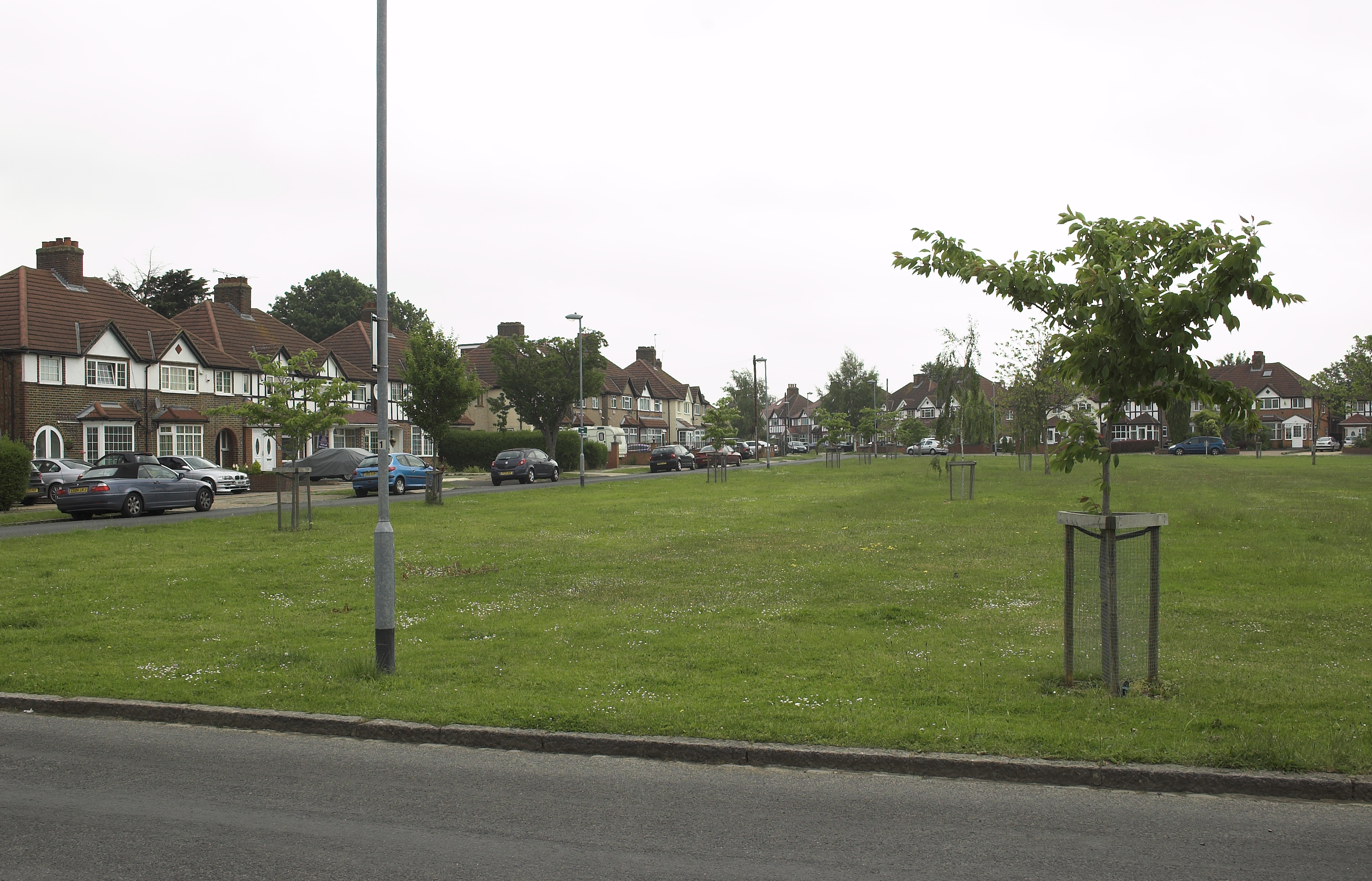
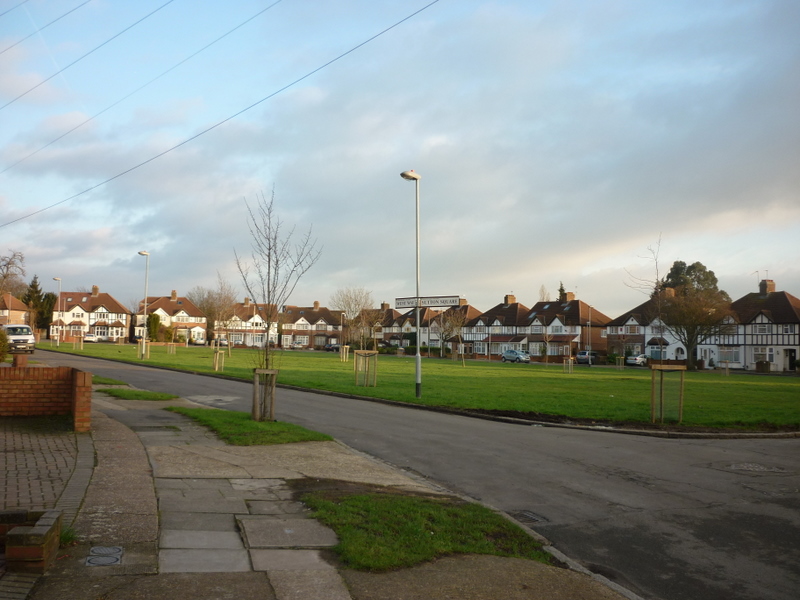
The outside of the Bhamra house. Sutton Square is a long green with a road running round it and gabled semis facing in from all sides, several of them dressed in mock-Tudor timber.
Chadha named the square in a 2017 interview, as the place where they shot the exteriors of Jess's family home, and stopped there. She named the street and no more. People live in those houses.
In the same interview she said someone ought to run a tour of the locations and finish it with a curry in Southall. That tour would start in the borough of Hounslow and spend the rest of its day outside it.
The early football with Jess and her friends, and the scene where Jess and Jules meet.
The park is three and a half miles north-west of Sutton Square, in another borough. Hillingdon council owns it, and the council's own page for the park said the film was shot there — and, in the same sentence, that parts of Chocolat were shot inside Barra Hall itself. The film map the west London boroughs publish keeps the split: the football film outdoors, the chocolate film indoors, in the house that stands in the same twenty acres.
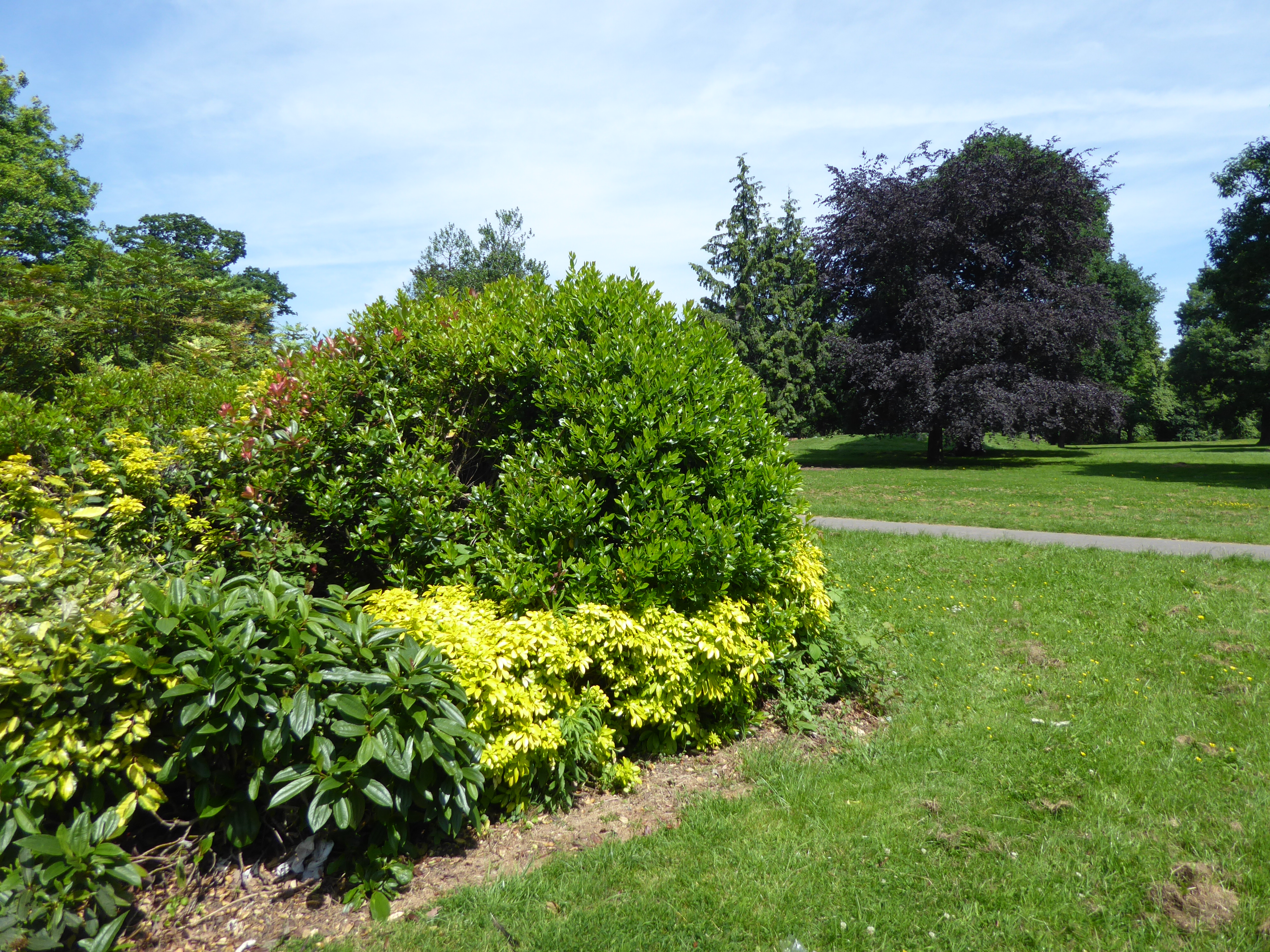
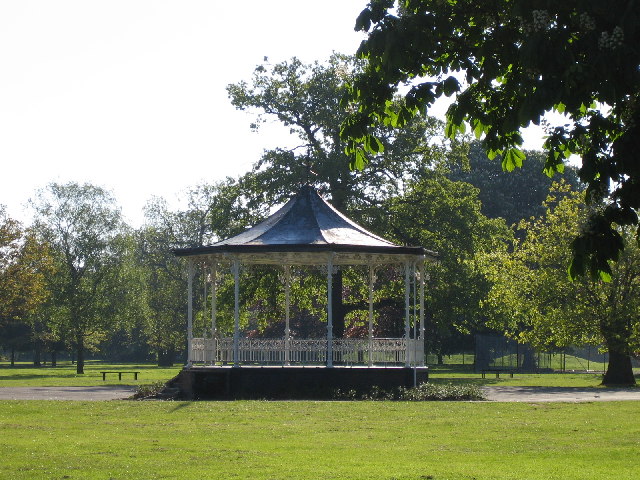
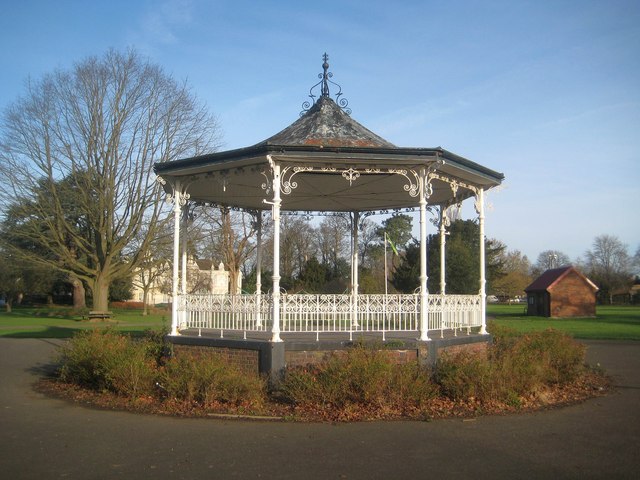
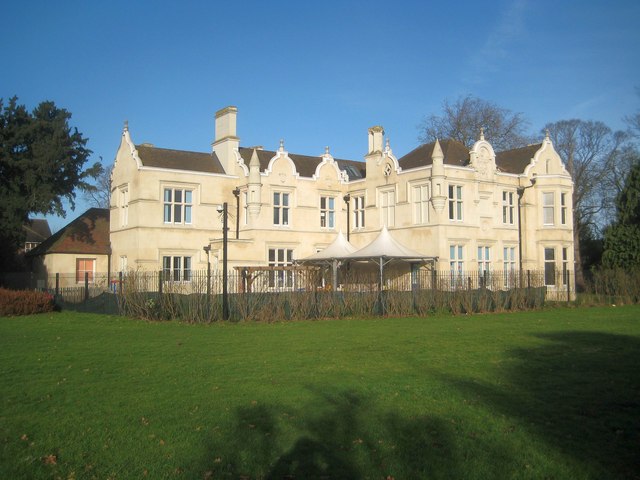
Barra Hall is a grade-two listed manor house, and it was the town hall of Hayes and Harlington before the council moved out to Uxbridge. It came out of a renovation in October 2005 as a children's centre. The park around it has a bandstand, an open-air theatre and a playground.
The Harriers' training pitch was a mile and a half away. It is not there now.
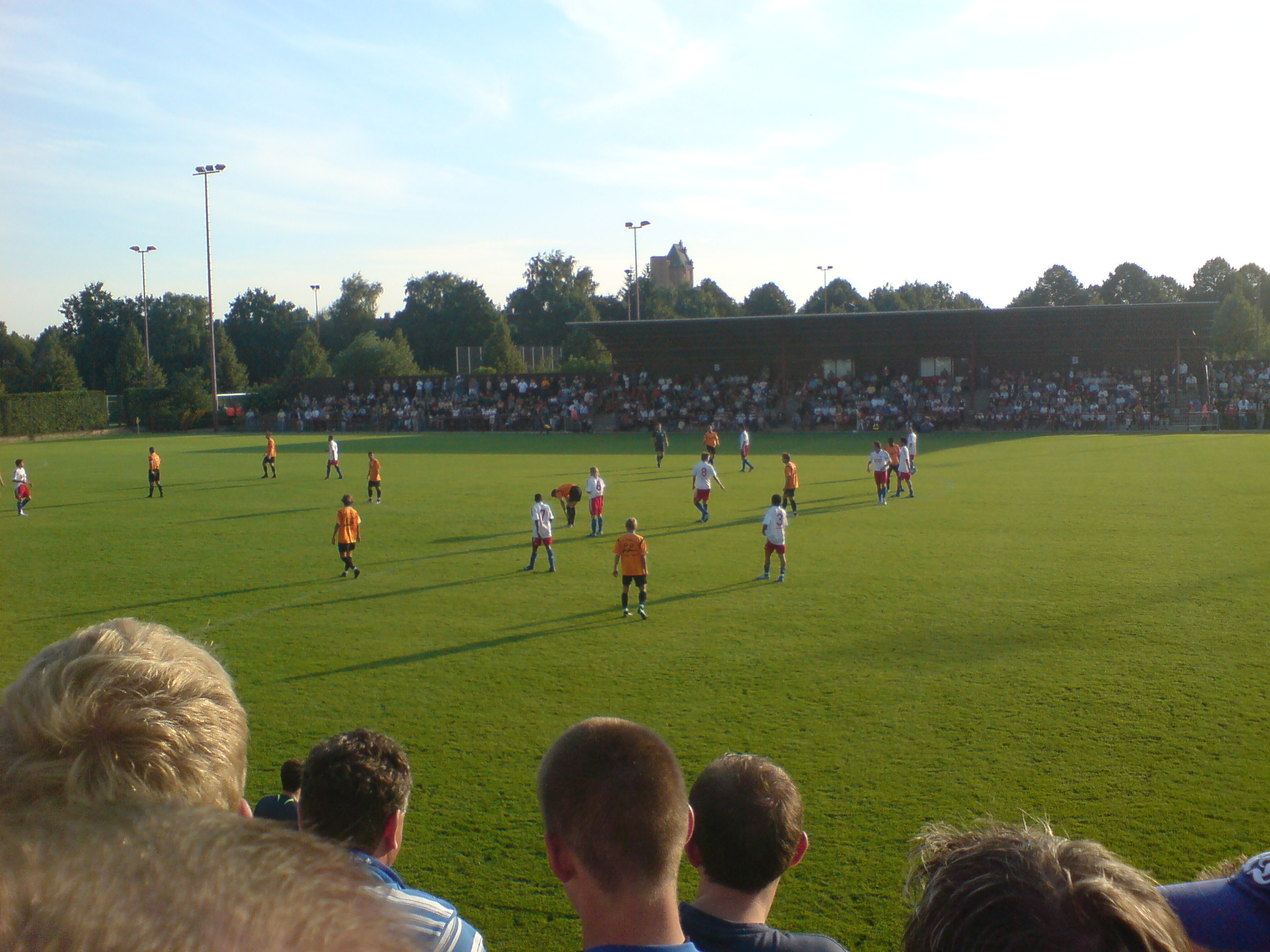
Nothing from the production names this ground. What names it is an encyclopedia sentence with a user-submitted list underneath it, and two groundhoppers who stood in the ground, photographed it and wrote it up, in 2008 and in 2011, and who agree with each other. A reader's comment under one of those posts goes further than either. He had gone out to the ground the day before, after seeing the stage musical, and found the terrace at that end pulled back and rubble where Jess scores her winner.
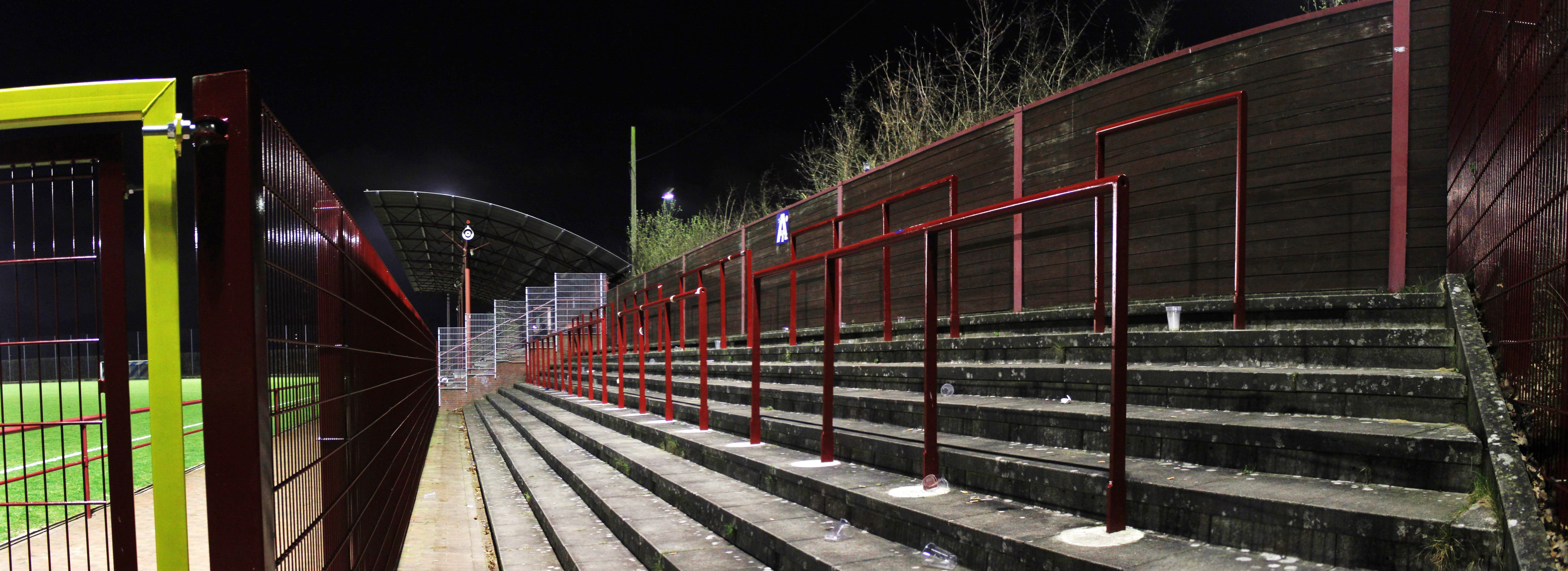
The Warren was Yeading F.C.'s ground, just off Springfield Road, a little over half a mile from Southall Broadway. Yeading merged with Hayes in 2007, the ground fell out of use, and the SkyEx Community Stadium opened on the same site in 2016. A single terrace of the old ground is still standing, outside the new stadium, behind one goal.
Two football films used this pitch in one year. The prison match that carries Mean Machine was shot at The Warren, and that film worked between April and June 2001; this crew arrived in June. Ted Lasso trains A.F.C. Richmond at the ground that stands there now, which is the same site and a different building.
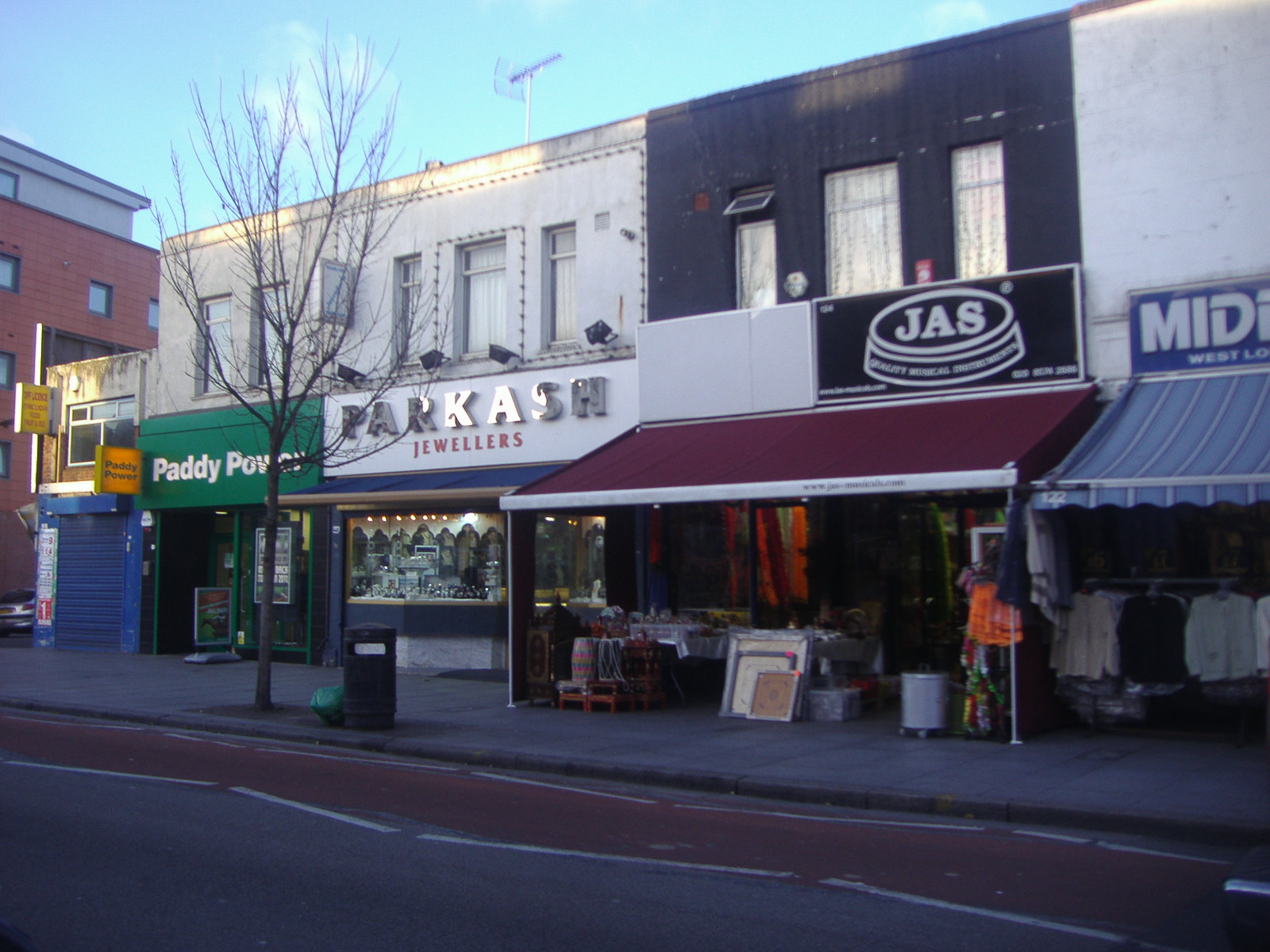
Ealing's film office names the street twice, on the council's own site and in the boroughs' film map, and both times it names that scene and adds that the Broadway plays ordinary background as well. The distributor's production notes put the story in Southall and west London, where Chadha grew up.
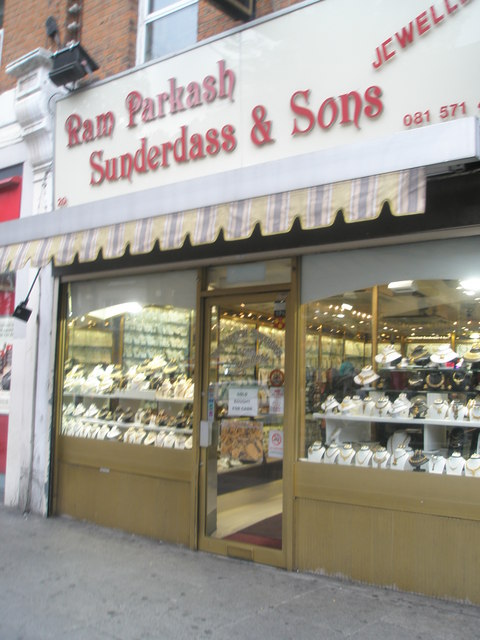
The Broadway is a kilometre of the Uxbridge Road. Jewellers with the cabinets lit from inside, a musical instrument shop with garlands hanging in the doorway and its stock out on the pavement, sari houses, a bookmaker in between. The signs at the railway station are in English and in Gurmukhi.
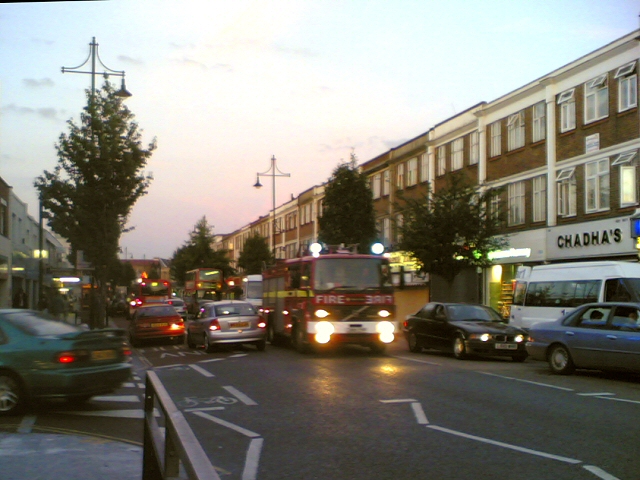
A photograph of the street at dusk in 2005 catches a fire engine coming down the road with its lights on, past shopfronts already lit, and above one of them the name CHADHA'S. It is the director's surname, spelled the same way, over a shop nobody has connected to her.
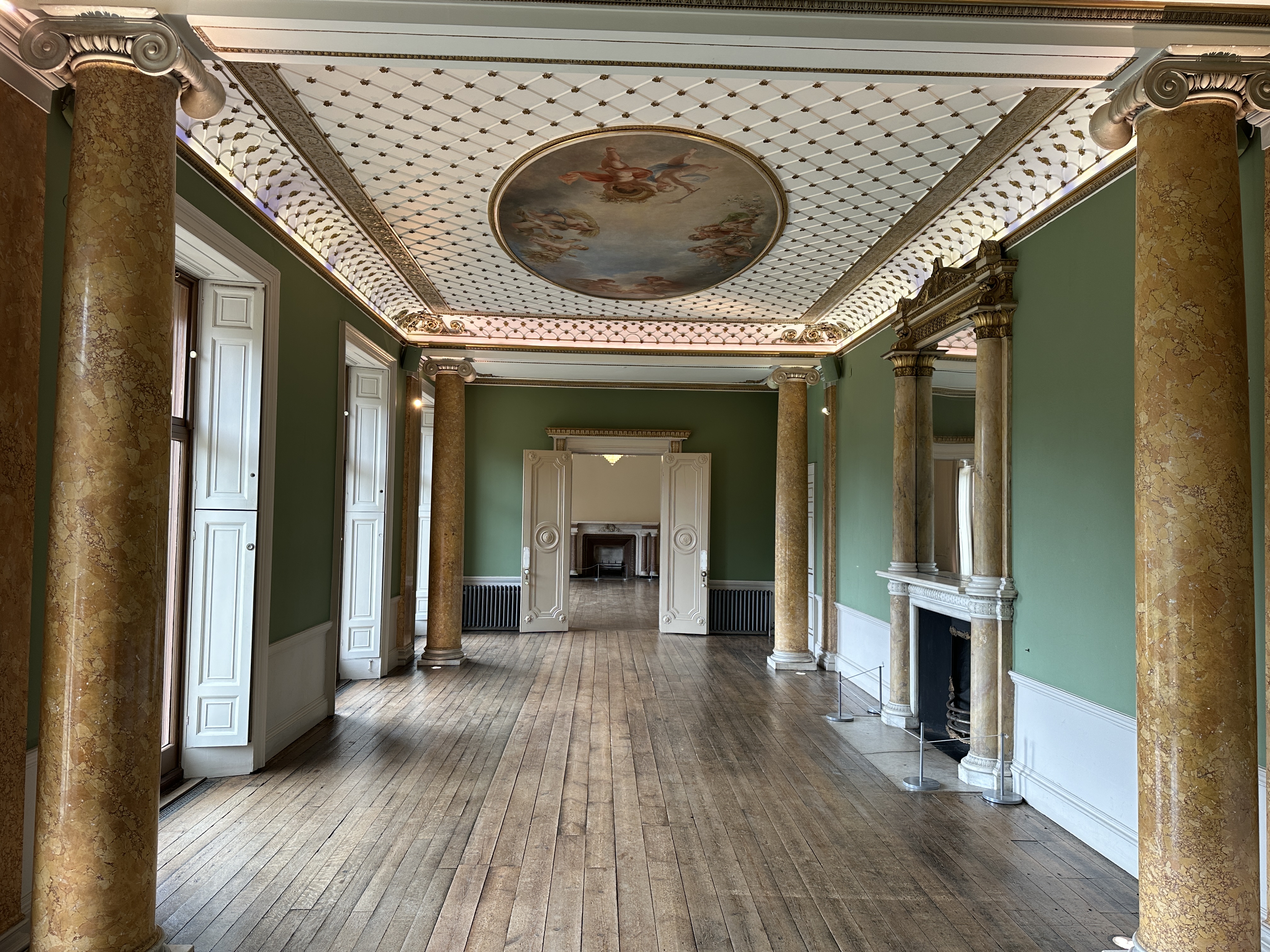
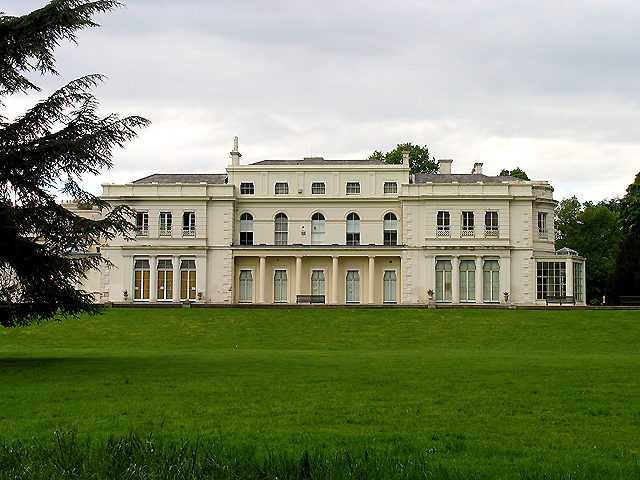
Pinky's wedding, and Paula Paxton turning up at it to confront Jess.
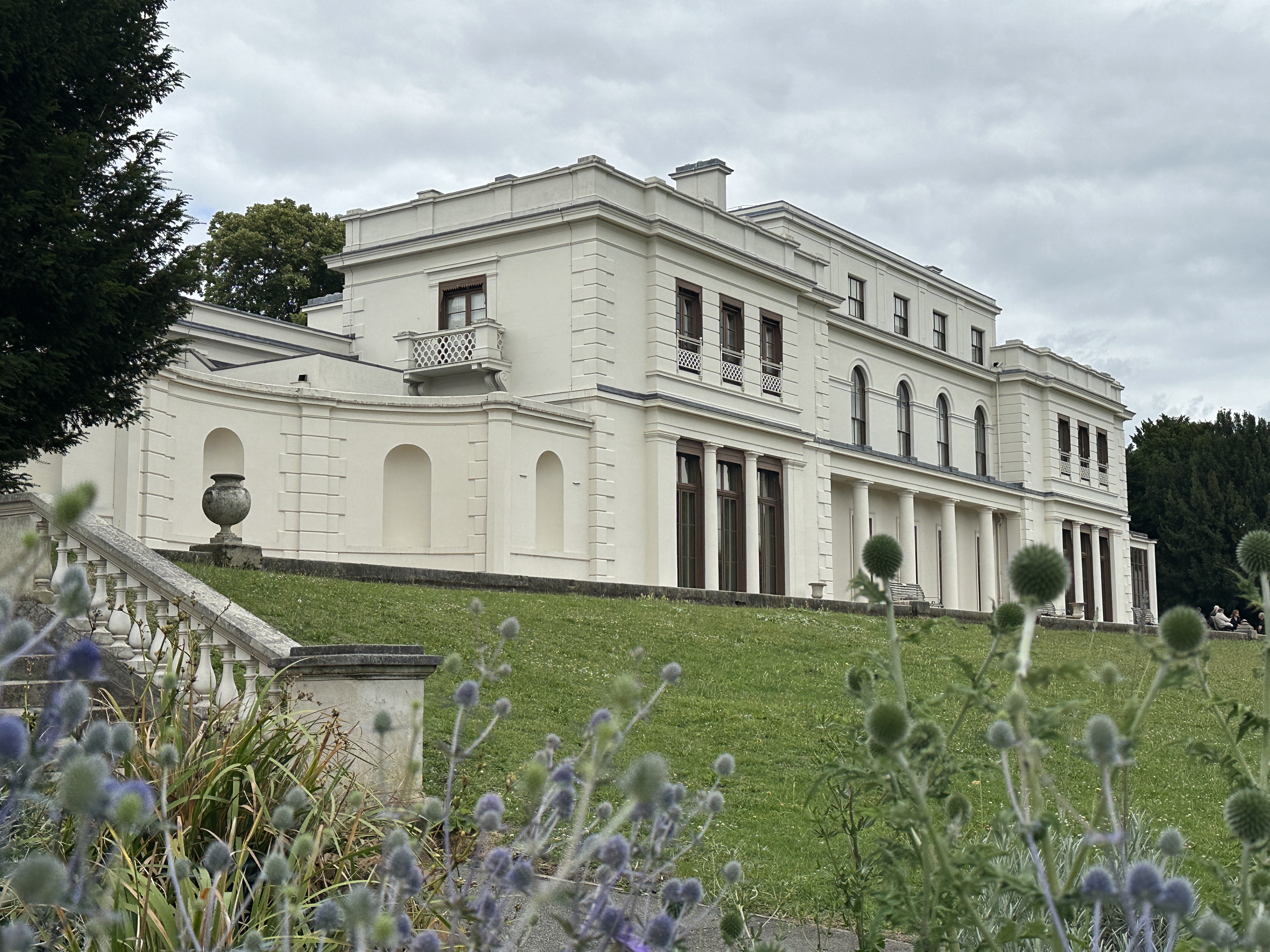
The Large Mansion stands on the seam where the borough of Hounslow meets Ealing's. Nathan Mayer Rothschild bought it in 1835, shortly before he died, and the family held it until 1925, when the estate went to the councils of Ealing and Acton on condition that it be used for leisure and nothing else. It has been the borough museum since 1929, and a four-year restoration finished in June 2018.
One document puts the scene in it: the fold-out film map that Ealing Council and the West London Film Office publish for six boroughs. It names the building, both actresses and what happens, and it does so inside a wedding-venue advertisement, as a joke about not crashing a wedding there. The newest entries on the sheet are shoots from 2005. Gunnersbury's own filming page offers production companies its formal rooms and nearly two hundred acres of parkland, and names no film at all.
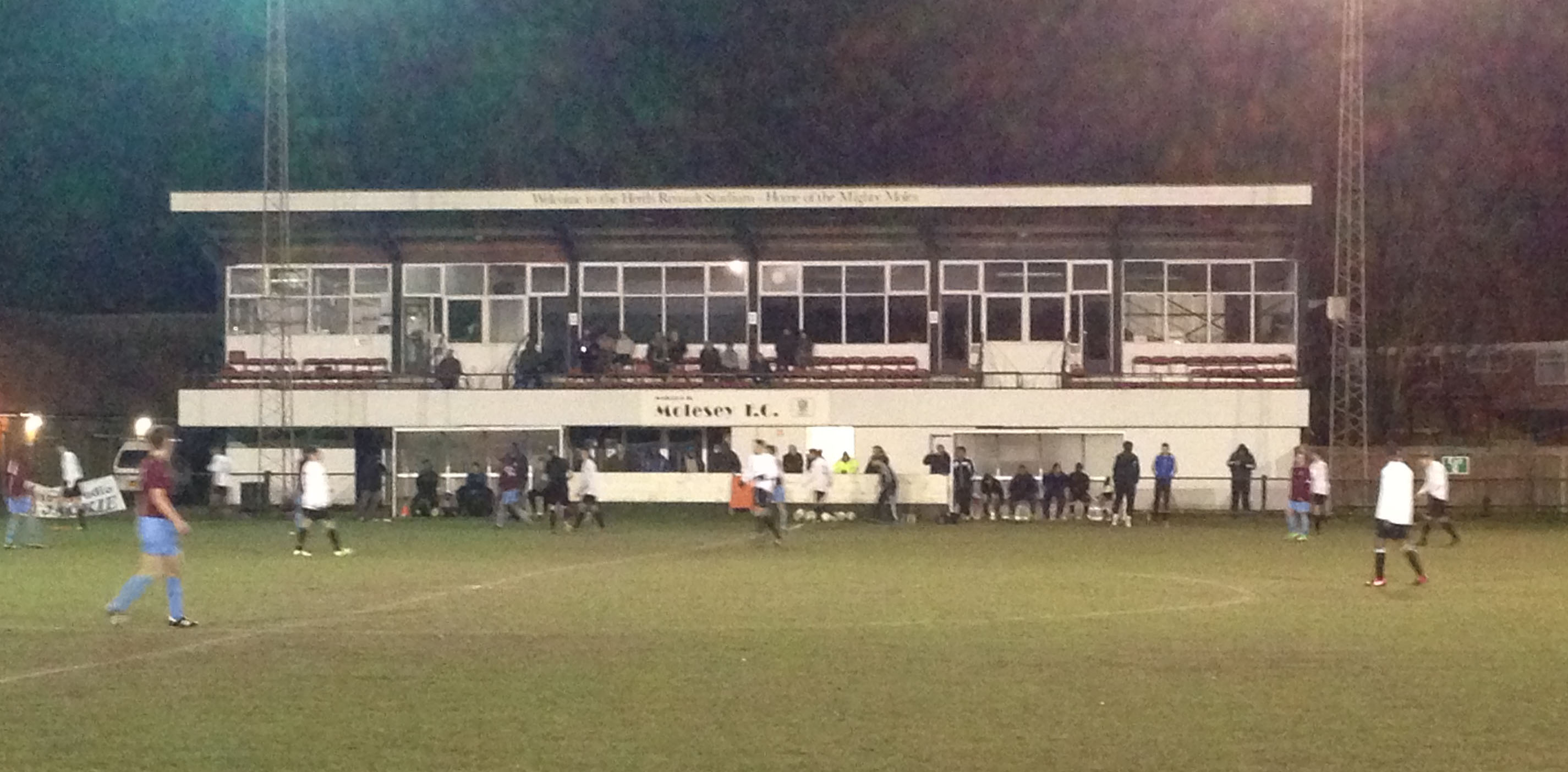
A non-league ground between the Thames and Hampton Court, five and a half miles south of Heston and four from Shepperton.
Molesey bought the site before the 1953-54 season, and in 1960 Stanley Rous opened a clubhouse along the touchline: a glazed upper floor with a deck of seats hung out over the pitch, straight above the dugouts.
That clubhouse is why anyone thinks the ground is in the film. In 2016 Jack Peat went through London's non-league grounds for The London Economic and wrote that the deck at Walton Road had appeared in the film; the club's encyclopedia entry sends the reader back to that same piece. He says the clubhouse featured in the film. He does not say which match, or whether it is a match at all.
Back in the town itself
Two addresses inside Hounslow come up on the location sites.
The film ends at an airport, and Heathrow is in the bottom corner of the borough. The pages that name it are lists built out of other lists. Neither the airport nor anybody from the production is quoted on one of them.
The other is Hounslow Central, on Lampton Road, the station in the middle of the town the story is set in. Its German encyclopedia entry says scenes were shot in and around the station in 2002: one sentence, nothing under it, and a year after the crew had gone home. The English entry for the same station does not mention the film.
Hamburg: three days, one minute
The production notes give the German trip three days and put the semi-final in it. One article accounts for where those three days went: a 2018 piece by Lutz Granert in a Hamburg city magazine, listing places in the city where films have worked. It has the German sequence as a boat trip on the Binnenalster, an arrival at the Hotel Steigenberger and a match at the small stadium of the Wolfgang-Meyer-Sportanlage, and counts the whole of that as barely a minute of film. No second account of those days turned up. The piece is a city guide, and it signs off by consoling its readers: in the film, the German side wins.
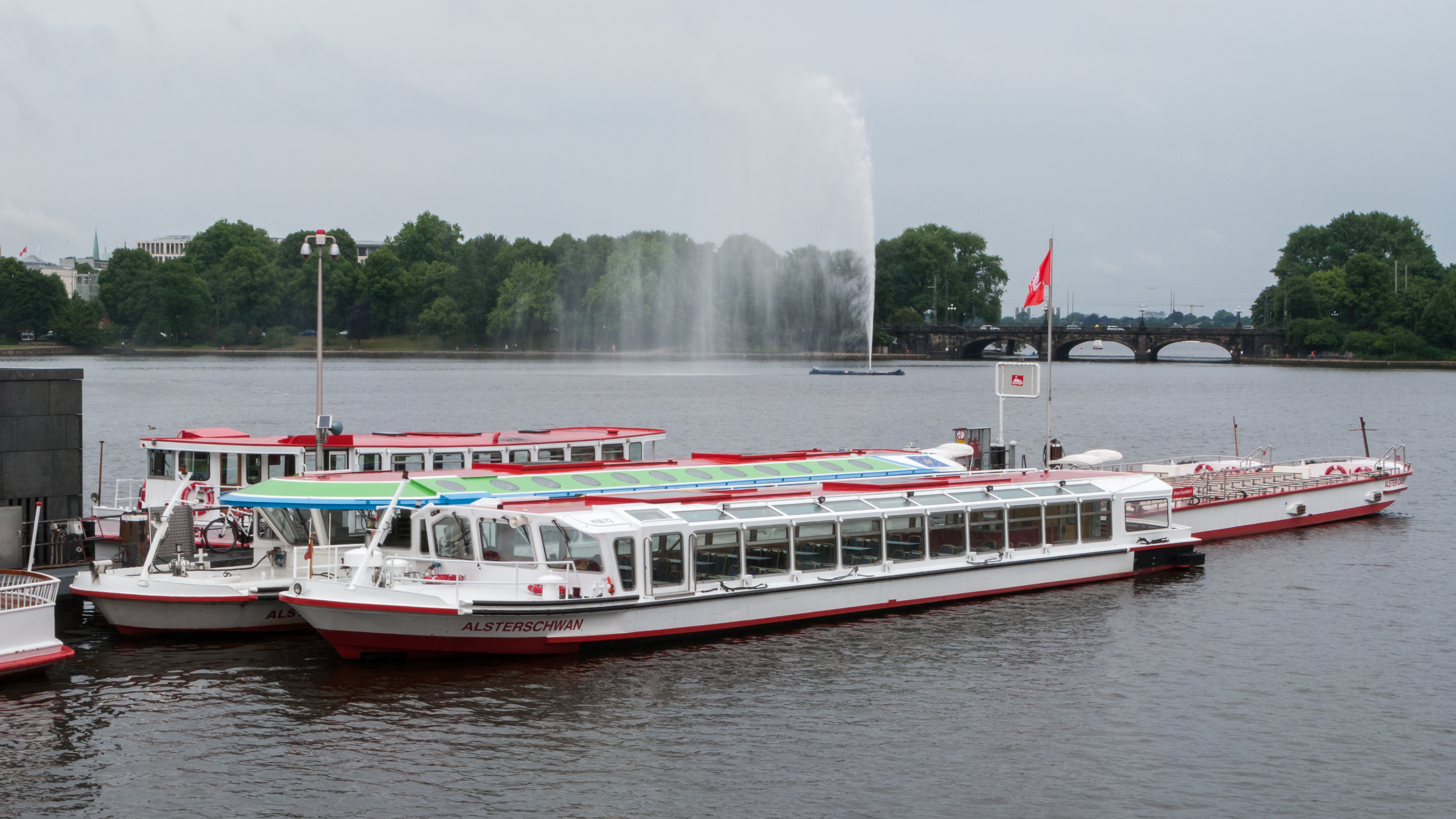
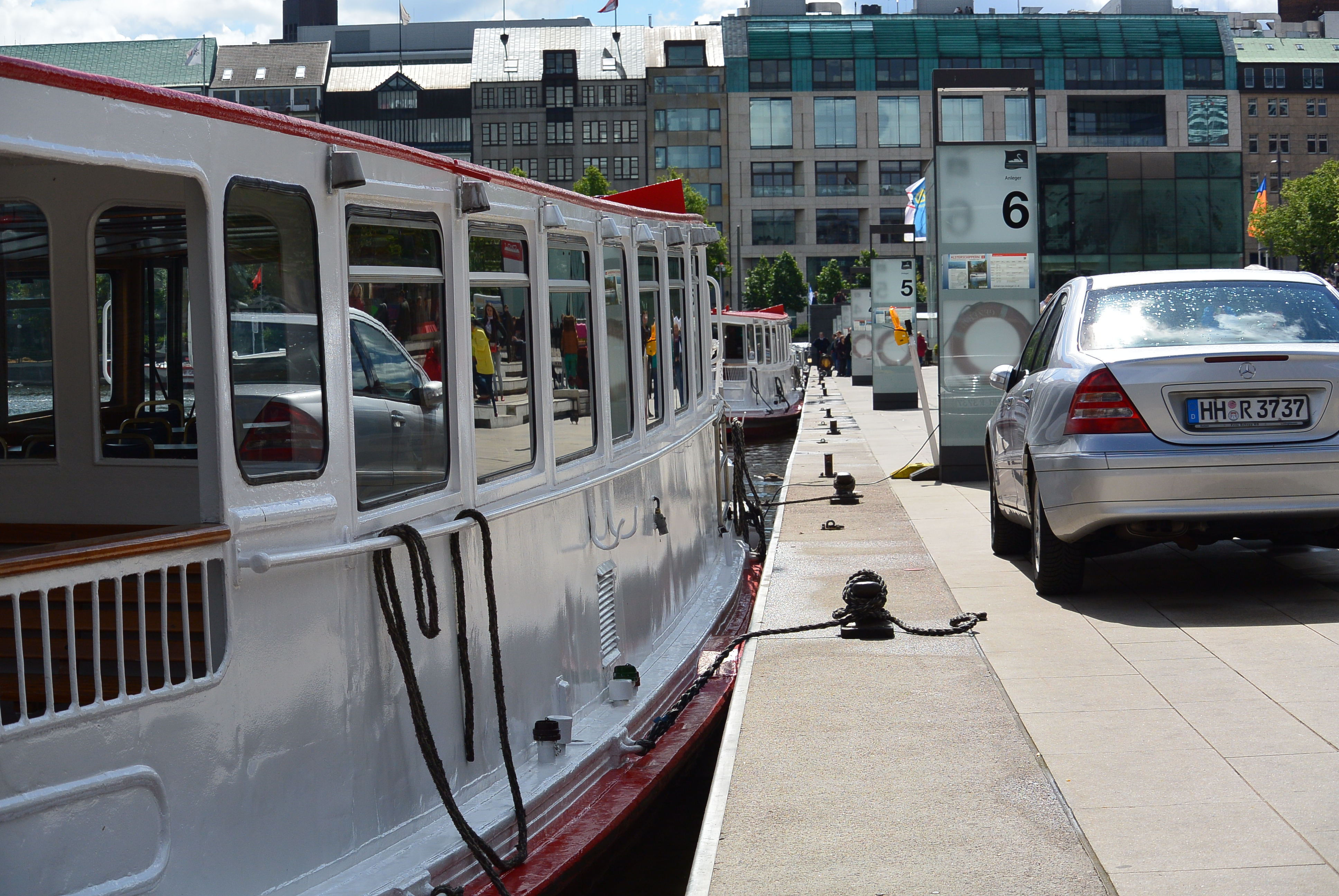
The boat trip. The Binnenalster is the smaller, inner basin of the Alster, about eighteen hectares of water in the middle of the city, with the Jungfernstieg along its south-west bank and the white excursion boats leaving from the quay there. A fountain has stood on a floating pontoon in the middle of it since 1987, throwing water up to sixty metres; it is shut off for the winter and replaced at Christmas by a lit tree. The buildings round the water are held to a regulation of their own: copper roofs, and no advertising on the façades.
For this one the magazine is a journalist describing what is on the screen. Nobody who was there is quoted.
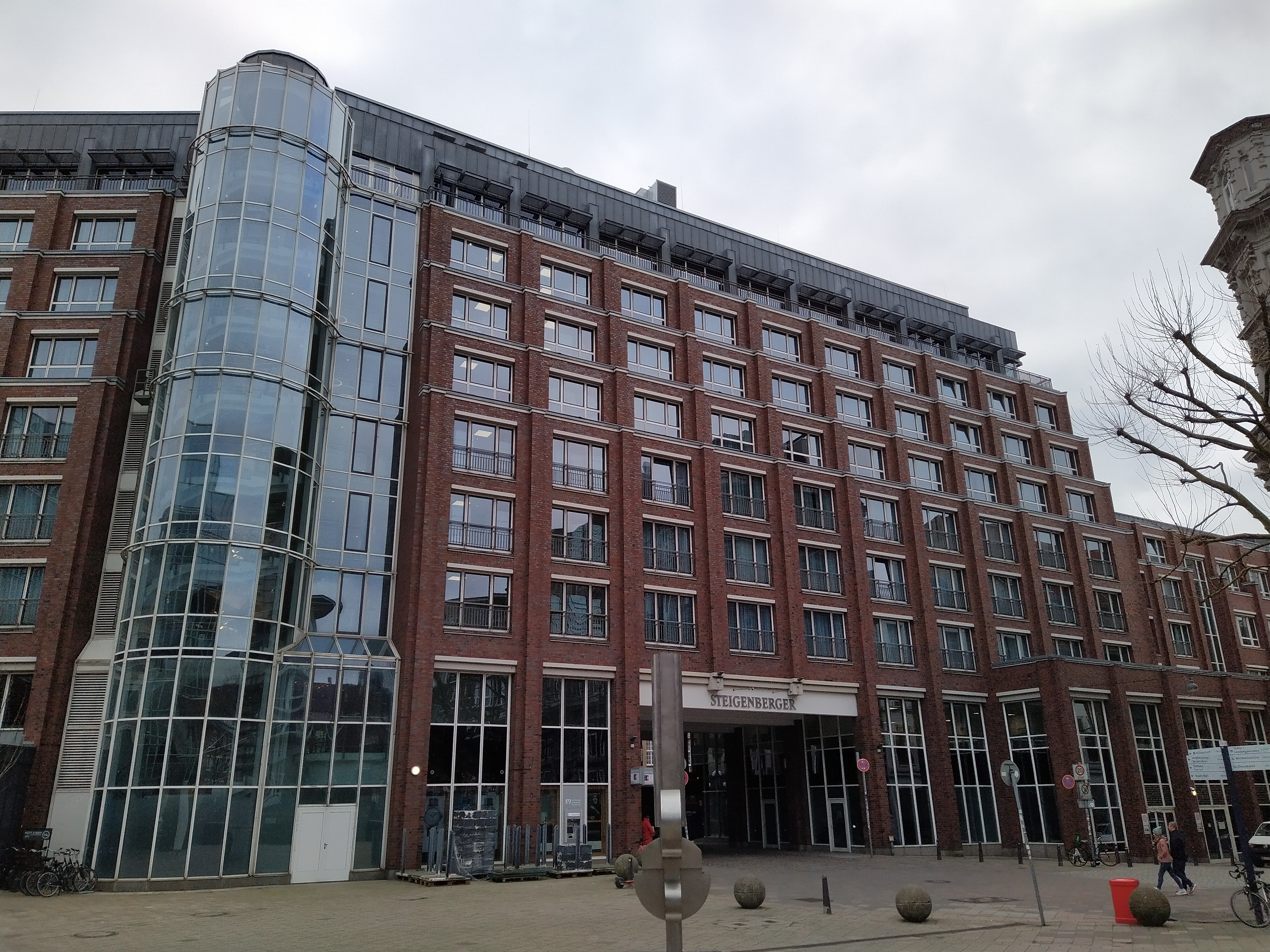
The team arriving at their hotel. The article names a Steigenberger and gives no address for it, though it prints a street for the stadium. The Steigenberger Hotel Hamburg stands at the Heiligengeistbrücke over the Alsterfleet, half a mile from the lake, and its name is the only thing tying the scene to that building.
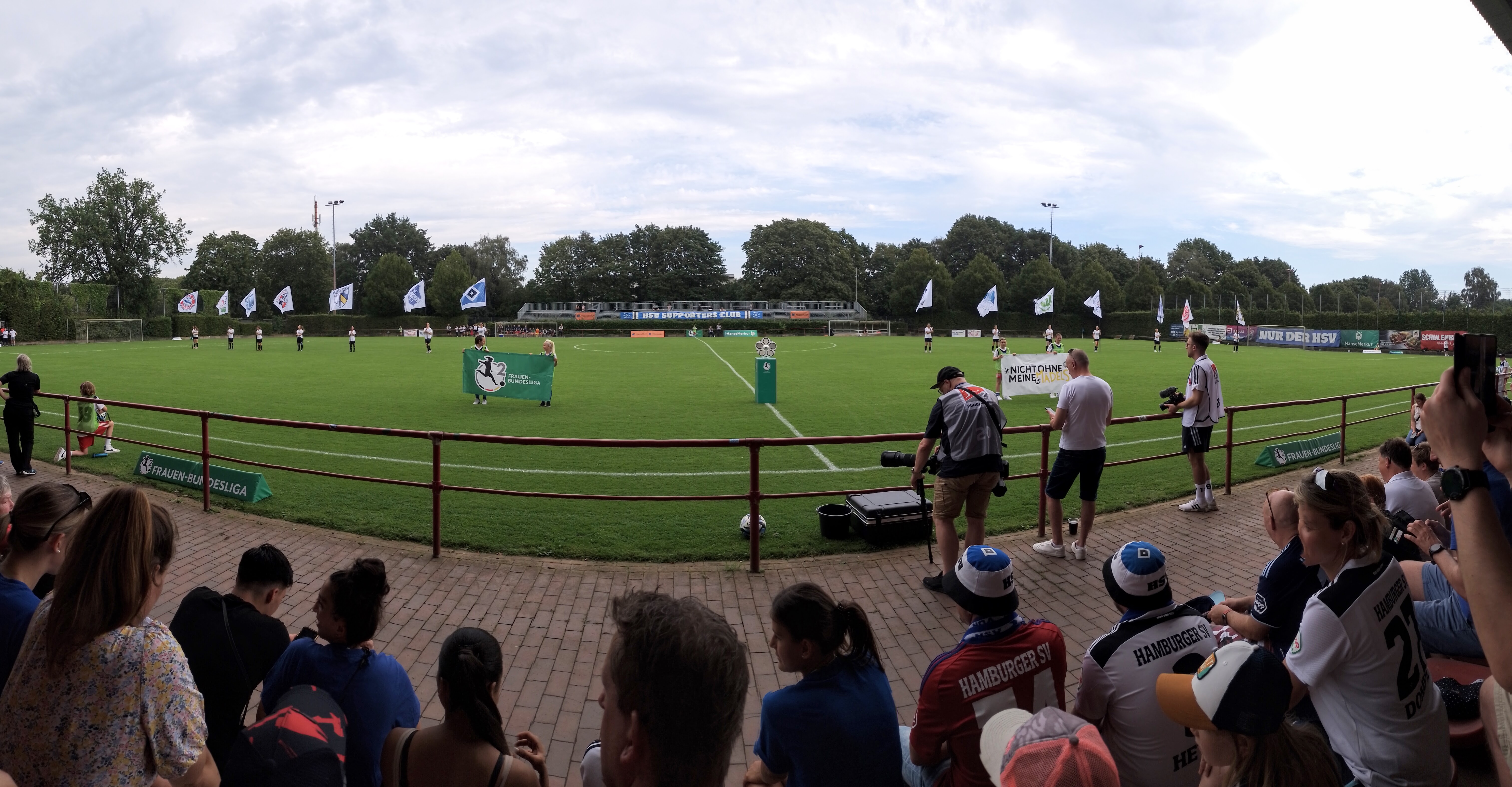
The match against the German side, on a municipal ground on Hagenbeckstraße in Stellingen, a few hundred metres south of the Hagenbeck zoo.
This is the one German address with somebody from the day on the record. Jürgen Hitsch, who runs SV Grün-Weiß Eimsbüttel, told the magazine that the club had supplied a great many of the spectators and, above all, players from its women's section, and that the club was not so much as mentioned in the credits. German Wikipedia names the same club as the German team on screen, and gives no source for it. The club's women had gone up to the Regionalliga Nord the year before.
When the crew used it, the ground was the Wolfgang-Meyer-Sportanlage, the name the pitches had carried since September 1934. In 2022 the district took the name off, after research set out how close Meyer had stood to the National Socialist direction of school policy in Hamburg. A jury of local politicians and of the clubs that use the site, and then the district assembly, settled on Sportpark Eimsbüttel, out of names the public had put forward.
The district has been rebuilding the ground. The stands those spectators sat in are being replaced by new ones for about 1,500 people. The grass the two sides played on is staying where it is.