On 29 October 1787 Mozart stood in a theatre in Prague's Old Town and conducted the first performance of Don Giovanni. In 1983 a film crew lit candles in the same room and shot the premiere of Don Giovanni, and the Vienna opera house on screen is that theatre. No other place in this film is playing itself.
19
places on the route
Almost all of it is inside 1.5 km of central Prague; the château is 260 km east — switch with the buttons above. Click a point to jump to its entry.
Everything else in the film is standing in for somewhere else, mostly for Vienna, and none of the substitutes is Austrian. The reasons were practical. Vienna by 1983 had neon at street level and prices to match. What Prague had in early 1983 was run-down cobbled lanes in Malá Strana, and corners where the camera could turn a full circle and catch nothing modern. Michael Hausman, the executive producer, reduced it to lanterns: stand up period ones and you could roll. Prague was also several times cheaper than Vienna or Budapest, the other two cities the production looked at.
So the film's Vienna is a handful of streets in Malá Strana and Hradčany, its imperial court is a château 230 km east in Moravia, its madhouse is a derelict military hospital in Karlín, and its pauper's grave is the burial ground of a Prague asylum. Some of it you can walk into for nothing, some of it is an embassy, and the two places the film ends in are the hardest to reach of the lot. The shoot ran from January to July 1983.
The one room that is not pretending
Estates Theatre, Ovocný trh 1, Old Town
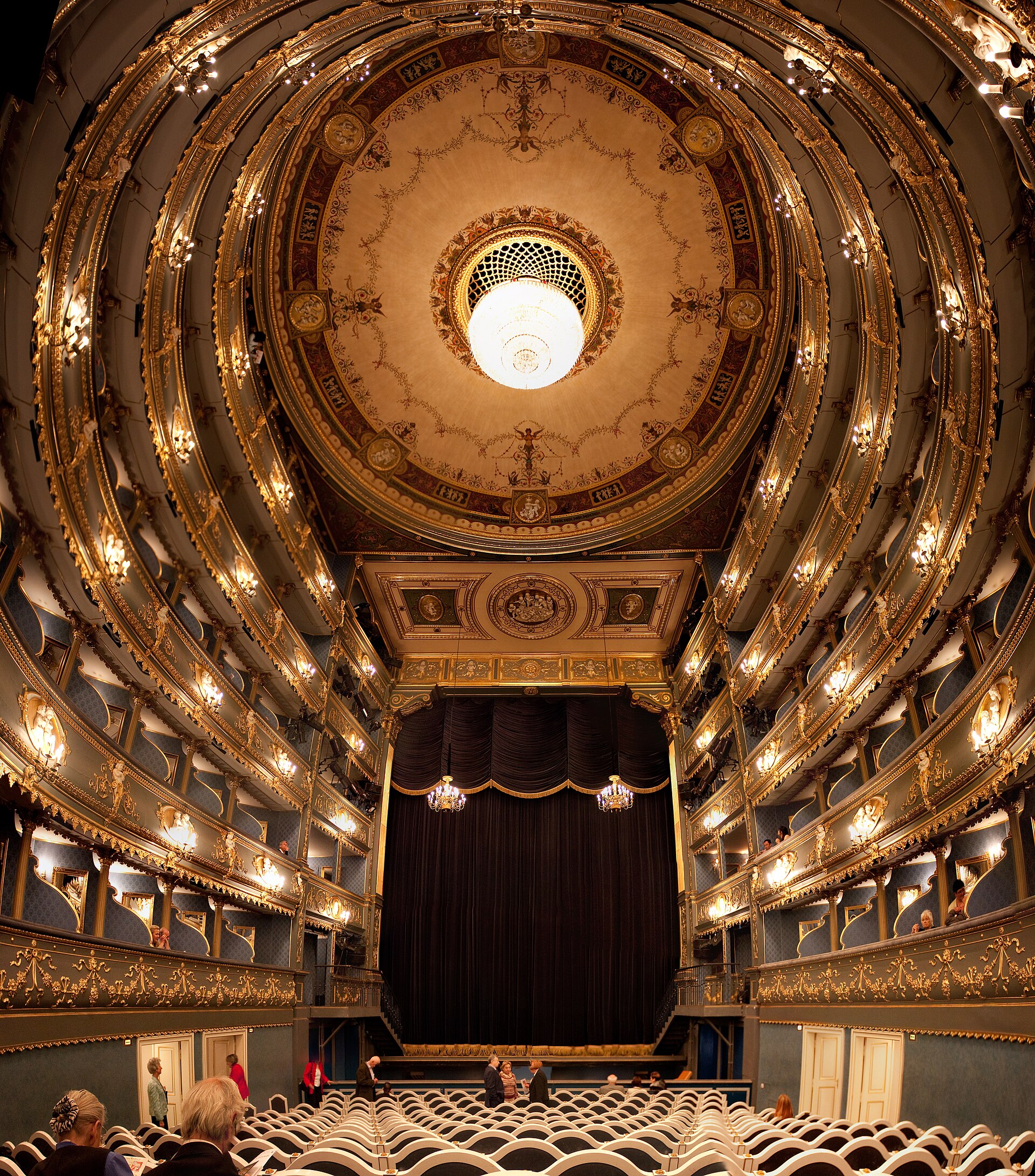
The auditorium of the Estates Theatre from the back of the stalls. Mozart conducted the world premiere of Don Giovanni from this room on 29 October 1787, and Forman staged the premiere scene in it in 1983.
Most of the film's opera scenes were shot in this house, and the Don Giovanni premiere is the one the crew came for. Dozens of firemen were on duty for the burning candles, the costumes and the wigs, and the theatre's own old wooden scenery was still in the wings. Miloš Forman has told the story of bringing his screenwriter in to see the place and then losing him: Peter Shaffer was in a corridor, crying, having just been told what had happened on the spot where he was standing. Daniela Retková, who assisted the choreographer Twyla Tharp on the film, remembers an American flag coming down from the chandelier on 4 July.
The room you can buy a ticket for is probably not the room in the film. The theatre closed for a full reconstruction after the shoot, and Czech Wikipedia has the auditorium going from white, gold and red to white, gold and blue in the course of it, with Forman getting his scenes in just before. It is blue now.
It is the second stage of the National Theatre and it plays a lot of Mozart, Figaro included. Ten years later Immortal Beloved put Beethoven on the same stage.
Vienna on foot
Nosticova, Malá Strana
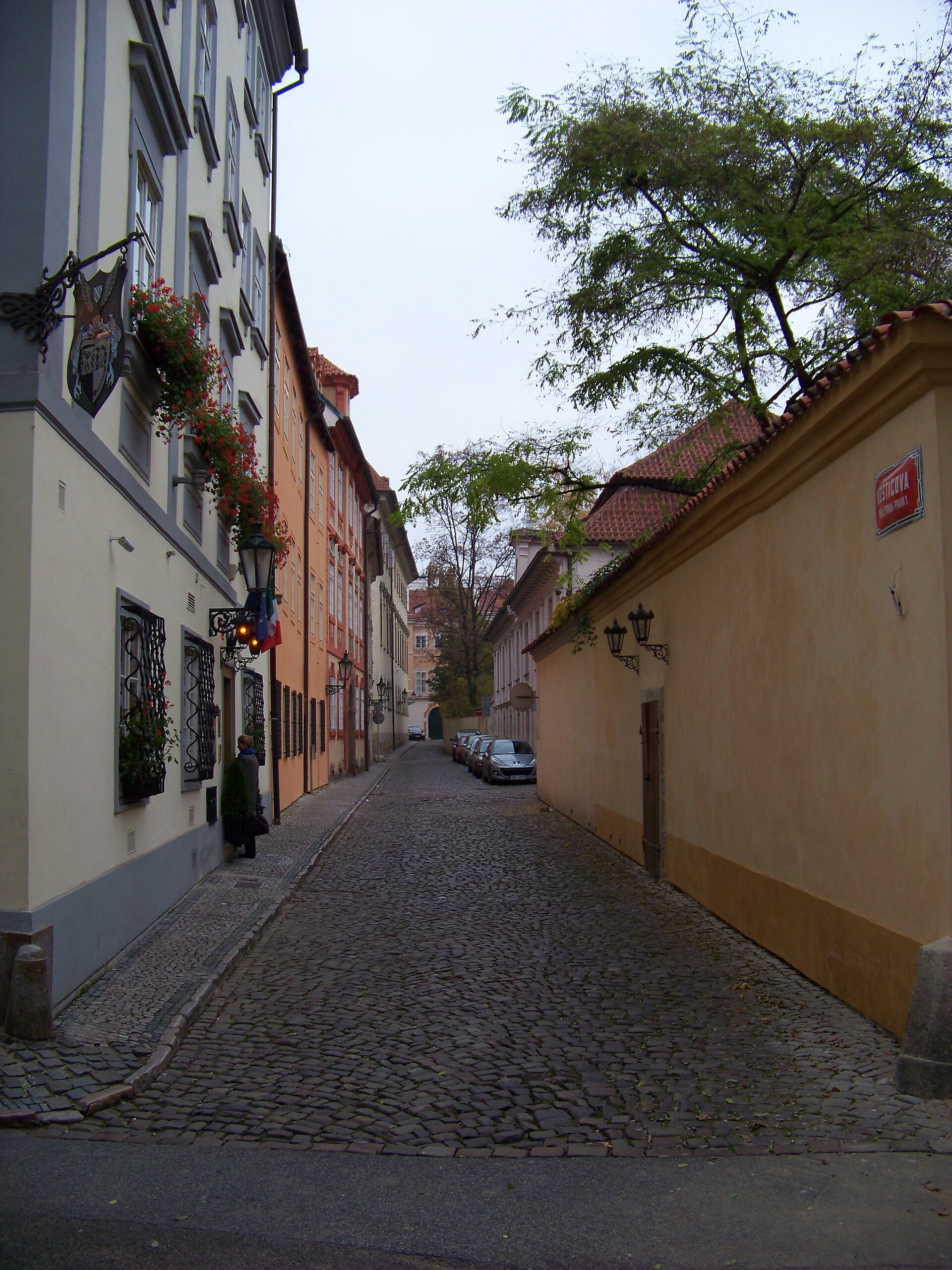
Nosticova from the Hellichova end. Salieri's cry that opens the film comes out of a window in this street.
The film opens on a dark street under snow with old Salieri's voice coming out of a window, and the street is this one, a short lane between Hellichova and Maltézské náměstí. Which house the window belongs to has never been published.
The scene is set in winter, and the crew expected to have to lay artificial snow. Then snow fell on Prague unannounced, and the American actors were in the city within a few days.
The empty street in the finished opening is salvage. Michael Chandler, who cut the film, told the Guardian in 2023 that Forman asked him to fix a beginning that was too obvious, and that he went looking and found a few seconds of empty cobbled Prague streets nobody had meant to use, and ran Salieri's voice over them.
Maltézské náměstí, Malá Strana
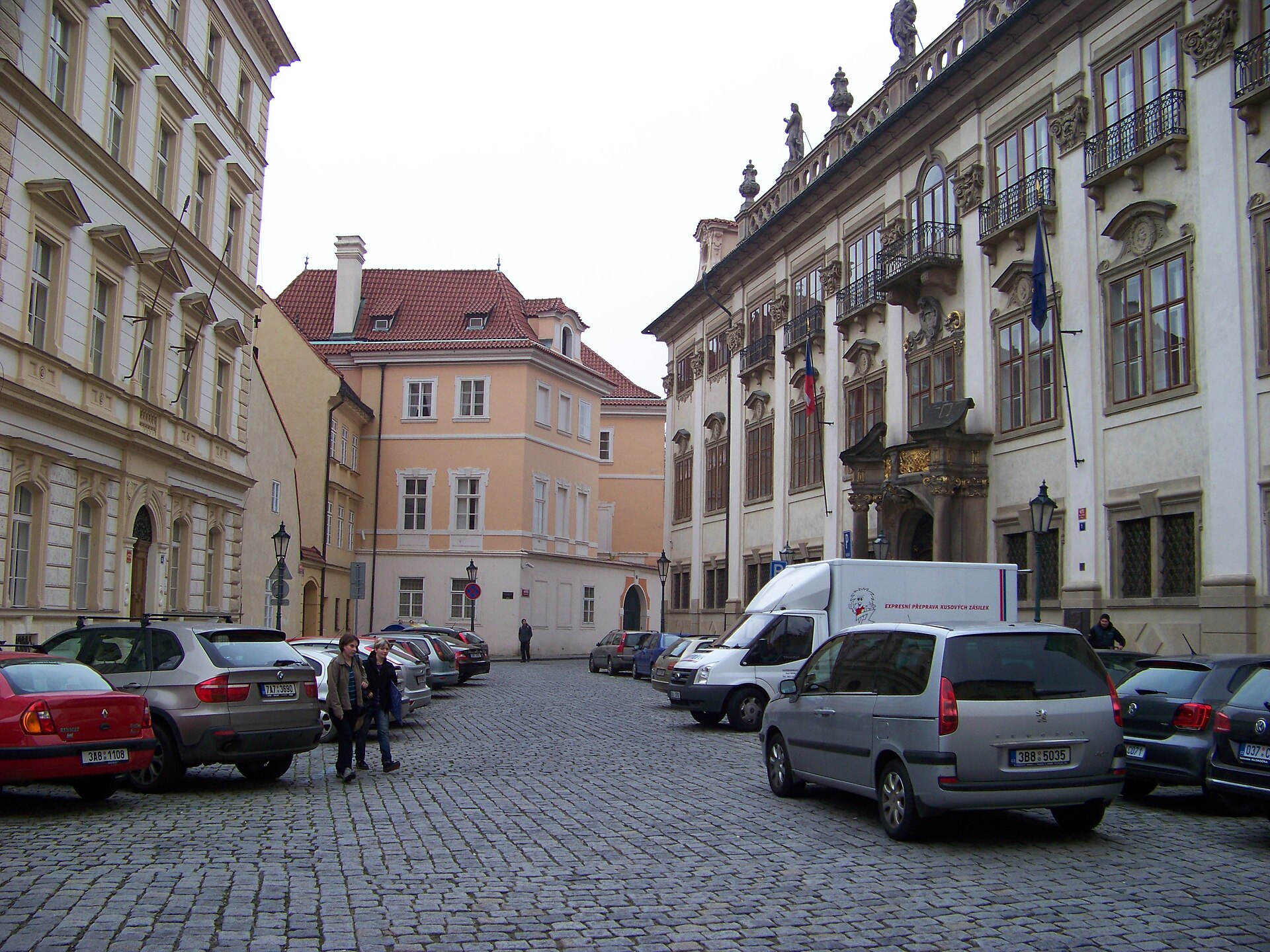
Maltézské náměstí, the square the production filled with a Viennese market. It now works largely as a car park.
The Vienna market Mozart walks through was built on this square. It is a public square with the church of Our Lady beneath the Chain on it, and it works today mostly as a car park hemmed in by palaces.
St Giles' Church, Husova 8, Old Town
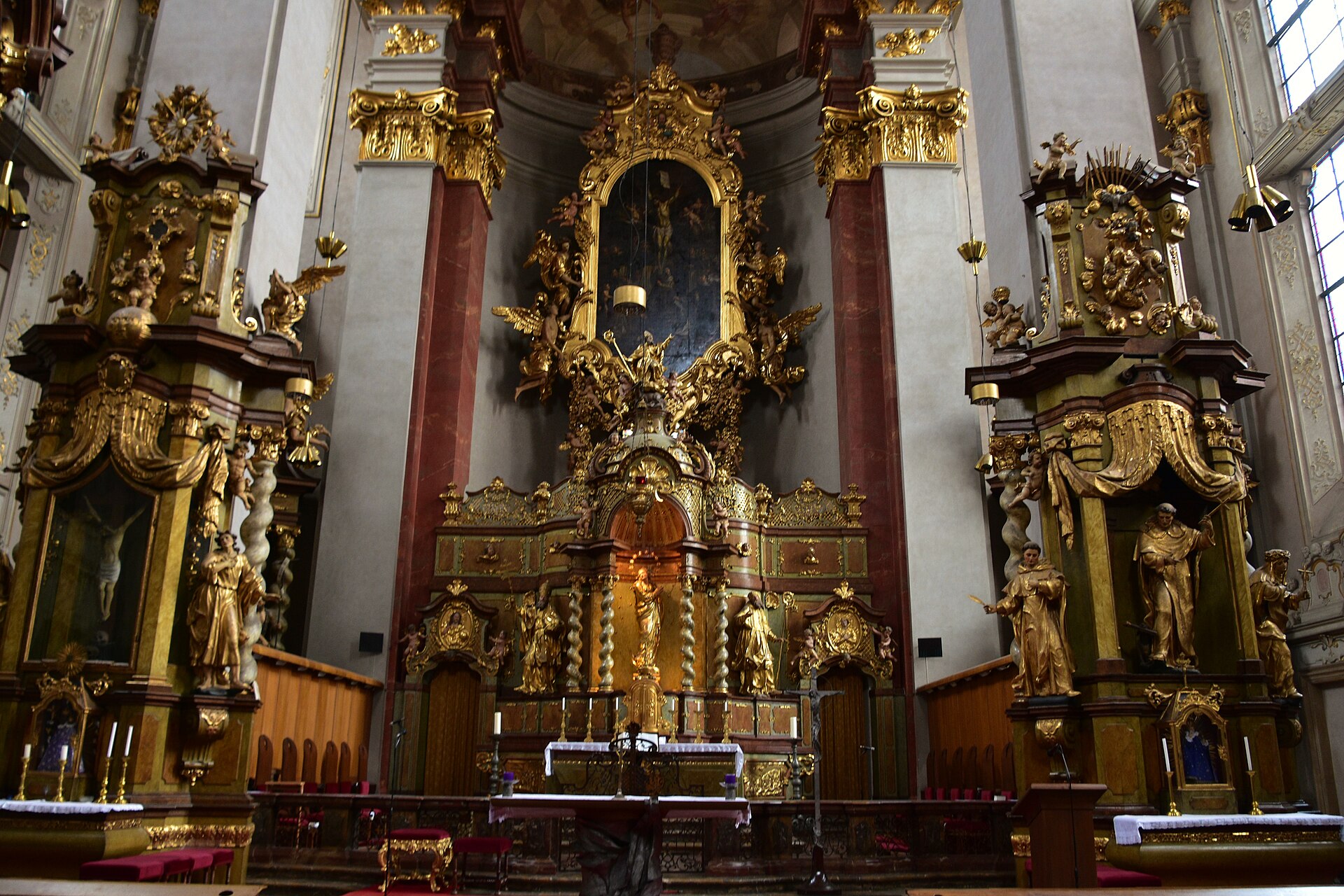
Inside St Giles': the high altar of the Dominican priory church where the film marries Mozart to Constanze.
Mozart marries Constanze here. From the street it is a Gothic box with a plain tower and gives nothing away; inside it is a Dominican priory church with ceiling frescoes by Václav Vavřinec Reiner, who is buried under them. It is open for services and generally between them.
Nerudova, Malá Strana
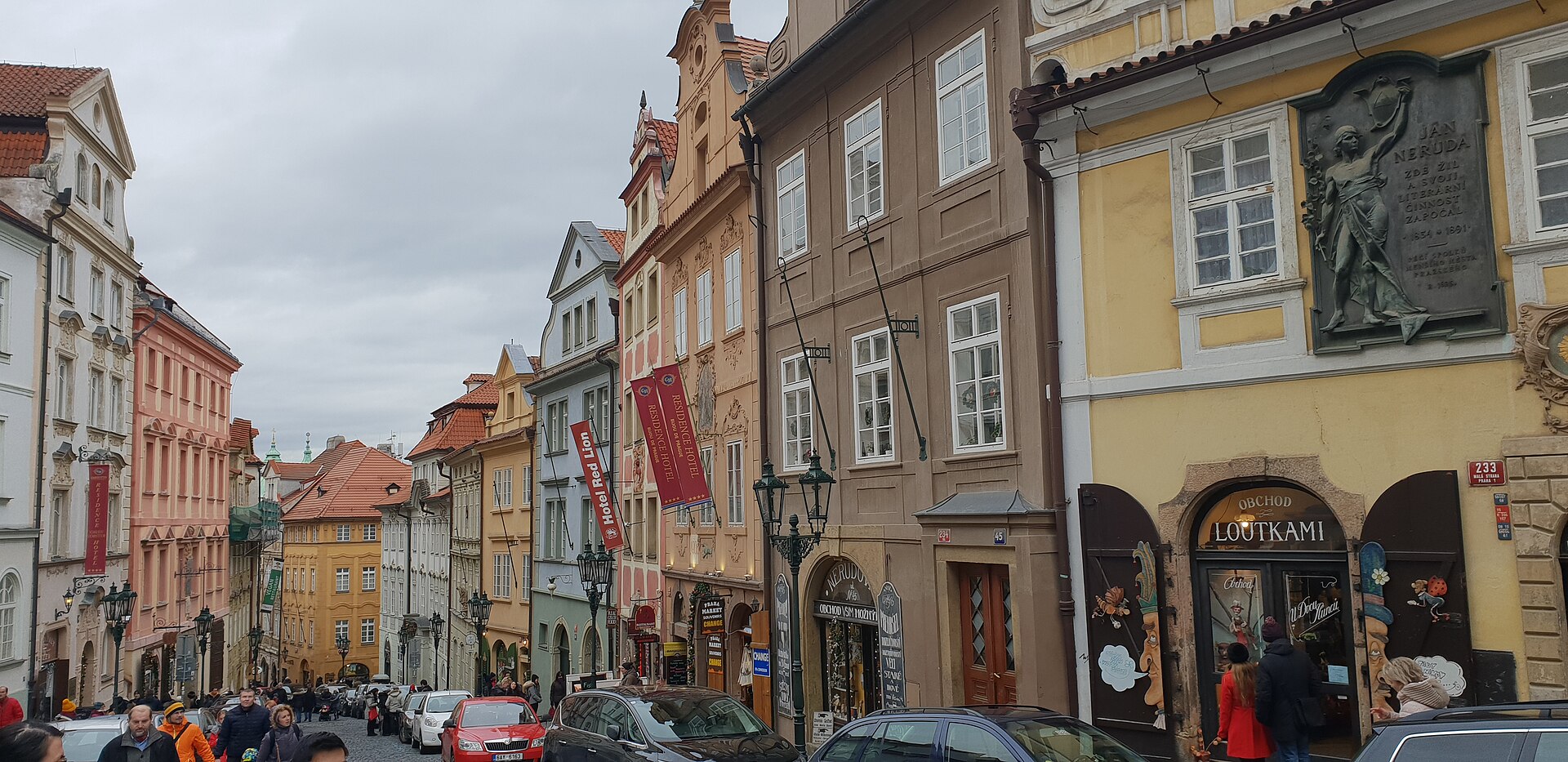
Nerudova today. Mozart hires his carnival masks in this street in the film; the sources are unanimous that the street's attraction in 1983 was that it had no shops and no tourists.
Mozart, his wife and his father hire the masks for the masked ball in a shop on this street. In 2016 there was a tea room inside that shop, with a memorial plaque and Forman's signature in it. The street number is not published anywhere, so the door takes finding.
Nerudova today climbs to the Castle between shopfronts and is one of the busiest walks in the city, which is the reverse of what brought the production here.
The drunken Mozart's walk home from the party starts in this passage, which goes through the Hartig Palace off Malostranské náměstí and is open to walk through.
Thunovská, Malá Strana
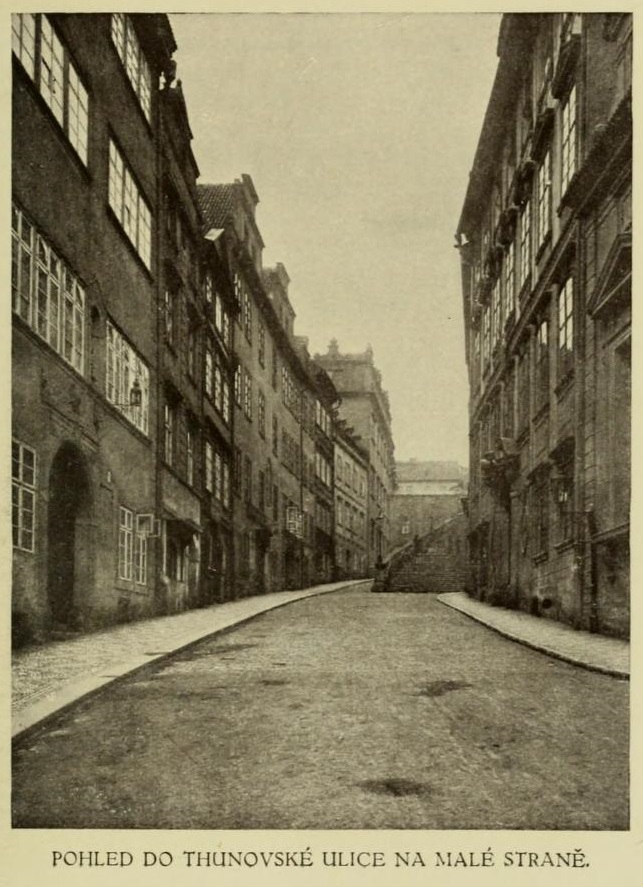
Thunovská in 1914, printed with its own caption: 'A view into Thunovská street in Malá Strana'. This is close to what the crew came for — the same lane, empty, before cars.
Photo: Anonymous, possibly Jan Štenc (1871-1947), graphic designer of this book · Public domain · Wikimedia Commons
The middle stretch of that walk, from the passage up towards Hradčany. Thunovská runs from Sněmovní to the New Castle Steps and has the British Embassy on it. A photograph from 1914 shows it empty, unparked and unshopped. That is close to what the production came to Prague for sixty-nine years later, and closer than anything you can photograph there now.
Hradčanské náměstí, Hradčany
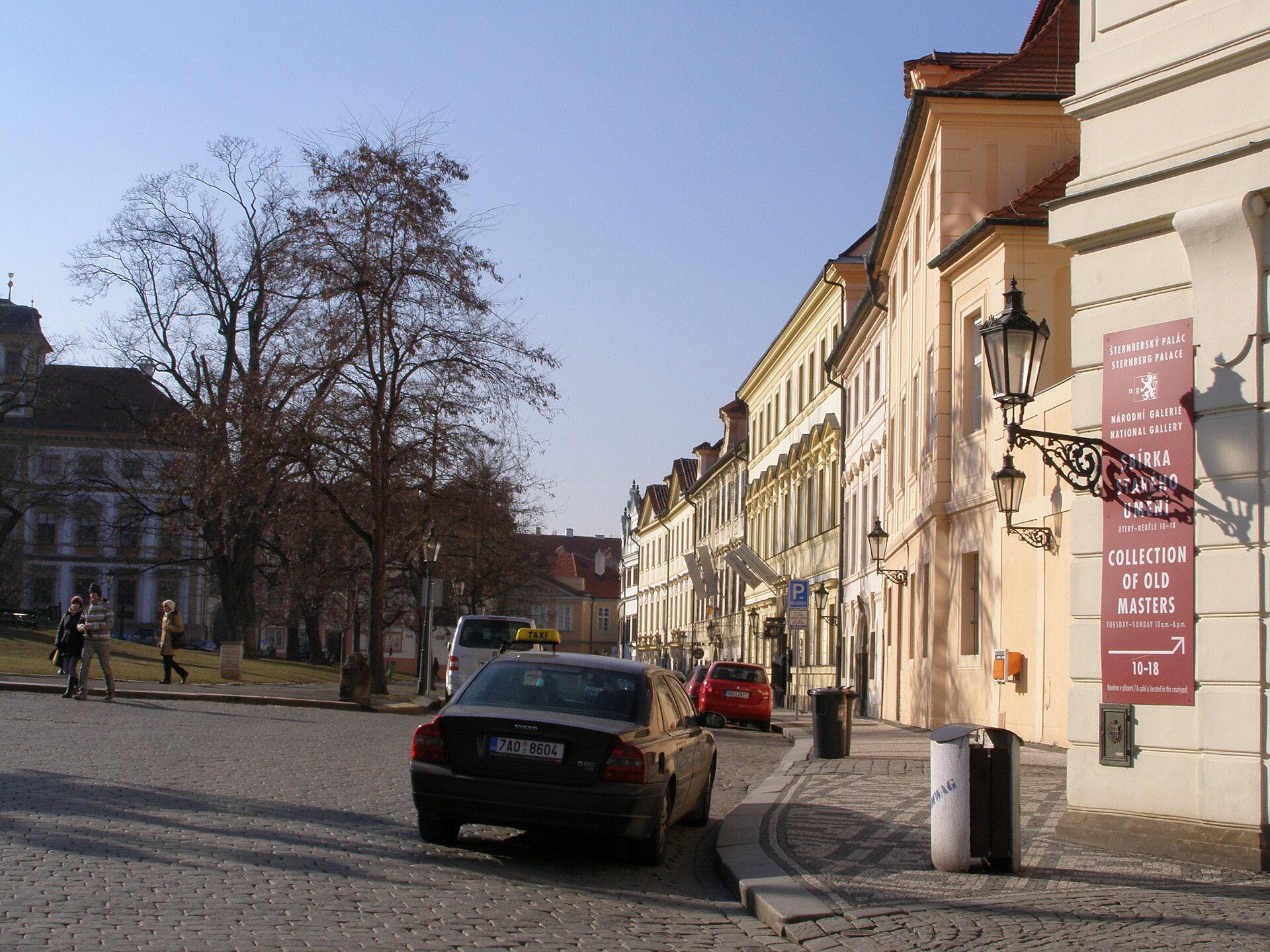
Hradčanské náměstí, where the film puts Mozart's house. The building on the right is the Sternberg Palace, the National Gallery's old masters.
The walk ends at Mozart's front door, which the film puts on the square outside the gates of Prague Castle. The Castle itself was never on offer. Forman asked to shoot inside the complex, where Gustáv Husák then had his seat, and the Barrandov management told him to forget it at once. The crew worked under state security observation throughout, and Forman gave an undertaking not to go looking for dissidents; Tom Hulce, who played Mozart, told the Guardian they were watched constantly.
The square is the Castle forecourt and crowded for most of the day. The Sternberg Palace on it holds the National Gallery's old masters.
The production shot on the bridge. Which scene it appears in, nobody has said, and the film gives you little to hunt with: the film historian Petra Mandová has pointed out that it never once shows a panorama of Prague. The bridge is public, always open, and one of the busiest pedestrian places in the city.
The court
Archbishop's Château, Sněmovní náměstí 1, Kroměříž
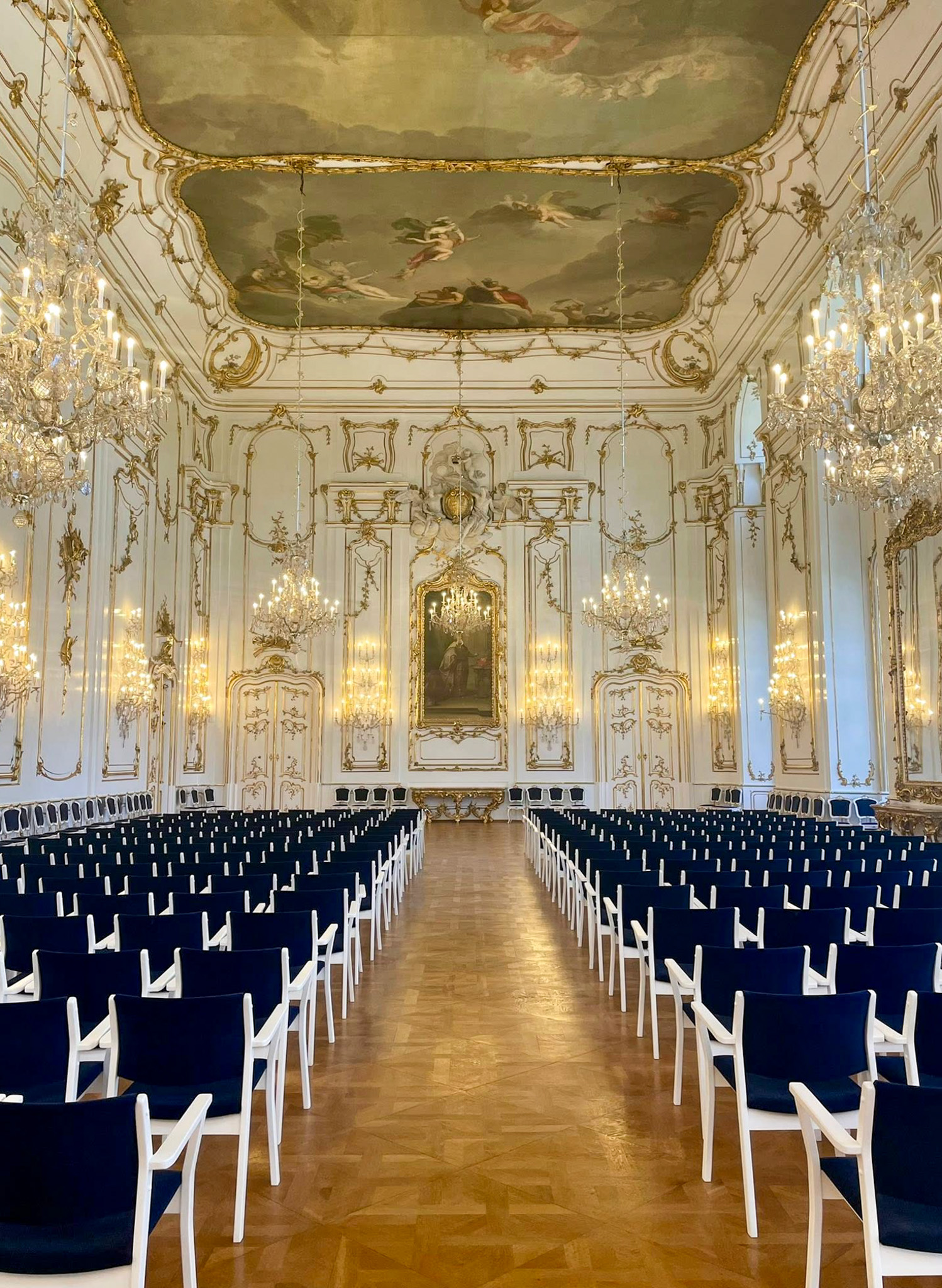
The Assembly Hall at Kroměříž, the largest of the rococo state rooms. Interiors like this one stood in for the imperial court in Vienna.
The imperial court is 230 km east of Prague, in Moravia. Salieri and the Emperor Joseph II first meet Mozart in these rooms, and Mozart is presented to the Cardinal in them. The American crew had the building for fourteen days in 1983. Residents and students of the town worked in the crowd scenes, and the ones who were not in them tried to get a look over the walls at the film stars.
Mozart never came to Kroměříž. Some of his music did, and is still here: the château's music archive holds a manuscript of his for two pianos.
The château and its two gardens are a UNESCO site and open on guided routes, with the Assembly Hall and the picture gallery on the standard one. Immortal Beloved, The Young Indiana Jones Chronicles, A Royal Affair, Napoléon, The Musketeers, Maria Theresa and Angélique have all filmed here since. Immortal Beloved is the one that closes a circle: the Mozart film and the Beethoven film used this château and that theatre stage, both of them, ten years apart.
Wallenstein Garden, Letenská 4, Malá Strana
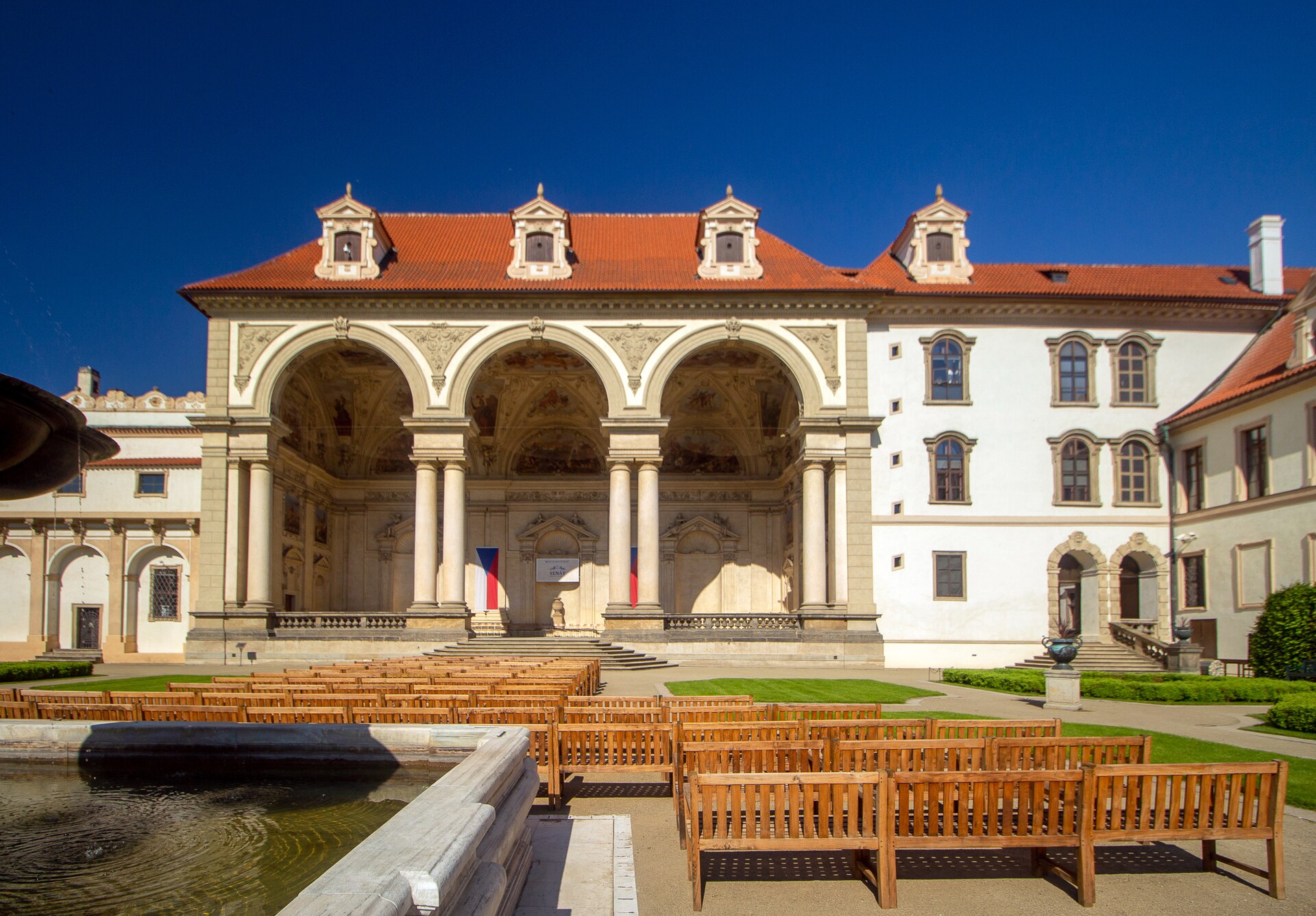
The sala terrena in the Wallenstein Garden, with benches set out for a concert. The film has Mozart perform before the Emperor in these gardens; the Senate still puts concerts here in summer.
Mozart performs before the Emperor in a palace garden, and this is the garden: fourteen thousand square metres behind a wall in Malá Strana, second in size in the centre of Prague only to the Castle gardens. The open hall at one end of it, the sala terrena, still takes concerts in summer, which is what the film has it doing. Immortal Beloved came to these gardens too.
It belongs to the Senate, and the garden is open to anyone, without a ticket. Peacocks live in it and dogs are not allowed. The Senate permits photography for private purposes only, so the next crew that wants it will have to ask.
Wallenstein Palace, Valdštejnské náměstí 4, Malá Strana
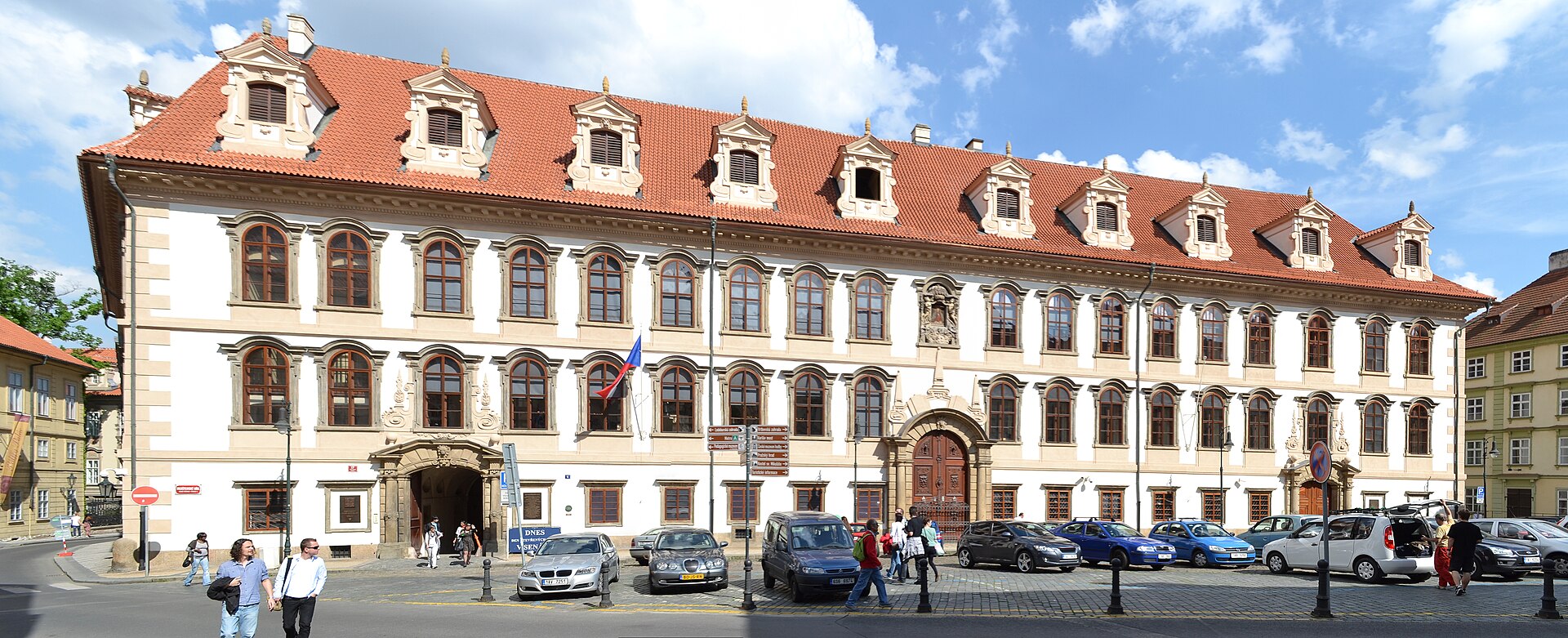
The Wallenstein Palace front on Valdštejnské náměstí. The Czech flag over the door is the Senate's; the building has been parliament since 1996.
The palace behind that garden has been the seat of the Senate since 1996. Inside it the film leaves Vienna: the child Mozart plays in Rome, in front of the Pope. Forman used the rooms for the film's grand balls and rulers' residences too, along with the Archbishop's Palace and the Buquoy.
Archbishop's Palace, Hradčanské náměstí 16, Hradčany
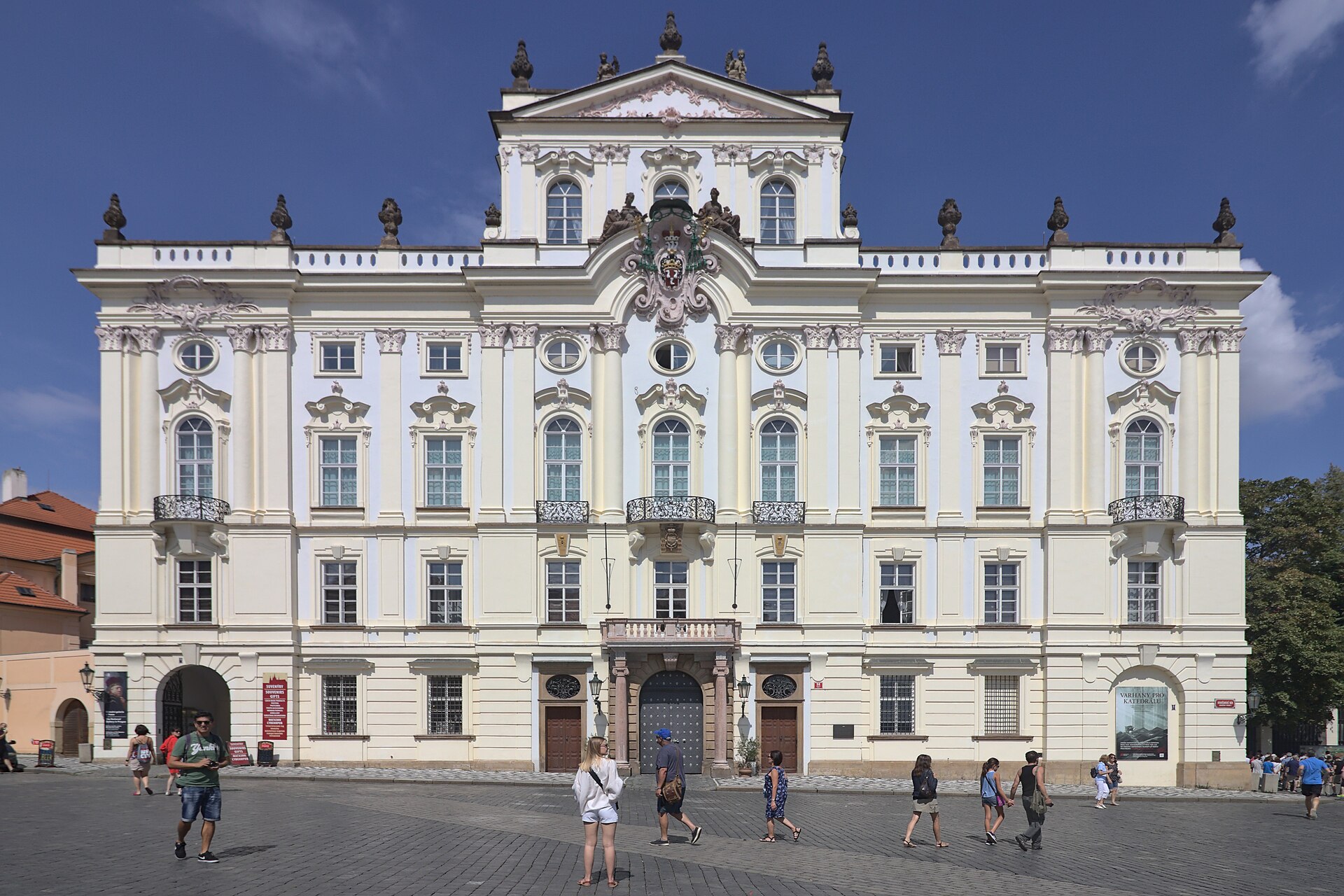
The Archbishop's Palace on Hradčanské náměstí. Czech Television lists it among the palaces used for the film's balls and rulers' residences; the English page of the Czech Film Commission calls it the Gryspek Palace.
Another of the ball and residence palaces, and the one that stands on the same square as Mozart's film address. It is also called the Gryspek Palace, after the older house it grew out of, which is worth knowing if you go searching. The Archbishop of Prague has his seat in it, and it is not a museum.
Buquoy Palace, Velkopřevorské náměstí 2, Malá Strana
The third of the palaces Forman used for the film's balls and rulers' residences. The French Embassy has held the building since 1919, so the inside is out of reach; the front of it stands on a small square a minute from the Lennon Wall.
Grand Prior's Palace, Velkopřevorské náměstí 4, Malá Strana
Across the same square, and also in the film. It is the seat of the Grand Priory of the Order of Malta in Bohemia and not a public building.
Veltrusy Chateau, Mělník District
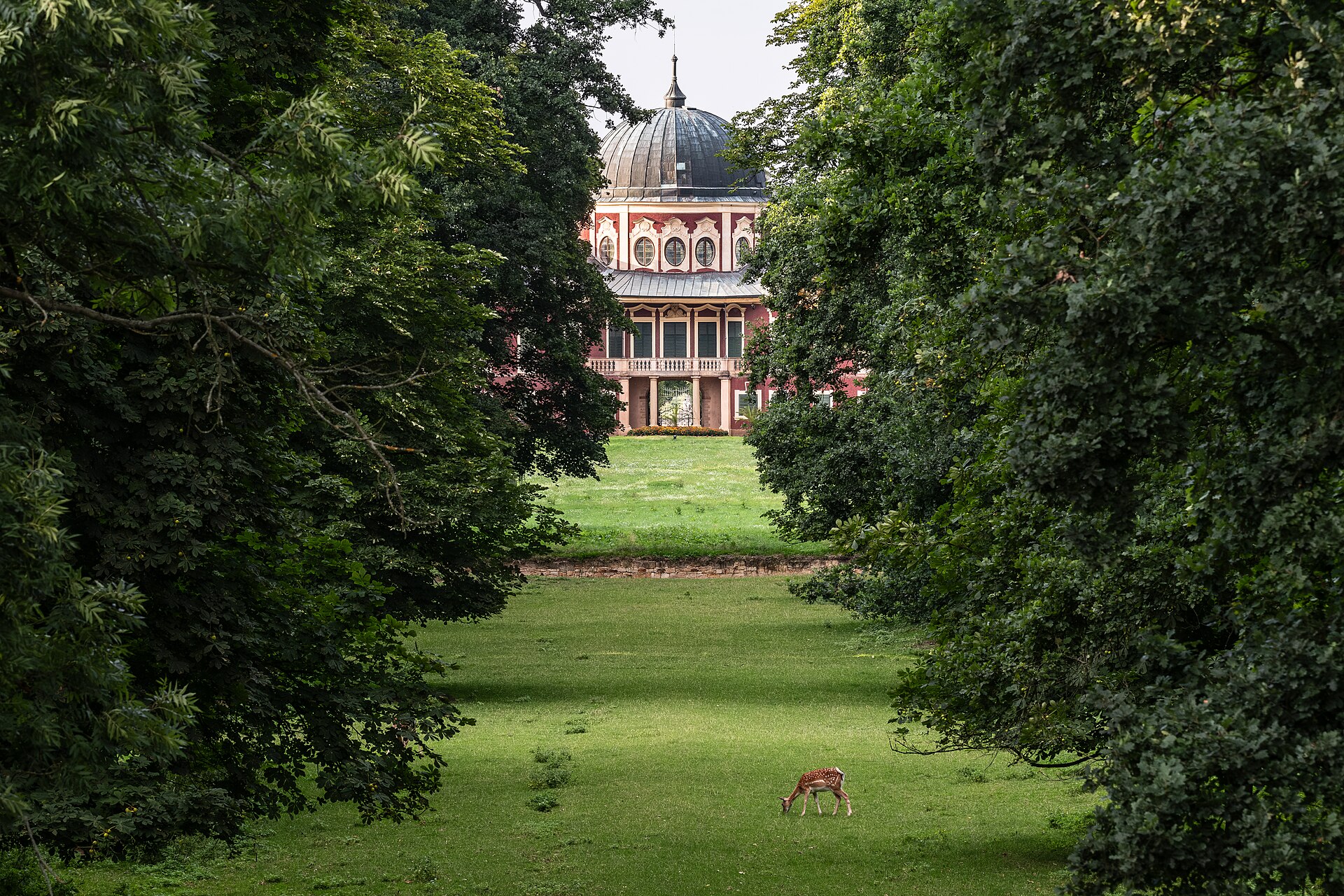
Veltrusy seen down a ride in its park, with a fallow deer on the grass. Czech Wikipedia puts the Amadeus filming in the deer park rather than in the house; the chateau's own filmography just lists the film.
About twenty kilometres north of Prague, in an English park with fallow deer in it. The crew came out here; what they shot is not known.
Crews have been coming to Veltrusy since 1921, Doctor Zhivago and The Red Baron among them, so whatever this film did here, it was one visit among many.
The end of the film
Bohnice Asylum Cemetery, Prague 8
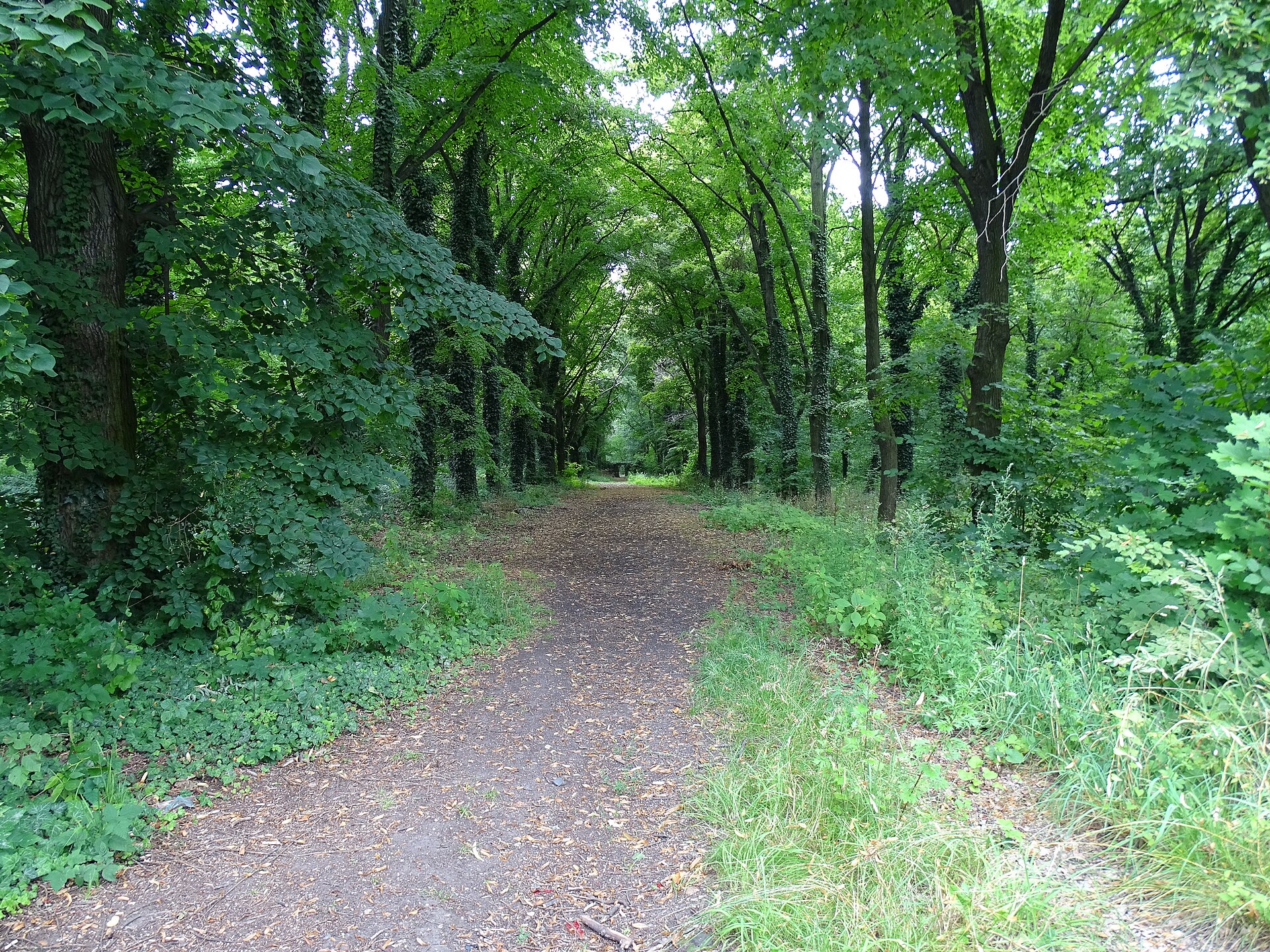
The main path of the Bohnice asylum cemetery. Burials stopped in 1963 and the ivy took it; Mozart's pauper funeral was shot here in the rain.
Mozart's body goes into a common grave in the rain, and the grave is six kilometres north of the Old Town, in the burial ground of the Bohnice asylum, known as the cemetery of the mad. It took the hospital's dead from 1909 until 1963 and has been shut since. Ivy has taken most of the graves, a small number of headstones are left, and the chapel, burned by vandals in 1989, is a shell. Guided tours go in at night now and then. There is otherwise no getting in.
Worth knowing if you go looking: the Czech Wikipedia article on the film sends this funeral to a different asylum cemetery, at Horní Beřkovice. Právo, MF DNES and Czech Television all say Bohnice.
Invalidovna, Sokolovská 24, Karlín
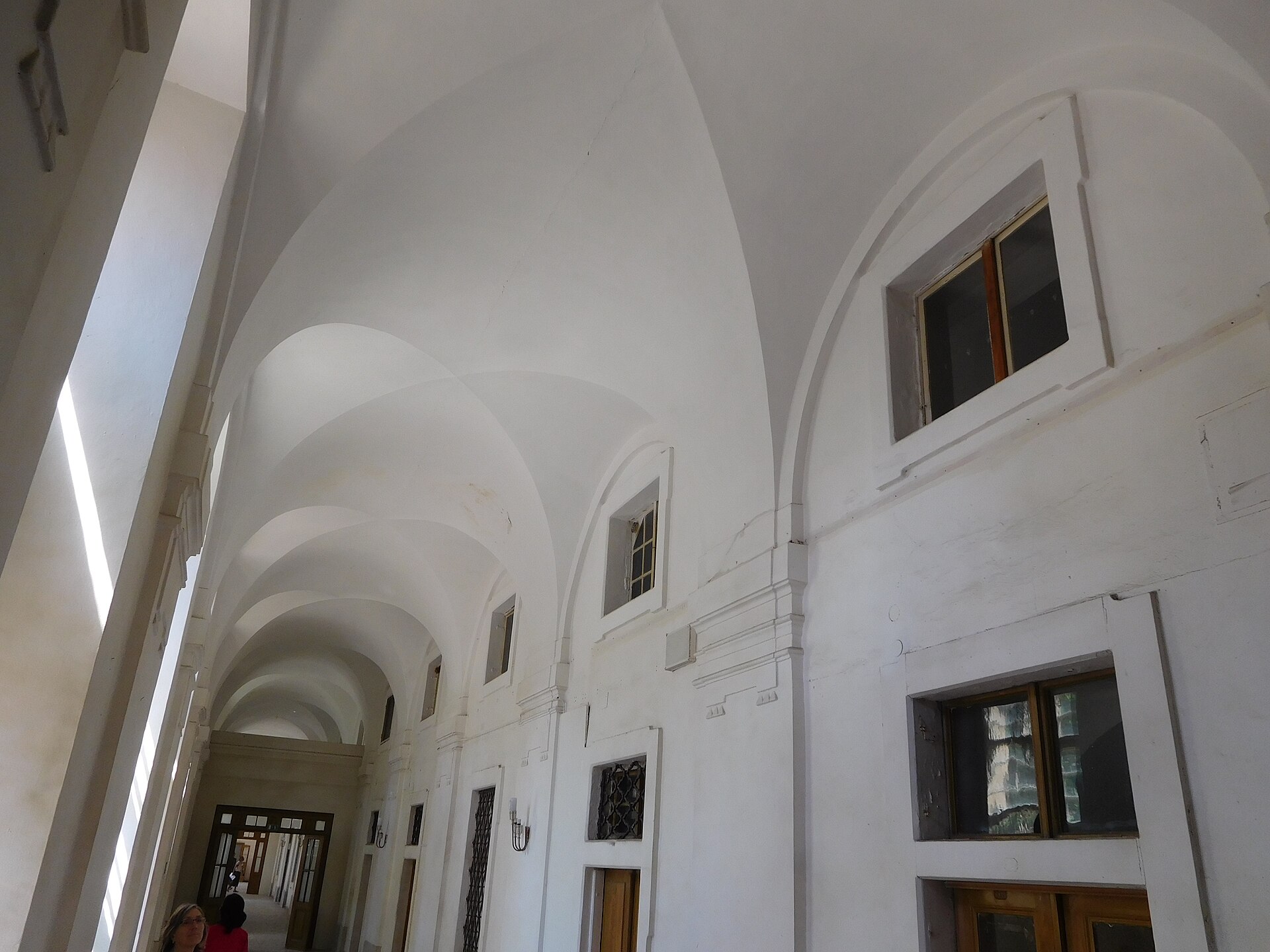
A vaulted first-floor corridor in the Invalidovna. The film's last shot travels down a corridor of this kind, with Salieri wheeled along it.
The last thing the film shows is a corridor with Salieri being wheeled down it after his conversation with the priest. The corridor is under three kilometres east of the theatre where the film's Mozart conducted, inside a hôtel des invalides built between 1731 and 1737 as a home for disabled soldiers. Roughly a ninth of the designed building was ever put up, and that ninth stands in pink stone among the new office blocks of Karlín.
The theatre closed for reconstruction after the crew left and came back a working opera house. The Invalidovna is still in the queue for the same thing. It was in poor structural shape for decades before the flood of August 2002 made it worse, opened to the public for the first time in decades over a heritage weekend in September 2009, and went to the national heritage service in May 2018, which has a reconstruction in preparation. Crews kept coming in the meantime. Hellboy used the building in 2004, and in 2023 Robert Eggers took Nosferatu down the same corridors.