BBC One Daytime · BBC Studios, Birmingham · from G. K. Chesterton's stories
Where was Father Brown filmed?
Walk in through the front door of the old cottage hospital at Moreton-in-Marsh and you are at the counter of Kembleford police station, with the cells beside it. Further in, where the wards were, the sets come one after another: Father Brown's kitchen, his study, the presbytery. The building lost its patients in 2009, when the work moved to a new hospital at the edge of town, and its landlord, NHS Property Services, wrote that walk down in September 2015, while the place was up for sale.
24
places on the route
Five English counties, with the Cotswold core inside fifteen kilometres of Blockley church. Click a point to jump to its entry.
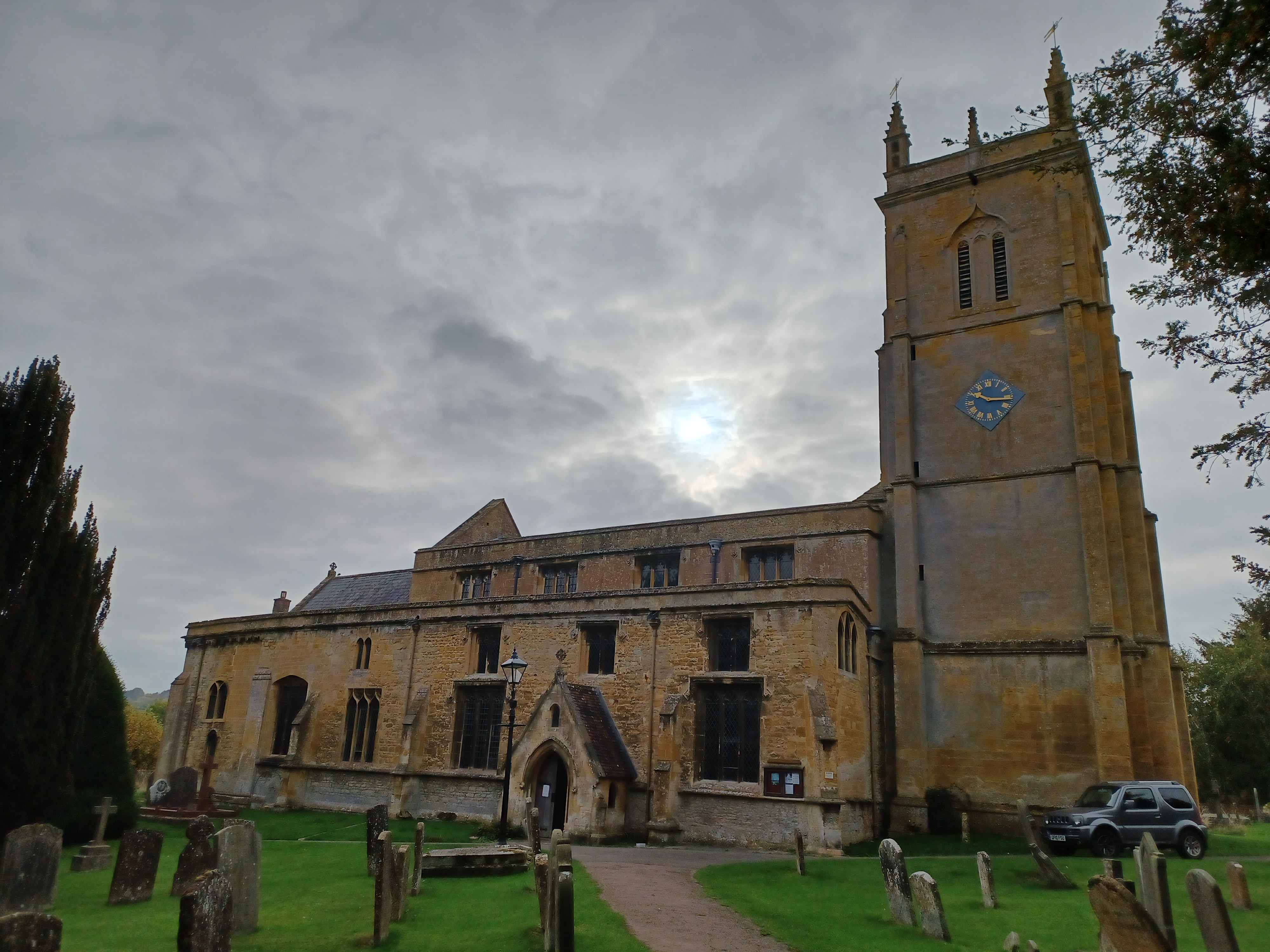
Where is Father Brown filmed? Outside, in Blockley, a village in the north Cotswolds in Gloucestershire: the parish church of St Peter and St Paul plays St Mary's Roman Catholic Church, and the vicarage beside it plays the priest's house. Inside, four and a half kilometres away, in the hospital. Either half of that answer on its own is wrong, which is why the kitchen is not in Blockley and never was.
Kembleford is not one village either. Blockley gives it the church and the square; the rest has been taken from Guiting Power, Upper Slaughter, Ilmington and two more, so a Father Brown filming locations map runs across five English counties, though its Cotswold core sits inside fifteen kilometres of one churchyard. What the places have in common is easier to see than the geography. A series set in 1953 has spent thirteen years in buildings that stopped doing the job they were built for: a hospital with no patients, eighteenth-century courtrooms whose courts moved out to Leamington Spa in 2010, a convent with no nuns and a boarded east window, a police station that is now housing, a Salvation Army citadel that is now a theatre. The exception is the church, which is working, and which is Church of England.
In June 2012, while the crews were still in the village, Blockley's vicar, Grahame Humphries, said it would be interesting to watch a place you have lived in turn up on television, and that if the thing was a success they might come back the next year.
Kembleford, outside and in
The church is Anglican and plays Catholic
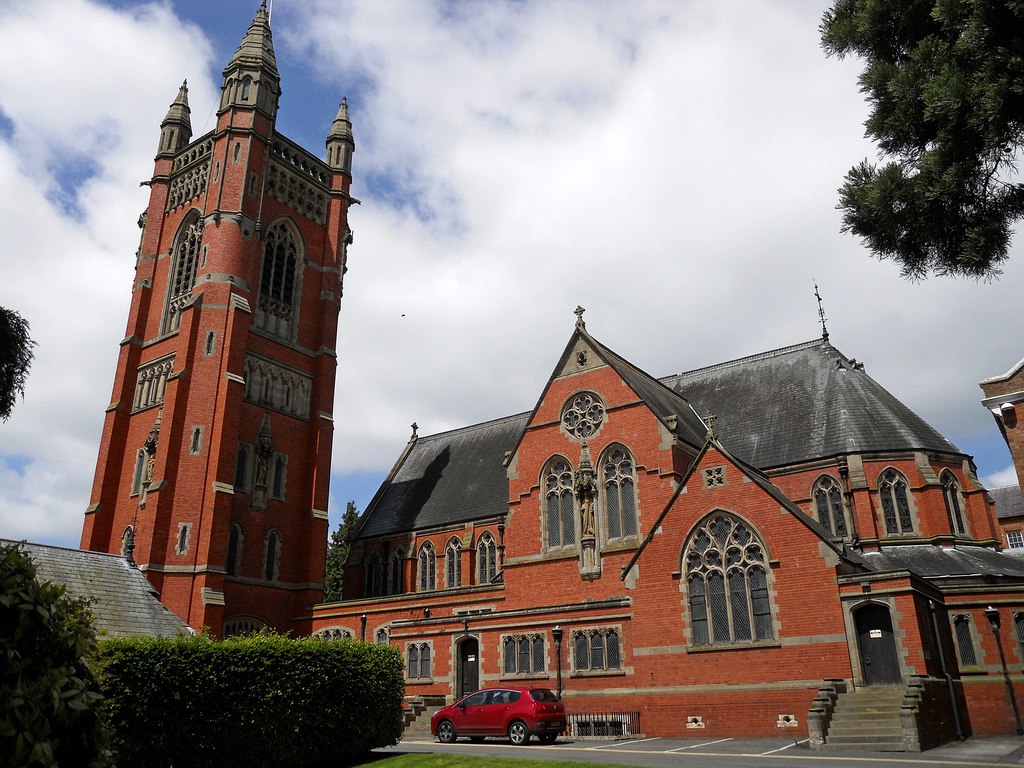
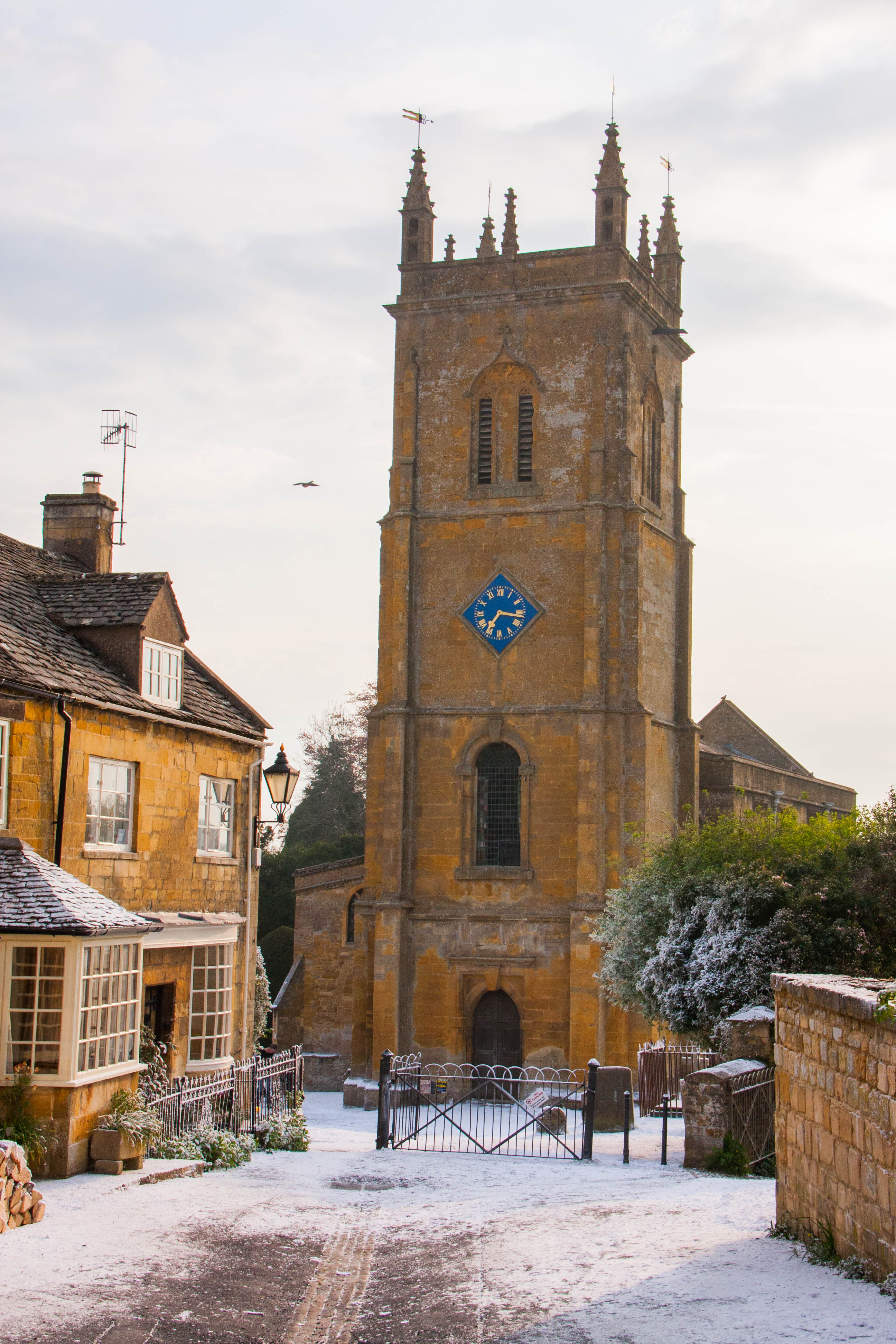
Blockley's parish church, St Peter and St Paul. On screen it is St Mary's Roman Catholic Church.
Blockley, Gloucestershire. A working parish church; the vicarage beside it is clergy housing.
Every series since the first has come back to this churchyard. A Church of England parish church stands in for a Roman Catholic one, and the vicarage next door was made over into a 1950s presbytery in June 2012. The present vicar, Dana Delap, has been in it herself, as an extra.
The vicarage is clergy housing rather than a museum, somebody lives in it, and its address is not public.
One name to get right, because two wrong ones are in circulation. Not St Peter's, not St Giles'. It is St Peter and St Paul.
Father Brown's kitchen is in a hospital
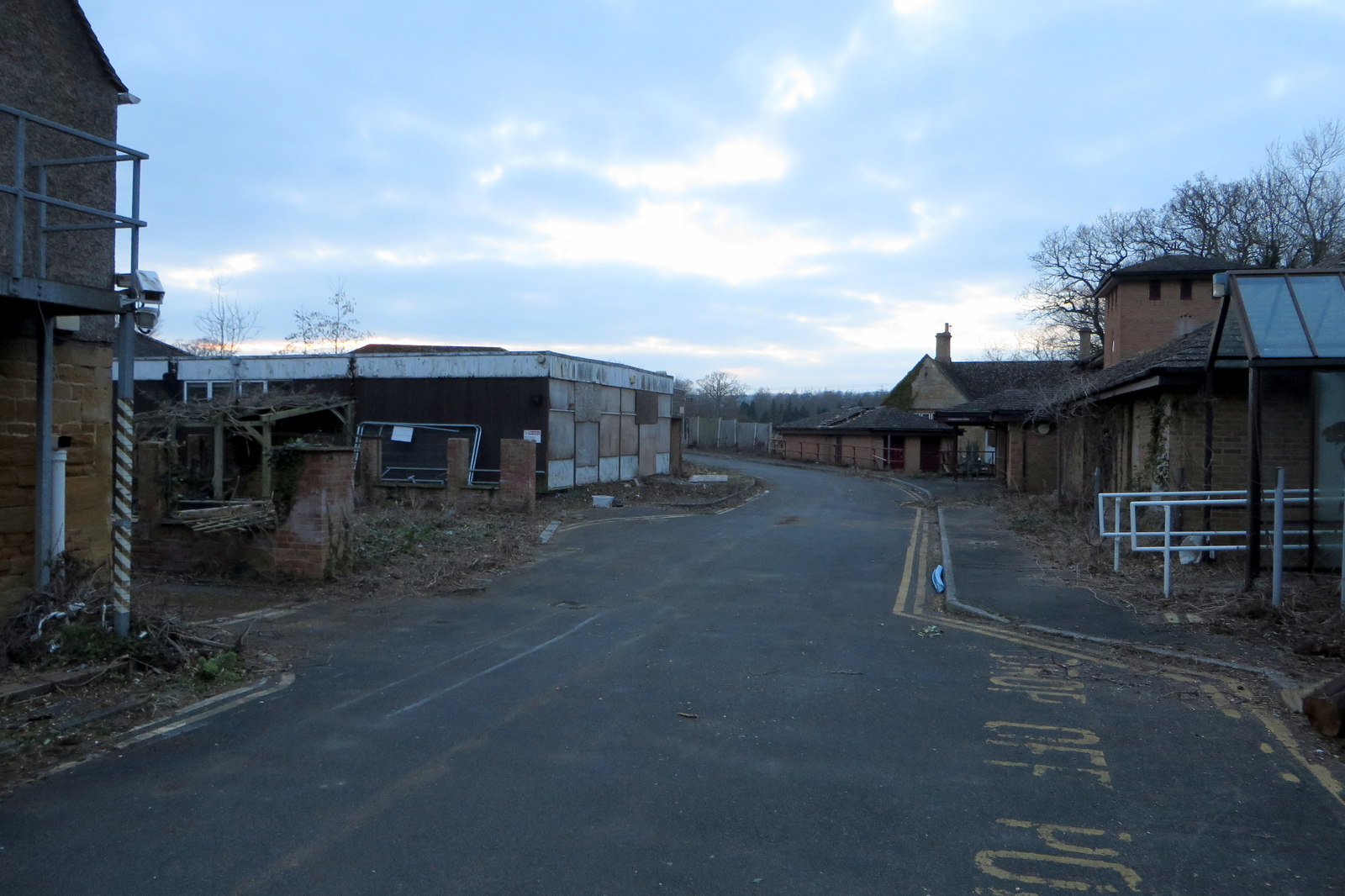
The former Moreton-in-Marsh hospital in February 2018, empty. The kitchen, the study, the presbytery and the police station were built inside this building.
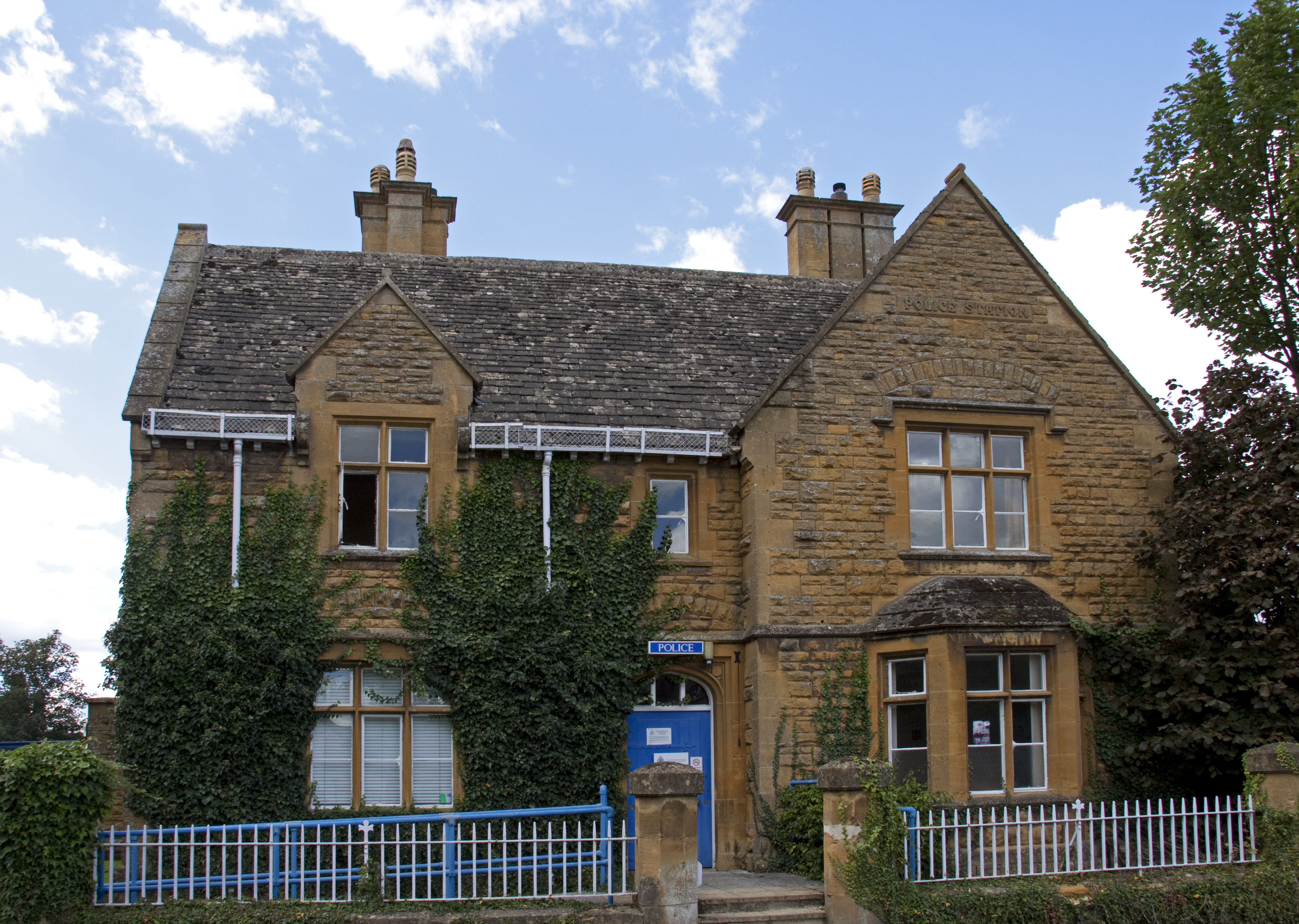
The Victorian police station on Moreton-in-Marsh High Street in 2010, before it became housing. It played the outside of Kembleford police station in the early series.
Photo: Tony Hisgett from Birmingham, UK · CC BY 2.0 · Wikimedia Commons
Moreton-in-Marsh, Gloucestershire. Empty, no access.
The wards and offices were left standing when the hospital shut, and from 2013 the production had them for four months of the year. The designer, Francis Boyle, said what made them worth having: the place was clean, it still had its sash windows, the wards were tall enough to build inside, and it sat off the main street, quiet. He measures a room, notes what is worth keeping, sketches it, and has a drawing done in a day; each room after that takes the set builders some three weeks, built up in timber. Dave Beauchamp directed that summer from the old ward office behind a bank of monitors, and his reason was money as much as period: a building that already looks 1953 does not have to be dressed into it.
One day in 2015 the scene being shot was itself set in a hospital, and extras in pyjamas were waiting in the corridors to be called. Mark Williams, whose father was an architect and surveyor, said the building looks as though everyone got up and left it overnight, and that the crew keeps finding corners in it that nobody could have used while the place was still working. When they go, he said, only the paint stays: the structures, the power and the lights all arrive on trucks.
Then the dates stop lining up. That was the summer the landlord expected to be the last, with the hospital on the market and a sale due inside the financial year. By February 2018 the buildings stood derelict. In August 2025 Countryfile was still putting the kitchen, the study and Kembleford police station inside those walls.
The police station has an outside too, and in the early series it is a different Moreton building: the Victorian station on the High Street, blue railings and Cotswold stone. The man who restored the black Riley saloon the series drives photographed it himself and put it down as the old police station. It went on without the programme: converted to a home by February 2014, a for-sale board on it that August, and by the next summer a name — Peeler's Court.
Four more villages, and an argument about which Slaughter
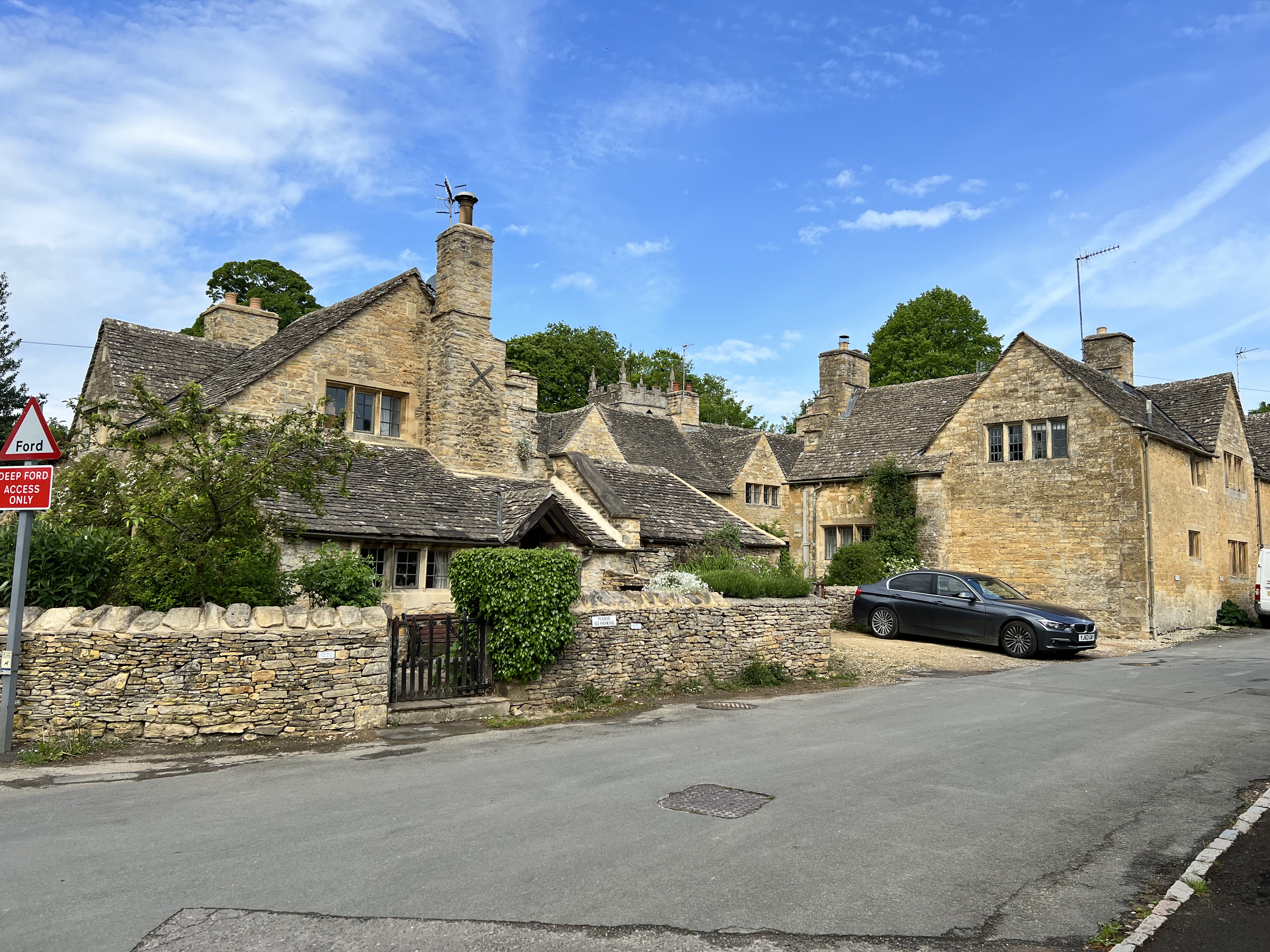
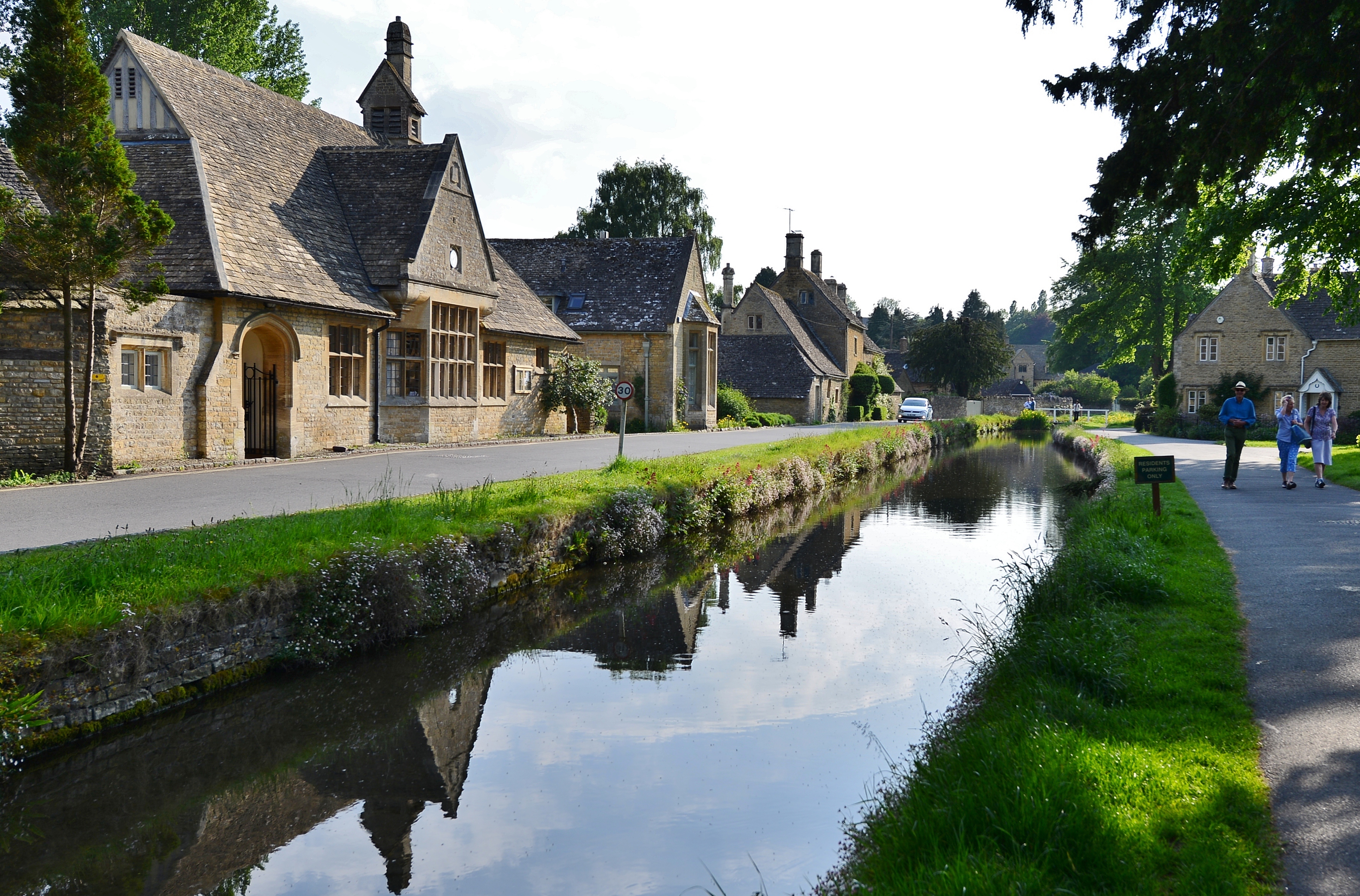
Upper Slaughter, named as a location by the Gloucestershire Echo in July 2012.
Blockley is the spine, and the rest of Kembleford comes from elsewhere. Guiting Power stands in for part of the village; a photographer on the green there in June 2013 tied the work to The Man in the Tree, the fourth episode of the first series. Ilmington, over the county line in Warwickshire, went into the second series. Dumbleton went into the first, in the same weeks as the vicarage, the church and the station at Winchcombe.
Which raises the Slaughters. On 23 June 2012 the Cotswold Journal named Lower Slaughter. A month later the Gloucestershire Echo named Upper Slaughter. Both are local papers, both were writing about the same first series in the same summer, and the two villages stand 1.1 kilometres apart. Upper is the one named ever since. Whether the crew worked in one village or in both, nobody has settled.
Both have other credits. Emma (2020) used Lower Slaughter's village hall, its manor house and its old mill. Upper Slaughter has carried Our Mutual Friend (1998), Interceptor (1989) and The Sailor's Return (1978).
A cricket pavilion, a station and a lane with a foam poacher
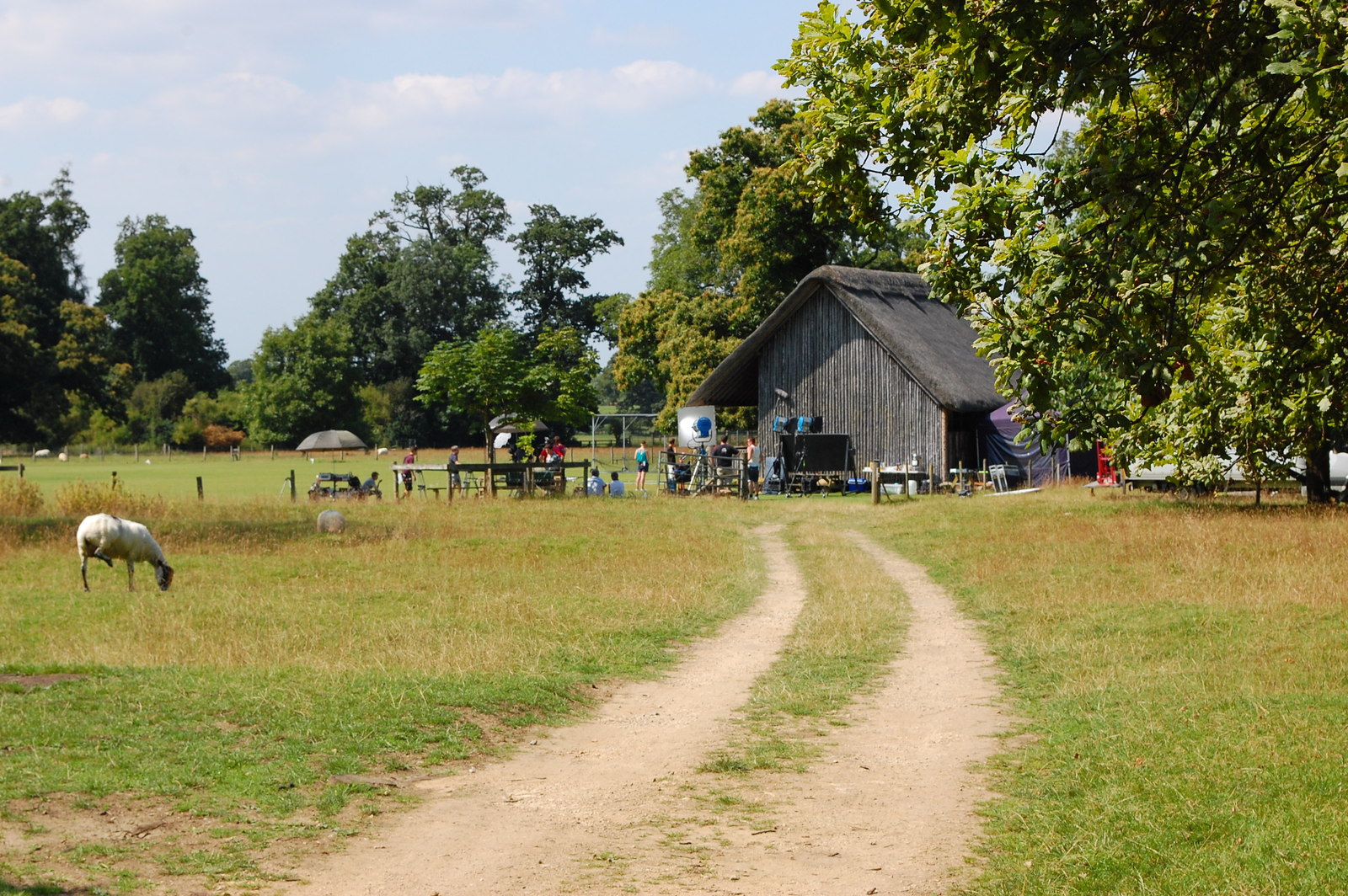
The thatched pavilion at Stanway with lighting rigs in front of it, 22 July 2014. The photographer did not name the production.
Greet, near Winchcombe, and Stanway, Gloucestershire; a lane near Aston Magna. The station runs steam trains; the cricket ground is private.
A village on screen needs more than streets. It needs a cricket pitch, a platform and a road out of it, and all three stand within fifteen kilometres of Blockley.
The cricket ground belongs to the Stanway estate, and its pavilion is thatched and raised on staddle stones. On 17 and 18 July 2014 one of the third-series episodes was being shot there. Four days later a crew was still at work in front of the pavilion. The third series has one cricket story, The Last Man, first shown on 9 January 2015.
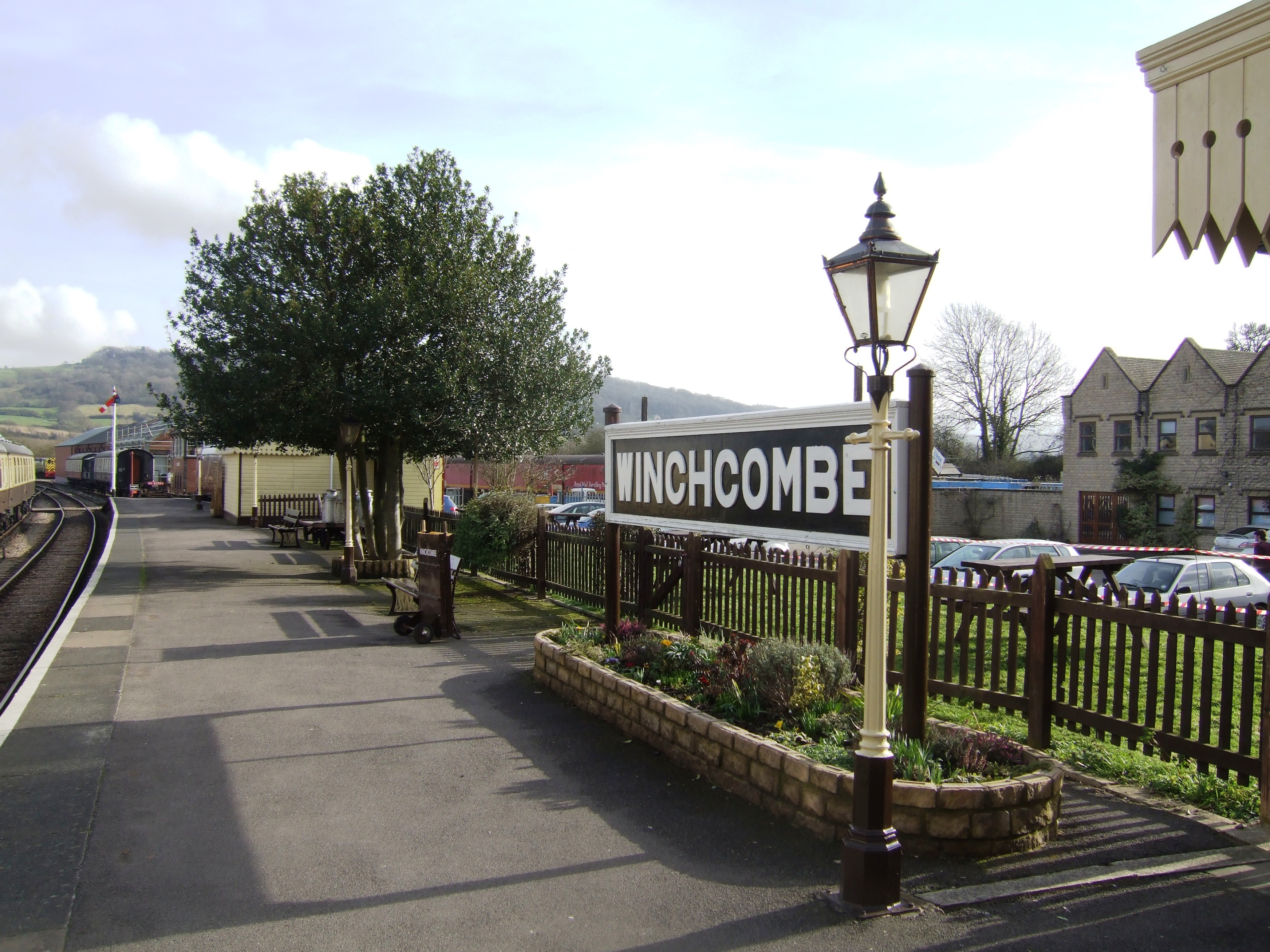
Winchcombe station is not in Winchcombe. It stands at Greet, a kilometre and a half outside the town, on the Gloucestershire Warwickshire Steam Railway, and it has carried the 1950s railway scenes since the first series, across several episodes.
The lane near Aston Magna is where somebody gets killed. The Riley's owner describes the stunt driver, Madeleine Havell, doubling for Lady Margaret and taking the car fast down a country lane, hitting a poacher who runs out of a field with his pheasants. The poacher is a foam dummy in the right clothes, and it goes into the air. Filming stopped to let a delivery van get down to the farm, and the driver got a good look at a man walking about with a hole in his head. Which lane it was he does not say. Lady Margaret runs a man down once in the whole series, in The Face of Death, the eighth story of the first, shown on 23 January 2013.
Borrowed for one story
Beyond the village and its hospital, the places come one story at a time: a castle for a week, another castle for two days, a school over the summer holidays, a civic hall for one morning.
Sudeley Castle: a week in the gardens, by the day
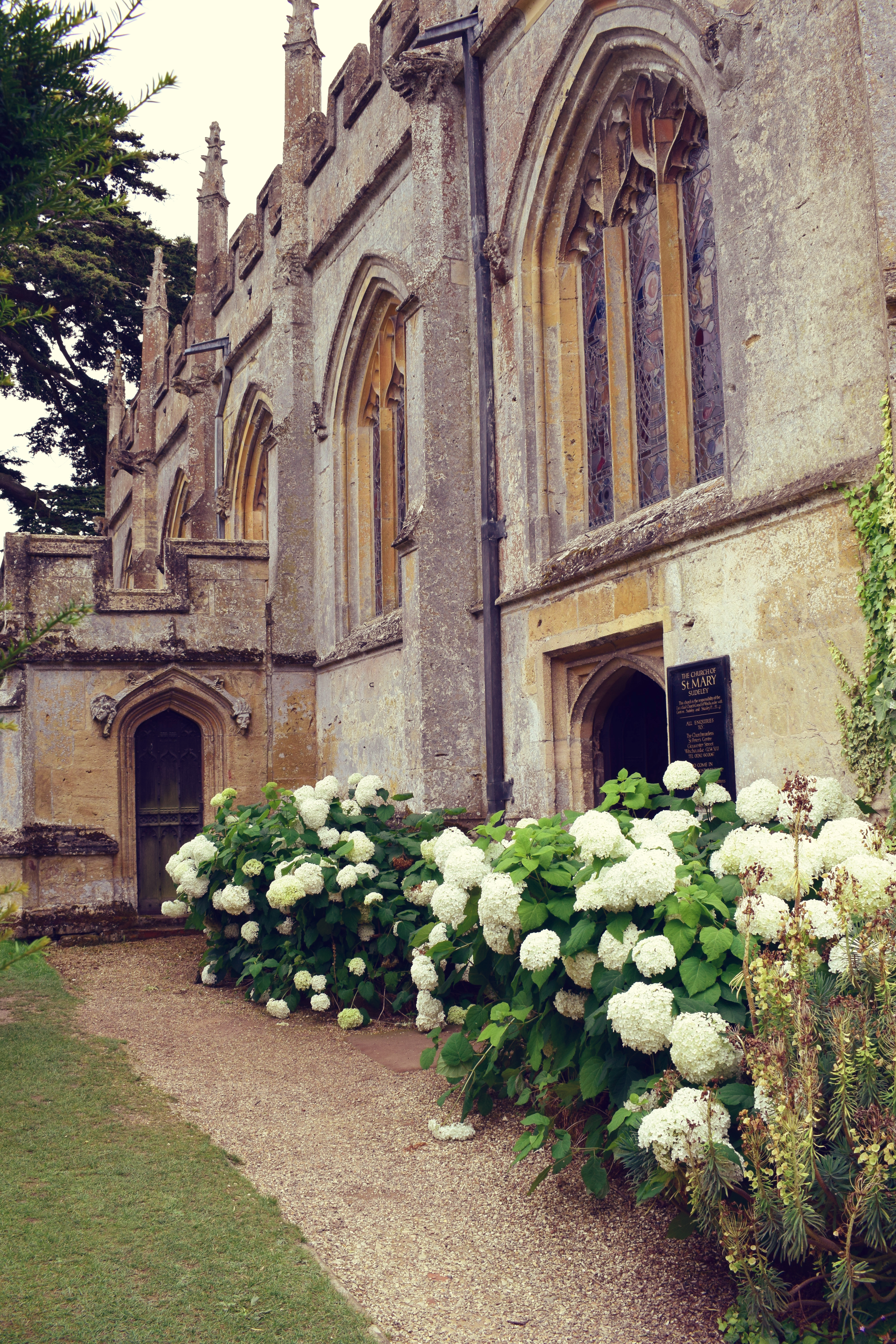
St Mary's Chapel in the grounds of Sudeley Castle, the main location of The Eye of Apollo in the first series.
Winchcombe, Gloucestershire. Open to visitors in season.
The week ran from 26 July to 2 August 2012, to a timetable: the Knot Garden on the first day, the tithe barn and St Mary's Chapel in the grounds on the Tuesday, and on 1 August the chapel steps, the East Garden, the Queen's Garden and the terrace. The castle stayed open through all of it. Some areas were affected as the crews reached them, and visitors went round the work. The chapel is the main location of The Eye of Apollo, in the first series.
Sudeley has been doing this for decades. The BBC filmed Wodehouse there in 1995, for Heavy Weather; before that came The Pallisers (1974), Beauty and the Beast (1976) and Martin Chuzzlewit (1994), and after it Tess of the D'Urbervilles (2008), The White Princess (2017) and The Spanish Princess (2020).
Berkeley Castle: two days, and a corpse in the crew's van
Berkeley Castle, where two days of filming in June 2013 put one actor off the battlements and another in the Lily Pond.
Berkeley, Gloucestershire. Open to visitors in season.
Sixty kilometres south-west of Blockley, two days in June 2013, on air on 8 January 2014. In those two days one actor went off the battlements, another ended up in the Lily Pond, and the Lower Lawn went under medieval tents, with women in period costume and hunting dogs walking about for the look of the thing. The Lily Pond was not dug for drowning anyone. The eighth Earl of Berkeley put it in as a swimming pool for himself and his American countess.
A realistic corpse arrived as a passenger in the crew's van. David Bowd-Exmouth, the house manager, was glad to have the production, and when the castle opened again that April his pitch to viewers was that they could come and walk where the cast had walked. What the castle is called on screen, nobody has published: the name Pryde Castle circulates without a source behind it. It was the programme's first visit to Berkeley. Before that the walls had carried Robin of Sherwood, Nostradamus and The Other Boleyn Girl.
Princethorpe College: a convent played by a school that used to be one
Princethorpe College, a school in a former Catholic convent. It plays the convent of St Agnes in The Bride of Christ.
Princethorpe, Warwickshire. A working school, no public access.
An episode was filmed at Princethorpe over the summer holidays of 2012, and before it went out on Monday 21 January 2013 the school told families to watch for their own children among the nun extras. The episode is The Bride of Christ, the sixth of the first series: two nuns die in strange circumstances at a convent called St Agnes, and Sister Boniface helps Father Brown work out how.
The buildings were a Catholic convent before they were a school, which is why they can play one without being dressed for it. One warning about the name. Countryfile puts a second convent in the same buildings: St Vincent's, where Sister Boniface lives. She has a programme of her own now, and St Vincent's belongs to it.
A guildhall under a borrowed plaque, and a camp of Nissen huts
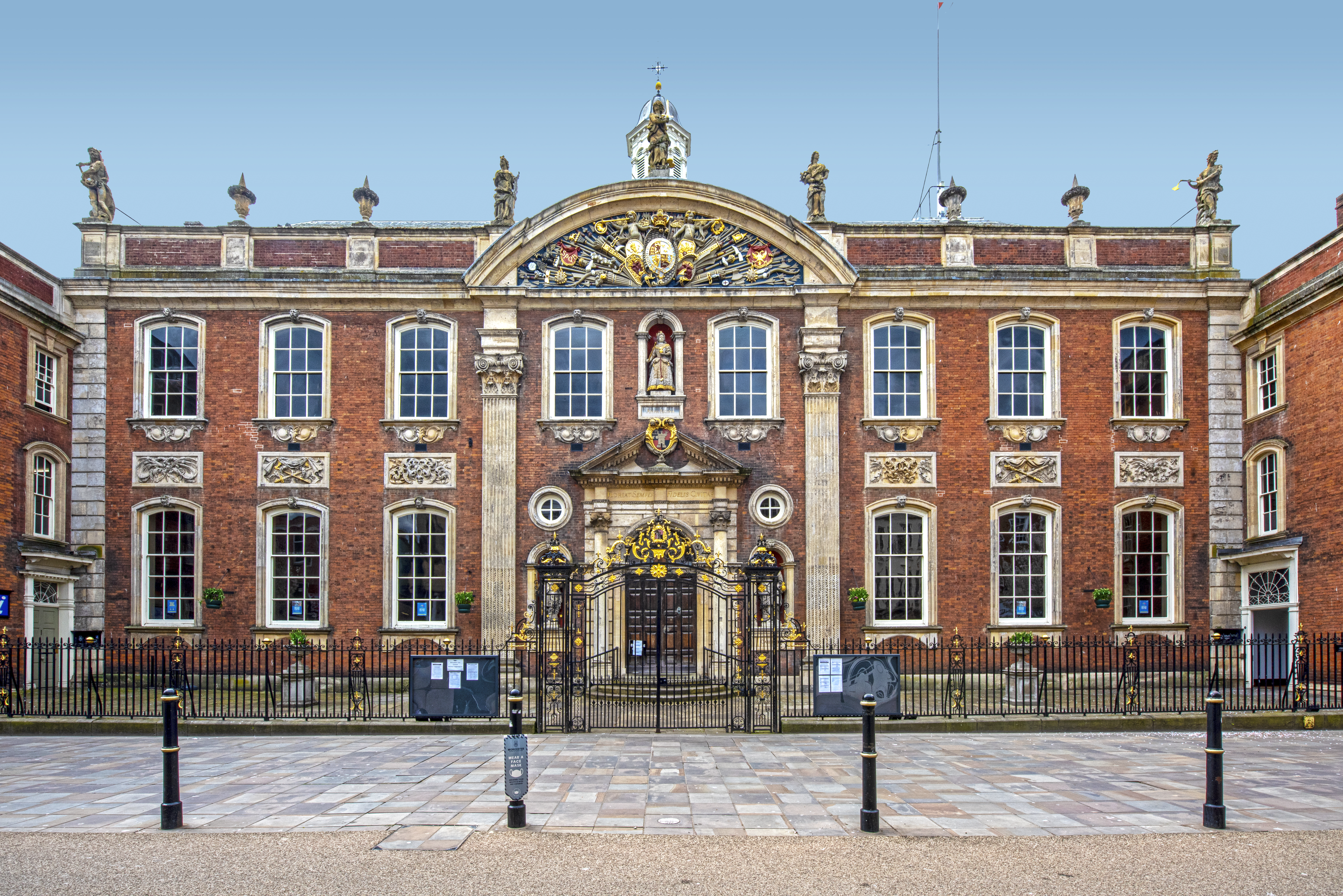
Worcester Guildhall. For one day in September 2014 a plaque on its gates named it the Belvedere Museum.
High Street, Worcester; Ashdown Farm, Badsey, near Evesham, Worcestershire. The Guildhall is a working civic building.
On the morning of 5 September 2014 the crew took over Worcester Guildhall, parked a vintage Wolseley police car outside and fixed a new plaque to the gates naming the eighteenth-century building the Belvedere Museum. Asked what part the Guildhall would play in the story, the BBC would not say. Third series, one morning, a plaque that said museum.
The other place is private, and it was not a building that turned into a set but a set from the start, put up by a military vehicle club: eleven Nissen huts, bomb shelters and outbuildings in a field at Badsey, hired out for film work. What the club sold was quiet. Little background noise, no flight path overhead, room for trucks and catering, huts the crew could sleep in, and military vehicles, weapons and accredited pyrotechnics to hand. The BBC used the camp and hired members' vehicles for Land Girls as well as for Father Brown.
Series 13: Warwick, Malvern and the sea
When filming on series 13 finished in August 2025, Williams listed that summer's buildings himself. The surveyor's son reads them the way he was taught, for what they were built to do and why they stand where they stand, and he carries the relevant volume of Pevsner on location. Six buildings and a beach, along with a run of Cotswold stone houses and churches he does not name. What any of them plays, he does not say.
A chateau, an old citadel, a farmhouse pub and a Baroque church
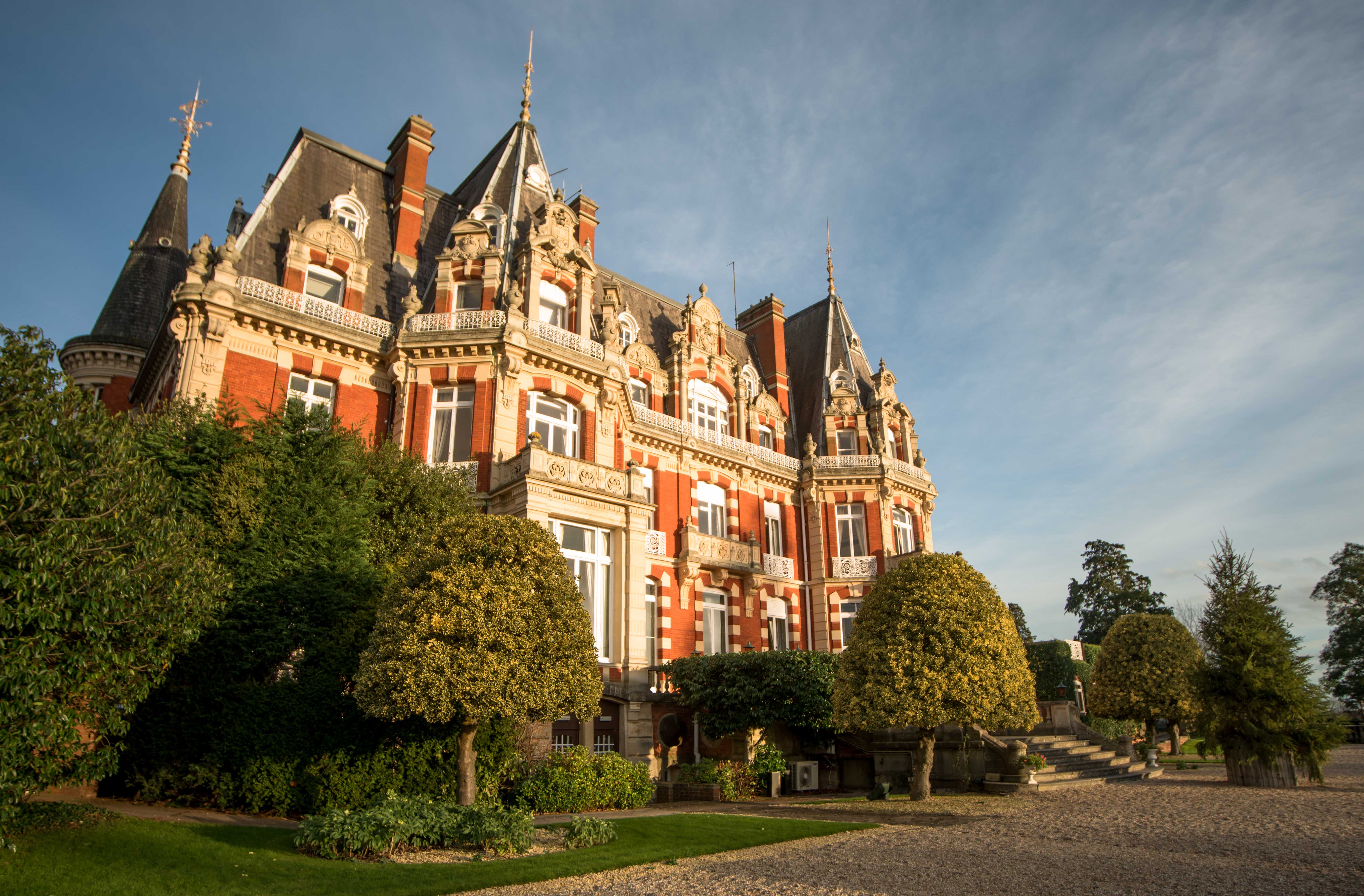
Chateau Impney near Droitwich, an 1870s house in French dress and later a hotel. What it plays in series 13 has not been published.
Droitwich Spa, Bretforton and Great Witley, Worcestershire; Chipping Norton, Oxfordshire. The pub, the church and the theatre are open; the chateau takes events.
Chateau Impney stands outside Droitwich: a house of the 1870s built in French dress and dropped into Worcestershire, a hotel for years afterwards, and latterly a venue for events. Williams calls it a French fantasy. The Theatre Chipping Norton is a small working theatre inside a Salvation Army citadel that stopped being one, and it is the citadel, not the theatre, that Williams points at.
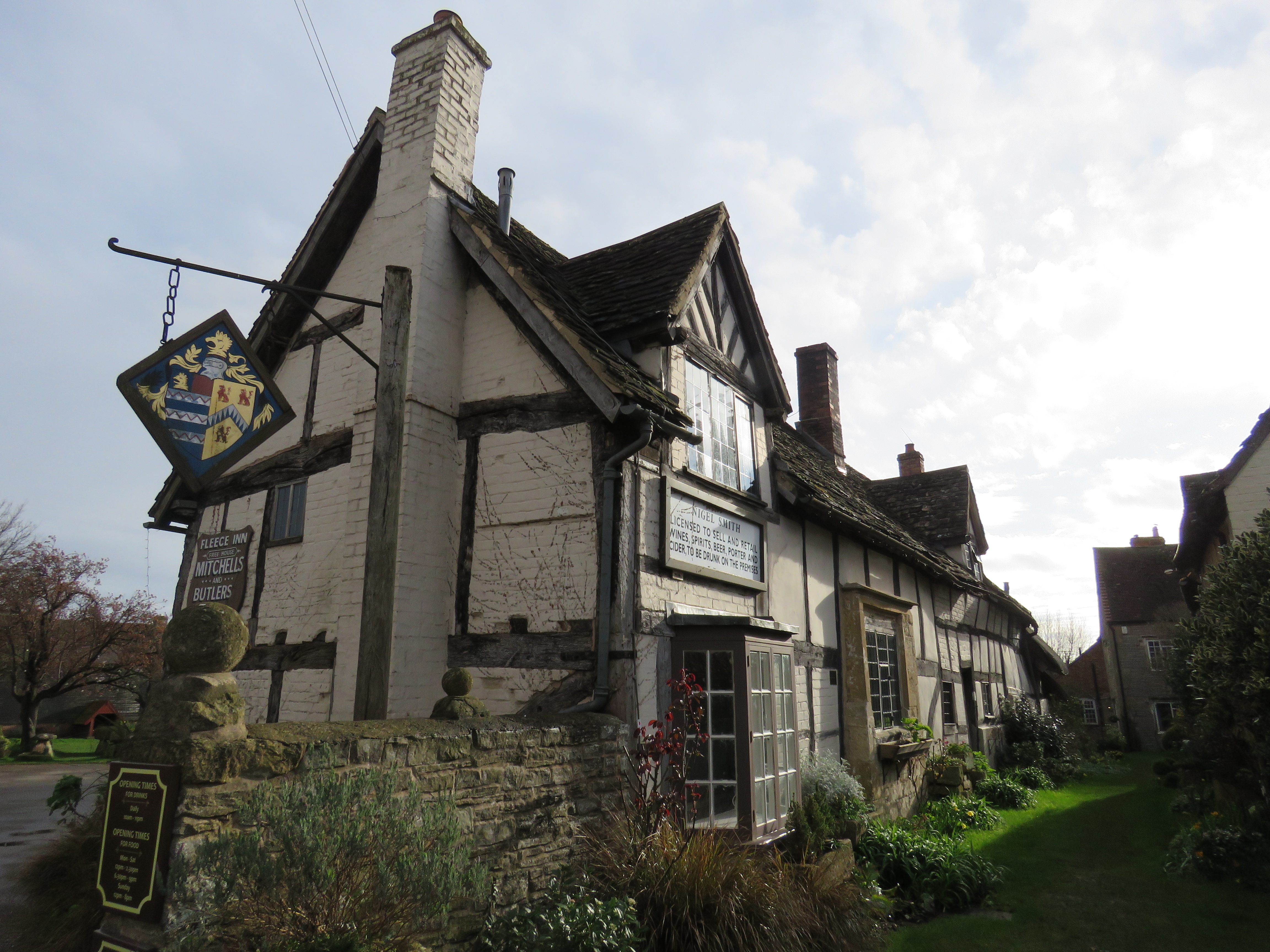
The Fleece Inn at Bretforton looks older than its licence. The National Trust owns it now: a half-timbered medieval farmhouse that sheltered a farmer and his animals and was not licensed as an inn until 1848, restored with its witches' circles and its pewter, known since for folk music, morris dancing and asparagus. Williams calls it a pub preserved whole.
St Michael and All Angels at Great Witley is the odd one out, a parish church with a Baroque interior standing beside the ruins of Witley Court. It is not a museum but a working church, and if a service is going on you are asked to stay outside unless you are joining it.
Crown courts with no courts, a convent with no nuns
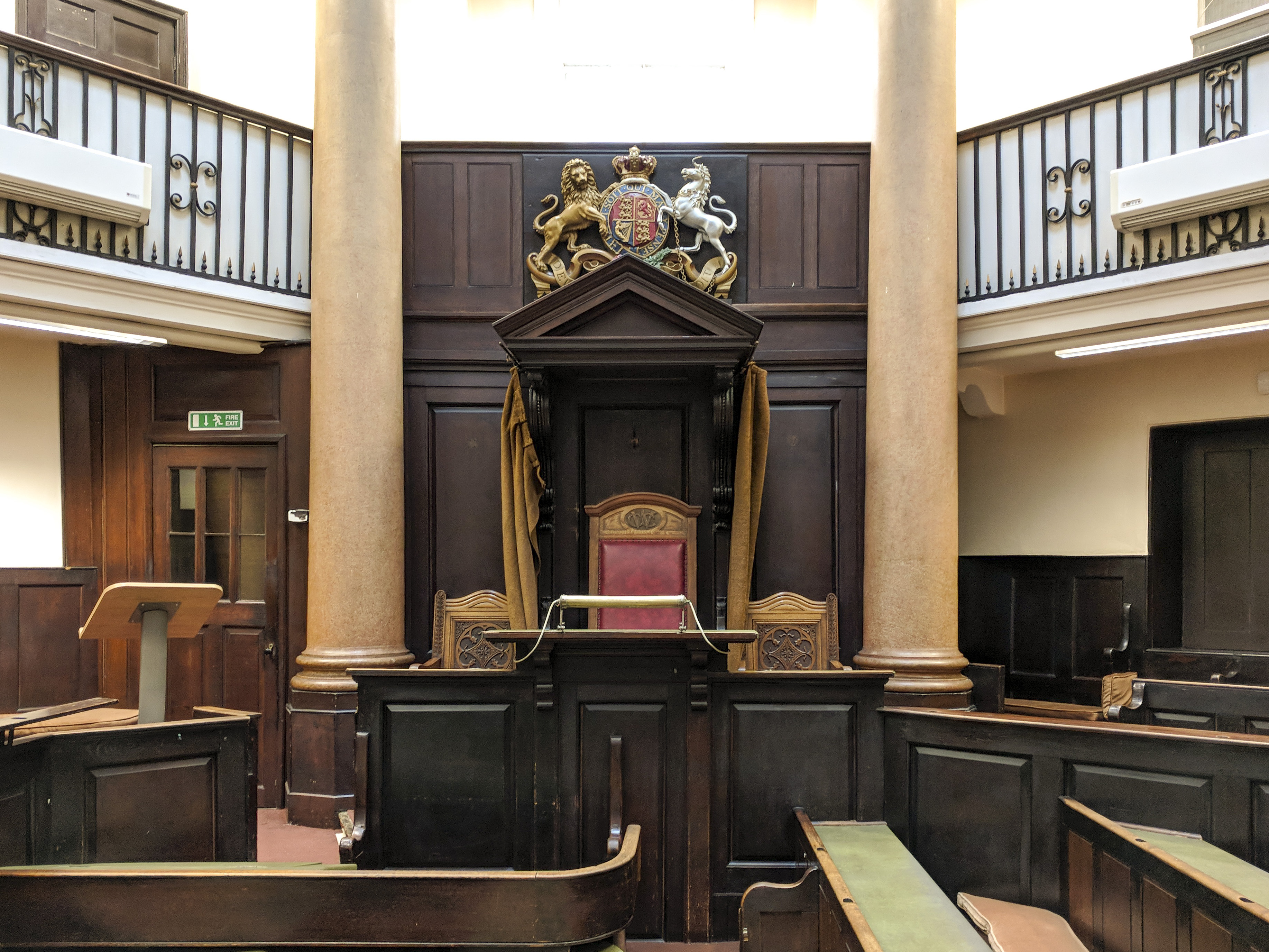
An old court room in Shire Hall, Warwick. The crown court left the town for Leamington Spa in 2010.
Northgate Street, Warwick; Ranelagh Road, Malvern Link, Worcestershire. Neither is open to visitors.
Williams named the eighteenth-century octagonal crown courts at Warwick. The Georgian courtrooms in Warwick are in Shire Hall on Northgate Street, built between 1753 and 1758 to a design by Sanderson Miller and put up by the brothers William and David Hiorn; the crown and county courts left the town in 2010 for a new justice centre at Leamington Spa, and the hall stayed with the county council. No account of the filming writes the name Shire Hall.
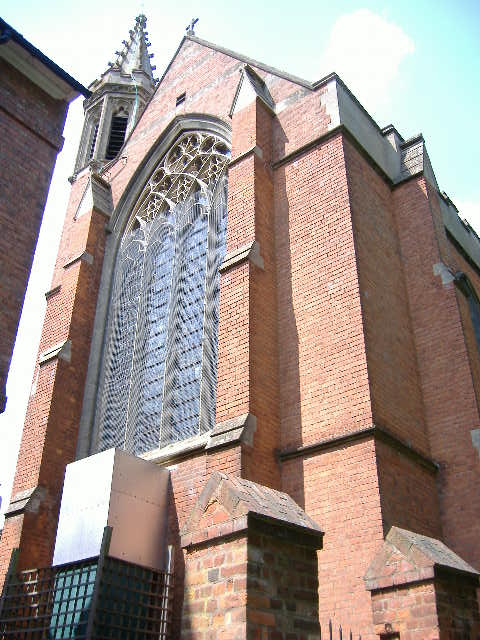
The convent at Malvern Link is on the national heritage-at-risk register. The former Convent of the Holy Name is empty; its chapel went up between 1891 and 1893 to Ninian Comper's design, with William Bucknell: brick, stone dressings, a plain-tile roof, Grade II* since 1973. Williams calls that chapel glorious. In 2010 its east window was boarded over and covered with mesh.
The Palace by the Sea, at Weston-super-Mare
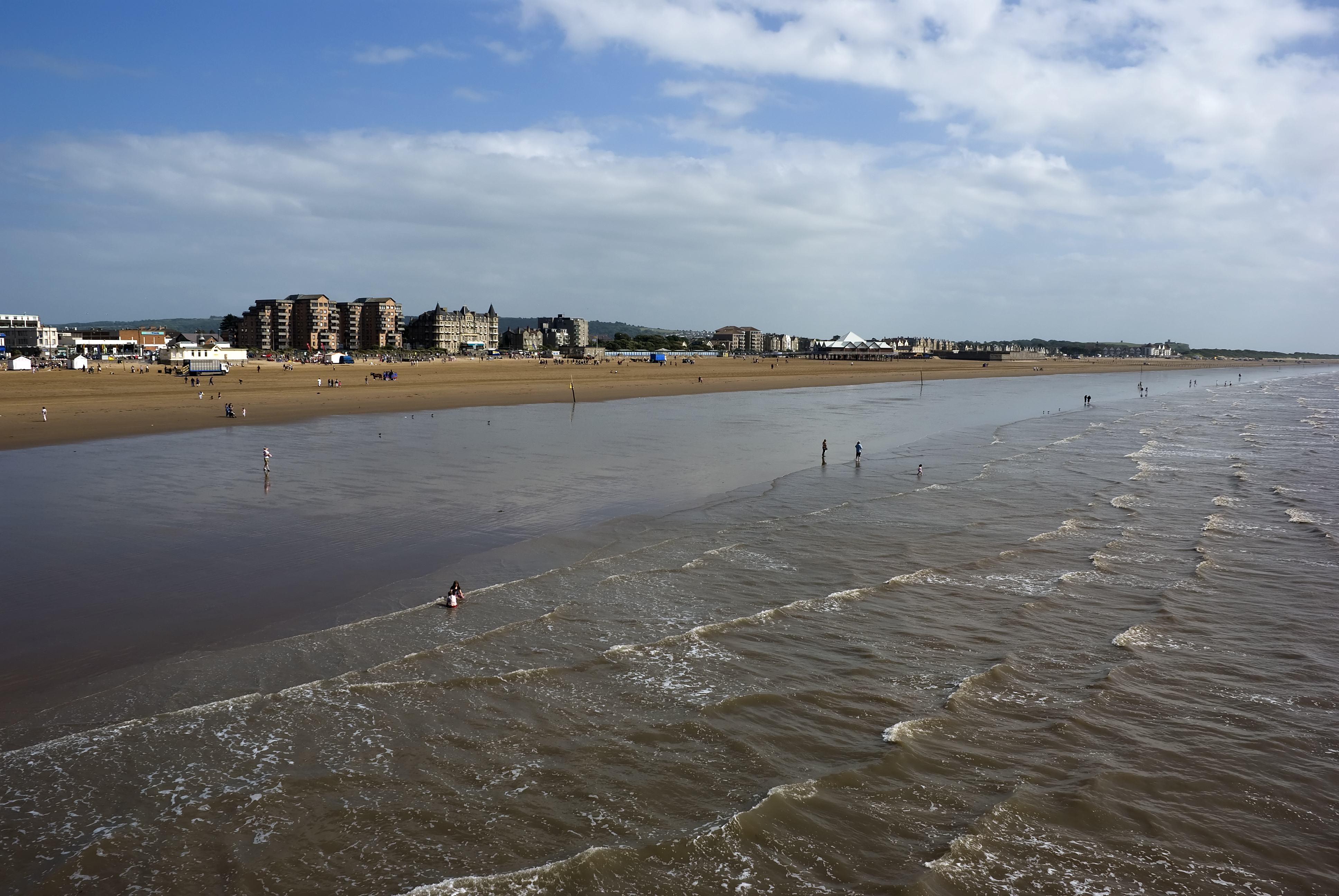
The beach and Marine Parade at Weston-super-Mare, where the cast worked on 20 and 22 May 2025. Which hotel plays the Palace, nobody has published.
Marine Parade and the beach, Weston-super-Mare, North Somerset. Public seafront.
On 20 May 2025 Marine Parade was working as 1953: deck chairs and umbrellas of the period, vintage cars, a horse and cart, costume the length of the parade, and Mark Williams out of the cassock in a short-sleeved black shirt, cargo trousers and good black shoes. A crowd stood round the actors while the scenes were shot quietly. On 22 May the work moved down onto the sand. This is 112 kilometres from Blockley, the furthest the programme has gone.
The episode can only be The Palace by the Sea, the third of the thirteenth series, first shown on 23 January 2026. Williams said one episode of that series went to the seaside, the seaside filming was at Weston-super-Mare, and the thirteenth series has one story by the sea.
Which hotel plays the Palace, nobody has published. One thing on the same seafront is not this programme. Another crew was filming on West Street in the same days, with traffic control in place and a fight scene people could watch so long as they did not photograph it. That one belonged to a different company.
Blockley, thirteen series on
The Square
Artificial snow on the path at Blockley for a Christmas special. The photographer dates the frame to 7 May 2016; a magazine puts the snow at the end of 2017.
The Square and High Street, Blockley, Gloucestershire. A lived-in village.
From the village, a shoot looks like this. The props department covered a modern street sign with a Victorian post box, and covered another one with a telephone box that came off the truck. On the hill, Father Brown pedalled downhill while Inspector Valentine chased him: turn your phone off, pedal faster, again. The man who brought the Riley towed it behind an old Land Rover to spare the car, left home at five in the morning and got back at ten at night.
The parish council saw a different picture. Its chair, Margaret Bryan, said in July 2012 that the filming had split the village, with people complaining that the High Street was partly blocked. When cones went out to keep the square clear for a day's work, villagers parked on it anyway, and the square was the crew's problem for the rest of the day.
Since then the churchyard has been under snow in May. Artificial drifts lay along the path on 7 May 2016; Cotswold Life puts that snow at the end of 2017. There are two Christmas specials to choose between, shown on 23 December 2016 and 18 December 2017.
Visitors come to the church from all over the world because of the programme. To raise money for the upkeep of the building the parish sells drawings by a parishioner, Barbara Dunn, printed on a linen tea towel, a jute bag, a bone china mug and a card, over the counter of the village shop. In the summer of 2026 it sold tickets for an evening of candlelit ghost stories read by Mark Williams and other cast members, in aid of the church's conservation fund.
The vicar of 2012 got his answer: they came back twelve more times. Part of the upkeep of an Anglican parish church is now paid for by a Roman Catholic priest who does not exist, and whose kitchen was four and a half kilometres away, in a hospital.