Where was Indiana Jones and the Last Crusade filmed?
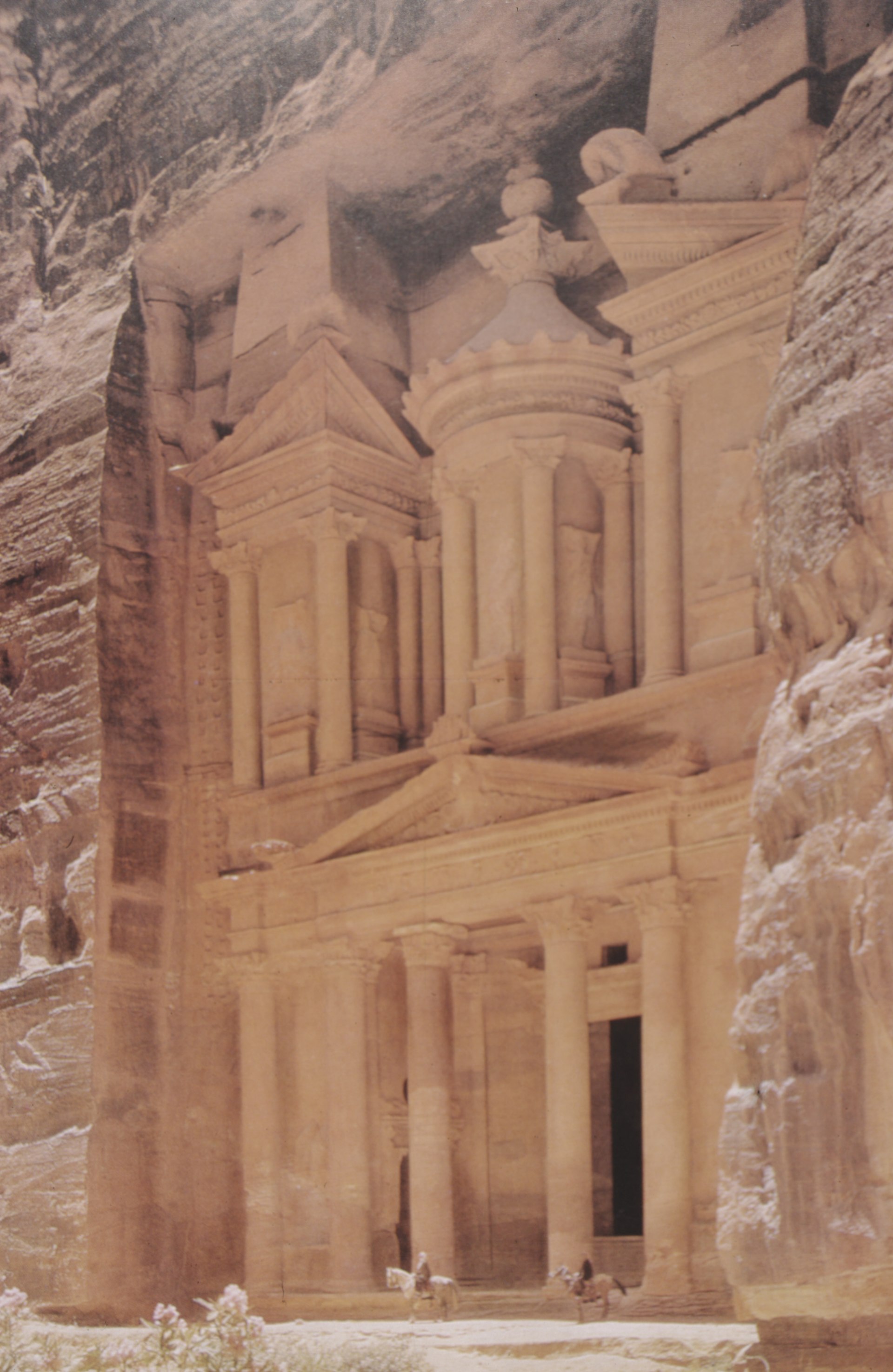
Behind the front of the Treasury at Petra there is one room. Banded sandstone, a doorway through to a second, smaller room, and nothing else. The trials, the knight and the cups that the film puts behind that facade were built at a studio in Borehamwood, north of London, and the rock face supplied the front.
22
places on the route
Almería carries the most; the rest runs from Utah to Petra — switch with the buttons above. Click a point to jump to its entry.
The film does the same thing again and again. The library in Venice is the front of a church that lost its parish in 1810 and now holds an exhibition of Leonardo da Vinci's machines; the catacombs beneath it were a set. Brunwald Castle, which the story places in Austria, stands in the German Eifel, and on screen it is flipped left to right and widened with a matte painting that copies its right-hand facade onto the other side of the tower. The inside of Berlin Tempelhof is a flower hall in Westminster. Alexandretta is a working station in Granada province. Almost everything you can walk into is in Spain, Italy, Germany and Jordan; almost everything you remember from indoors was carpentry in Hertfordshire.
1912: Utah and a narrow-gauge railway
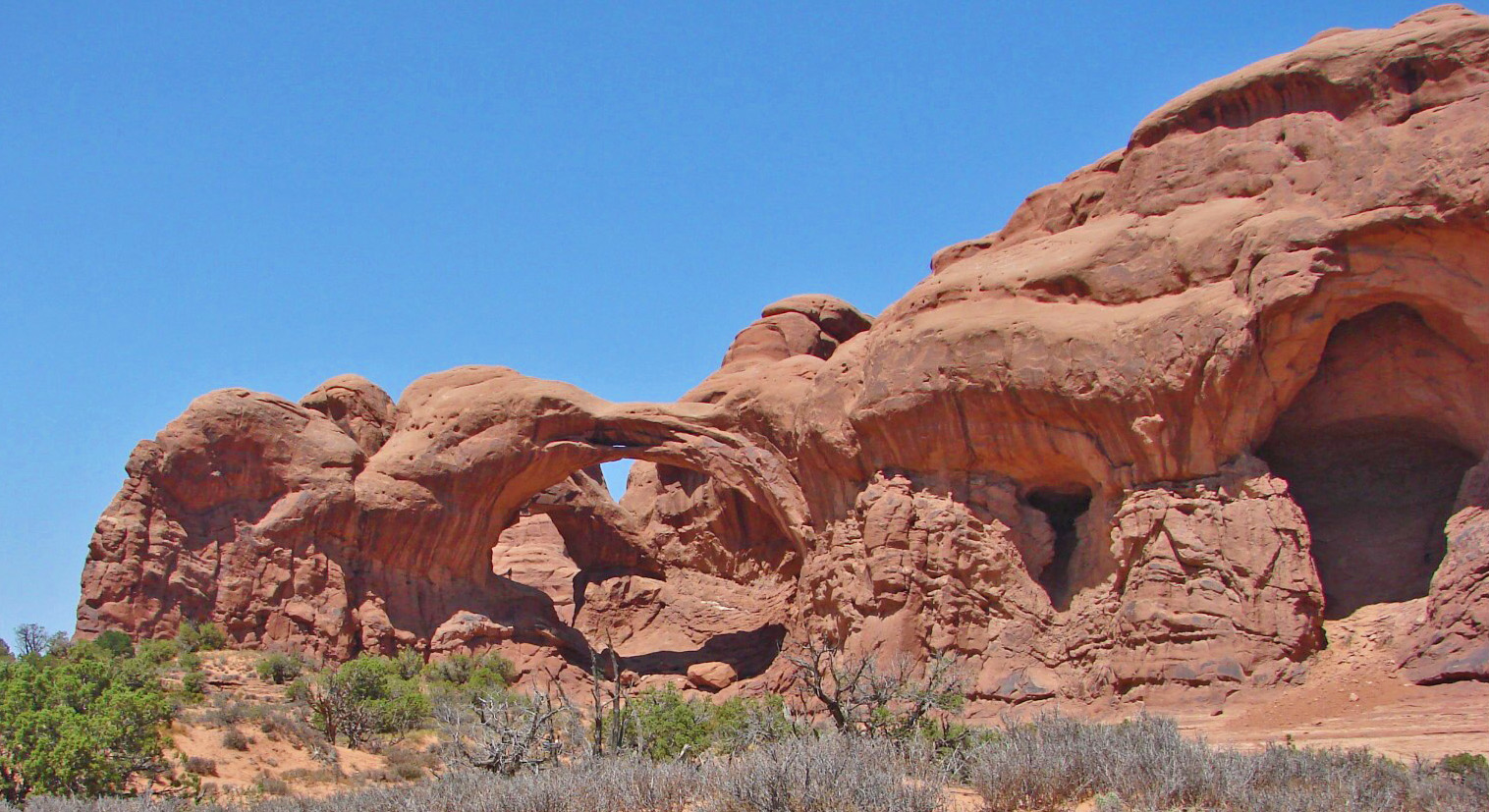
Double Arch, Arches National Park, Utah
Double Arch on the left and, on the right, the alcove the film treats as the mouth of the cave. The photographer notes that most visitors come for the arch and never recognise the recess beside it.
The scouts ride up, dismount, and go into a cave under the arch. The arch is real and the cave is not. There is no cave in that rock at all.
Double Arch was cut from above, by water standing in a pothole, rather than from the side like most of the arches in the park. The larger of its two openings is 148 feet across and 104 feet high, the tallest opening in Arches. It is half a mile there and back from the Double Arch car park, and nothing is fenced off: people walk under both openings and through them.
Lobato siding, Cumbres and Toltec Scenic Railroad, New Mexico
The circus train runs on a narrow-gauge steam line between Antonito in Colorado and Chama in New Mexico. The crew worked out of Alamosa. At Lobato, milepost 339.99, the first siding on the line, there stood a wooden water tank that had been built for a film in the 1980s and was used again by this one. It went over in 2006, old and in a high wind.
What is still at Lobato is the remains of a stock pen and the trestle, put up in 1883, the second-highest on the line and rated so light that a double-headed train has to uncouple, cross one engine at a time and join up again on the far side. A fire nearly destroyed it and it was rebuilt in 2011. Ten films have used this line between 1969 and 2021, from The Good Guys and the Bad Guys to The Harder They Fall, with Butch and Sundance: The Early Days, The Missouri Breaks and A Million Ways to Die in the West in between. Fifty-two years of crews on the same narrow gauge.
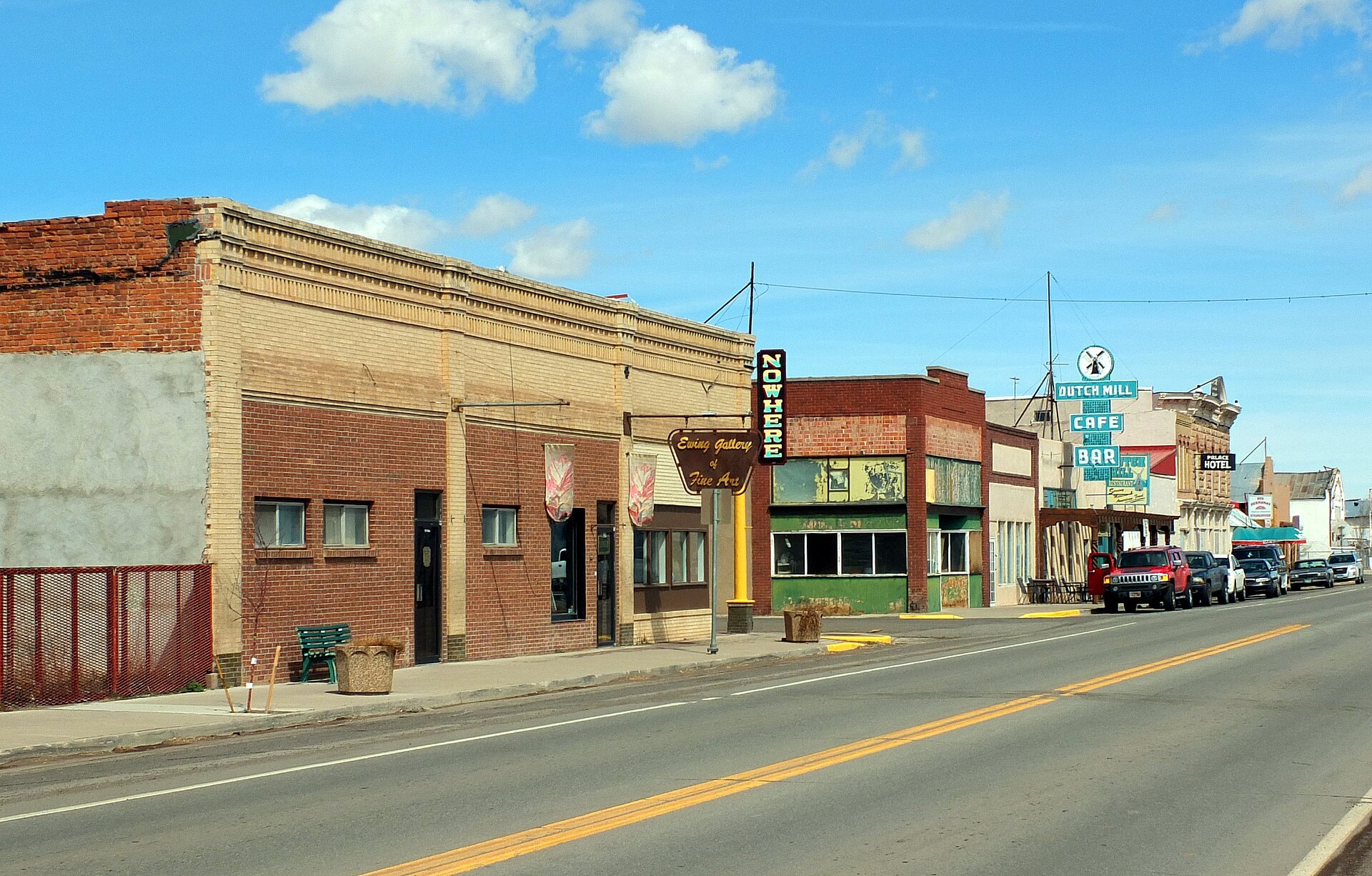
The Jones house, 502 Front Street, Antonito, Colorado
Main street in Antonito. This is the town, not the house — the Jones family home is on Front Street and is now a bed and breakfast.
Young Indy's home is at the Colorado end of the same railway, half a mile from Antonito station. It is a bed and breakfast now, run under the film's name, with a room of memorabilia in it. It is somebody's business and somebody's house rather than a place to look round.
College, and the flight out
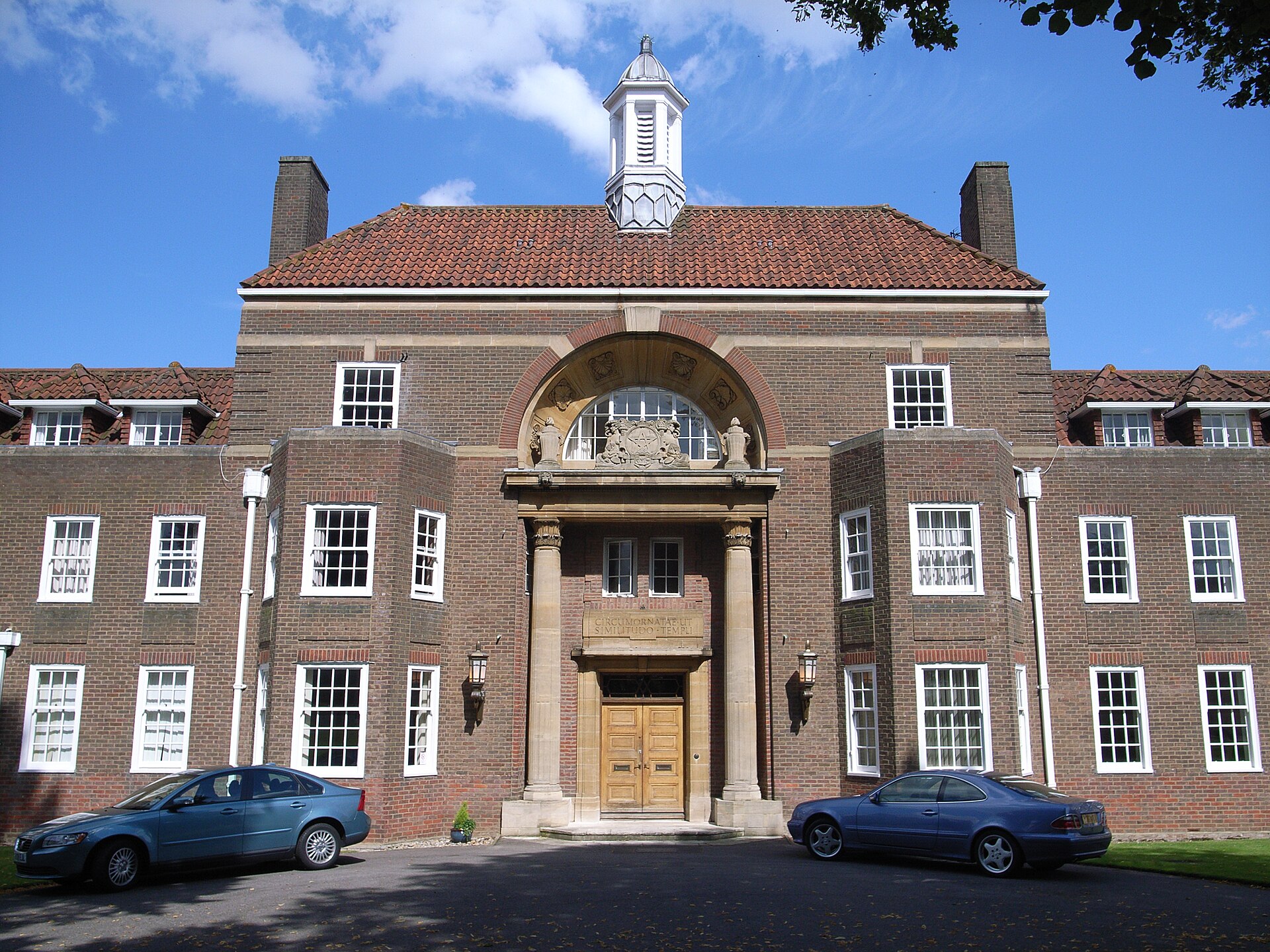
The Royal Masonic School for Girls, Rickmansworth
The front of the Royal Masonic School for Girls at Rickmansworth, which played Indy's college here and in Raiders of the Lost Ark eight years earlier.
Indy's college is a girls' boarding school in Hertfordshire, and it had already played the same college eight years earlier in Raiders of the Lost Ark. The English part of the shoot finished here on 5 August 1988. The school is still a school and is not open to visitors.
One day, 29 June 1988, for Indy leaving for Venice. A single runway crosses flat Essex farmland, with pre-war hangars along its west side and workshops inside one of them now.
Venice, and the part of Venice that is in Essex
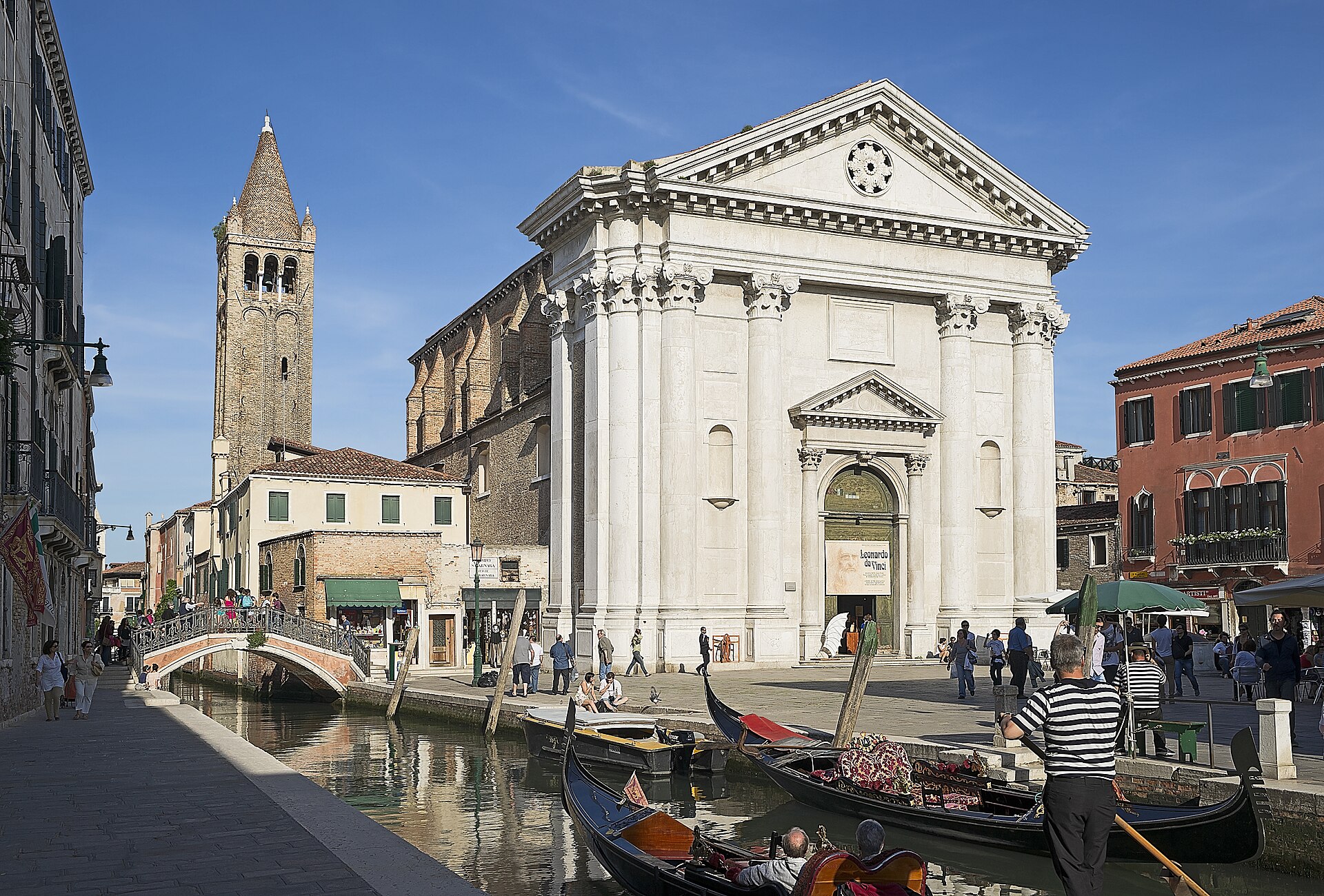
Chiesa di San Barnaba, Dorsoduro 2771
The front of San Barnaba, which plays the library. The banner hanging in the doorway advertises the Leonardo da Vinci machine exhibition that occupies the church today. The detached brick campanile behind is 11th-century.
The library. Only the outside of it: the church front is the library's front, and the manhole Indy climbs out of is in the middle of the square before it. The reading room and the catacombs under it were built in England.
The parish was suppressed under Napoleon in 1810 and the church became a dependency of the Carmini nearby. Late in the twentieth century it was turned into a permanent exhibition of models built from Leonardo da Vinci's drawings, which is what is inside it today, the whole show on the ground floor behind two small steps at the door. The nearest vaporetto stop is Ca' Rezzonico on line 1, and it is a five-minute walk from Accademia or San Tomà. The brick campanile standing apart from the church is eleventh-century, with a spire shaped like a pine cone added in the 1300s.
Indy and Brody meeting Elsa, Kazim telling Indy where his father is, and pieces of the boat chase, all on 8 August 1988. Robert Watts had the canal to himself from seven in the morning until one, tourists sealed off for as long as that could be made to last, and Douglas Slocombe put the camera where no satellite dish would be in shot. The canal is 3.8 km long, and nobody has published which part of it they used.
The rest of the boat chase is 1,100 km from Venice, in a commercial port on the Thames. Hacker Craft speedboats were run here on 4 August 1988, four days before the Venice day.
The shot of a boat passing between two ships was done by cabling the ships off for safety and then moving them together while the boats went through the gap. One boat scraped the sides. An empty speedboat loaded with dummies was launched from a floating platform between the hulls, with fire and smoke laid on partly to hide the platform, and the stunt had to be run twice because the first one landed short of the camera. Tilbury is a working port and closed to visitors. It has also stood in for John Wayne's smuggling investigation in Brannigan and appeared in the 2004 Alfie.
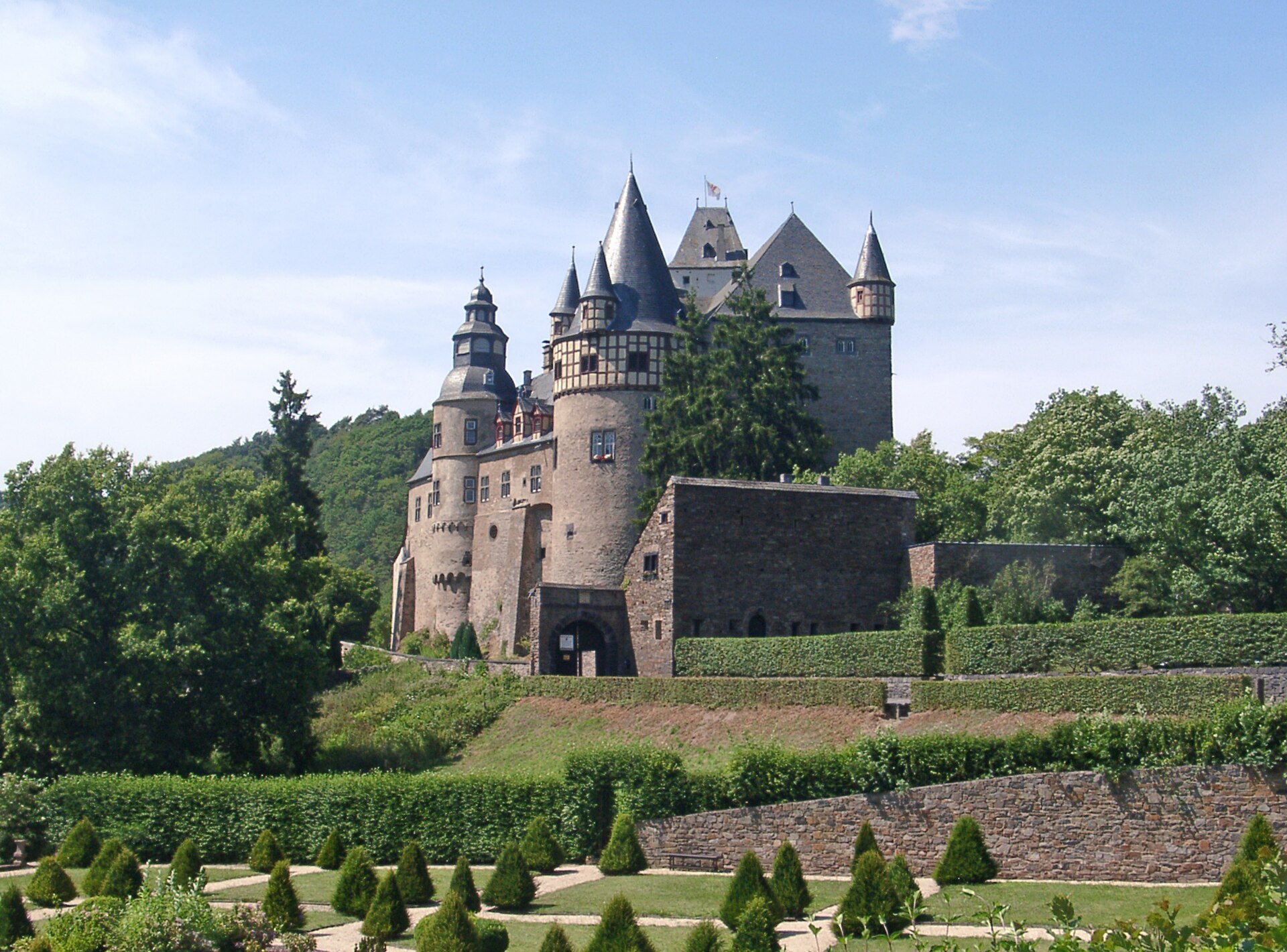
Austria is in the Eifel
Schloss Bürresheim, near Mayen
Schloss Bürresheim above its formal garden. This is the view the film flips left to right and widens with a matte painting.
A short exterior, and the building on screen is not quite the building on the ground: the shot is flipped, and a matte painting adds a copy of the right-hand facade to the left of the main tower, so the castle reads wider than it is.
Bürresheim is one of three castles in the Eifel that were never destroyed, along with Eltz and Lissingen, which is why it has pointed roofs, oriels and painted half-timbering rather than a ruin's outline. It belongs to the state heritage directorate of Rhineland-Palatinate, and the fairy-tale Rumpelstilzchen was shot here too. The rooms can only be seen on a guided tour. There is a car park at the entrance and the Förstersteig walking path goes past. The house cannot be made step-free, there is nowhere to eat on site, and dogs are not allowed in. Photography outdoors is allowed for private use; inside, it has to be applied for in writing.
The motorcycle chase was not part of the shoot at all. Spielberg and his editor Michael Kahn watched a rough cut late in 1988, decided the picture was short of action, and the sequence was shot afterwards during post-production on Mount Tamalpais and around Fairfax, near Skywalker Ranch. Marin County is across the bay from San Francisco, 9,000 km from the castle the chase is escaping. Which road on the mountain, nobody says.
Berlin
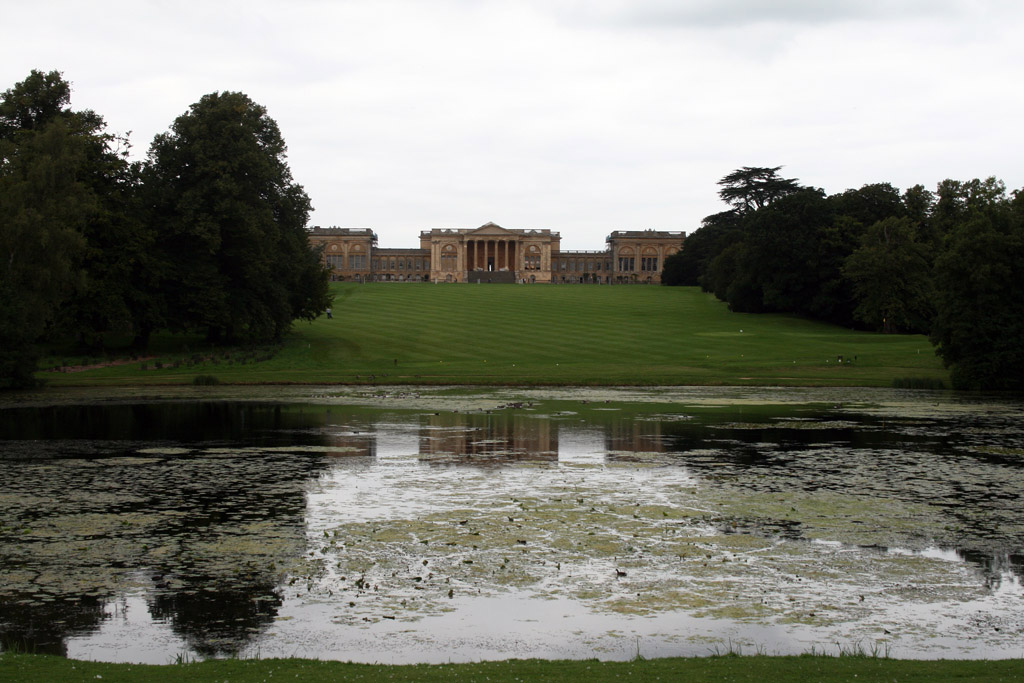
Stowe School, Buckinghamshire
Stowe House across the Octagon Lake. The Nazi rally was shot here over two nights in July 1988.
Two night shoots, 25 and 26 July 1988, for the book-burning rally. The house is eighteenth-century, and the Octagon Lake lies in front of it. It is an independent school, and the landscape gardens around it are National Trust.
The interior of Berlin Tempelhof, where the diary is signed, filmed on 16 June 1988. The hall was built for the Royal Horticultural Society and used for flower shows. In December 2011 the society leased it to Westminster School for 999 years for eighteen million pounds, keeping the right to hold four flower shows a year in it, and the school converted the building into a sports centre. The inside of Tempelhof is a school sports hall that clears itself four times a year for the flowers.
Hatay is Almería
Hatay is a desert inland, a stretch of coast inside a natural park and the city of Almería, with forty-four kilometres between the beach and the riverbeds.
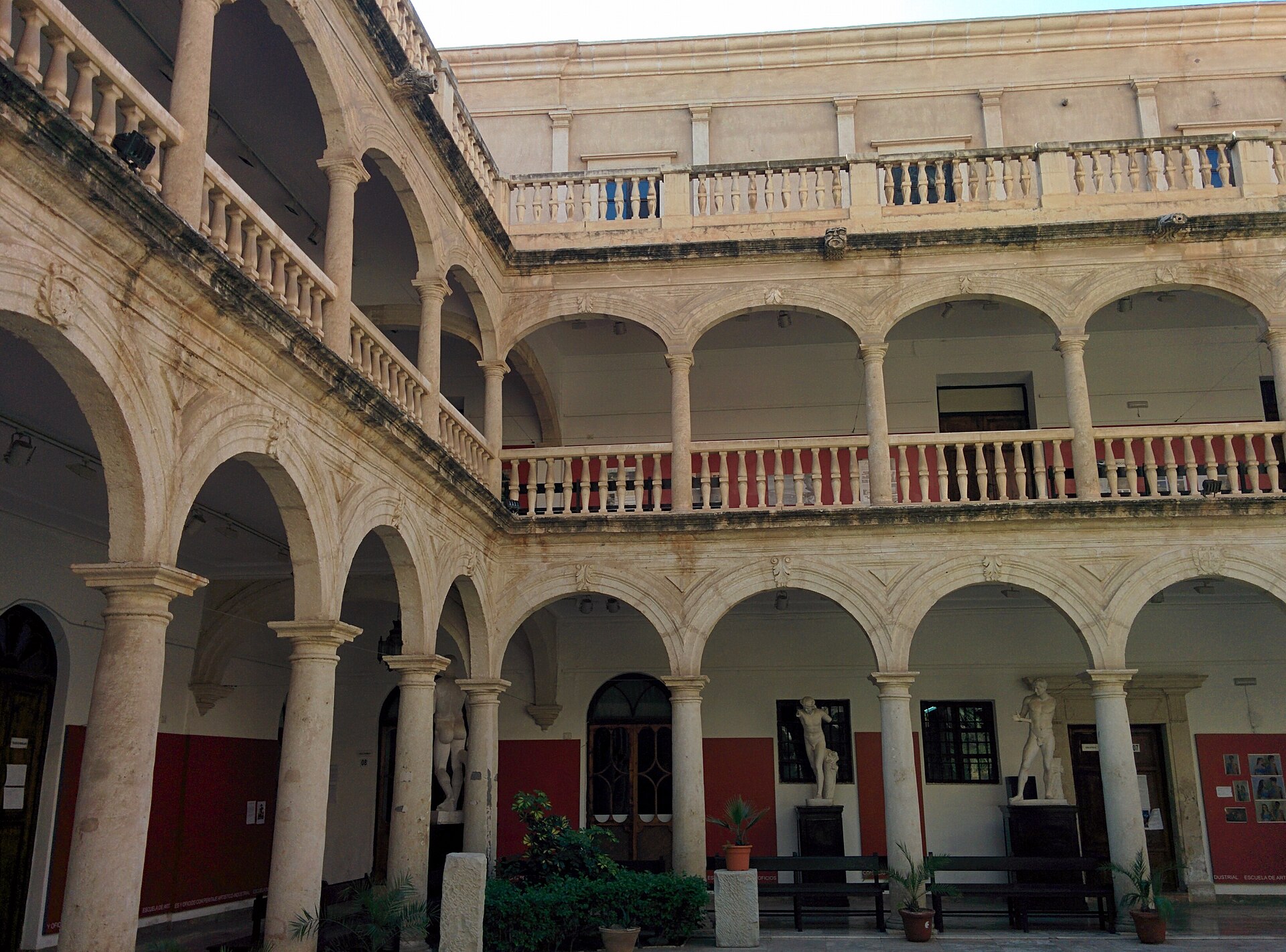
Escuela de Arte, Almería
The courtyard of the Escuela de Arte in Almería, which played the Sultan of Hatay's palace. Plaster casts stand under the lower arcade.
The courtyard of the Sultan of Hatay's palace, where the Rolls-Royce is handed over, is the courtyard of an art and design school in the middle of Almería: two storeys of round arches, balustraded galleries, plaster casts standing under the lower arcade. The crew came here after about ten days in the desert. One other film used the courtyard, El oro de nadie, in 1968. It is a working school.
Alexandretta station, where Brody is taken, and the last day of Spanish filming, 2 June 1988. Rather than add one afterwards, the production built a mosque next to the station so that it would stand in the background.
Alexandretta is a real town: İskenderun, on the Turkish coast in Hatay province. The crew never went there. Guadix is in Granada province rather than Almería, on the line from Linares-Baeza down to the coast, with eroded clay badlands standing behind the platforms.
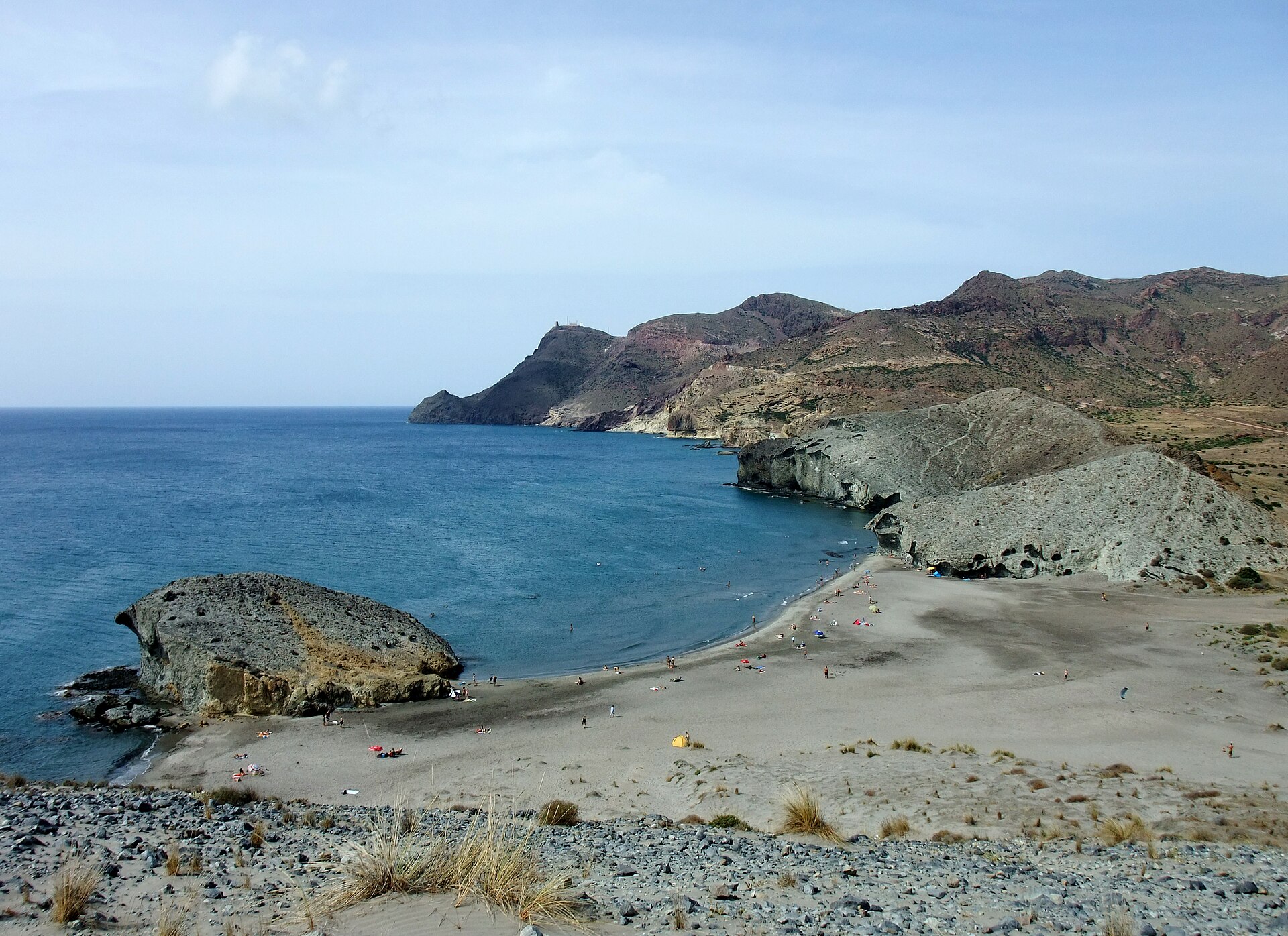
Playa de Mónsul, Níjar
Playa de Mónsul from above, with the rounded rock at the water's edge that the Almería film office singles out as the recognisable thing in the shot.
The beach where Henry Jones Sr. raises his umbrella at a flock of gulls and brings down a fighter. The rounded rock standing in the shallows at the end of the beach is the thing to recognise, and it has been recognised often: it stands in the shot in The Adventures of Baron Munchausen, and it is nearly lost in the retouching of The NeverEnding Story, where Atreyu calls the dragon. The same sand carries Antony and Cleopatra, Talk to Her, Sinbad and the Eye of the Tiger, The Wind and the Lion, Shalako and The Valley of Gwangi. It is inside the Cabo de Gata-Níjar natural park.
Minas de Rodalquilar, Níjar
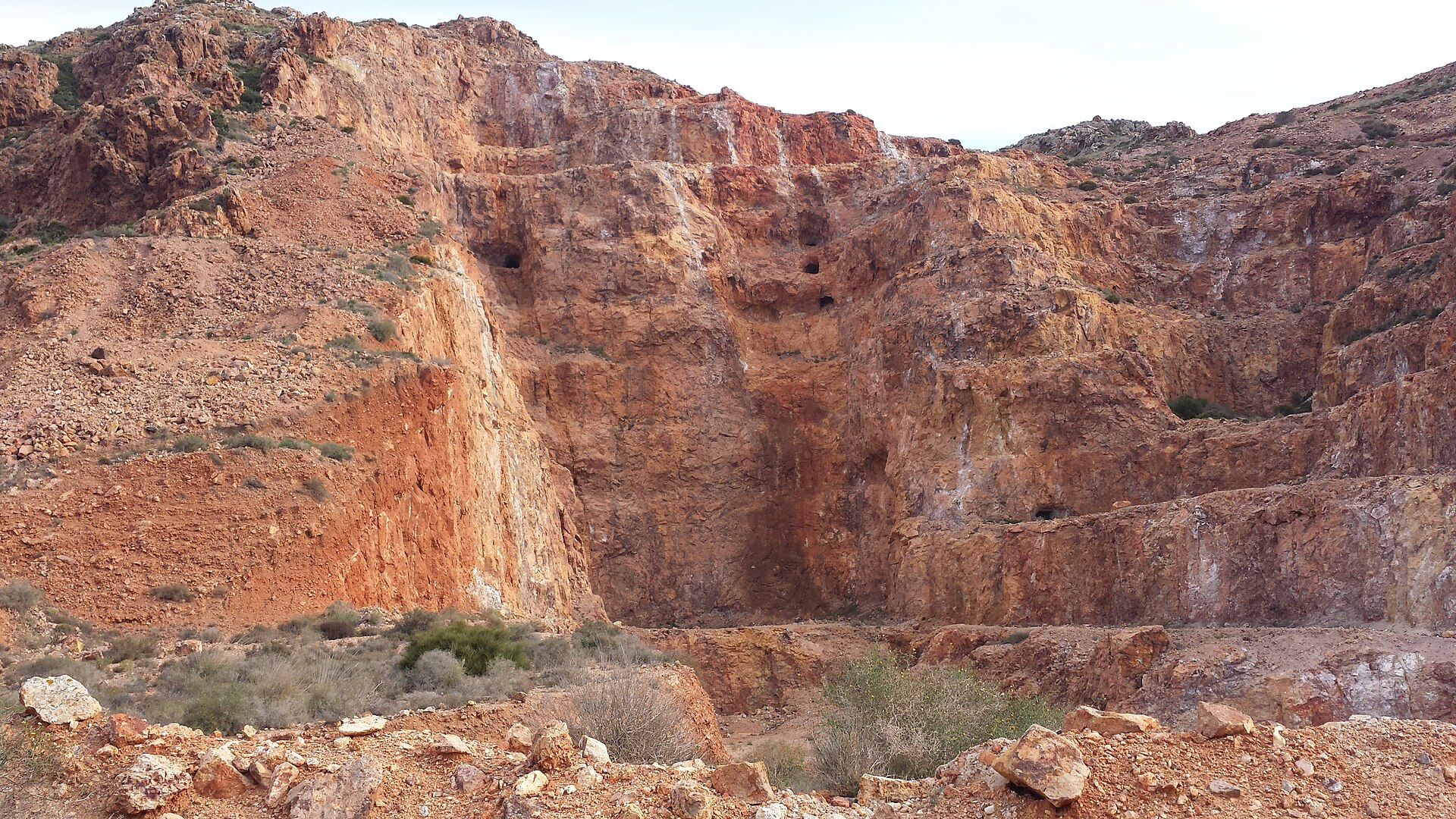
The Cerro del Cinto cut at Rodalquilar, with mine adits opening in the rock face. The film office puts parts of the car chase, and the aeroplane's tunnel, on the roads through this ground.
Parts of the car chase run on the roads through the old gold-mining ground at Cerro del Cinto and Minas de Abellán, including the moment the fighter tears its wings off trying to fly through a tunnel in a mountain.
The mine is abandoned. Adits open straight out of a stepped orange cut in the hillside, the leaching tanks of the processing works stand empty in the dry hills above the village, and roofless miners' cottages line the road into it. Duck, You Sucker!, The Condor, The Wind and the Lion and The Man from Marrakesh were all shot on the same ground.
Principal photography began on 16 May 1988 in the Tabernas desert. Spielberg had planned the chase around the tank as a short thing, two days of work, then storyboarded it into the centre of the film.
It was shot in the dry riverbeds here. A rambla is a dry watercourse kilometres long, and the chase is somewhere in several of them rather than parked in one: Búho, Indalecio, Trujillo, Otero, Viciana, Las Salinillas and a stretch at Alfaro. Leone got there first. The Good, the Bad and the Ugly was shot in Rambla de Otero, and all three Dollars westerns in Rambla Indalecio.
Los Escullos, Níjar
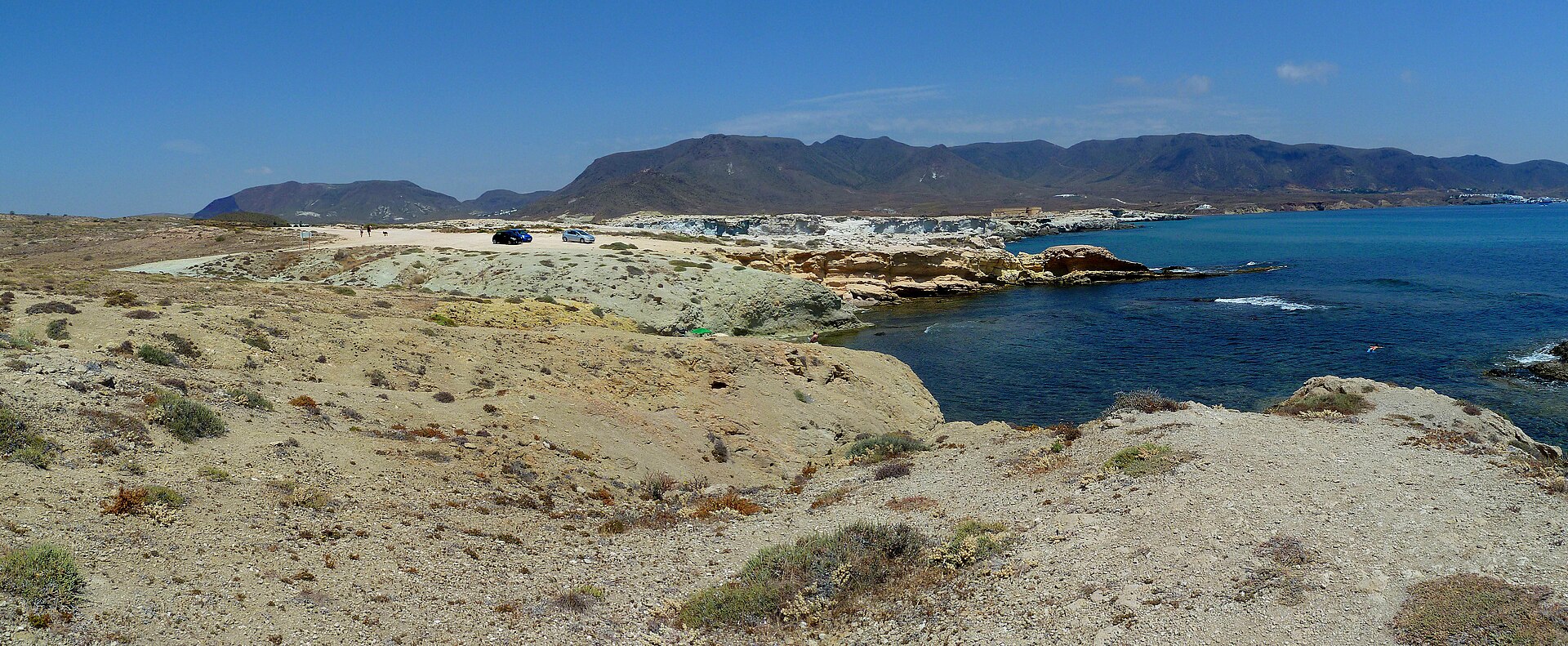
The coast at Los Escullos. The Almería film office lists this among the film's locations without saying what was shot here.
The production filmed at Los Escullos. What was shot here, nobody has said.
The place itself is a low coast of pale fossil dune stone with the Cabrera hills behind. Connery goes into the sea off the jetty here in Never Say Never Again, the same actor on the same coast in a different film. The Wind and the Lion and Lucky Luke and the Daltons were shot here too.
A range of hills above Turre: red-brown ridges, thin scrub and loose stone, the A-1102 winding through them and dirt tracks dropping towards the sea. Part of the picture was shot in them.
The castle interiors went up first, 5 to 10 June 1988, and the escape from them on a motorcycle was shot here too. Then the library, the Portuguese freighter and the catacombs, one after another. The fight in front of a ship's propeller in Venice was done in a water tank here, with a long lens making the two men look closer to the blades than they were. The steamship brawl in the 1938 prologue took three days on a deck built on gimbals, with dump tanks of water coming down on it.
The Grail temple was filmed on 20, 21 and 22 July. The set had taken six weeks to build and sat on hydraulics so that it could come apart in the earthquake; between takes it took twenty minutes to put the hydraulics back to their starting positions and fill the cracks with plaster.
Elstree belongs to Hertsmere Borough Council and is a working studio, not somewhere to go. Its stages have carried Blackmail, the first British talkie, and Star Wars, and The Shining, and the largest of them is named after George Lucas.
Petra
Al-Khazneh, the Treasury
The Treasury seen from inside the Siq, photographed in 1989 — the year the film came out — with the gorge walls closing the frame.
The temple of the Grail, filmed the day after Venice, with the crew as guests of King Hussein and Queen Noor. The main cast finished their work that week. Everything the film shows on the other side of that front was built on a stage.
Sinbad and the Eye of the Tiger was at both ends of this journey in 1977: the Treasury, and Playa de los Genoveses along the same Almería coast.
The Treasury stands 39.5 metres high at the mouth of the Siq, the gorge just over a kilometre long that splits the rock in front of it; a triumphal arch spanned the entrance to that gorge until it fell in 1895. It is a mausoleum. Getting to it means four kilometres on foot from the visitor centre, or a seat in one of the club cars that run the same route. Everyone is expected out before sunset, and nobody sleeps inside the park. The stone is losing its surface to hands: white marks of stearic acid have come up on the walls and columns where people lean and touch, and the face has receded by 40 mm in under ten years.
Outside the gate at Wadi Musa there are kiosks with a fedora painted on the boards, an Indiana Jones Snack Shop, an Indiana Jones Gifts Shop, the 1989 poster line about the man with the hat bringing his dad. The treasure in the monument's name is older than any of that: a bedouin story puts a pharaoh's hoard in the urn carved at the top of the facade, and the urn is pocked with bullet holes from people who shot at it to bring the hoard down.