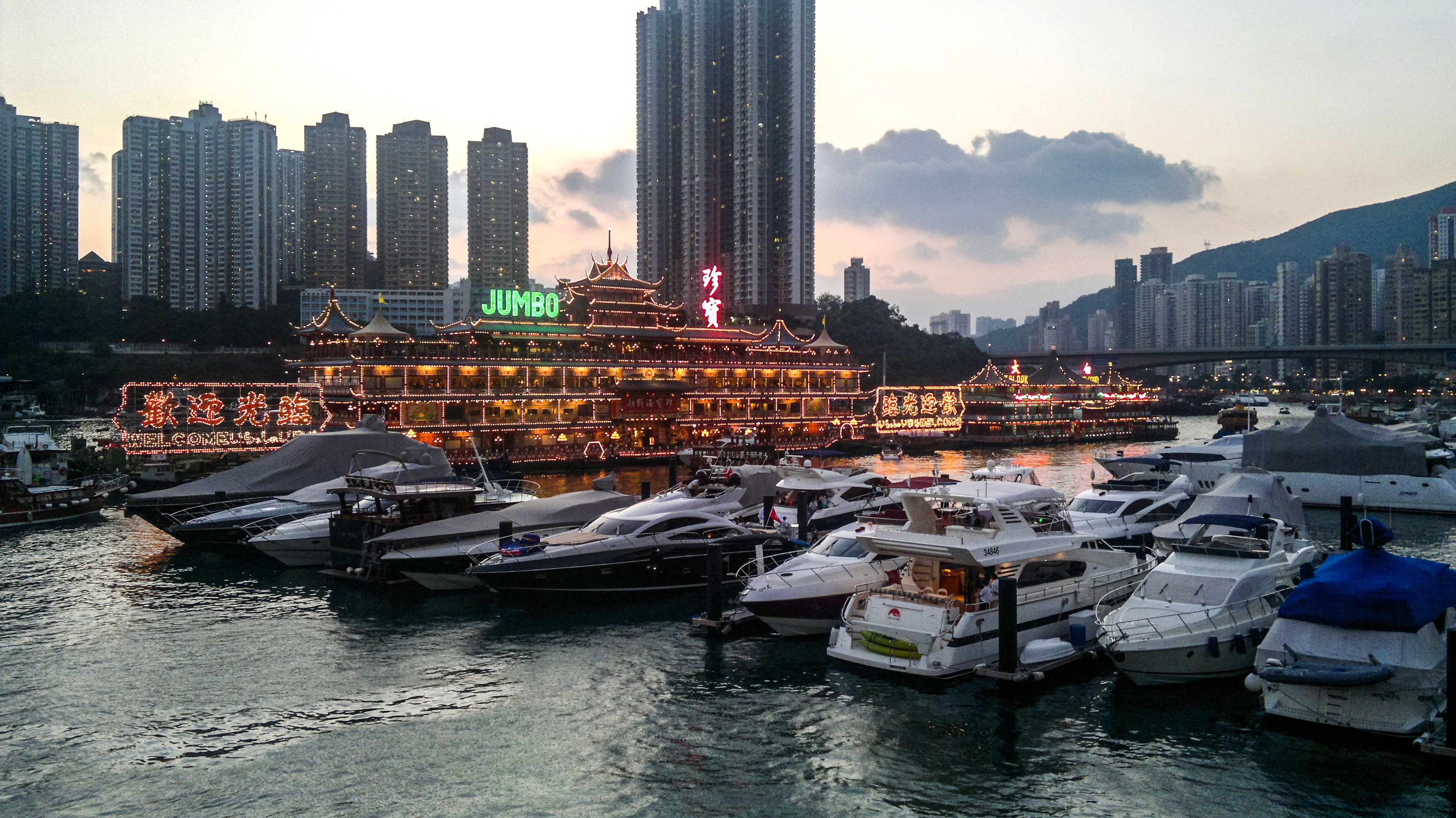
The Macau casino in this film is a boat in Hong Kong. The producers wanted one of the real casinos and could not have it, because filming near a gaming floor in Macau is prohibited by law, so the casino was built inside the Jumbo Floating Restaurant in Aberdeen Harbour and the equipment went out to it on sampans, carried by locals hired because they were used to moving loads that way.
25
places on the route
Chicago and San Francisco carry most of it — switch with the buttons above. Click a point to jump to its entry.
Almost every interior in Contagion is a real room somewhere. Soderbergh shot the film without a studio: he wanted the premise to hold up as real, and he has said the satisfaction of the work is making one place look like another and having nobody notice. So the Minneapolis where the Emhoffs live is the North Shore of Chicago, the hospital where Beth dies is an emptied hospital in Elgin, Illinois, the corridors of the CDC are an office park in Downers Grove, and Chicago's Dan Ryan Expressway is a lakefront road in Waukegan that the town closed for a day. The hardest thing the production designer, Howard Cummings, had to make was the Biosafety Level 4 laboratory: rooms pressurised so that no air escapes, steel doors on inflatable gaskets, a disinfectant shower in the air lock, and a grid of pipes over the whole set. San Francisco is where the film stops pretending. Krumwiede's city plays itself, rubbish and all. Some of this you can walk into, and some of it is gone.
The casino had to be a boat
Jumbo Floating Restaurant, Shum Wan Pier Drive, Aberdeen Harbour, Hong Kong Island
The Jumbo Floating Restaurant lit up at dusk in Aberdeen Harbour, Hong Kong, photographed in October 2010, weeks after the film unit built a Macau casino inside it.
The casino floor, and the handshake the whole film comes from: the chef who cooked the pig takes Beth Emhoff's hand without washing his own. Jumbo had been in Aberdeen Harbour since 1971, when it caught fire on 30 October while it was still being fitted out, and it stayed in that water for another half-century.
Films came to it: The Man with the Golden Gun (1974), Jackie Chan's The Protector (1985), The God of Cookery (1996), and the anime Giant Robo: The Day the Earth Stood Still (1992), which drew the boat rather than filmed it. The other floating restaurant in the same harbour, the Tai Pak, is a different boat, and Enter the Dragon (1973) belongs to that one.
Jumbo closed in March 2020, was towed out of Hong Kong in June 2022 and capsized in the South China Sea days later. What is there now is open water and the Shum Wan pier it used to be moored off.
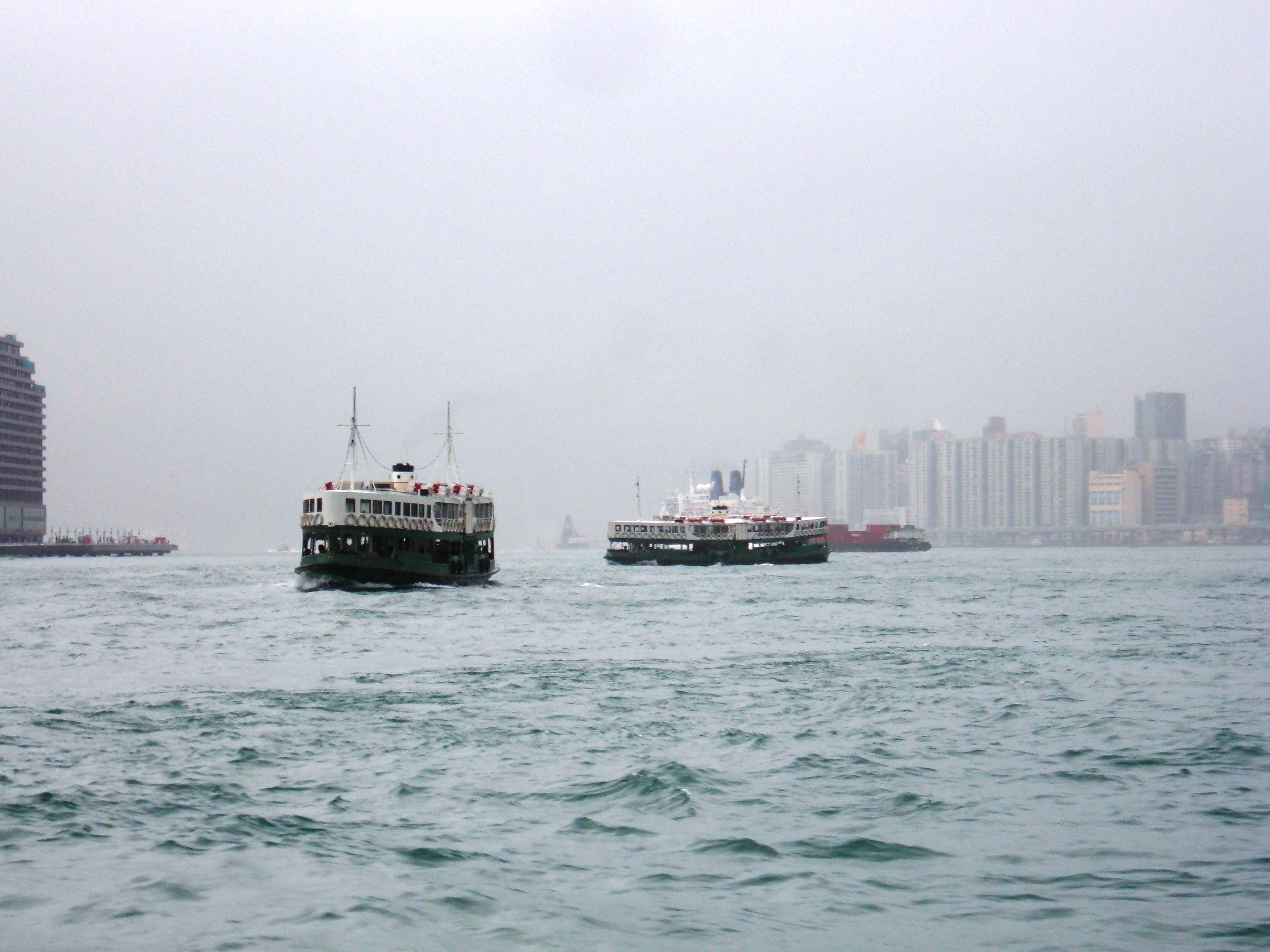
Star Ferry, Tsim Sha Tsui to Central crossing
Two Star Ferries passing in Victoria Harbour on the crossing between Kowloon and Hong Kong Island.
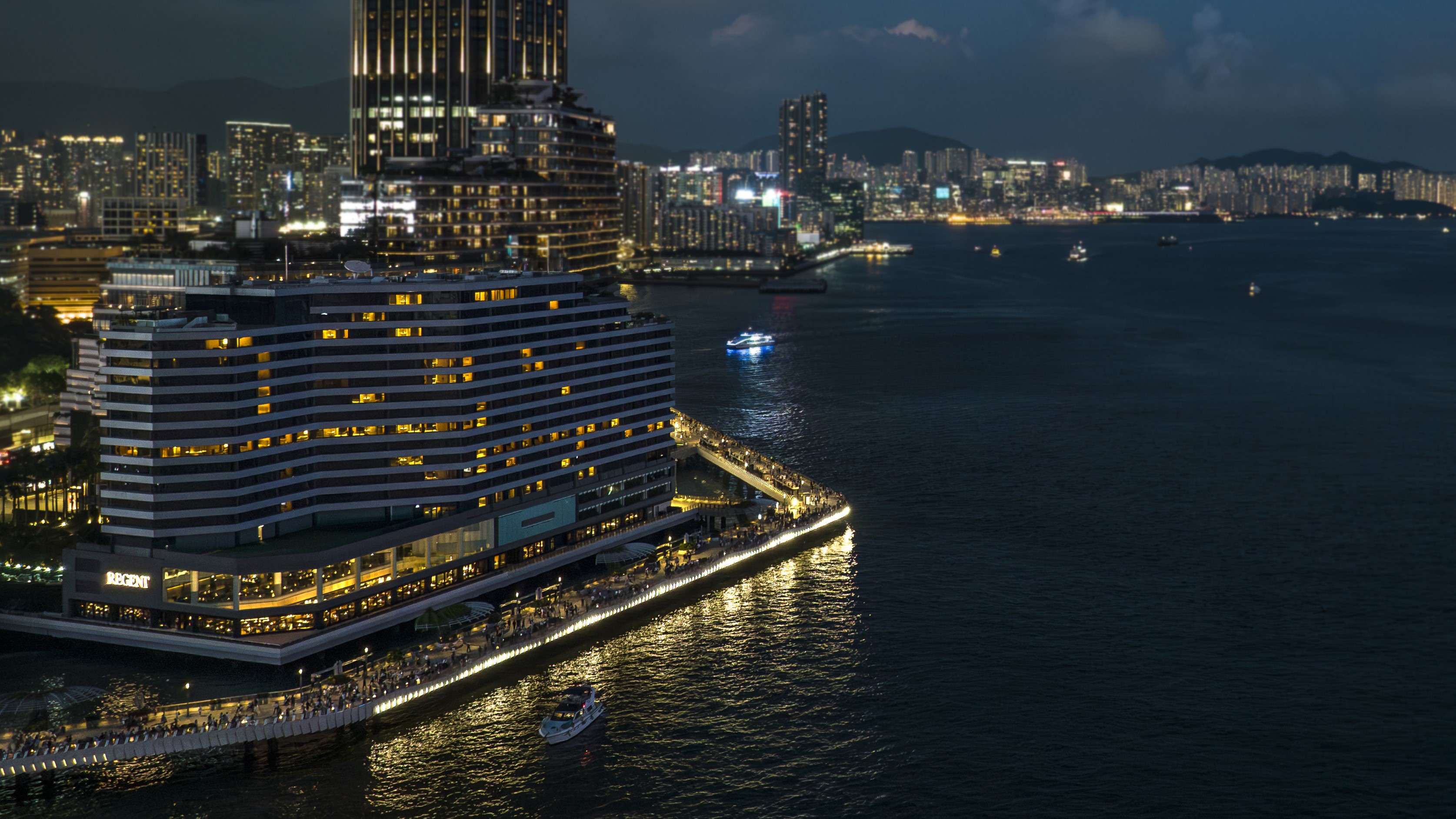
A low block on the Kowloon waterfront facing Hong Kong Island, two minutes' walk from the ferry pier the crew also used. The name has moved twice around this shoot: the Regent until 2001, the InterContinental when the crew arrived in 2010, the Regent again since 2022.
Pierce Brosnan worked here twice, in the miniseries Noble House (1988) and the TV film Nightwatch (1995). Dynasty (1985) came too, and later Borgen (2012) and Better Late Than Never (2016). Lost in Hong Kong (2015) shot in the Presidential Suite.
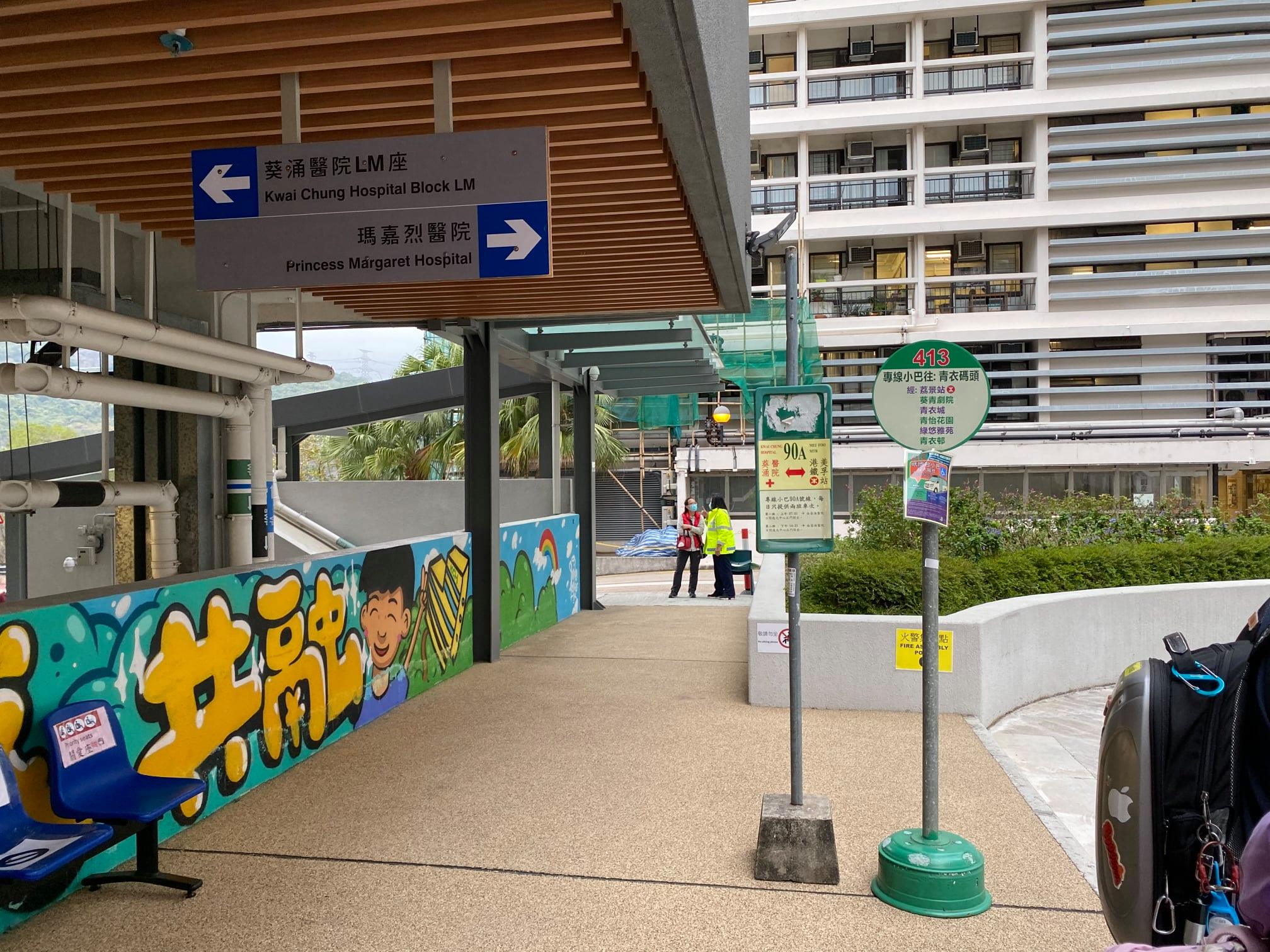
Princess Margaret Hospital, Lai King, Kwai Chung, New Territories
The covered approach to Princess Margaret Hospital in Kwai Chung, Hong Kong: a sign points right to the hospital and left to Kwai Chung Hospital next door. The hospital blocks themselves are behind the camera.
The hospital in the film's Hong Kong scenes, and a working hospital the rest of the time. The way in is a covered walkway with a sign hanging over it, pointing right for Princess Margaret and left for Kwai Chung Hospital next door.
Hong Kong International Airport, Chek Lap Kok, Lantau Island
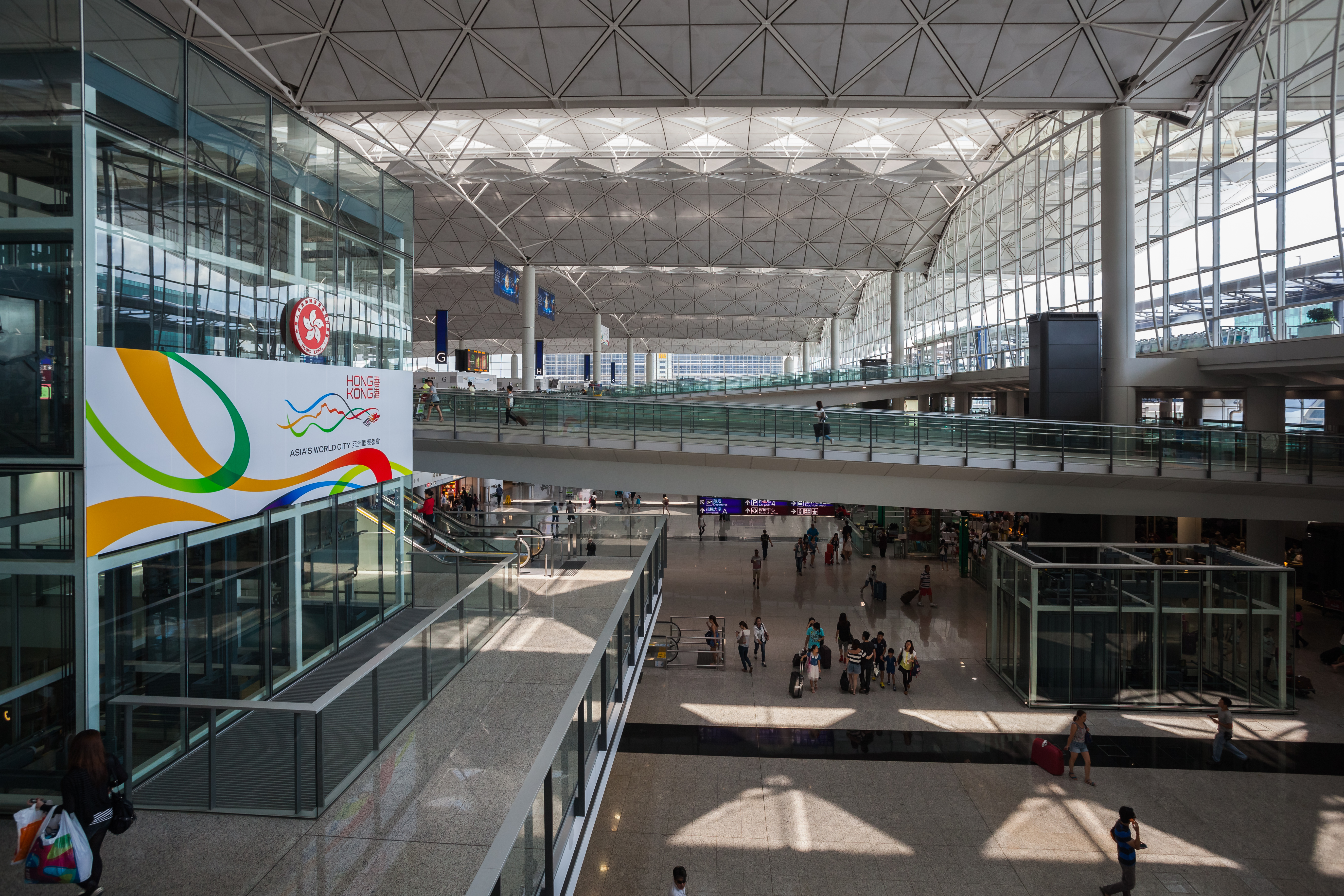
The departures hall of Hong Kong International Airport at Chek Lap Kok.
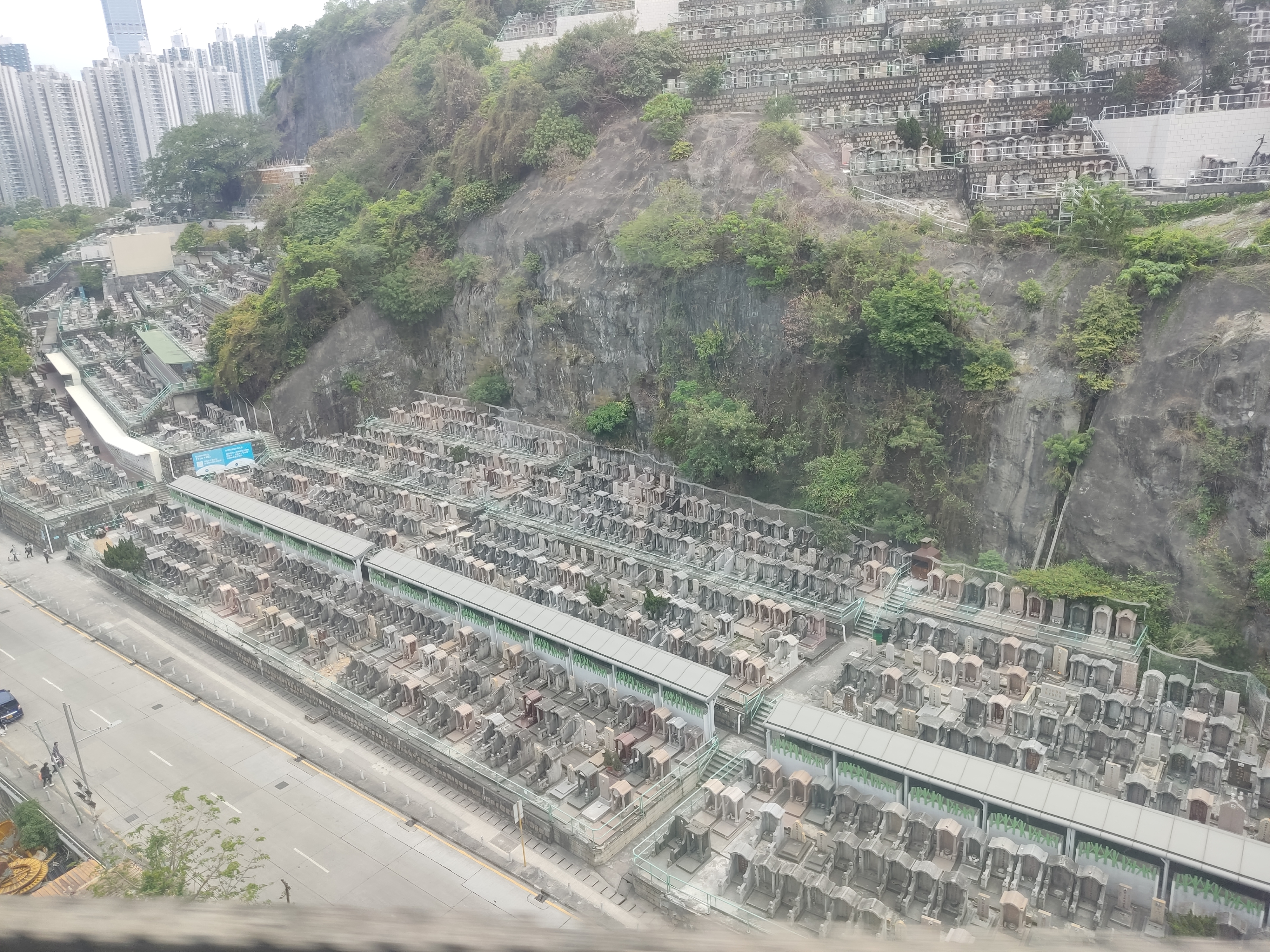
This cemetery is the only place anyone has named for the hostage handover that ends the kidnapping story, and the naming is a caption under a photograph.
Graves stand in terraces up a hillside above the Rambler Channel, facing the container port. The Board of Management of the Chinese Permanent Cemeteries runs it, and it takes visitors, with the roads closed to cars at Ching Ming and Chung Yeung.
Minneapolis is on the North Shore
John G. Shedd Aquarium, 1200 South DuSable Lake Shore Drive, Chicago
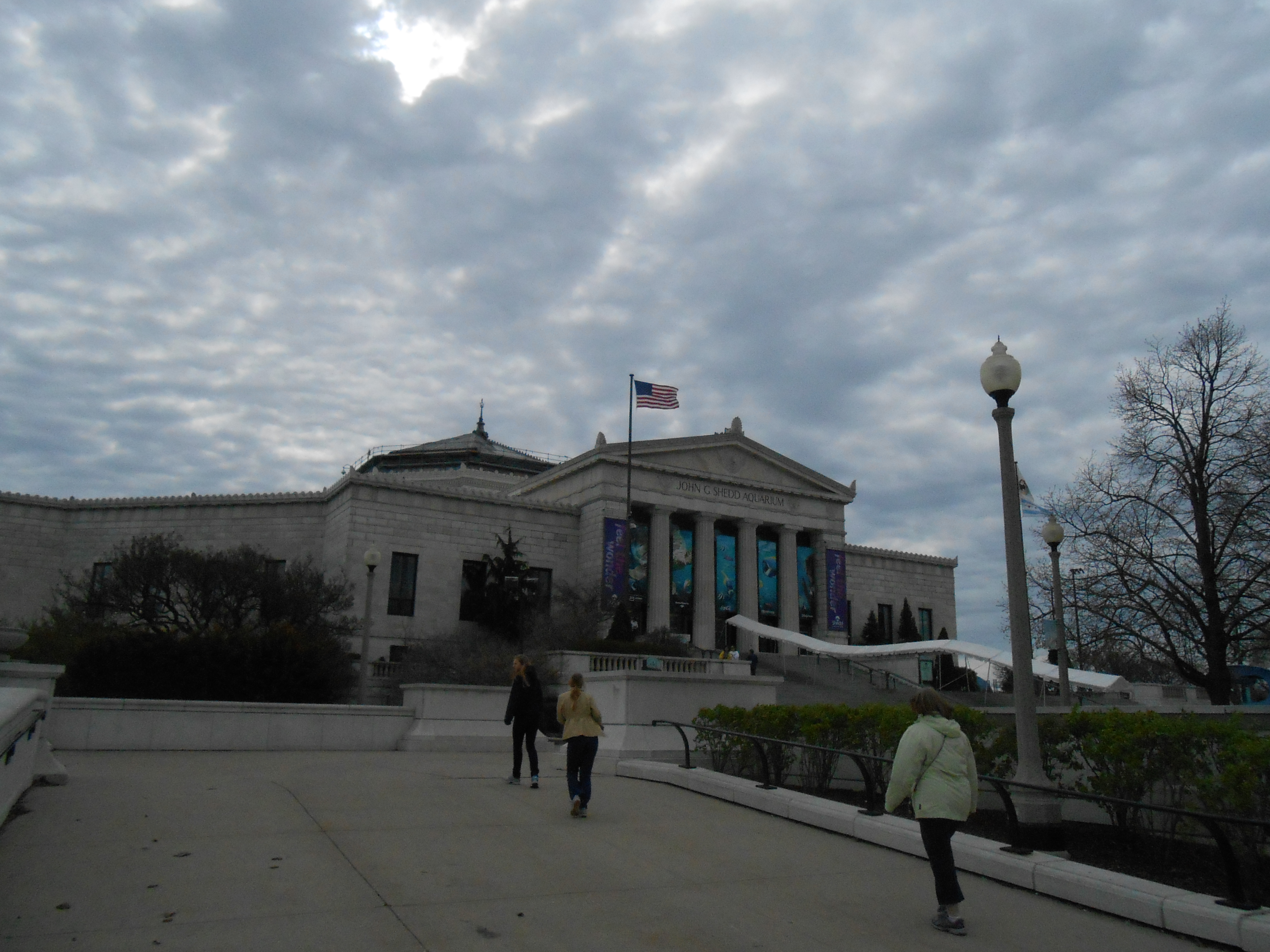
The John G. Shedd Aquarium on Chicago's Museum Campus, the white marble rotunda facing Lake Michigan.
Chicago filming opened here, in the first week of the American shoot: the aquarium closed early on 19 October 2010 to let the crew in. It is a white marble rotunda on the lakefront.
The Emhoff house, in the film a home in Edina outside Minneapolis, in fact a private house on the 500 block of Woodlawn Avenue, a tree-lined street in Glencoe. People live in it: nothing to see from the street, and no reason to knock. One of the producers, Michael Shamberg, grew up a couple of blocks away.
The woods where Mitch goes after his daughter are somewhere near the Glencoe Park District. The film office called them the Robert Everly Wildlife Sanctuary, and nothing in Glencoe goes by that name.
Glencoe's other screen credits belong to the village rather than to this street: Sixteen Candles (1984), Ferris Bueller's Day Off (1986), and the village railway station in She's Having a Baby (1988) and Flags of Our Fathers (2006).
Central Elementary School, 910 Central Avenue, Wilmette
The Emhoff children's school. A working public elementary school on the North Shore, standing in for suburban Minnesota, and Matt Damon afterwards sat for an interview and a photo call with the school's own newspaper, which is written by the third and fourth grades.
The University of Minnesota Medical Center, Fairview: the hospital where Beth Emhoff dies and where her son follows her. It was empty when the crew arrived. Sherman Hospital had moved to a new building on Randall Road at the end of 2009 and left this one standing vacant, which is why a film crew could have an intensive care unit and an operating room to itself.
The building has since been demolished. In March 2020 the state named the old Sherman campus at Slade Avenue and Center Street among the sites to be opened for overflow COVID-19 patients; what was fitted out, the city says, was the medical office building next door at 901 Center Street, the hospital itself already gone.
Downtown Western Springs, the 4400 block of Wolf Road
The looted supermarket. A false shopfront reading Gold Medal Market went up over the empty Tischler's grocery, and Mitch and Jory Emhoff go in for supplies and come out past a sick woman. The alley next door, beside what had been Breens cleaners, is the Lake City Mutual bank whose windows the looters break; the two of them run off through the car park of the Western Springs Baptist Church, on the same block, towards Johnson Avenue. The church was where the crew went to get warm. Damon's trailer stood on Franklin Avenue.
A neighbour watched the fake front go up and wrote that she liked the new look, and that it made her wish someone would open a real grocery there again.
Chicago plays Chicago, with the people taken out
General Richard L. Jones Armory, 5324 South Cottage Grove Avenue, Chicago
The makeshift infirmary where Kate Winslet's Dr Erin Mears sets up field operations, and the largest set in the picture. The building is a working National Guard armory on the South Side, on Cottage Grove Avenue at the edge of Washington Park.
Amstutz Expressway, Waukegan
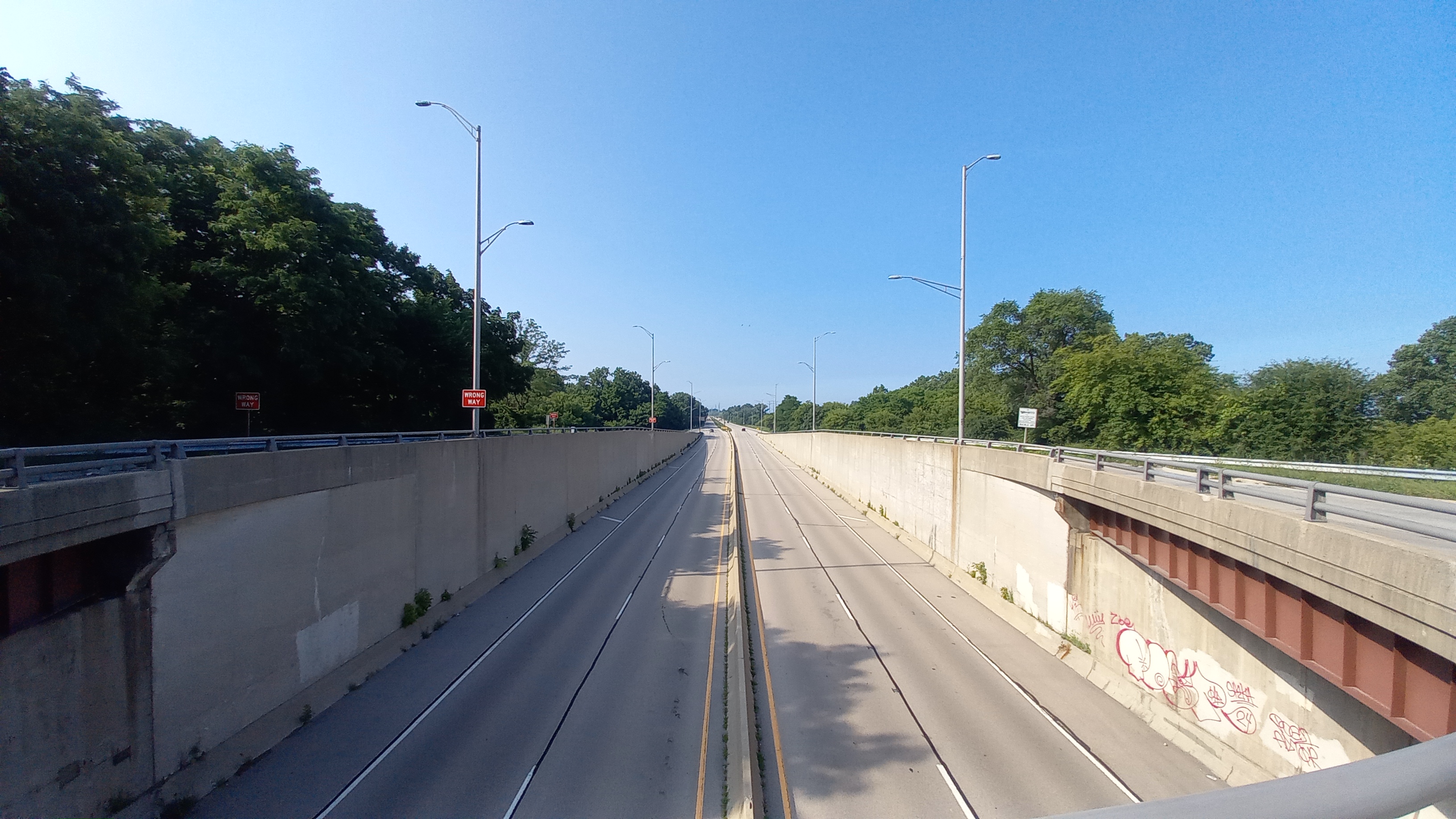
The Amstutz Expressway heading north at Grand Avenue in Waukegan, Illinois — the empty lakefront road that played the Dan Ryan.
The Dan Ryan Expressway, emptied: a military convoy moving through a depopulated city while two Illinois National Guard Black Hawks make low passes over it. The road it plays runs through the middle of Chicago. This one is forty miles north of that, on the Waukegan lakefront, and Waukegan closed it from six on a Monday morning until six on the Tuesday, from Greenwood Avenue south to Genesee Street, with the traffic pushed onto Sheridan Road and parking banned along two blocks of it. The helicopters came over from Waukegan Regional Airport and were on call from ten until six.
The Guard lent the film more than the aircraft: Humvees, troop carriers, jeeps and upward of a hundred uniformed soldiers from Illinois, California and Georgia.
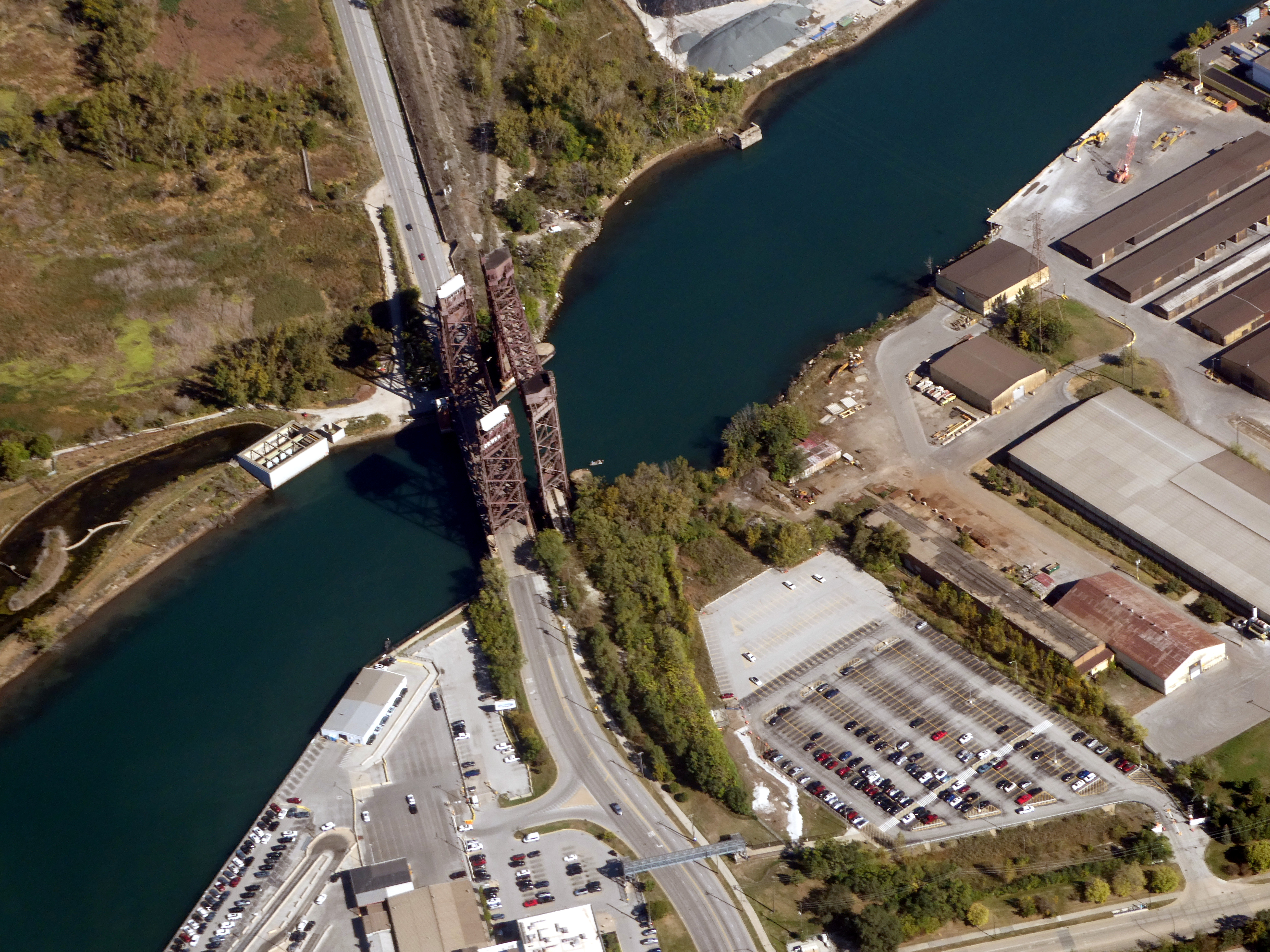
Henry Ford II Memorial Bridge, Torrence Avenue over the Calumet River, Chicago
The Calumet River in Chicago from the air. The tall steel truss in the middle is the Chicago & Western Indiana railway lift bridge; the road crossing at the bottom of the frame is Torrence Avenue on the Henry Ford II Memorial Bridge.
The road block. Mitch Emhoff's confrontation with federal authorities as he tries to get back into the city, in the film a state line, shot at night in real freezing rain.
The middle span goes straight up instead of folding, which makes this the only city-owned vertical lift bridge in Chicago. It was built in 1938 and rebuilt across 2011 and 2012, the year after the film used it, and the city's count then was more than a hundred lifts a month for ships on the Calumet.
The story turns on a layover: Beth Emhoff breaks her flight home from Hong Kong in Chicago and meets a former lover. Chicago's airports are among the few American places in this film not standing in for somewhere else.
Midway International Airport, 5700 South Cicero Avenue, Chicago
The other Chicago airport the production worked, fifteen miles south-east of O'Hare.
Atlanta is an office park in Downers Grove
Centers for Disease Control and Prevention, 1600 Clifton Road NE, Atlanta
The headquarters of the Centers for Disease Control and Prevention on Clifton Road, Atlanta — the campus the film was allowed to shoot from outside and no further.
The CDC in this film is the CDC, from outside. The campus is restricted, so the crew got the exteriors, the parking garage and the reception area of the David J. Sencer CDC Museum on the site, and no further. They were there on 6 January 2011. Everything that looks like the inside of the CDC was shot nearly six hundred miles away.
Sara Lee corporate headquarters, Lacey Road, Downers Grove
Everything the CDC would not give up. The corridors and offices behind Laurence Fishburne's Dr Cheever, and the rooms where the military response is run, are a corporate headquarters in an office park on Lacey Road, in the western suburbs of Chicago.
San Francisco plays San Francisco
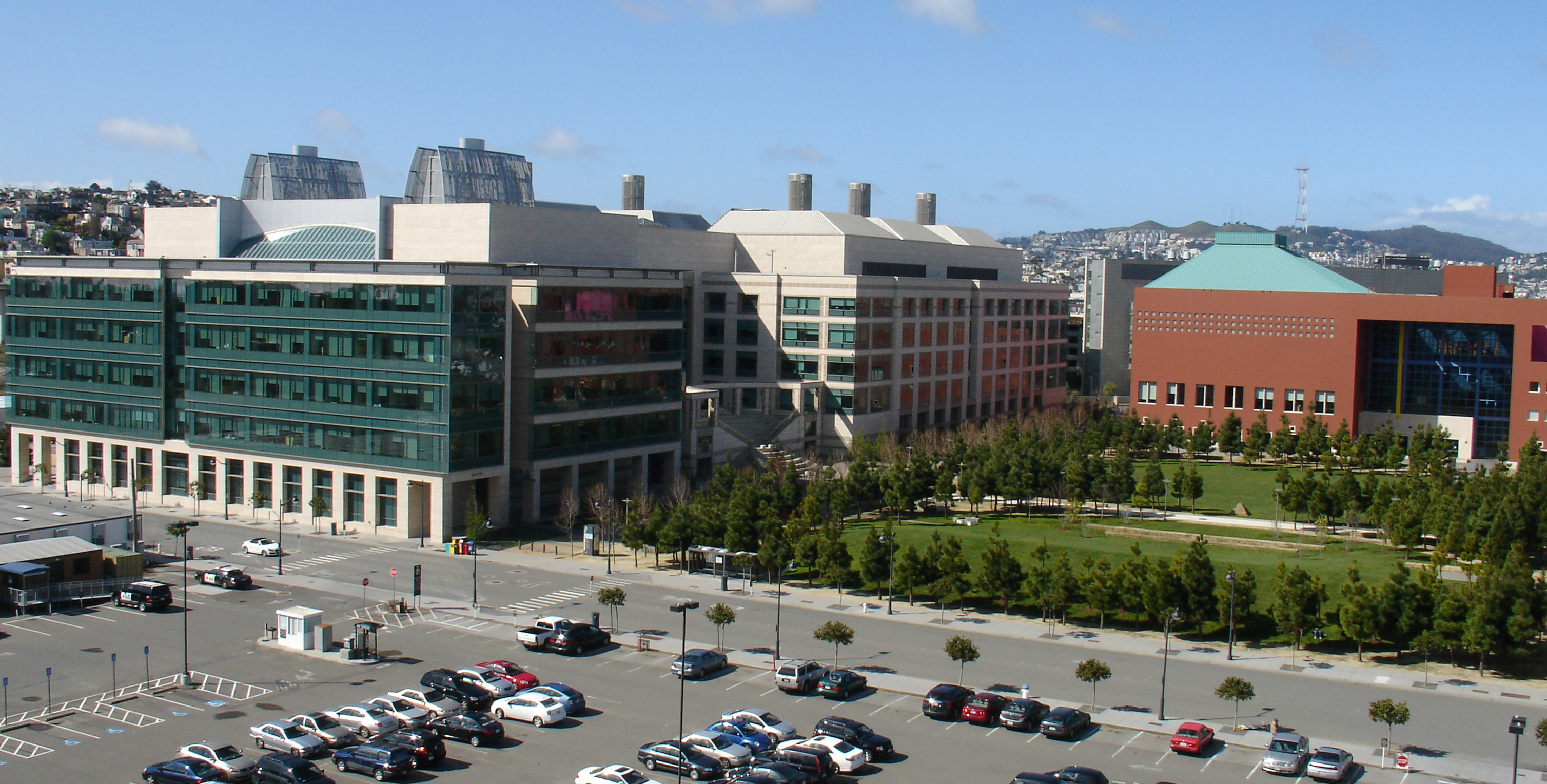
Genentech Hall, 600 16th Street, UCSF Mission Bay
The UCSF Mission Bay campus seen from the Third Street garage; Genentech Hall, renamed Mendel Hall for the film, is the second building from the left.
Mendel Hall in the film, renamed for the occasion: the laboratory where Elliott Gould's Dr Sussman keeps growing the virus after being told to destroy his samples, and where Krumwiede comes to confront him. In life it is a research building holding UCSF's structural biology and biochemistry labs, and in 2018 the university's postdoctoral association screened the film in it.
Warner Bros. named the wrong school in the film's own press notes: the University of San Francisco at Mission Creek, which runs two institutions into one. The University of San Francisco is a private university on the other side of town, and Mission Creek is the water beside this campus.
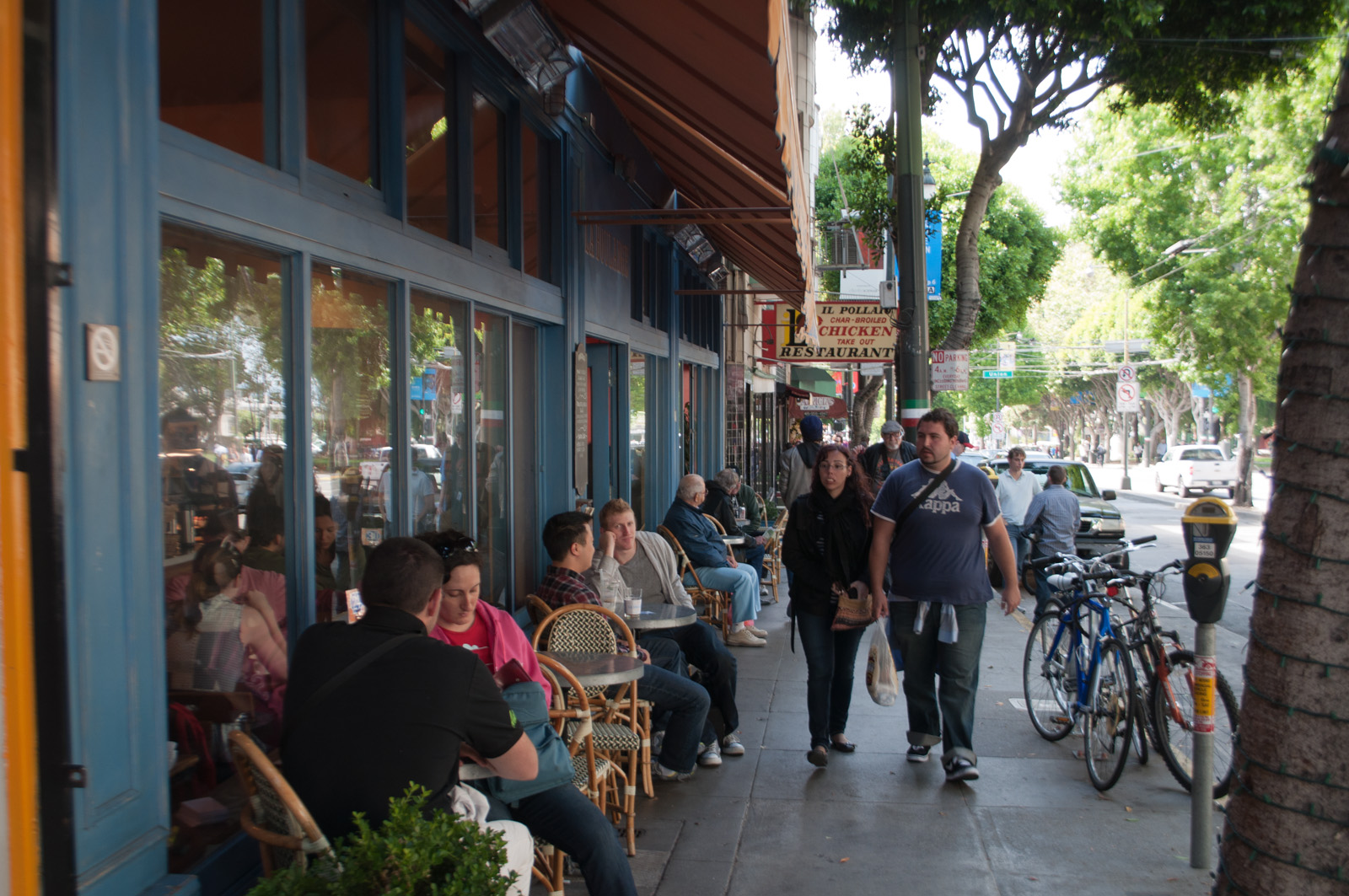
Taylor Street between Filbert and Union, North Beach, San Francisco
The city months into the collapse. Cummings had rubbish and laundry piled the length of the block as if it had been thrown out of the windows by people getting rid of anything that might carry the virus, and Jude Law's Krumwiede walks through it in a home-made hazmat suit. North Beach residents came out on a Sunday in February 2011 and found their street under it.
De Haro Street between 20th Street and Southern Heights Avenue, Potrero Hill, San Francisco
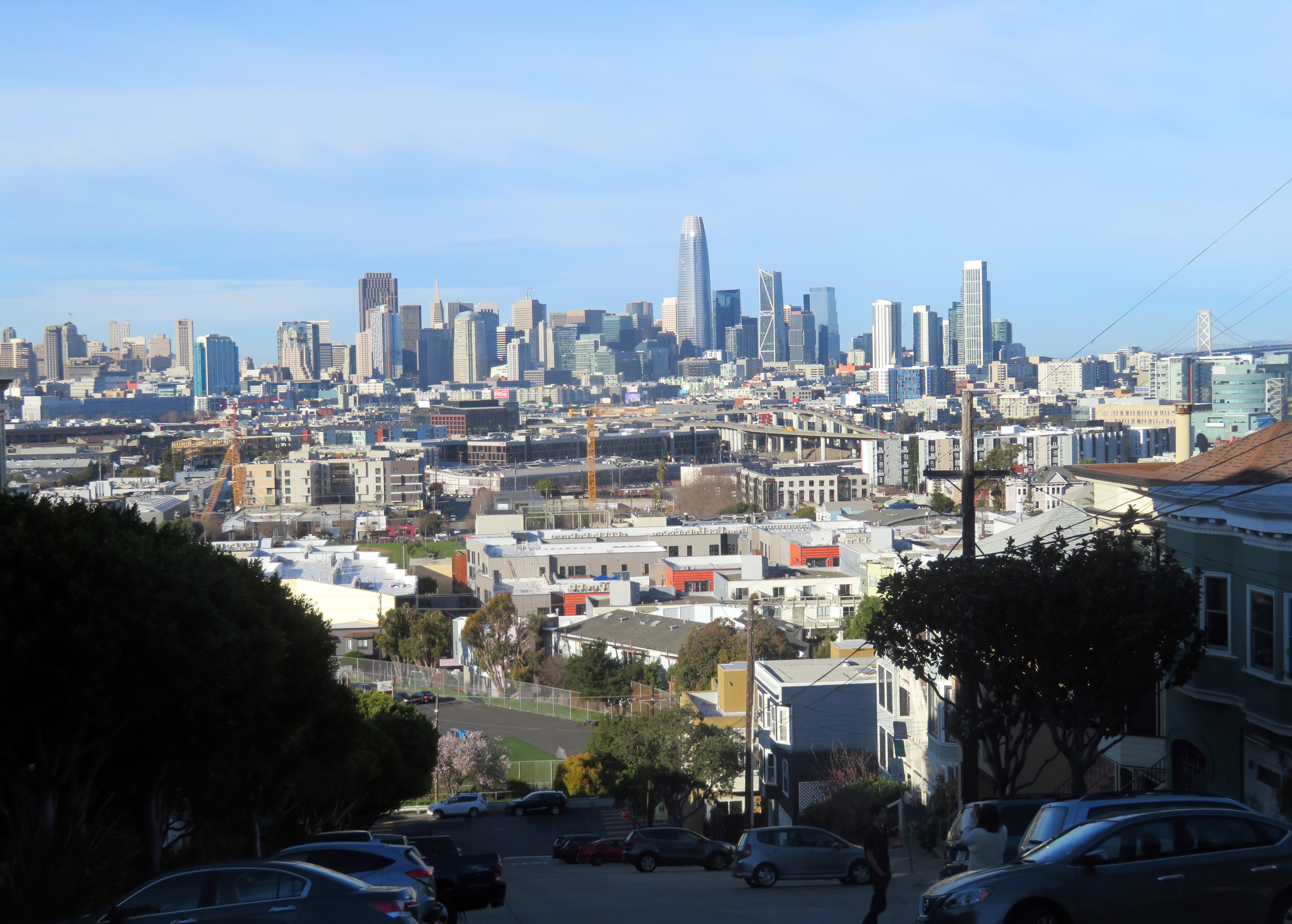
The downtown skyline standing up behind Potrero Hill — the background that made the block worth filming.
The second neighbourhood dressed the same way. Cummings had Potrero Hill littered as well as North Beach, and Krumwiede walks both. The block is De Haro between 20th and Southern Heights, steep enough that the downtown towers stand up behind it.
Crews have worked this hill since the 1960s. Bullitt (1968) used San Francisco General. Harry Callahan is written as a Potrero Hill boy in Dirty Harry (1971), which finds a body at Texas and Sierra. Mike Stone's house in The Streets of San Francisco (1972) is 768 De Haro, the one credit that stands on this street. Harry Caul's workshop in The Conversation (1974) is Suite 36 of the American Roofing building at 1616 16th Street. Invasion of the Body Snatchers (1978) grew its pods in Building 6 at the Pier 70 shipyard. The Victorian at 1243 19th Street plays 275 Pacific Street in Pacific Heights (1990). The Joy Luck Club (1993) is at 610 Rhode Island, Sweet November (2001) at 298 Missouri, Ant-Man and the Wasp (2018) at 18th and Missouri, and Venom: Let There Be Carnage (2021) dressed the Anchor Brewing building on Mariposa Street as a police station. The 700 block of San Bruno Avenue is in Godzilla (2014).
Music Concourse, Golden Gate Park, San Francisco
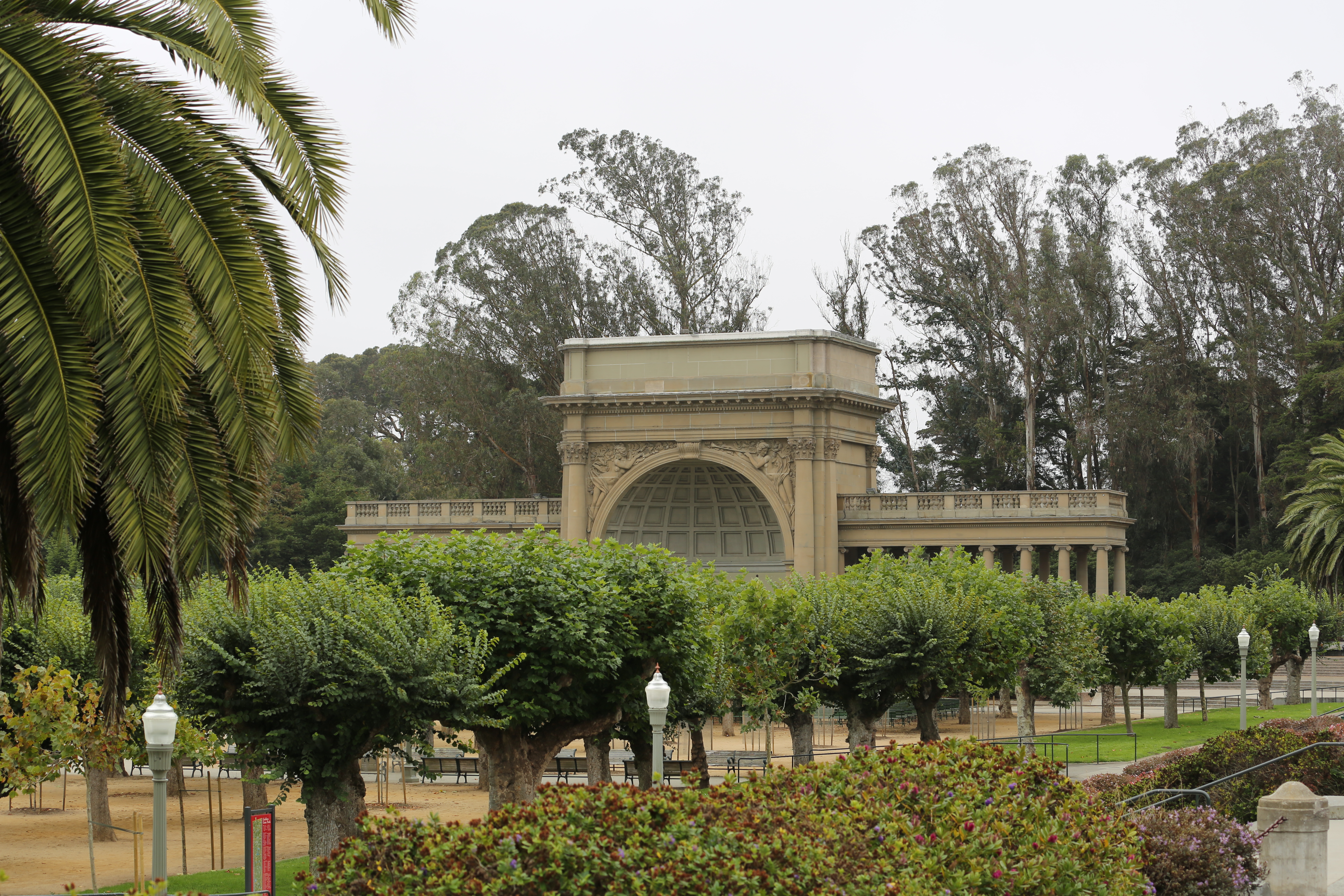
The sunken oval of the Music Concourse in Golden Gate Park, San Francisco.
A scene in the park. The concourse is the sunken oval between the de Young Museum and the Academy of Sciences, with the Spreckels bandshell closing its west end since 1899.
The park's other credits are spread across it and mostly nowhere near this oval: Dirty Harry (1971) at Kezar Stadium, Harold and Maude (1971) at the Conservatory of Flowers, the opening of Invasion of the Body Snatchers (1978), Spock's casket in Star Trek II: The Wrath of Khan (1982), filmed in an overgrown corner with smoke machines, football in Hellman Hollow in The Room (2003), the Children's Playground in The Pursuit of Happyness (2006), the opening of The Diary of a Teenage Girl (2015) and Always Be My Maybe (2019). The one that is genuinely on the concourse is the oldest: The Lineup (1958), inside the Steinhart Aquarium.
Chinatown is one of the film's San Francisco locations. Rich King, who cast the extras, told a reporter in February 2011 that the remaining work would be at an undisclosed stadium, a coffee shop, and a location near Chinatown. Near it, rather than in it. The stadium was Candlestick Park.
San Francisco City Hall and Civic Center Plaza, 1 Dr. Carlton B. Goodlett Place
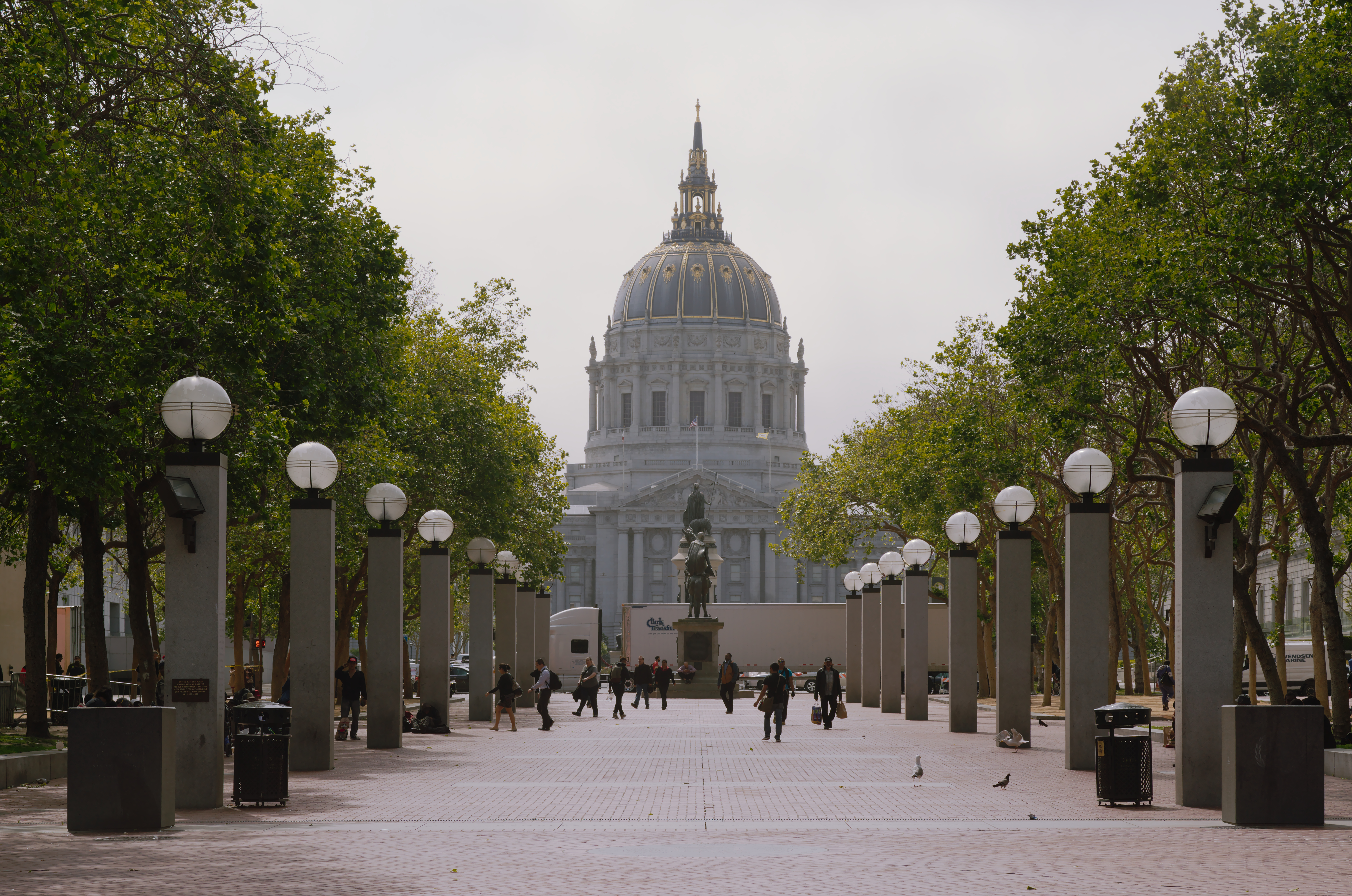
San Francisco City Hall behind the open ground of the Civic Center, where the crowd scenes of the collapse were filmed in February 2011.
11 February 2011: hundreds of extras in flu masks on the plaza in front of the dome, with military vehicles parked around them. More than two thousand San Franciscans were cast as background over roughly ten days of filming in the city, paid $139 a day if they were in the union and $64 if they were not.
City Hall has been carrying scenes for decades. Dirty Harry (1971) shot inside the Mayor's office, and after it came The Towering Inferno (1974), Invasion of the Body Snatchers (1978), Foul Play (1978), the Grand Staircase standing in for a Washington government building in Raiders of the Lost Ark (1981), A View to a Kill (1985), Milk (2008) and the television series The Man in the High Castle (2015). The building took some damage for Bicentennial Man (1999), when ten-thousand-watt lamps set off the sprinklers and flooded part of it.
Candlestick Park, 602 Jamestown Avenue, San Francisco
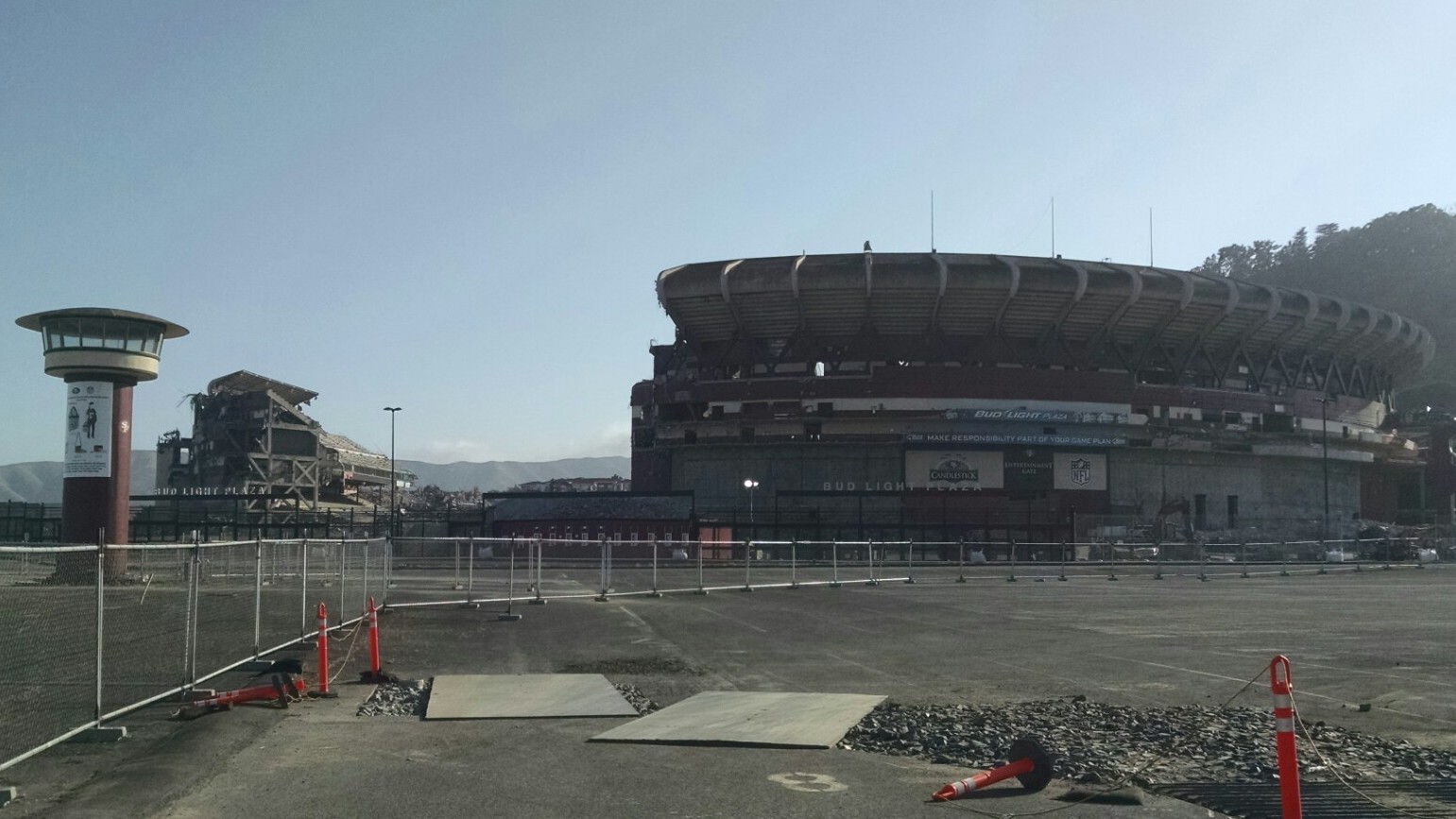
Candlestick Park part-demolished in May 2015, four years after the film staged its vaccination centre on the field.
The mass vaccination centre: tents, military vehicles and about a thousand extras on the field of a football stadium. A trial helicopter landing was booked and then cancelled, the producers asking to be released from paying for it. This was the last thing the production shot, in February 2011.
Candlestick had taken the climax of Experiment in Terror (1962) and of Freebie and the Bean (1974), The Enforcer (1976), a Giants game in Getting Even with Dad (1994), a missile diverted away from it in The Rock (1996), The Fan the same year, and the finish line of the sixteenth season of The Amazing Race in 2010.
Soderbergh would not shoot in a studio, so his crew went out and borrowed rooms instead. Not all of them are still standing. The stadium came down across 2014 and 2015, the hospital in Elgin was gone by 2020, and the boat that held the casino capsized in the South China Sea in June 2022, days after it was towed out of Aberdeen Harbour.