About a dozen runners from athletics clubs around St Andrews reported to a hotel on the Scores early on 24 April 1980, were sent off to have their hair cut short, and spent the day running barefoot on the West Sands. When the film reached them, the laugh came at the caption: Broadstairs, Kent, lettered over a shot of the 18th hole of the Old Course.
19
places on the route
From Fife to the Paris suburbs — switch with the buttons above. Click a point to jump to its entry.
The caption is the habit of the film rather than an accident of it. Chariots of Fire is set in a Cambridge college, at a hotel on the Kent seafront and at the 1924 Olympics in Paris, and it filmed at none of the three. The race round Trinity's Great Court was staged at Eton because Trinity said no, and Harold Abrahams, who runs it on screen, never ran it in life. The Olympic stadium is a municipal track on the Wirral that still had cinders on it. Dover is a Mersey ferry terminal, the railway platforms are at York, and the London theatre where Abrahams first sees Sybil Gordon is in Liverpool. The map only settles down in Scotland, where a school playing field, a public park, a hall on the Mound and a kirk at the head of a glen play more or less themselves. Most of those you can walk into.
filmed herewhere it really happened
Cambridge said no, so the Great Court run was filmed at Eton
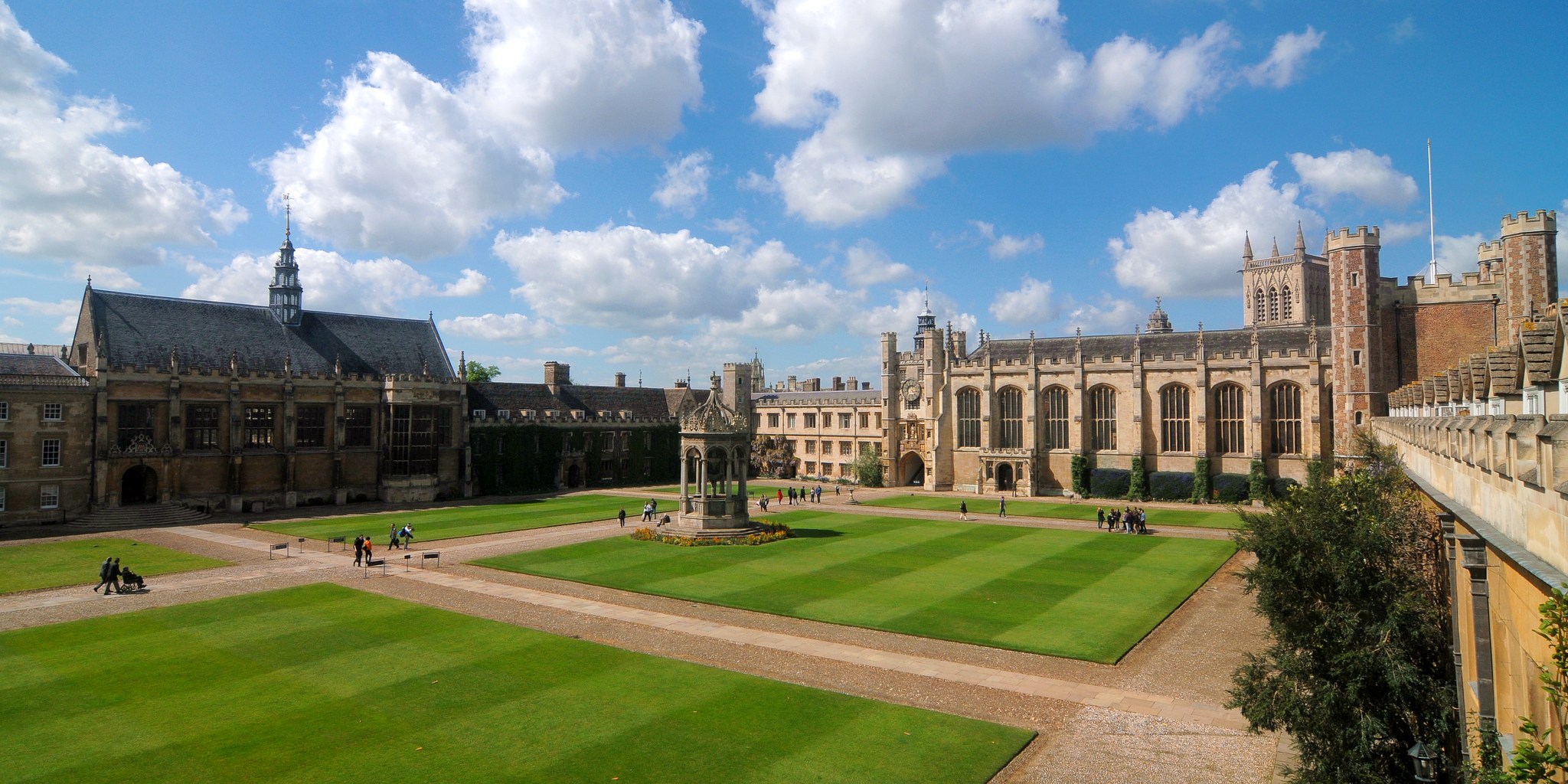
Great Court, Trinity College: the run the film handed to Abrahams
Great Court, Trinity College, Cambridge — the court the run is named after and the one the film was refused.
The Great Court Run is real, the court is real, and Harold Abrahams never ran it. The distance is 339 metres round the court, to be finished before the clock has stopped striking twelve, which by an old tradition it does in 24 chimes. Three men are believed to have got round in time, the first of them Lord Burghley in 1927. The film hands the run to Abrahams and stages it sixty miles away.
Trinity refused the production. Visitors are let into the court for much of the year, with closures in exam term. The name arrived in the city anyway, if the film did not: a charity relay race called Chariots of Fire has been run through Cambridge since 1991.
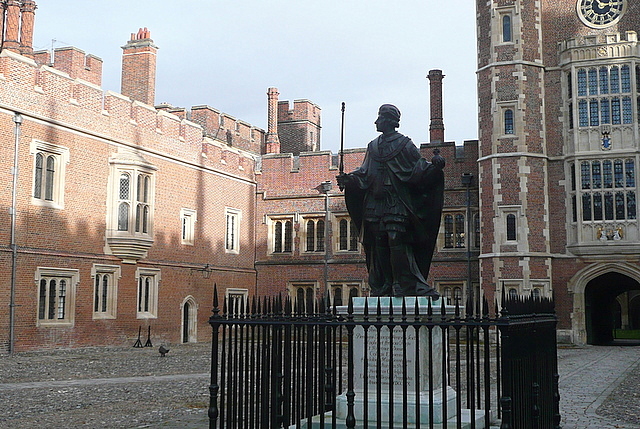
Eton College: the Cambridge court, in Berkshire
School Yard at Eton: the eighteenth-century statue of the founder, Henry VI, with Lupton's Tower behind.
Refused by Trinity, the production went to Hudson's old school. Graham Elliott, one of the crowd extras, wrote it up forty years afterwards: he collected his costume at Eton, the race took two days to shoot, and a third day went on a handful of them walking and pushing bicycles across a quad. All of it outdoors.
Eton is a boarding school and the buildings are not open to callers; guided tours have run at times and the arrangements change.
The London platforms are at York, and *The Mikado* is in Liverpool
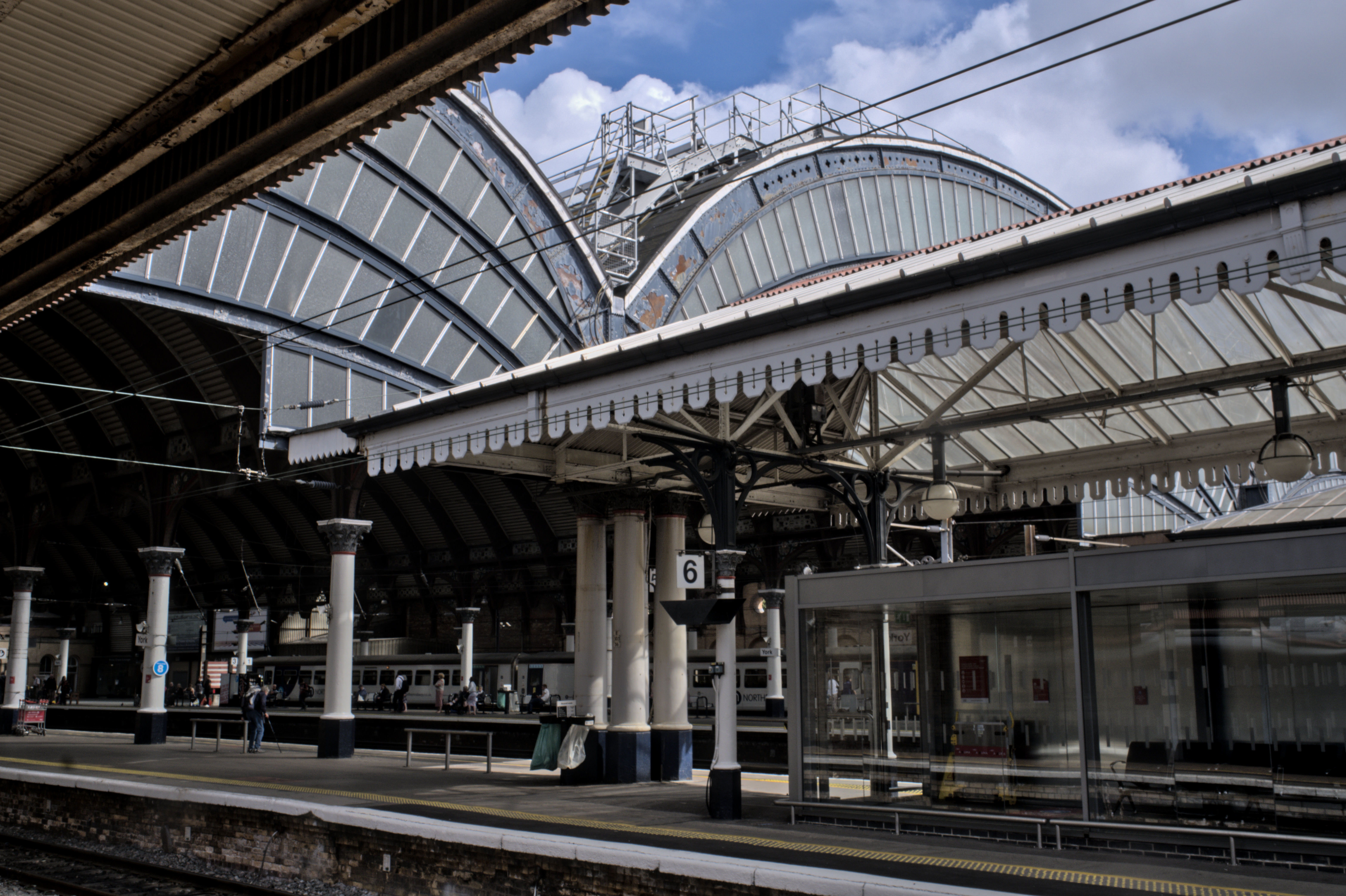
York railway station: every station scene in the film
The curved trainshed at York, the reason the station gets filmed.
The film's station scenes were shot at York, and the engines standing at the platforms came on loan from the National Railway Museum. On screen those platforms are in London.
The roof is not in doubt. The trainshed of 1877 curves because the tracks do, iron ribs on slender columns, and at the north end it runs out and the platforms open to the sky. The museum whose engines did the work is a five-minute walk away and free to go into.
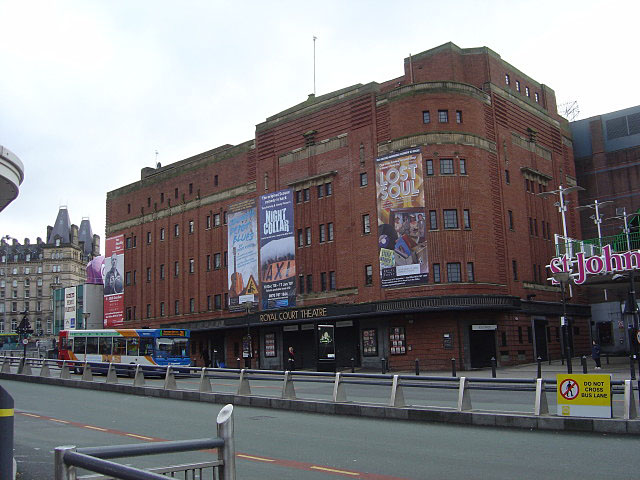
Royal Court Theatre, Liverpool: *The Mikado*
The Royal Court on Roe Street, an Art Deco theatre of 1938.
Abrahams first sees Sybil Gordon across a performance of The Mikado, and the singers on the stage are not extras in costume. The D'Oyly Carte Opera Company was on tour at the time and went in front of the camera.
The theatre is younger than the evening it plays: an Art Deco building of 1938 on Roe Street, brick with rounded corners, Grade II listed and still working.
Paris is Merseyside, and one Paris church is in Edinburgh
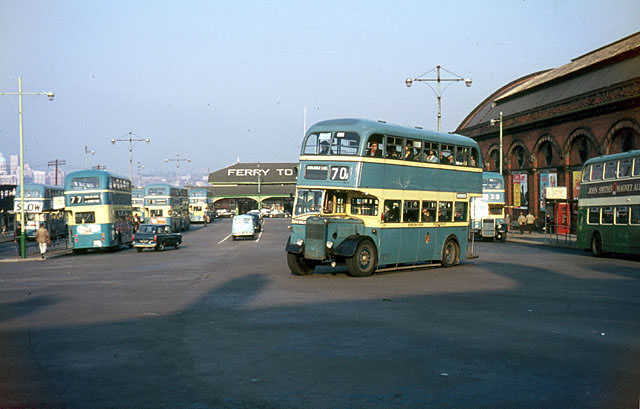
Woodside Ferry Terminal, Birkenhead: Dover
Woodside in 1966: Birkenhead Corporation buses drawn up on the ferry approach under the FERRY TO signs.
Photo: Alan Murray-Rust · CC BY-SA 2.0 · Wikimedia Commons · From geograph.org.uk; transferred by User:Benkid77 using geograph_org2commons.
The team sails for France from Dover, and the water is the Mersey.
The covered passenger bridge and the floating landing stage that appear in the film are gone. The terminal building behind them was in poor condition and was replaced, and the bridge and the stage went with it.
In a photograph from September 1966, Birkenhead Corporation buses stand on the wide tarmac apron under the FERRY TO signs. That is fourteen years before the film arrived, and closer to what the crew found than anything standing on the site today.
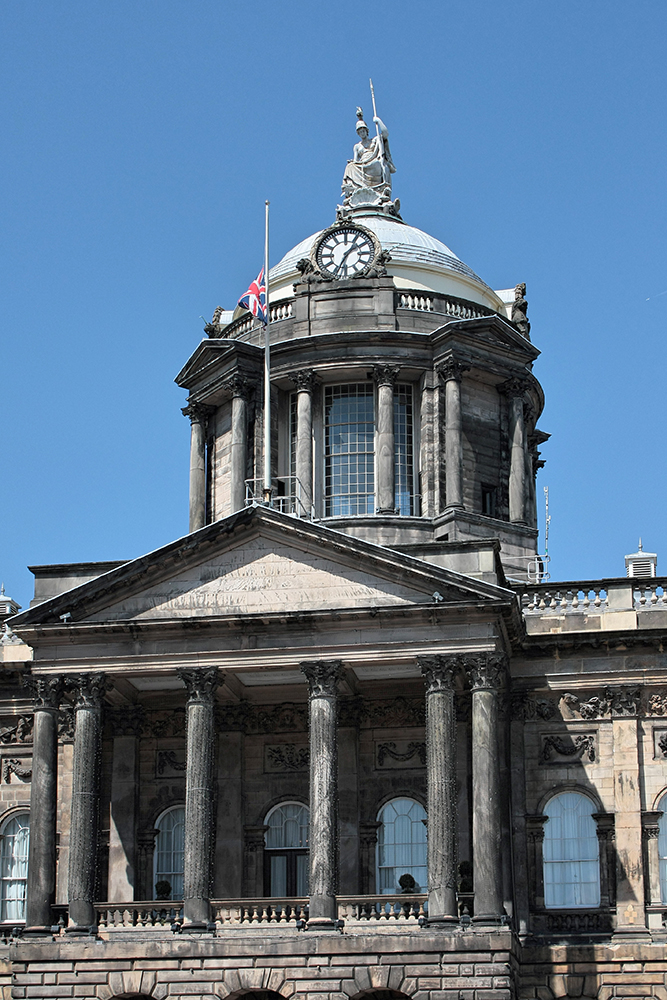
The Prince of Wales and the Olympic committee take Liddell aside and press him to run on a Sunday. The room is in Liverpool.
The building is Georgian, pale stone, with a Corinthian portico under a dome carrying a clock and a statue. It is Grade I listed, it is still the seat of Liverpool City Council, and it opens to the public on advertised tour days.
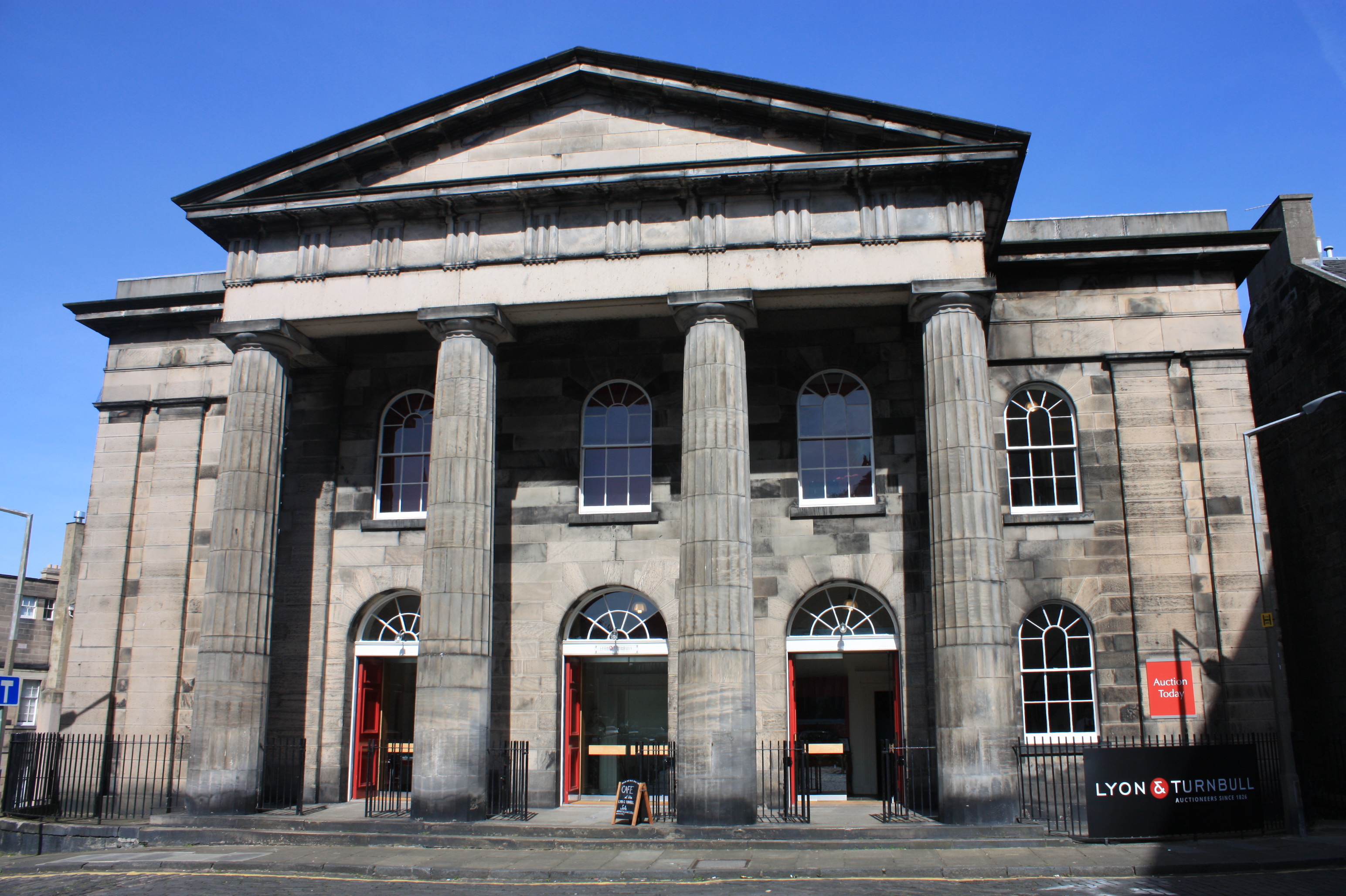
Broughton McDonald Church, Edinburgh: the Church of Scotland in Paris
Broughton McDonald Church on Broughton Place, built 1820–21, now an auction house.
Liddell preaches on the Sunday of the heats in a Church of Scotland in Paris, and the church is in the Edinburgh New Town. Archibald Elliot built it in 1820 and 1821, four heavy Doric columns under a pediment, red doors.
It has been out of religious use for years and in commercial use instead. A photograph taken inside in 2009 shows the galleried floor with furniture and pictures set out for a sale, and one from 2015 has an auctioneer's name lettered at the corner of the building. The Illusionist has a credit on Broughton Place, but that is the street and not this building.
Of the film's Edinburgh addresses, this is the one that plays another country.
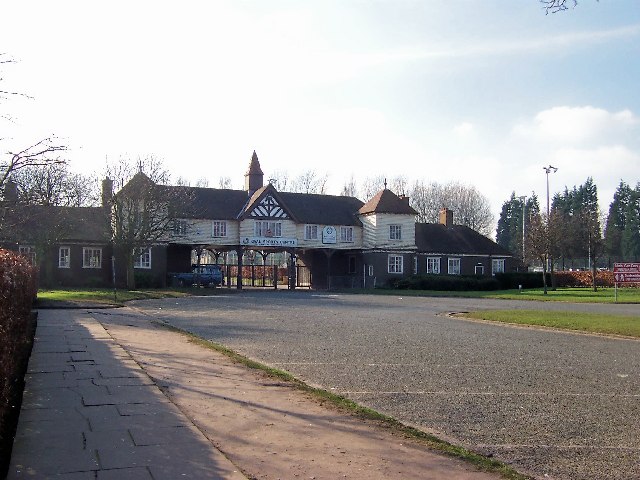
The Oval, Bebington: the 1924 Olympic stadium
The entrance to the Oval at Bebington.
Photo: Sue Morgan · CC BY-SA 2.0 · Wikimedia Commons · From geograph.org.uk; transferred by User:Benkid77 using geograph_org2commons.
Every race the film has been building towards was run on a municipal athletics ground on the Wirral. The Oval opened in 1888 and was picked because it looked the period and still had cinders on its track.
Thousands of local people filled the stands as the Olympic crowd. They were asked to wear dark colours so that nobody would catch the eye, and those who turned up in real Edwardian dress were paid £20 for the day against £10 for everyone else.
The track has eight lanes now and belongs to Wirral Council, with Wirral AC and Warriors Pentathlon & AC training on it. The building at the gate is a long black-and-white timbered pavilion behind a wide empty forecourt.
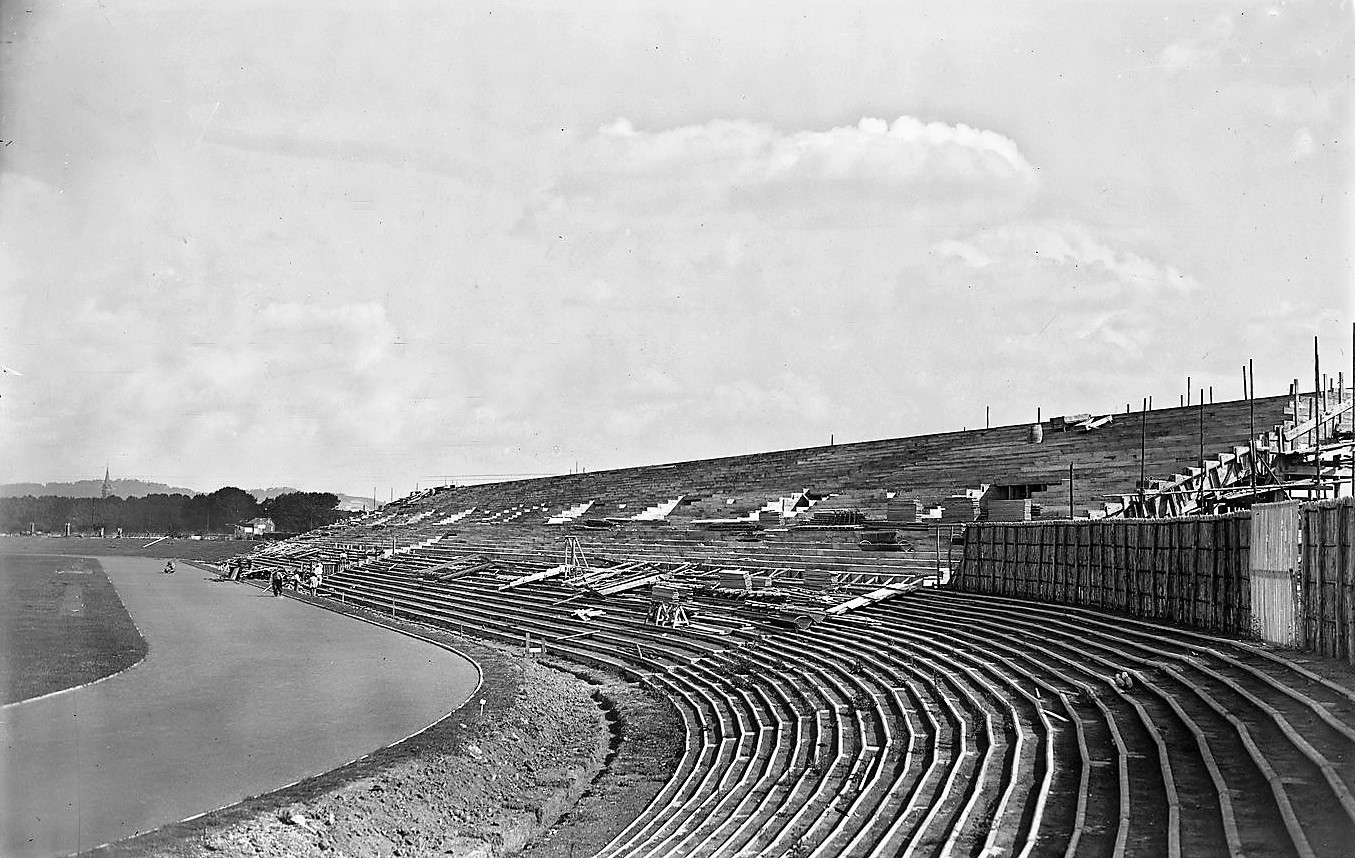
Stade Yves-du-Manoir, Colombes: where the races actually happened
Colombes on 23 August 1923, the stands being enlarged for the 1924 Games.
Photo: Auteur inconnu, photographie de presse / Agence Rol. Source BNF-Gallica · CC BY-SA 4.0 · Wikimedia Commons · http://gallica.bnf.fr/ark:/12148/btv1b531186124/f1.item.r=stade%20de%20colombes%20tribune%20constructionstade%20de%20colombes%20tribune%20construction%20stade%20de%20colombes%20tribune%20construction.zoom
Abrahams won the 100 metres here in 1924 and Liddell the 400, and the film never came.
A press photograph of 23 August 1923 shows the terracing being enlarged for those Games, workmen strung along the top of the scaffolding. In January 2004 the stadium was saved from demolition at the last minute. The Olympic hockey was played on it in 2024, a hundred years after the races the film is about.
Chariots of Fire in Edinburgh and Perthshire: the part of the map that is true
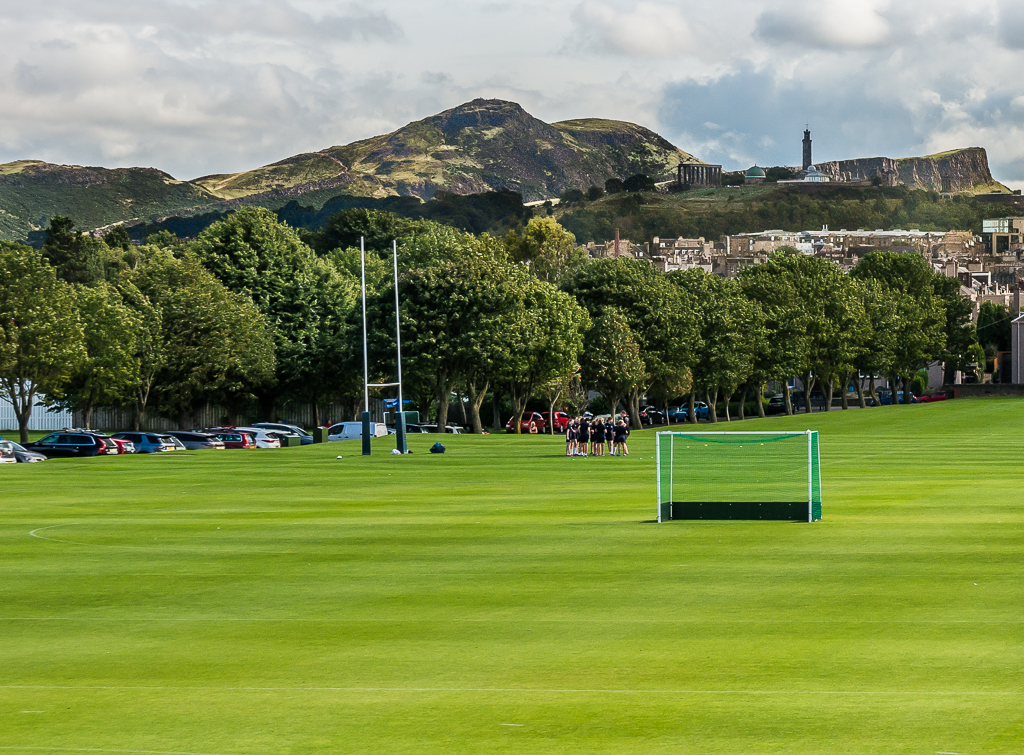
Goldenacre: Scotland against France
Goldenacre looking south: rugby posts, a hockey goal and, on the skyline, Arthur's Seat and Calton Hill.
The international with the packed grandstand, Scotland against France, is a school playing field with Arthur's Seat and Calton Hill on the skyline behind it.
Goldenacre belongs to George Heriot's School, Heriot's Rugby Club and Heriot's Cricket Club play on it, and the way in from Warriston Gardens goes past a row of turnstile huts beside a low white timber stand. Rugby posts, a hockey goal, a line of trees.
The gates open for games rather than for walking on the pitches; the cricket square has since taken Twenty20 internationals.
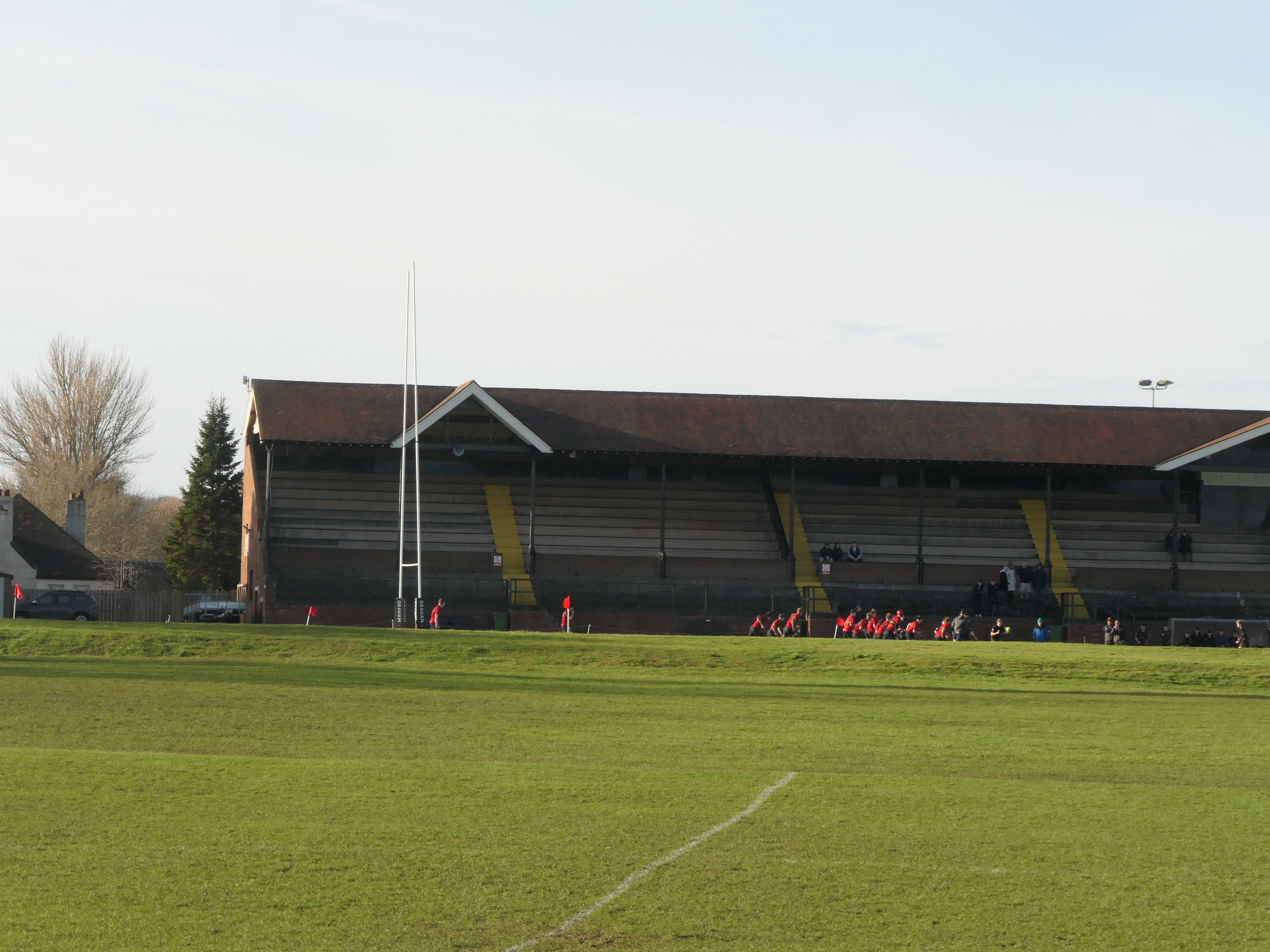
Inverleith: Scotland against Ireland, or Abrahams training
The grandstand at Inverleith Sports Ground, parts of it dating from the ground's opening in 1899.
Inverleith is a name that covers more than one piece of ground.
Film Edinburgh, the film office at the city council, has the Scotland against Ireland athletics in Inverleith and leaves it at that. The city's film map is more particular and says something else: Inverleith Park, and a different scene in it, Abrahams training. A third Inverleith lies about 750 metres from the park: Inverleith Sports Ground, where Stewart's Melville RFC play, with a grandstand partly dating from its opening in 1899.
The park is open at all hours and there is a tree-lined avenue through it that runners use; the sports ground is private. The Lost King has a credit on the park.
Park and sports ground both lie less than a kilometre from Goldenacre, in the same quiet corner of north Edinburgh.
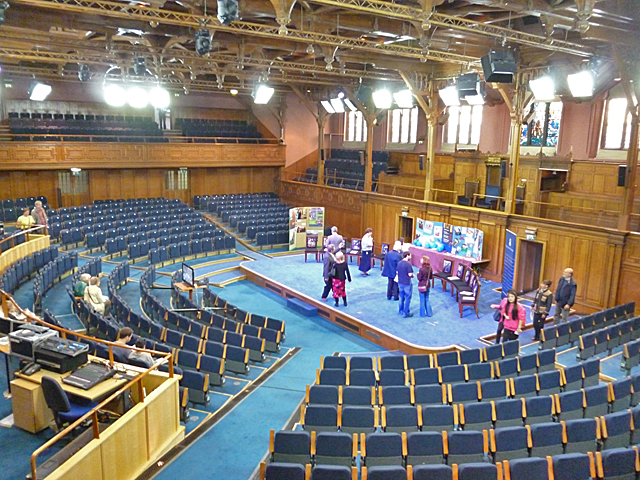
Assembly Hall, Mound Place: the meeting Liddell runs to
Inside the Assembly Hall: the horseshoe of benches around the central floor.
Liddell comes off a race and is late for a religious meeting. The hall he runs to is the General Assembly Hall on the Mound, where the General Assembly of the Church of Scotland meets, and not the Assembly Rooms on George Street, a different building with a similar name. Inside, tiers of blue benches curve round an open floor with a gallery above them. Outside stands John Knox in bronze with one arm raised. The Scottish Parliament used the hall as a temporary debating chamber from 1999, and in August it is a large Festival venue.
In 1959 the same address took a pipe band. In Journey to the Centre of the Earth, Professor Lindenbrook walks through one marching along Mound Place.
Holyrood Park: Liddell tells his sister about China
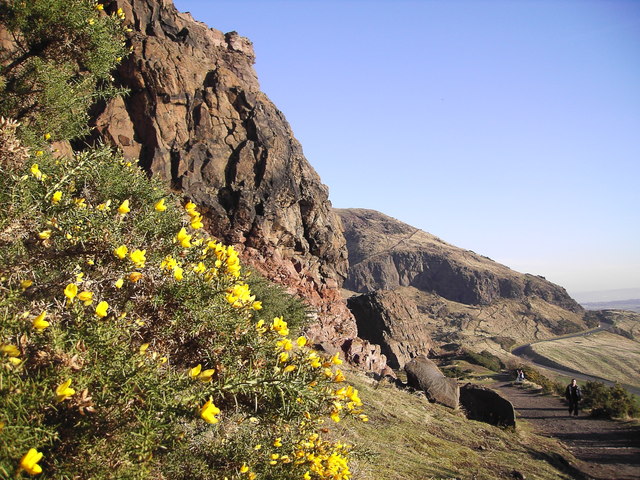
The Radical Road along the foot of Salisbury Crags.
The hillside where Liddell tells Jennie that he still means to go to China as a missionary is a royal park inside the capital. The walk is along Salisbury Crags, the cliff line that runs through the park.
The Radical Road runs along the foot of the crags with gorse on the slope below and the city dropping away to the right. Historic Environment Scotland keeps the park, entry is free, and Queen's Drive has been closed to cars on Sundays since 2018.
Other films come to this hillside: One Day, The Battle of the Sexes and The Illusionist on Salisbury Crags, Doors Open and T2 Trainspotting on Arthur's Seat above them.
Café Royal: dinner in a city the film never names
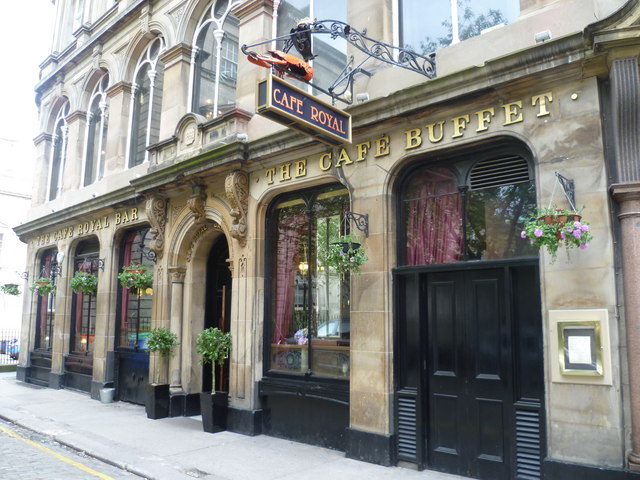
The Café Royal on the corner of West Register Street, with its hanging sign and the Café Buffet entrance.
Abrahams dines at the Café Royal on West Register Street, and which city the dinner is supposed to be in never comes up.
It is a working pub and oyster bar on the corner, with THE CAFE ROYAL BAR in gold capitals across the window glass. Behind that glass is a Victorian room with a bar island standing free on the floor and Doulton tile portraits set into the walls.
The Games where Liddell hands out the prizes were shot at Crieff, a town of about 7,500 people at the foot of the Highlands, 17 miles west of Perth. North of it the A822 climbs into the Sma' Glen.
Amulree and Strathbraan Church: the service after the Gathering
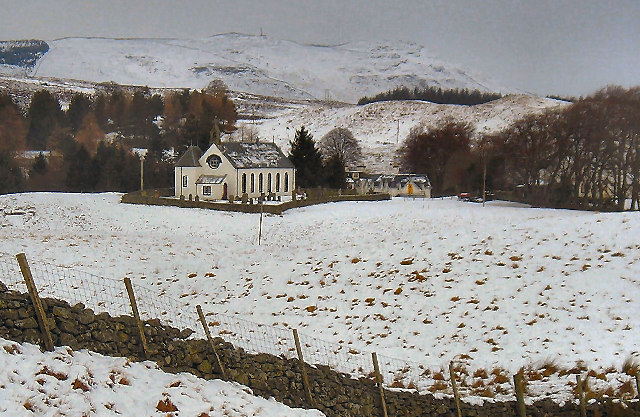
Amulree church in its glen after a light fall of snow.
The Sma' Glen ends at Amulree, and the kirk standing there by itself is where the service in the next scene was shot.
It is white harled with a bellcote, a dry stone wall in front and bare hills behind, of 1743 and rebuilt in 1881, and inside there are box-ended pews on a wooden floor under a blue-painted timber ceiling. The Amulree and Strathbraan congregation has closed, and the kirk has been out of regular use.
The Chariots of Fire beach is at St Andrews, and the caption says Kent
West Sands: the running scene that opens and closes the film
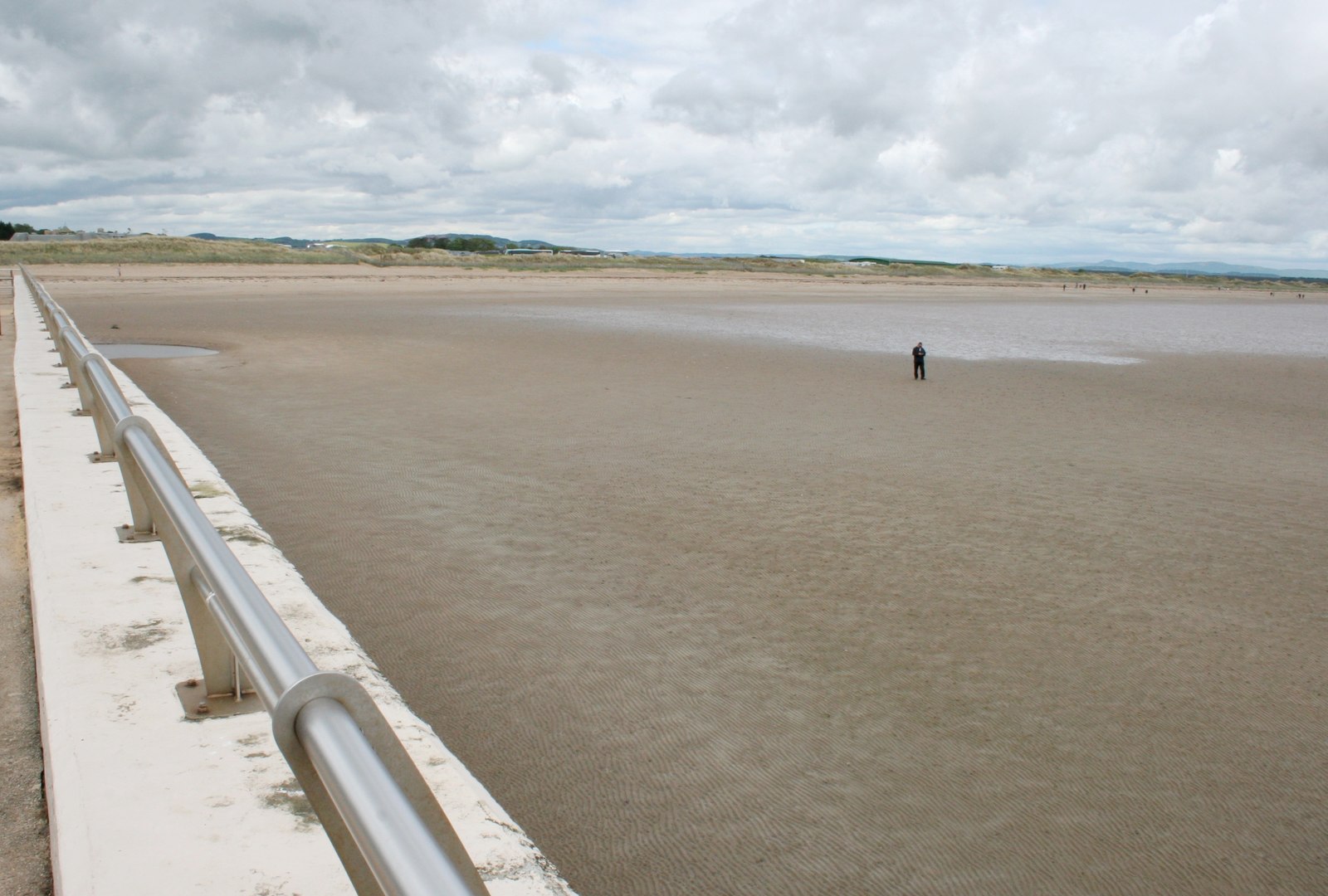
West Sands out of season, looking north from the seawall.
The beach in Chariots of Fire is the West Sands at St Andrews, two miles of sand on the Fife coast, and the film labels it Broadstairs, at the other end of the country in Kent.
Money did that. The crew was already working in Edinburgh and around Crieff, and hauling a production to the south coast of England cost more than staying where it was.
The first attempt at the running scene was thrown away. Sand got into the camera on 24 April 1980 and the day's work was unusable, so the crew came back a week later and shot the sequence again. What is on screen is the second attempt.
The runners in it came from athletics clubs in the town, and were told they would lose their hair and run barefoot. One of them remembered afterwards that the jump over the railings by the Old Course had to be done again and again for the camera.
The opening scene of Chariots of Fire is not quite the beach. The film opens and closes on a memorial service for Abrahams in a London church, and the run comes out of that. Which church it was is an open question.
Out of season the West Sands is a very wide grey emptiness with a handrail along the seawall, a public beach with a Blue Flag, open and free. It does not stay empty. The Chariots of Fire race is run along the sand every year, in white kit, with the Vangelis score playing over the beach, and around 400 people entered it in 2015. The run was staged here again for the Olympic torch relay in 2012.
Hamilton Hall: the Carlton Hotel from outside
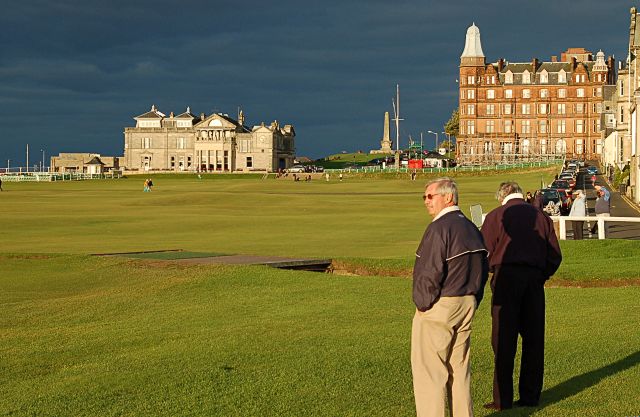
The last of the 18th from the Swilcan Burn, with the clubhouse left and Hamilton Hall right, under a black sky.
Two buildings stand over the 18th green of the Old Course and only one of them is the hotel. The low pale clubhouse of the Royal and Ancient is on one side; Hamilton Hall, turreted and red, is on the other, and it is Hamilton Hall that was dressed as the Carlton.
In 1980 it was a University of St Andrews hall of residence, so what the production made into a Kentish seaside hotel was a student hall. It had opened as the Grand Hotel in 1895, and that was still the name the extras used for it when they told the story thirty years later. It is Category B listed, it holds twenty-six private apartments now, and it is in shot through every Open Championship played over the Old Course.
The golf club comes into the story earlier and in another way: the auditions were held there and at Leven, which is casting rather than filming.
Rusacks Hotel: the same hotel from inside
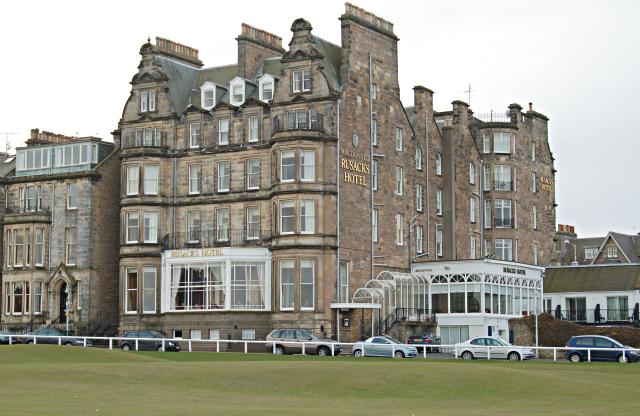
Rusacks Hotel from Grannie Clark's Wynd, the right of way that crosses the Old Course.
The inside of that hotel is a different building, a short walk round the edge of the Old Course.
Rusacks is grey stone with dormers and a glazed conservatory across the front, open since 1887, and Grannie Clark's Wynd, the public right of way that crosses the Old Course, runs past its door. The Kentish hotel in Chariots of Fire is therefore two Fife buildings, two minutes' walk apart, with a golf course between them.
The former Carlton Hotel, Broadstairs: where the 1924 team actually stayed
The hotel the runners are heading for is real, and it is where the caption says it is: Victoria Parade, Broadstairs. No filming happened there. The rest is true, and the town proved it: the British team of 1924 did stay at the Carlton, and putting the evidence together took several years. On 29 June 2017 the mayor unveiled a blue plaque on the building, and at three that afternoon they ran the beach race again below it.
All three of the places the film is set in are still there, and it kept out of all three. It ran the Great Court at a school in Berkshire, held the 1924 Olympics on a cinder track on the Wirral, and moved the Kent seafront to the east coast of Scotland, onto two miles of Fife sand. The men who laughed at that caption have a plaque of their own now, on the Bruce Embankment above the sand that did the work. It dates the run to 1981. They ran it in April 1980.