Two films are called The Bourne Identity, and the older one is the one that went to Zurich. The 1988 television version, with Richard Chamberlain, shows the city from the Römerhof to the Münsterbrücke. In the 2002 film Bourne wakes on a Zurich park bench, walks a Zurich street under snow, looks across at the Zurich bank that holds his safe deposit box, shows a passport at the door of the Zurich consulate and climbs down the outside of it. Five addresses, all of them in Prague.
10
places on the route
Prague plays Zurich for most of the film — switch regions with the buttons above. Click a point to jump to its entry.
Prague does not stop at Zurich. A mill inside the city limits plays a farmhouse in the French countryside, and on Mykonos a restaurant plays a scooter rental. The producer, Patrick Crowley, gave the reason while the film was new: Zurich looked dull on camera unless you stood back far enough to get the lake into the shot, and Prague had exteriors with more drama in them. Whether a camera ever rolled in Zurich at all is unsettled. Most of what the crew used is still there in one state or another: a working ministry, a park with no gates, a mill you can watch from a footpath, a riverside road with its middle closed to cars.
The Zurich scenes
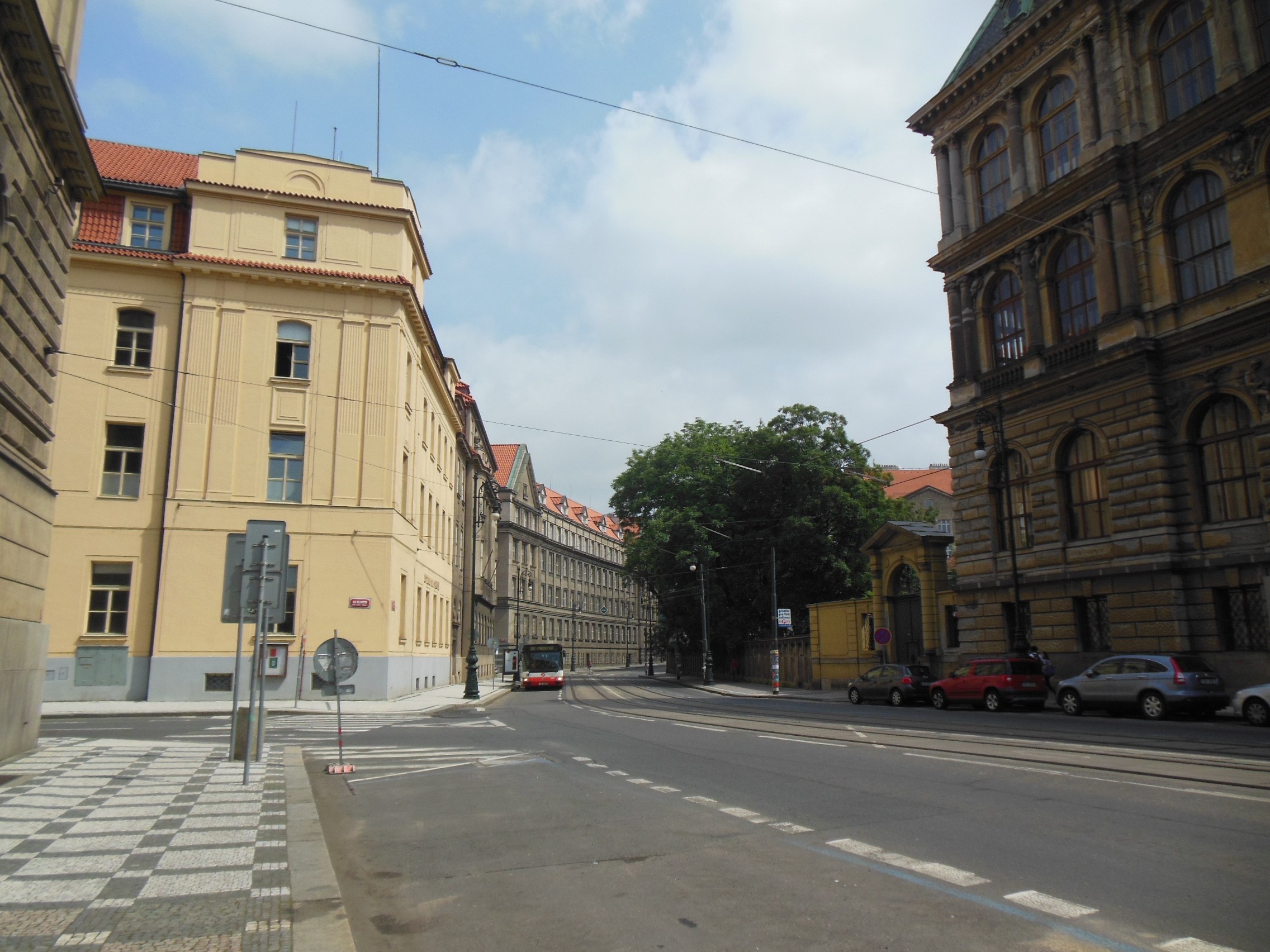
17. listopadu, beside the Old Jewish Cemetery
17. listopadu seen from the Rudolfinum end, with the Museum of Decorative Arts on the right. In the film this street is Zurich, under snow.
A man stands in the middle of a snow-covered roadway with a wall on his right. The wall is the boundary of the Old Jewish Cemetery. The ornate front beside it is the Museum of Decorative Arts, and the street is 17. listopadu, four hundred metres of tram rails that start at the Rudolfinum. The signs in the Prague scenes are all in German.
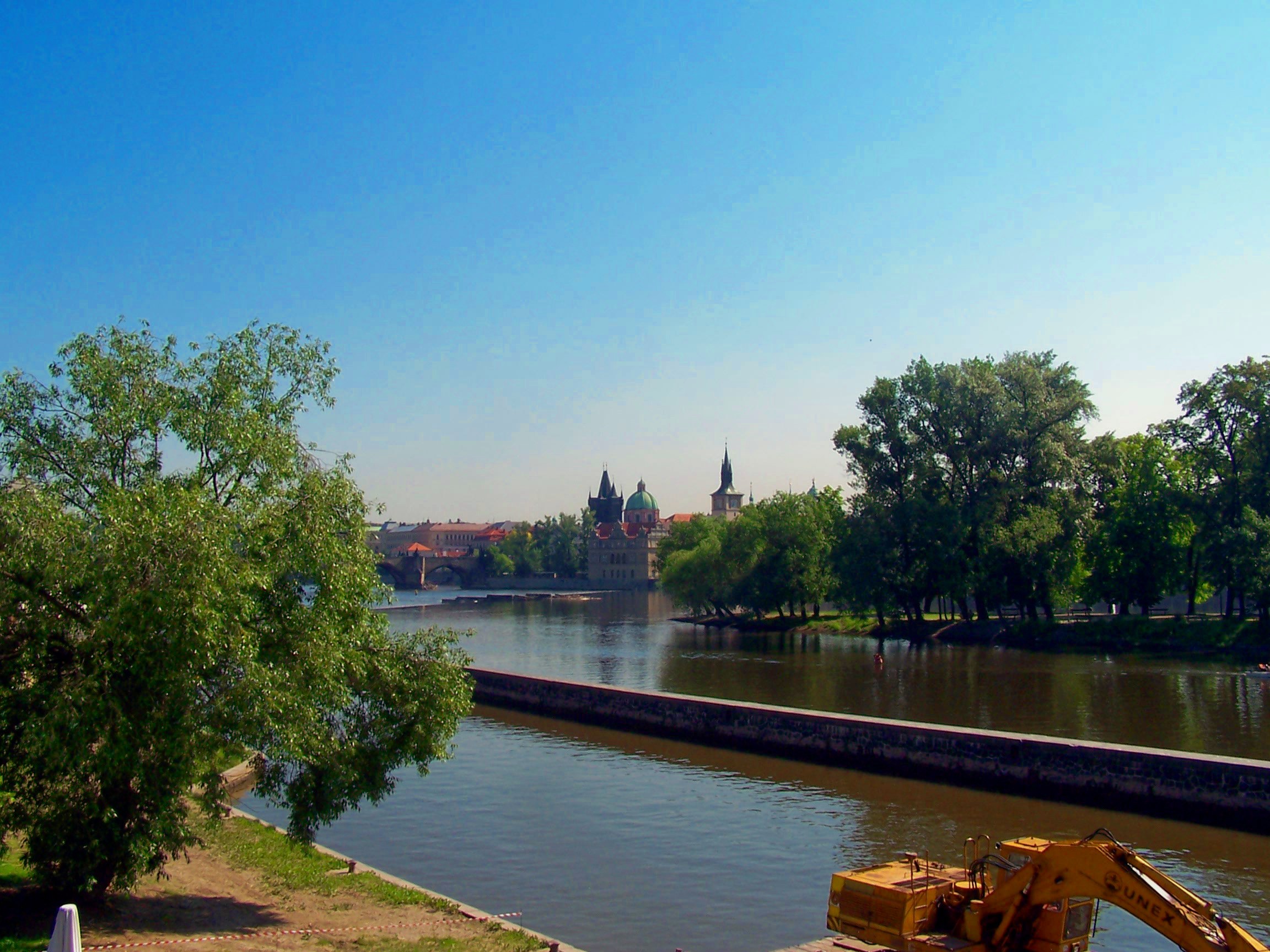
Kampa park
The Kampa bank of the Vltava, with the Charles Bridge tower beyond. Bourne is asleep on a bench in this park when two Zurich policemen wake him.
Two policemen wake a man asleep on a bench, and in a few seconds he has taken both their guns off them. It is the first time he, and the audience, learn what he can do.
The river behind the policemen is the Vltava; the National Theatre shows on the far right for a moment. Kampa is a park on an island, lawn and willows along the water, no gates on it, open at whatever hour you arrive. The Museum Kampa is at the southern end of it, in the old Sova mills.
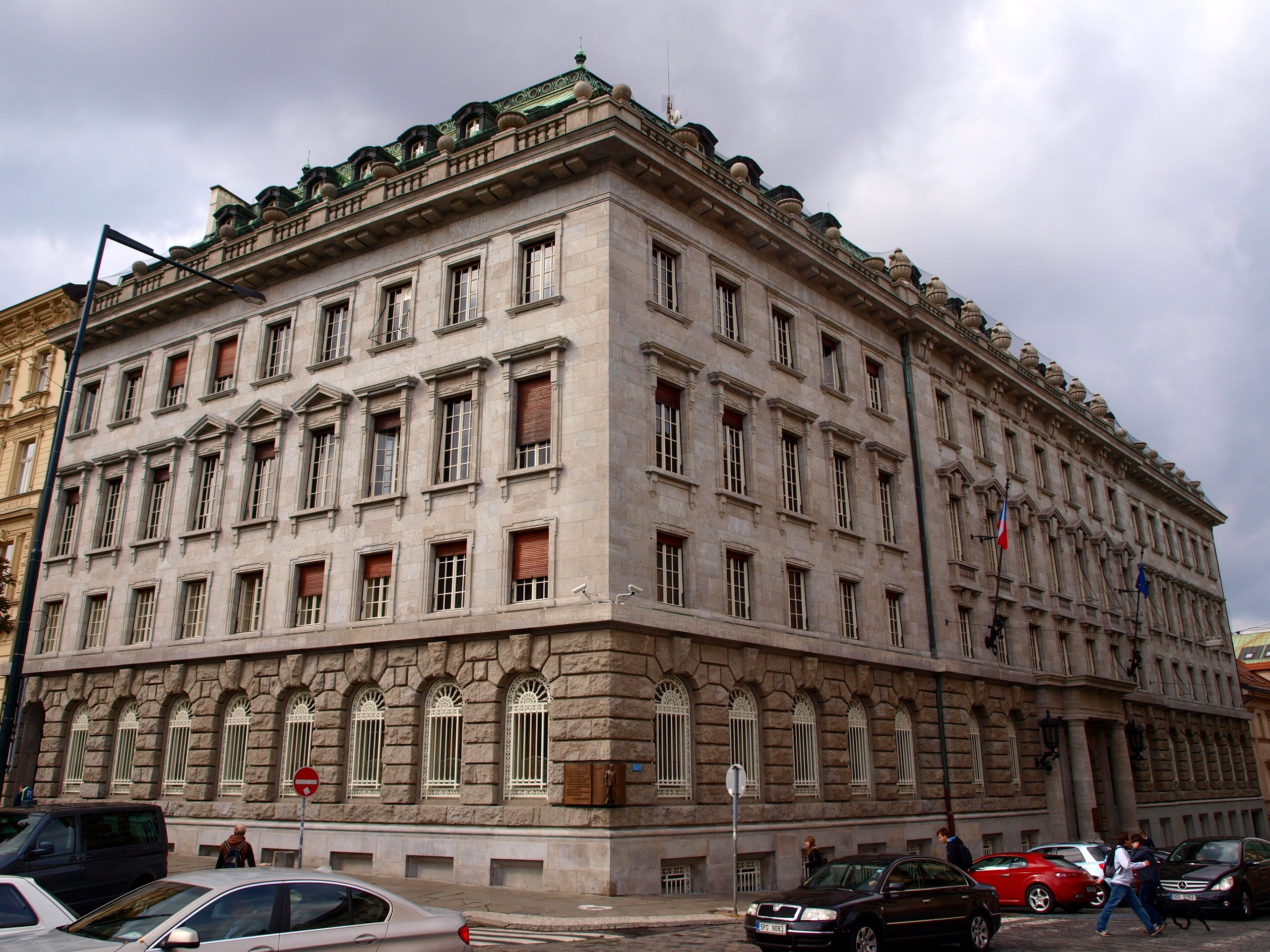
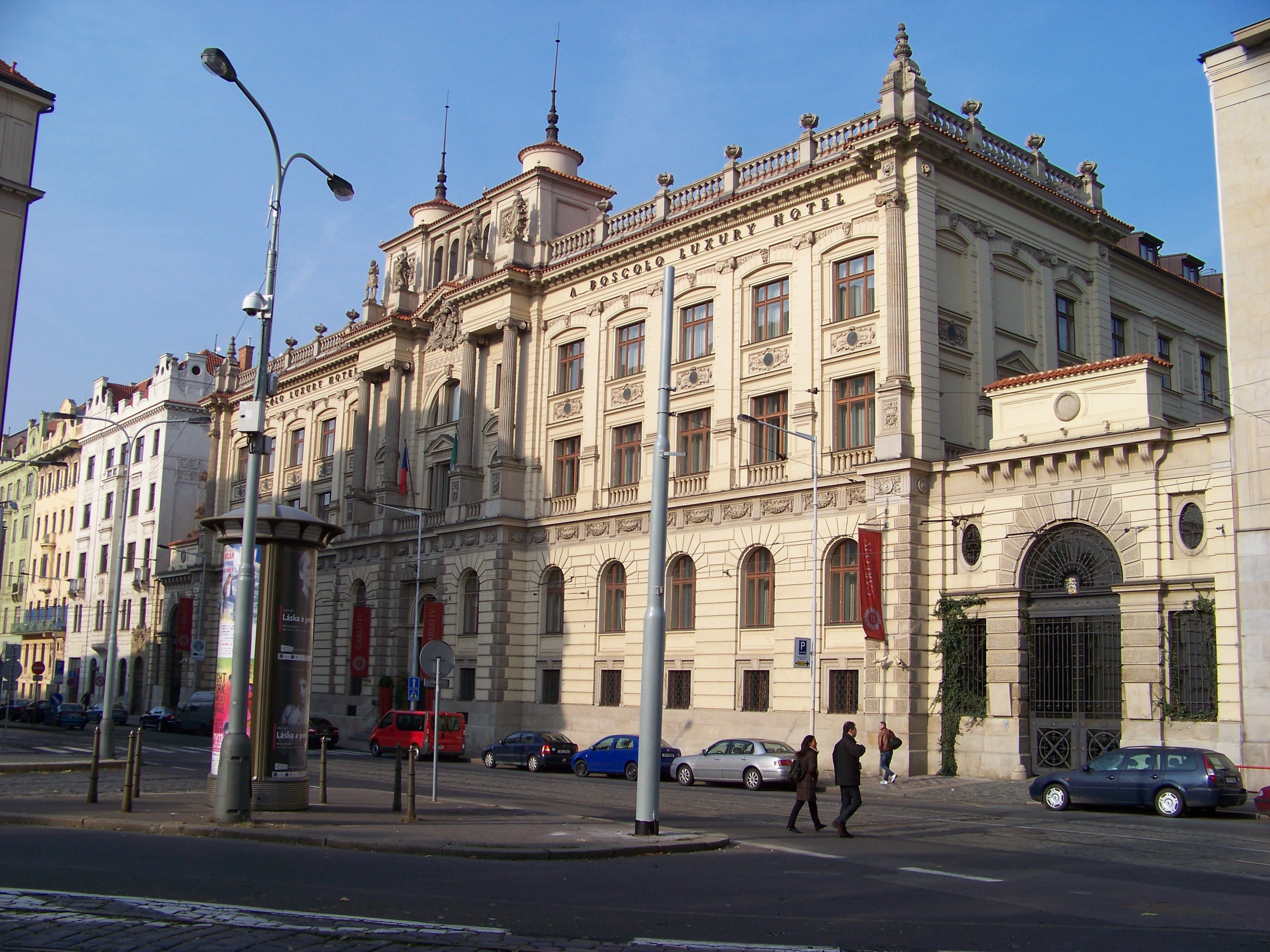
Petschek Palace, Politických vězňů 20
Petschek Palace on the corner of Politickych veznu and Washingtonova in 2012. Built for a bank, taken over by the Gestapo, and today part of the Ministry of Industry and Trade; in the film it is the Zurich bank that holds Bourne's box.
The Gemeinschaft Bank of Zurich, where the box is. Bourne looks across at the building, then walks away from it with the State Opera at the far end of the street.
He is walking away from a bank. Max Spielmann built the palace between 1923 and 1929 for the banking house of Petschek and company, and made it modern behind a historicist front: reinforced concrete, air conditioning, pneumatic post, a paternoster lift that still runs, and safes in the basement set into concrete walls that nobody ever tried to rob.
The Petscheks sold up and emigrated before the occupation. From 1939 the Gestapo ran the Protectorate out of the building, with cells and interrogation rooms in the same basement as the vaults. Those rooms are a memorial now, shown to small groups by appointment.
The Ministry of Industry and Trade has had the building since 1993 and opens it to the public one day a year, on 28 October. In 2024 that tour was a film tour, and one of the rooms on show was the restored bank vault. Crews film there, the ministry says, at about six pictures a year. Nothing in it happens inside.
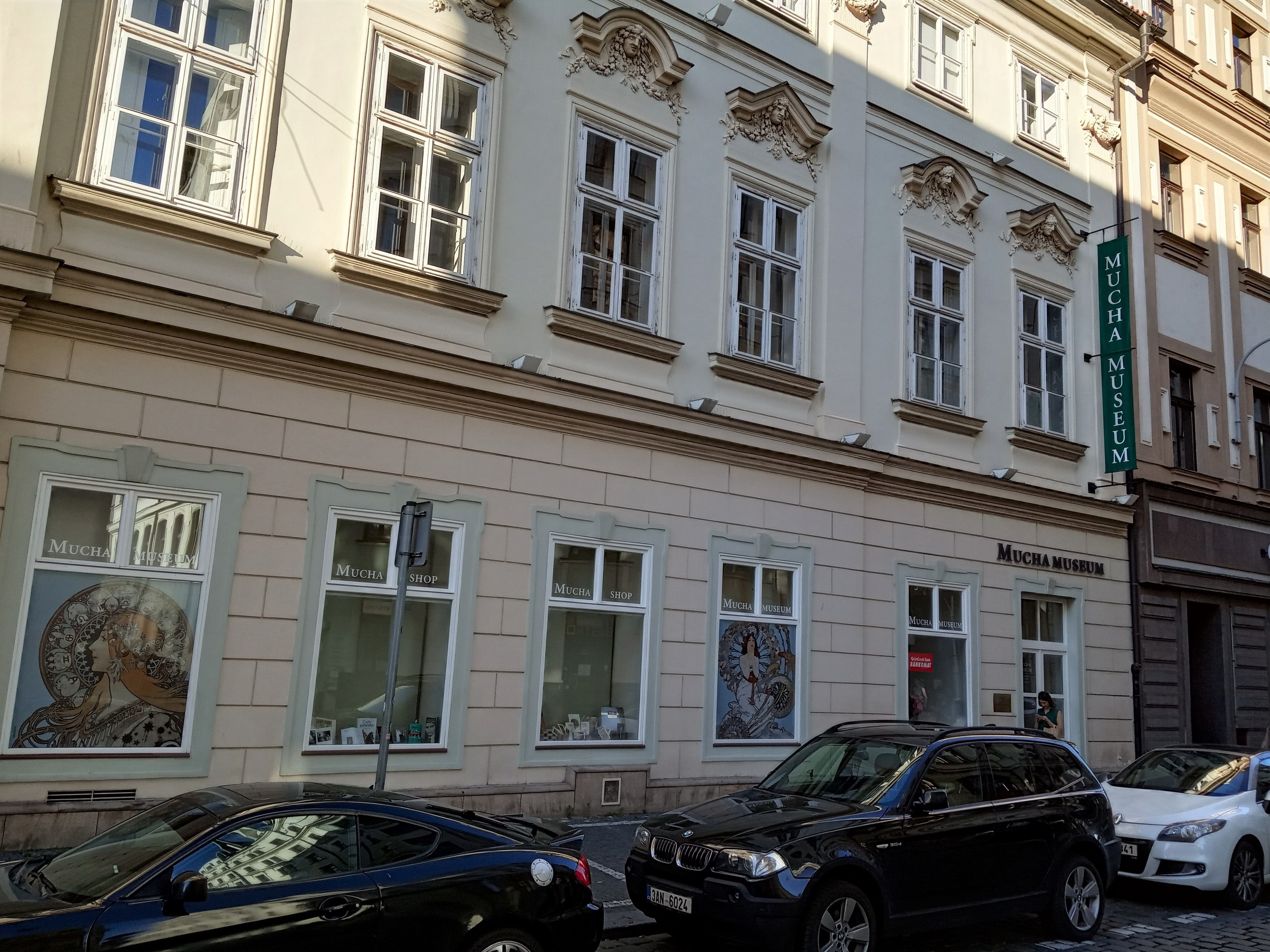
Panská 7
Panska 7, the Kounic Palace, with a Mucha museum on its ground floor. A Prague guide who has watched the film many times puts the consulate door here.
The consulate door. Bourne shows a guard his passport under the Stars and Stripes and goes in, and what is behind that door is not what the film shows next. The guards he walks past were serving United States Marine security guards. The interiors of the film were all shot in Prague.
The address is Panská 7, the Kounic Palace, a listed building with a Mucha museum on the ground floor. Panská is a short street of palaces with two working embassies on it: Brazil at number 5, Argentina at number 6.
A Prague guide who has watched the film many times over puts the consulate door at number 7, and one more scene fifty metres off it: Bourne takes ten thousand dollars out of the red bag and buys his ride in Marie's Mini on V Cípu, the short street behind the Hotel Palace.
Senovážné náměstí 13
Senovazne namesti 13, a hotel now. In the film Bourne comes down its outside wall after leaving the consulate.
A few frames of film. The guard opens the emergency door after the escape, looks down, and there is an ornate gateway, a tram line and a large blue building opposite. The same guide worked that gateway out to Senovážné náměstí 13, the arched carriage entrance on the left of the front.
It is a hotel now, and the gateway and the square are open to anyone walking past. The ledge the stuntman drops from was built onto the wall for the film.
Eight kilometres from Wenceslas Square, in France
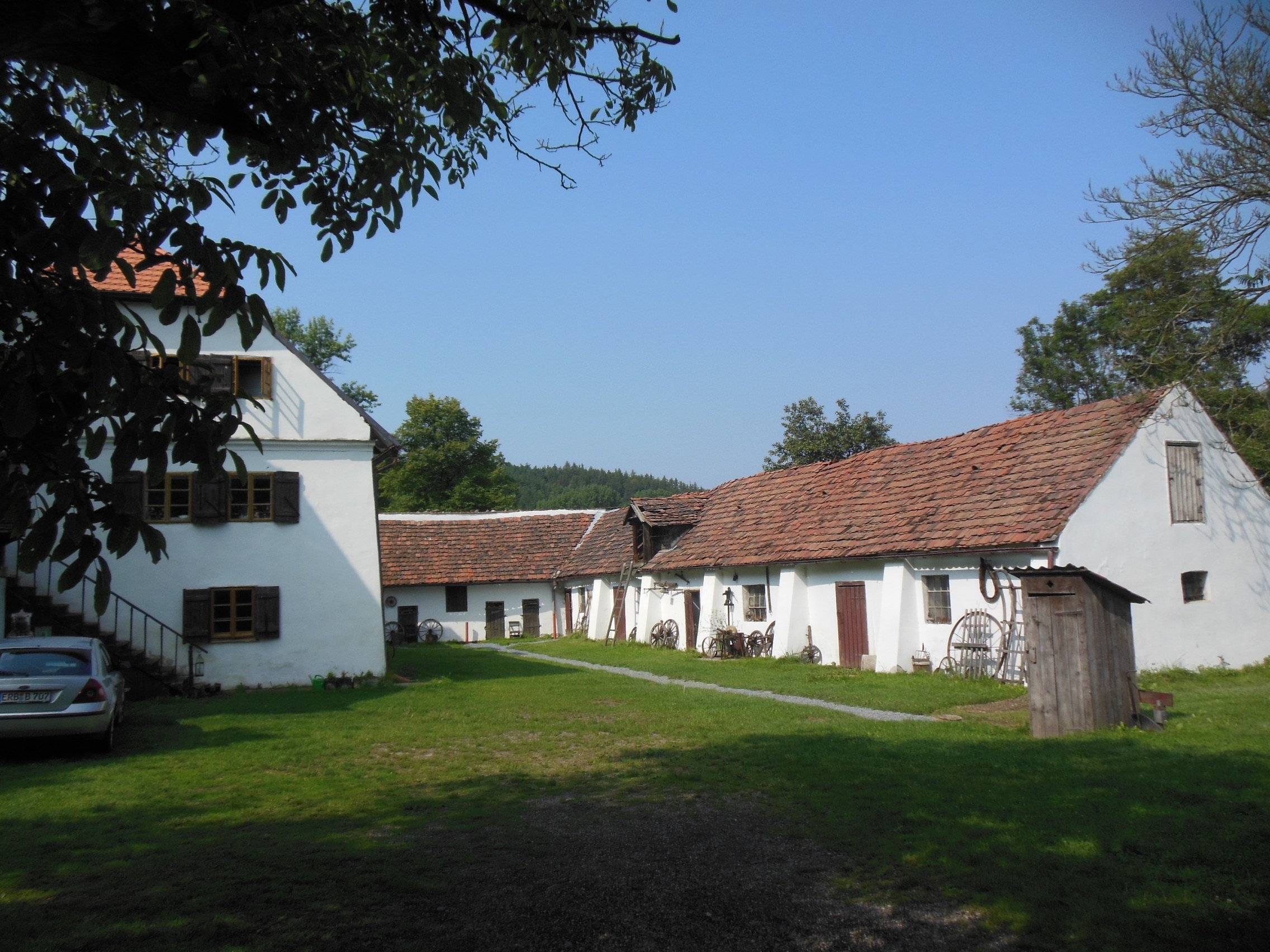
Trojanův mlýn, Suchdol
The yard of Trojan's Mill in Suchdol, on the northern edge of Prague. This is the farmhouse in the French countryside where Bourne and Marie hide.
The same production that was turning Prague into Zurich drove north out of the city to turn it into France. The farmhouse where Bourne and Marie hide with her friend Eamon, and where the sniper comes for them, is a mill on the Únětice brook in the Tichá údolí valley, at the northern edge of Prague.
The buildings have stood on this water for nine hundred years and have been most things in that time: a mill first, then Benedictine property, a bakery, a pub with a swimming pool built in the mill pond, an aviary for exotic birds, a block of flats. Irena Pörschmannová's family bought it in 1997 in a poor state and has been repairing it ever since, with film crews paying for a good part of the work. She lives there and rents the place out for weddings and events. Four hectares go with the houses: stables, a barn, an orchard, and a pond the family dredged and stocked with trout.
The culture ministry concluded in 2003 that the foundation is medieval and that the buildings kept growing on it into the twentieth century; it has been a protected monument since 30 May of that year, all of it except the enclosure wall, the gate and the wicket.
A public path runs along the brook past the yard, part of the Roztocký háj – Tichá údolí nature trail. The buildings are visible from it; the yard is not open. The board at stop 8 tells walkers that a television series was shot at the mill in the early 1970s, with Miroslav Horníček and Jiří Sovák in it. Bestiář, Hlava – ruce – srdce and Signál were shot here too, and so was the American series Missing; Pörschmannová has also let Jan Hřebejk in, for an episode of Místo zločinu Plzeň.
Paris, out of order
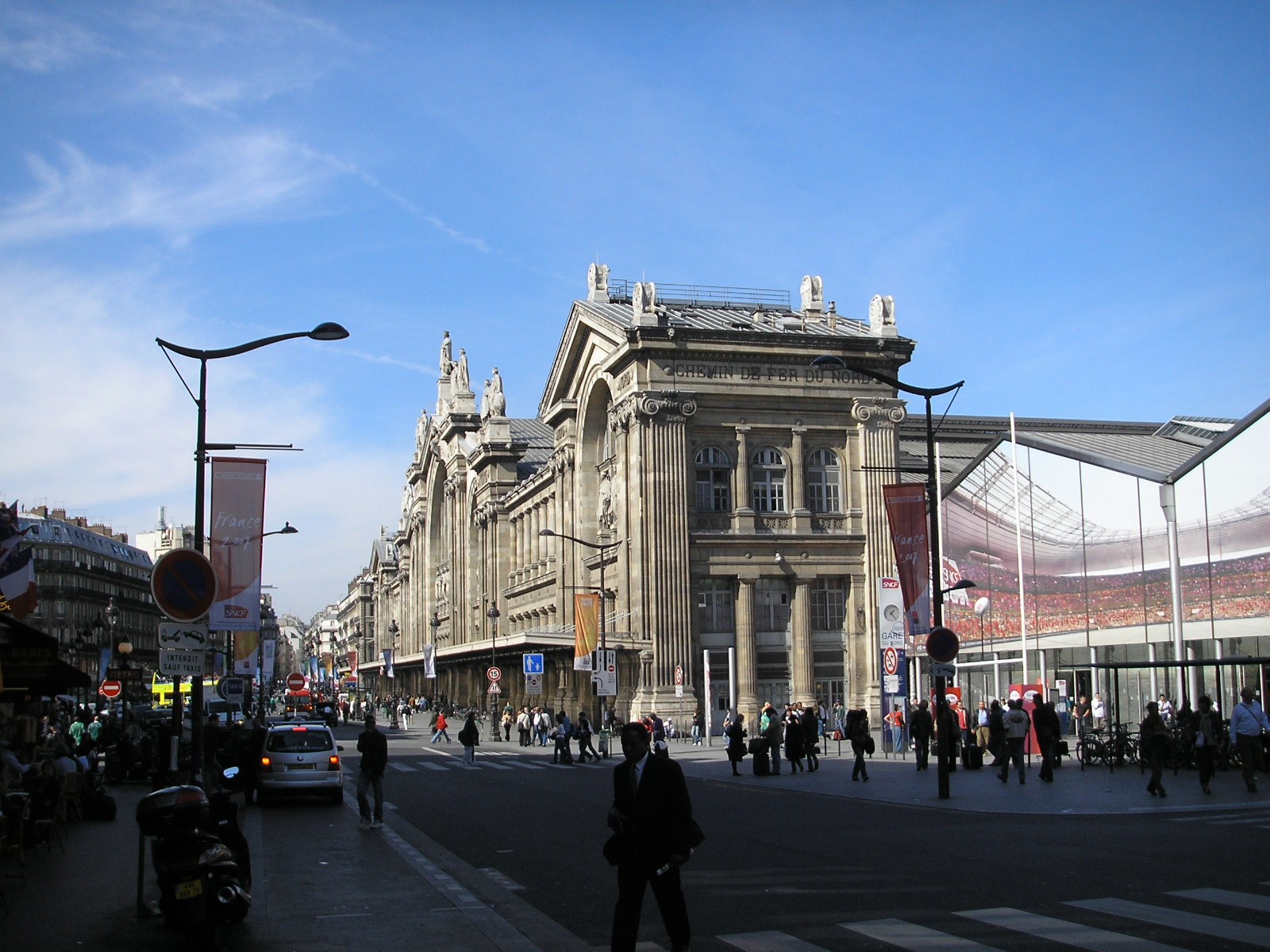
Gare du Nord
The Gare du Nord. Liman says the Mini chase begins here — and that the rest of it is cut together from pieces shot all over Paris.
The Mini chase starts in front of the Gare du Nord, and that is the last thing about it a map will support. From the station the sequence runs on pieces shot all over the city. Anyone who really knows Paris will find the route illogical, Liman says, and he claims a fair amount of logic for it anyway; the reporter he said it to knew Paris well and was not bothered. The quarter Liman says inspired him is Belleville, for the mix of people living there: the real Paris, he calls it, as against the tourist one.
Almost all of it was second unit, and the second unit could not work when it liked. A union week of thirty-three hours with no overtime left it Sundays and some Saturdays, for the whole time the production was in Paris.
The station front they pull away from is Hittorff's: 180 metres of stone laid out as a triumphal arch, with twenty-three statues on it for the cities the company ran trains to. Trains were going through it by 1864 and the work finished in December 1865. It faces the place Napoléon III, and behind it is the busiest station in Paris.
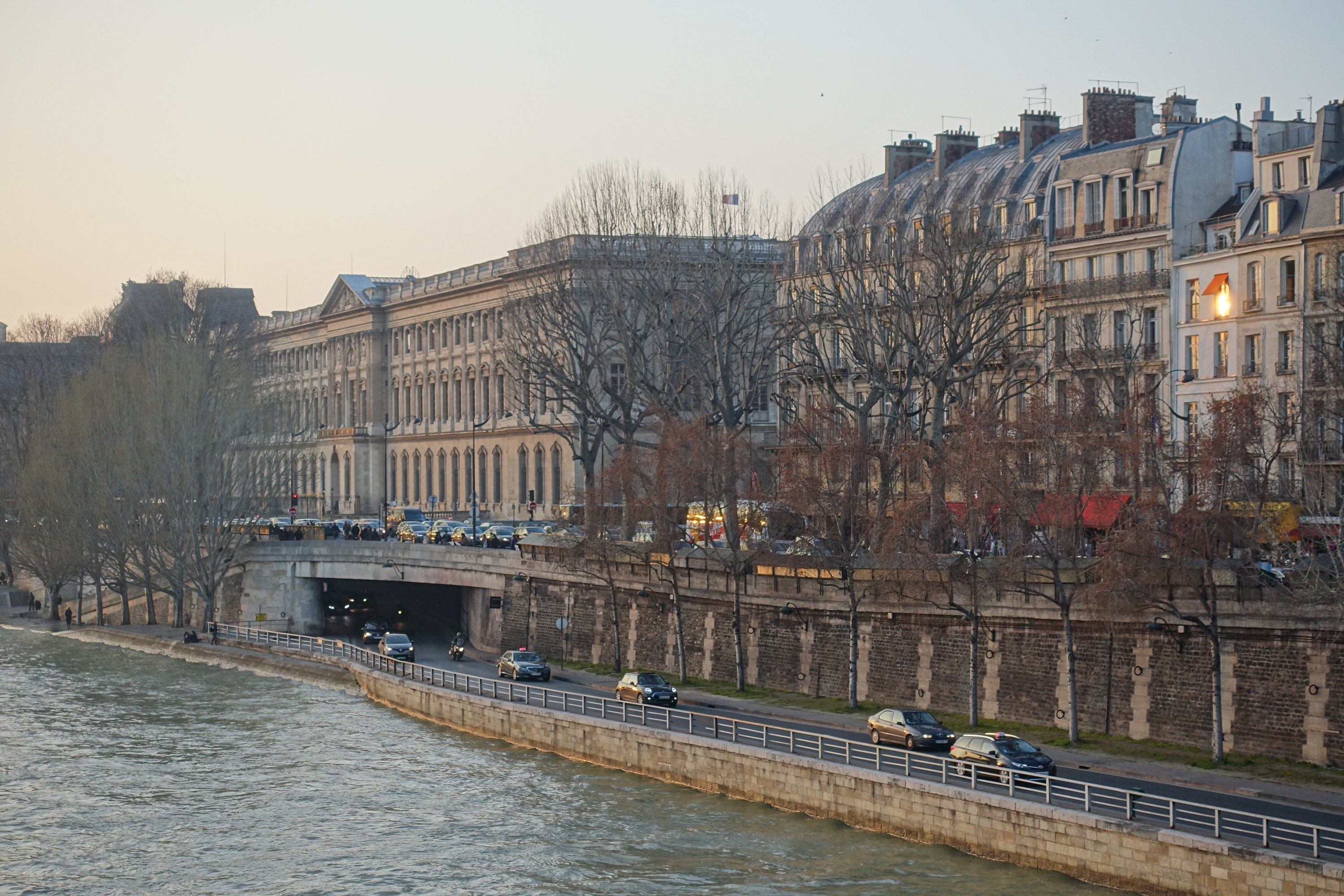
Voie Georges-Pompidou
The Voie Georges-Pompidou below the quai du Louvre in March 2016, still an expressway, with the mouth of the Tuileries tunnel on the left.
The Mini drops down onto the road under the quais and drives it against the traffic. On the right bank that road is the Voie Georges-Pompidou, about thirteen kilometres of it between the water and the quay wall.
Half of it cannot be driven now. The central stretch, from the Tuileries tunnel to the quai Henri-IV, was closed to cars in the autumn of 2016 and is a walking and cycling park; the courts upheld the closure in October 2018. West of the tunnel the traffic still runs, on one lane since 2017, with a two-way cycle track on what is left. A driver can still take the western end of it. The middle is on foot.
The first ten minutes and the last scene
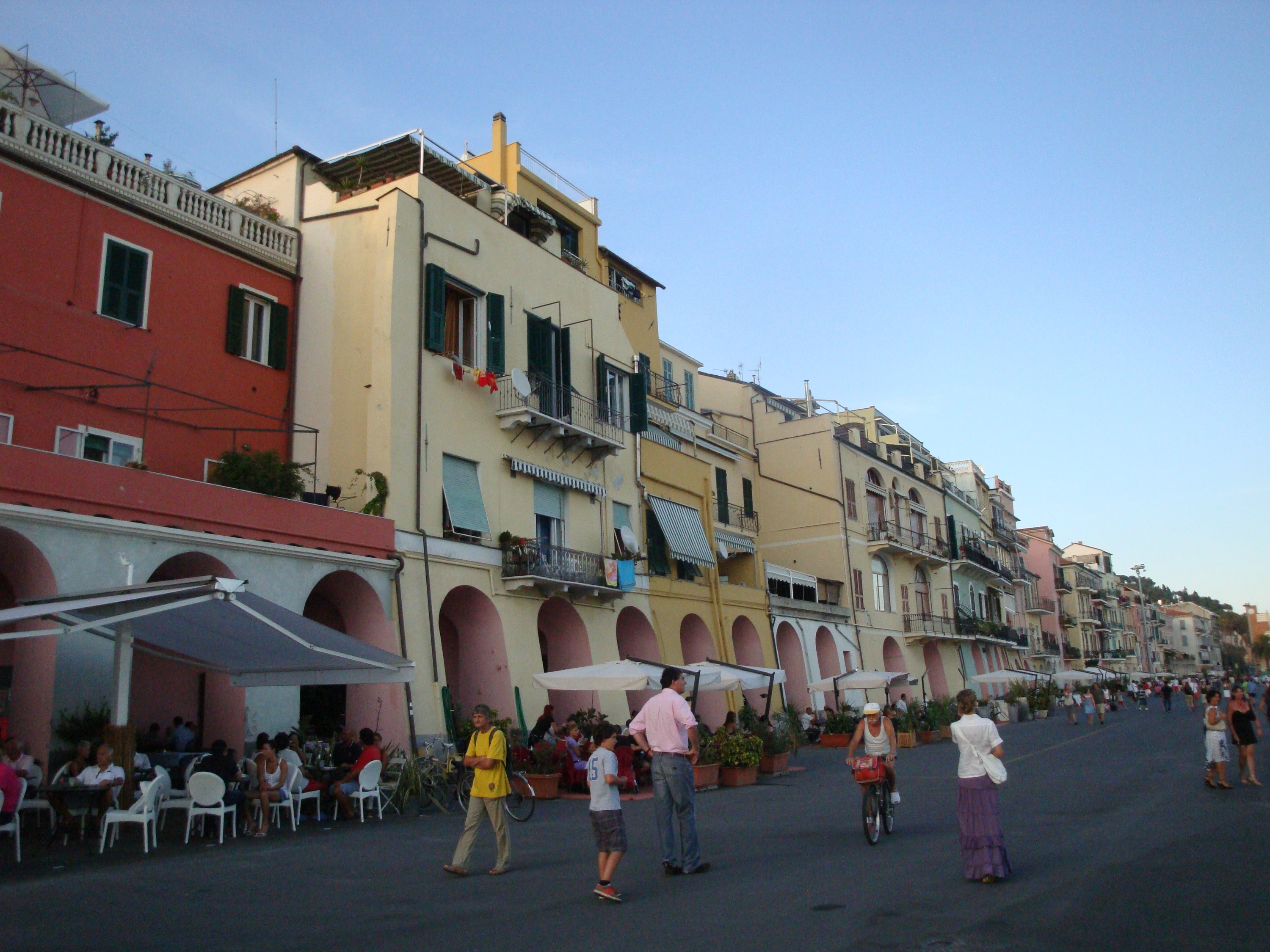
Calata Cuneo, the port of Oneglia
Calata Cuneo, the arcaded quay of the port of Oneglia in Imperia. Bourne walks along this front in the first ten minutes of the film, after the trawler puts him ashore.
Photo: Tony Frisina at Italian Wikipedia · Public domain · Wikimedia Commons
Before any of the substitutions, an Italian trawler comes in past a pier with a lighthouse on it, carrying a man it pulled out of the sea. He walks the port and takes his first steps on dry land there. The first ten minutes of the film are Imperia and the water around its harbour.
Oneglia is the modern, industrial side of Imperia; it and Porto Maurizio were joined into one town by royal decree in 1923. Calata Cuneo is its pedestrian quay: a row of tall coloured houses with arcades along the ground floor, cafés and bars under them, and two piers off the end of it. The longer of the two can be walked. The port used to live on fishing and lives on tourism and trade now.
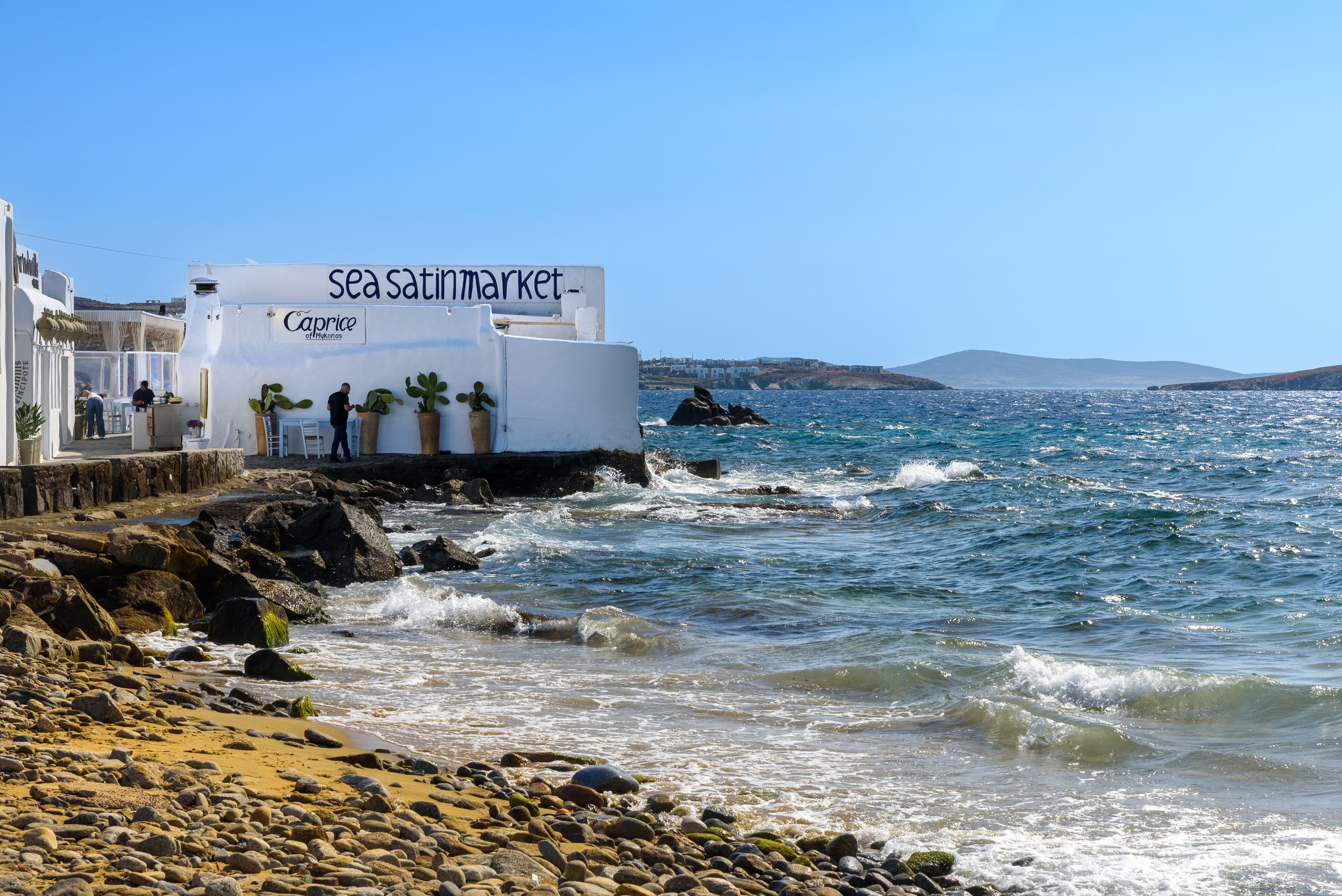
Sea Satin Market, Mykonos
Sea Satin Market at Alefkandra on Mykonos, below the windmills. Marie's scooter rental in the last scene of the film is this restaurant.
The other end of the film is on another waterfront. Marie has spent the money on a scooter rental, Bourne finds her there, and the camera lifts away from the two of them over the water.
Damon came to Mykonos for the first time in May 2001, for this shoot. The crew worked in several parts of the island, in secrecy, and stayed on until the last scene came out the way they wanted it. Sea Satin Market stands on the rocks at Alefkandra, at the western edge of Mykonos Town, under the Kato Myli windmills, and it is open in season. Damon came back in July 2023 on holiday, with a party of twenty-odd and Chris Hemsworth among them, a few days after the restaurant opened for the year, and they ate lobster and crab.
Marie's shop is a restaurant, and it was a restaurant on the day they filmed it. The rental came with the production and left with it, the way Zurich did.